GMS Faculty Spotlight: Sean Tallman, PhD, RPA
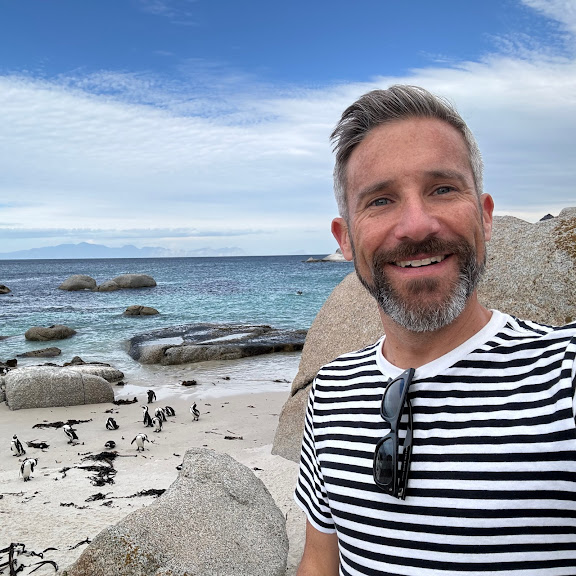 Sean Tallman is an associate professor in the Department of Anatomy & Neurobiology, with secondary affiliations with the Department of Anthropology and Program in Archaeology on the Charles River Campus. He is a biological anthropologist who specializes in forensic anthropology, human skeletal biology, and forensic archaeology. In the Department of Anatomy & Neurobiology, Dr. Tallman teaches, researches and advises students through his Forensic and Bioanthropology Laboratory (FAB-Lab) Group in the Program in Forensic Anthropology. His research interests include sex and ancestry estimation in Asian populations, cranial nonmetric variability, population-specific biological profile methods, secular change, issues of human identification, and diversity and inclusion in the forensic anthropology field. Learn more about Dr. Tallman below!
Can you please tell me about your educational and professional background?
I am a holistically trained biological/forensic anthropologist and archaeologist. I became interested in anthropology (cultural, biological, linguistic, and archaeology) while at community college, and all my subsequent degrees have been in anthropology (BA from the University of Washington; MA from SUNY Binghamton, and PhD from the University of Tennessee, Knoxville). I attended two field schools as an undergraduate, which introduced me to archaeological field work (in the American Southwest) and human osteology (in Illinois). As a result, I fell in love with fieldwork and travel, which have remained an important part of my life.
After receiving my master’s, I worked as a human osteologist and archaeologist for a cultural resource management firm (private archaeology firm), taught anthropology courses at community college, and provided skeletal analyses for museums and universities who were working to repatriate Indigenous remains under the Native American Graves Protection and Repatriation Act (NAGPRA)—all in the Seattle area for just over two years. Subsequently, I moved to Hawaii to work as a forensic anthropologist with the Joint POW/MIA Accounting Commands’ Central Identification Laboratory (JPAC-CIL), now the Defense POW/MIA Accounting Agency (DPAA). As such, I spent over six years conducting archaeological fieldwork to recover missing service members killed in past conflicts (e.g., WWII, Korean War, Vietnam War) in France, Germany, Laos, Papua New Guinea, Soloman Islands, and Vietnam and worked in the lab to identify service members via skeletal analyses.
The eight years between my master’s and PhD programs gave me much needed real-world experiences and enabled me to identify what I wanted to study for my dissertation. It also gave me the skills to focus on school and treat it like day job when I returned for my PhD, so I was able to finish relatively quickly. For my PhD, I studied skeletal variation in modern East and Southeast Asian individuals, specifically studying osteological/skeletal sex estimation and ancestry estimation in Japan and Thailand, which was funded through the National Science Foundation and the National Institute of Justice. Until 2021, I served as an on-call forensic anthropologist for the Disaster Mortuary Operational Response Team (DMORT), which is a federal organization of forensic specialists that is able to respond to mass disasters and mass death that overwhelms local resources anywhere in the country within 24 hours of an event. Thankfully during my tenure, my skills weren’t needed much.
What drew you to working at BU?
I was intrigued by the fact that BU is one of the only universities in the United States to have a forensic anthropology-specific Master of Science degree program in an anatomy department (Department of Anatomy & Neurobiology) and in a medical school. Forensic anthropology in the U.S. is traditionally housed in anthropology departments, as it is an anthropological discipline (a social science). Being affiliated with the medical school enables us to collaborate with radiologists, dentists, and other health-related researchers to study human skeletal variation via medical imaging, which is exciting to be a part of, while also keeping forensic anthropology grounded in anthropology and the anatomical sciences. Additionally, all my past education experiences were at public institutions, and I was intrigued to work at an elite-facing private institution in an area of the country where education is highly valued.
Could you please describe your work and research at BU?
I am an associate professor in the Department of Anatomy & Neurobiology and secondarily affiliated with the Department of Anthropology and Program in Archaeology on the CRC. In Anatomy & Neurobiology, I teach, research, and advise students in my Forensic and Bioanthropology Laboratory (FAB-Lab) Group in the Program in Forensic Anthropology. I teach courses in advanced human skeletal biology; forensic anthropology methodology; history, method, and theory in biological anthropology; and bioarchaeology (the study of skeletonized individuals from archaeological sites). FAB-Lab research includes using radiographs and computed tomography scans to understand human variation, pathology, and positive identification; using survey data to understand sociocultural practices and perspectives in the field of forensic anthropology; develop and test forensic anthropology methods used in the biological profile (establishing the skeletal sex, age-at-death, stature, and population affinity of skeletonized individuals).
Beyond my research in exploring human skeletal variation in Asia, I am interested in applying queer, feminist, and biocultural lenses and theories to practices in forensic anthropology in order to better increase the inclusion of practitioners and students from a diversity of lived experiences and to more accurately identify deceased individuals. I was awarded a Fulbright US Scholar grant in public health to study structural violence and weathering in unidentified and anatomized individuals in South Africa in 2024, where I lived in Cape Town for nearly a year conducting research and learning about the forensic and anthropological infrastructure of the Western Cape. I am also an associate editor for two flagship anthropology journals (American Anthropologist and Yearbook of Biological Anthropology), where I have greatly valued learning about journal editorial processes, organizing projects, and helping people to get published.
I have also served on numerous diversity, equity, and inclusion committees while at BU, including the BUSM Diversity Steering Committee, Faculty Council Diversity & Equity Committee, and LGBTQIA+ Faculty Recruitment Committee, among others. I am presently on BU’s Fulbright Committee and the NAGPRA Committee.
What is a project you are especially proud of?
Two projects come to mind. I am proud of earning a Fulbright grant, which I was able to use during my year-long sabbatical, and which I never imagined I would have been awarded. I worked closely with biological and forensic anthropologists at two universities in Cape Town, South Africa: the University of Cape Town and Stellenbosch University. The sabbatical and Fulbright award allowed me to develop deep connections with colleagues in South Africa and Namibia and allowed time to think in new ways—in an environment vastly different from Boston and BU. My research was focused on studying the embodied skeletal manifestations of structural violence experienced during life in individuals who became forensic cases and those who donated their bodies for scientific study.
Second, I am very proud of a study and published paper with a former student (Caroline Kincer) and a medical anthropologist (Eric Plemons at the University of Arizona). The project involved surveying forensic anthropology practitioners and students to understand the frequency in which transgender individuals appeared in forensic anthropology casework and to understand how forensic anthropologists think about sex, gender, and identifying trans and gender diverse individuals. This paper, published online in 2020 and in print in 2022, was one of the first to advocate for trans individuals in forensic anthropological contexts and to use queer, feminist, and biocultural theories to interrogate forensic anthropological perspectives and practices and improve our approaches to caring for deceased trans individuals. It was a very collaborative project and has influenced my subsequent work to “queer” forensic anthropological practices and interrogate unexamined harmful perspectives and practices that potentially hinder identifying individuals and providing meaningful deathcare. Moreover, work like this is especially important at a time when trans lives and healthcare are being invalidated by anti-LGBTQIA+ legislation and perspectives.
How do you see your field evolving in the next five to 10 (or beyond) years?
Forensic anthropology is undergoing exciting changes. The field is increasingly embracing public health, medical anthropology, and other social science theories and perspectives to improve the field and our identifications of deceased people and interrogating harmful practices that have made the field susceptible to supporting harmful and wrong conceptions of human skeletal variation and stereotypes.
For example, the field is actively discussing how we can better represent the non-binary (or sex polymorphic) nature of sex and gender in classrooms, science communication, and in research to combat the strict binary conceptions of sex and gender. As such, the field is solidifying its position in anthropology—forensic anthropologists should be anthropologists first and forensic practitioners second. Because of the work of many of my colleagues, the field is being recognized as an important avenue to study human biocultural variation, and forensic anthropologists are increasingly writing on the theoretical aspects of the field, which is just as important as the methodological advancements. The field is also becoming adept at using medical imaging to studying human skeletal variation (of living and deceased individuals), which is important, since anatomical skeletal collections are often very biased in their demographics and many of them were historically unethically established with people who did not want to be scientifically studied.
So, I see the field as becoming increasingly ethical (by understanding who comprises the skeletal collections that we collectively study, and work to repatriate those who were unethically “collected”), increasingly theoretical (by incorporating queer, biocultural, feminist/Black feminist, evolutionary, and other social science theories), and increasingly adept at using medical imaging to study human variation.
Who has been a significant influence or mentor in your career?
Because I am first-generation college student (my parents and my older sister did not go to college), I have relied a lot on my friends and peers in anthropology as to how to navigate the complexities associated with education, employment, and research in academia. They have been invaluable mentors to me, inspiring me to engage in research and writing, serve on committees, and take on leadership positions in the field. Peer-to-peer mentorships are often overlooked because of the focus on traditional (top-down) mentorships, but in my experience, they have been just as—if not more—valuable than traditional mentorships because of my peers’ diverse accomplishments and experiences in the field that are more similar to my perspectives compared to older mentors.
What is your favorite part about mentoring students at BU?
I really enjoy seeing students get excited about research. This usually occurs over a series of one-on-one meetings to develop ideas for their original thesis research project, which is an important requirement of the Program in Forensic Anthropology. Being able to propose a study, research, write, and communicate about that study is incredibly valuable for any career. Often students are intimidated about writing a master’s thesis but learn that it is feasible when they break it down and set specific goals.
Relatedly, I really value working with students to publish and present their research. The publication process can be intimidating and turbulent, even for researchers and professors. I like being able to serve as a mentor through that process, which is something that I never had as a graduate student. My associate editor experience also helps navigate this process, as I try to predict what editors and peer reviewers will have concerns about (though you can never really predict peer-review outcomes!). I strongly believe that one does not need a PhD and many publications to publish, and I like demystifying the path to publication for my students. I learn a lot with every manuscript submission and in working with students who want to publish their work.
What advice would you give to students or early-career professionals in your field?
I would advise students and early-career professionals to say yes to as many opportunities that arise as possible. Since employment in biological/forensic anthropology can be difficult to attain, it is important to have diverse and numerous experiences and skillsets. One never knows where an opportunity will take them—it may entirely change their educational or career trajectory. My path in the field of anthropology and to becoming a professor has not been a direct line, and all of my experiences have contributed to where I am currently.
Relatedly, I think it’s important for people to avoid getting too focused on one particular career or educational outcome. I never planned on being a professor or working at a university (even in graduate school), but I am glad that I am now. I worry that students who are too focused on one outcome will be disappointed if/when that opportunity doesn’t arise. Academia and research come with much rejection, which everyone goes through, and we should normalize talking about.
What do you enjoy doing when you’re not teaching or researching?
Maintaining a good work/life balance is important to me. When I am not working, I like running outside (I run almost daily, but not in races). Being outside and active helps to clear my head and think about bigger-picture issues. I have come up with several paper topics and killer sentences for manuscripts while running! I try to walk most places and avoid taking the T or busses—Boston is such a walkable city and public transportation can be frustrating!
I also like taking time to cook and prepare food. I am by no means a great chef, but I like the intentionality to eat well. I also enjoy travel—it has been important in both my professional and personal life. It invigorates me and allows me to work for something during challenging times. I enjoy seeing live music, which might stem from growing up in Seattle during the “grunge” era, where music was a vital part of the city. There are some great venues throughout Boston, and a lot of bands come through town.
Is there anything else you’d like to share?
I love non-human animals! I have had the great fortune of getting to know personally rhinos, hyenas, spider monkeys, siamangs, baboons, lions, and tigers as a zookeeper volunteer for four years at the Honolulu Zoo. In addition to cleaning and feeding, we worked with animals on enrichment, training, and interactive activities like grooming, holding hands/tails, petting, and receiving vet care. And I’ve met elephants in Thailand and Zambia (including walking with, feeding, and bathing) and cheetahs in South Africa. They have all been amazing to meet, and sometimes I wonder if I picked the wrong species to study (humans)!