Congratulations to Our 2026 GMS Educator and Mentor Awardees!
Boston University Chobanian & Avedisian School of Medicine has honored three Graduate Medical Sciences Educators and Mentors who have delivered exceptional education and mentorship to graduate students in master’s and doctoral programs. The school grants these awards based on recommendations from across GMS programs.
This year, GMS is pleased to share that Vanessa Xanthakis, PhD, and Matthew Jones, PhD, have been awarded the 2026 GMS Educator of the Year awards, and that Andrew Henderson, PhD, has been awarded the Excellence in Research Mentorship (GMS) award. Read more about each awardee below.
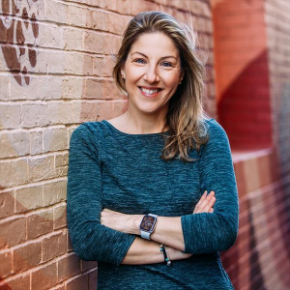 Vanessa Xanthakis, PhD
GMS Educator of the Year Award (Master’s)
Dr. Xanthakis is a biostatistician and an associate professor at Chobanian & Avedisian School of Medicine. She has been a part of the BU community for 21 years, studying for six years as a PhD student and serving as faculty for 15 years.
She teaches the Fundamentals of Biostatistics Using R course for GMS (GMS MS750).
Can you tell me about your research?
I am a trained biostatistician and have a strong commitment to clinical epidemiological research. I am an associate professor in the Section of Preventive Medicine and Epidemiology in the Department of Medicine at Chobanian & Avedisian School of Medicine and in the Biostatistics Department at BU School of Public Health. I serve as the Principal Investigator for the BU T32 Postdoctoral Program in Cardiovascular Epidemiology and also for the BU Promoting Research In Medical Residency (PRIMER) Training Program, both funded by the NHLBI (National Heart, Lung and Blood Institute). I am also the Director of the Framingham Heart Study Pathway program within Boston Medical Center’s Internal Medicine Residency program. At the Framingham Heart Study, I serve as an investigator and the biostatistician on several research projects.
For the last 18 years, I have focused my research on A) the epidemiology of cardiac remodeling and subclinical disease, including identifying cardiovascular disease risk factors; B) population-based vascular testing and echocardiography, including identifying biological, environmental and genetic determinants of cardiac structure and function; C) epidemiology of novel biomarkers including but not limited to natriuretic peptides, adipokines and vascular growth factors; D) cardiovascular risk prediction using biomarkers and assessing their incremental prognostic utility; E) epidemiology of heart failure and its precursors; and F) ideal cardiovascular health and its impact on cardiovascular disease and its precursors.
What was your initial reaction to finding out you won an Educator of the Year award?
I get rewarded every time I teach and see the students’ faces when they finally understand what the “p-value” really means, but it’s always nice to get officially recognized by the school. I felt honored, appreciated and grateful for the nomination and support by my students, postdoctoral scholars, residents and colleagues who all contributed to this amazing award!
What does being an educator mean to you?
Being an educator is so much more than simply teaching materials. When you serve as an educator, you teach students the tools on how to be curious and ask the right questions and also create a safe space whereby you challenge your students to think.
Can you tell me about your teaching style/philosophy?
Most of the time, a biostatistics course is a “required” course, and not an “elective”, so I try to make it fun and make sure that students relate to real-life examples and also enjoy our time in that classroom.
Can you tell me one of your favorite parts about mentoring students within GMS?
I truly like how these students join my class in September telling me how “they were never good in math” and that “they just need to take this course”, and then in comes December and they start asking where they could sign up for more Biostatistics classes.
 Matthew Jones, PhD
GMS Educator of the Year (PhD)
Dr. Jones is an associate professor of pulmonary, allergy, sleep & critical care medicine and a member of the Genome Science Institute. He has been at BU since 2008 and completed his PhD in the lab of Katya Ravid, PhD, professor of biochemistry & cell biology.
Within GMS, Dr. Jones serves as an advisor to first-year students in the PhD Program in Biomedical Sciences (PiBS), where he facilitates a professional skills class to help students adjust to graduate school and transition to their dissertation labs.
Can you tell me about your research?
Our lab studies how the lung protects itself during infection and also how it recovers after injury. We are especially interested in lymphatic vessels, which clear excess fluid and help regulate immune-cell movement through inflamed tissue. Although lung lymphatics have traditionally been viewed as a uniform drainage network, our work has shown that they are much more specialized. We identified two distinct lymphatic endothelial cell populations in the lung suggesting that different lymphatic niches may play different roles in host defense, inflammation, repair and pulmonary congestion.
What was your initial reaction to finding out you won an Educator of the Year award?
I felt honored and genuinely appreciative of the recognition.
What does being an educator mean to you?
Being an educator means having the opportunity to shape the next generation of scientists. Each year, we invite alumni to return and talk about what they have done since graduating, and it is inspiring to hear about their accomplishments and the many different directions their careers have taken. When we start classes in the fall, I often think about these alumni events and wonder where this next group of students will go and what discoveries they will make.
Can you tell me about your teaching style/philosophy?
I think the best learning happens when students feel like they are discovering something for themselves. We try to create an environment where students explore ideas, ask questions, and get excited by what they find. As a researcher, I try to share the approaches and ways of thinking that have shaped my own work, but I also love when students bring their own perspective and come up with creative strategies I would not have anticipated.
Can you tell me one of your favorite parts about mentoring students within GMS?
One of my favorite parts is watching students find a lab and mentor they are genuinely excited about joining. This is the point when their training begins to shift from the classroom to the lab and they start seeing themselves as part of a research team with real world questions, ideas and contributions.
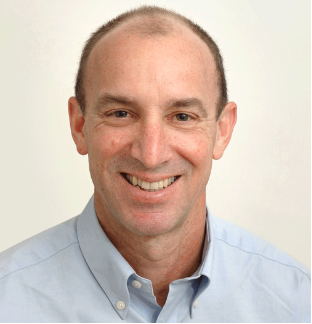 Andrew Henderson, PhD
Excellence in Research Mentorship (GMS)
Dr. Henderson has been at BU for almost 20 years and holds a variety of roles under the GMS umbrella. At GMS, Dr. Henderson sits on several committees, facilitates F grant writing workshops and leads several research trainee programs.
Currently, he supports the BU-University of Liberia Emerging and Epidemic Virus Research (BULEEVR) training program, which is supported by the National Institutes of Health Fogarty International Center to facilitate PhD training for Liberian scientists and establish collaborative programs focused on emerging diseases. He also leads the Research Assistant PhD Prep program (RAPP), which provides guidance and professional development opportunities for current research assistants and techs aspiring to go to graduate school. Previously, he facilitated BU PREP, a former NIH-supported R25 post-baccalaureate training program.
Can you please tell me a bit about your research?
My research focuses on cellular and biochemical mechanisms that influence HIV infection, replication and pathogenesis. Some questions that we are exploring today include general and unique properties that regulate different HIV variants found around the world and within an individual; how DNA damage responses interface with different steps of HIV infection (such as integration into the genome of an infected cell); do the defective HIV genomes that make up most of the persistent viral reservoir contribute to chronic HIV associated inflammation; and how is this reservoir established, maintained and reactivated.
What was your initial reaction to finding out you won the Excellence in Research Mentorship award for GMS?
I was truly flattered and humbled. Maybe a bit shocked, because I sincerely feel this recognition could have gone to anyone of our faculty. I think all our faculty take mentorship seriously and take great pride in our trainees. The science is fun and challenging and important, but I think what really motivates most of us is being an educator and helping people discover their professional paths and passions in science.
My second reaction was more nostalgic and led me to think of my previous mentors, who really do shape you as a mentor, all the wonderful people who have come through the lab and how fortunate I have been to work with a lot of wonderful scientists, post-docs and students.
What does being a research mentor mean to you?
I think being a mentor is a bit of paying back while paying forward. There is the pay back to my previous mentors, who believed in me and trusted me and provided me the opportunity to succeed; and yes, I still want to make them proud. The paying forward is empowering the next generation, helping them find their voices, their aptitudes and their passion on their way to being future leaders in science, policy, education or whatever path they choose.
Can you please tell me a bit about your mentorship style/philosophy?
As I suggested, your mentorship style is very much shaped by your own training experiences. I had mentors who challenged me, made me think and gave me the opportunity to explore and take ownership of projects. I found this very empowering and it helped me overcome many of my self-doubts and anxieties about graduate school and my post-doc.
With that context, I hope I help students feel supported and feel I am invested in their success, while at the same time giving them the freedom to think, to challenge paradigms and to do that experiment that surprised all of us that it worked. I also hope they feel they are part of a larger community that wants to see them succeed.
Can you please tell me one of your favorite parts about mentoring students within GMS?
There are truly many things. When a student gets an “ah ha” moment about their project, that umpteenth draft of the manuscript that has finally come altogether, seeing them nail their talk at a large professional meeting or the dissertation defense, being able to host a former trainee as a departmental seminar speaker or a note after several years saying “all is good, in hindsight grad school was a lot of fun, thank you.” Recently, the daughter of one of my former mentees, who is a sophomore at Northeastern, invited me for a career panel, in part because of her mom’s suggestion! How cool is that?
View all posts