Stephen Brady, PhD
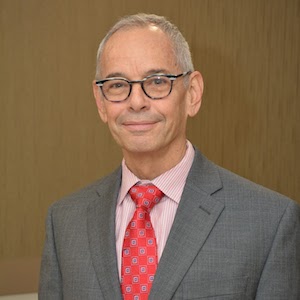
Associate Professor of Psychiatry
Education
I received my BA in Sociology from the University of Florida in Gainesville FL, and my MA and doctoral degrees from the University of California, Santa Barbara, CA.
Biography
It have been a member of the Psychiatry Faculty at Boston University School of Medicine for over 35 years. I am semi-retired but teach 2 classes a year related to clinical supervision and techniques of psychotherapy. I remain an active clinician and primarily treat gay male professionals. Over the course of my career I have served many roles at BU including as a senior leader in a community mental health center, as founding Director of the Mental Health Counseling and Behavioral Medicine Program (MHCBM) and Assistant Dean of Graduate Medical Sciences. I was elected as the Chairperson of the 3000+ faculty at Boston University and have served on many committees at the University. I have been affiliated with several professional organizations including serving as the Chair of the American Mental Health Counseling Associations (AMCHA) Professional Development Committee and Chair of the American Psychological Associations (APA) Counsel on Psychology and AIDS. I also have had a research career and publications with a principal focus on the intersection of HIV and mental illness. This includes being a senior contributor or Principal Investigator for federally funded projects of the National Institutes of Health.
Questions & Answers
Q: Please describe your theoretical orientation and teaching philosophy.
I would describe my theoretical orientation as “technical eclecticism” which utilizes a variety of empirically supported treatment strategies based on client need rather than a therapists’ “a priori” assumptions about behavior change. I have been fortunate to work with a wide variety of clients including the medically ill, the mentally ill, the developmentally disabled, and those with more everyday problems of living. Thus a one size fits approach to counseling with diverse clients is problematic and informs my embrace of eclecticism.
Regarding my teaching philosophy, I emphasize a “see one” “do one” and “teach one” approach. The courses I currently teach emphasize a great deal of experiential learning. After an initial brief lecture or case discussion, I demonstrate a clinical skill and then have students demonstrate that skill using structured role-play. Students subsequently present their finding or observations to their peers….thus see one, do one, teach one in action.
Q: Why did you choose to be a faculty member in the Mental Health Counseling and Behavioral Medicine Program?
I am the founding Director and was initially driven to initiate the program because of the need for clinically focused Masters education on the medical campus. We were also one of the 1st programs of its kind to focus on the integration of behavioral health into healthcare settings. I cannot imagine a more interesting role than being part of this counselor education program. The MHCBM Program is a great place to share knowledge and train the next generation of practitioners in what I consider to be sacred work.
Q: What do you enjoy most about teaching in the Mental Health Counseling and Behavioral Medicine Program?
I am at a stage in life where being generative and nurturing new clinicians is highly meaningful. I have spent many years in the field and I have the desire to share my knowledge and experience. I also love the diversity of our student’s training which includes degrees in such areas as education, psychology, human development, biology, neuroscience, genetics, and sociology. This creates a more vibrant learning environment from which I have also learned a great deal.