GMS Alumni Spotlight: Omer Elrayah, DMD, MS ‘18
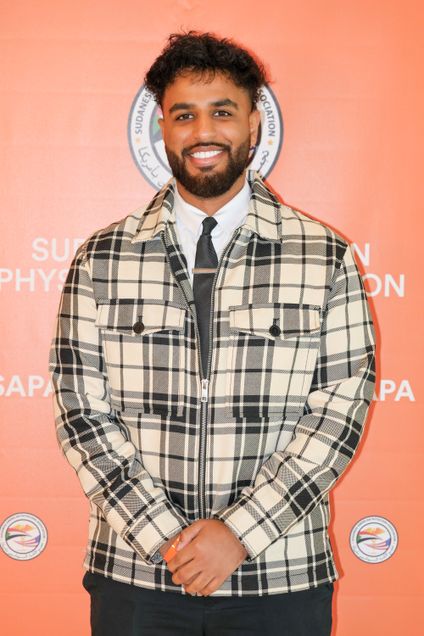 Omer Elrayah, DMD, MS, is a 2018 graduate of the Master of Science in Oral Health Sciences Program at Boston University Chobanian & Avedisian School of Medicine. Following his graduation from Graduate Medical Sciences, Omer attended Tufts University School of Dental Medicine before taking on roles in community health and private practice settings in New England. He also worked as a clinical instructor for third- and fourth-year dental students in Boston. Omer founded Remo Brush, a sustainable, water-activated toothbrush designed with Miswak-infused bristles. Learn more about Omer and his company below!
Tell me about your journey to Boston University.
I’m originally from New Hampshire, which is where I grew up. I’ve always wanted to stay local and be around family. That was very important to me. I had applied to Boston thinking that I wasn’t going to get into the OHS program. It wasn’t until I met Dr. Davies (Program Director) via Zoom, and she saw something in me and wanted me to be one of the program participants. It worked out because it was very close to home, and I’m happy that I made the decision.
What about the Oral Health Sciences Program stood out to you?
I liked how it was very rigorous. I liked how it made students very prepared for dental school by taking classes with dental students themselves. It makes it a lot easier for students who are unsure if they have what it takes to get into dental school. I think that it was a good prep for dental school itself. At the time, I took the DAT, and I wasn’t too satisfied with my score. I also didn’t think my grades were up to par. After doing the OHS program and finishing, I didn’t have to take the DAT again, which was amazing for me. I was able to get interviews and was accepted to all the schools that I applied to.
Tell me a little bit about your experience in the OHS program.
So, I commuted. I think I was the only student that commuted at the time. I think that the program prepared me very well. I was able to take the classes that I really wanted to take, so I had that flexibility. I took classes with dental students, and I’m not going to lie, it was very challenging, especially taking classes like physiology. We also had other classes with the OHS group themselves. I think the group that we had together was very friendly. Everybody was very welcoming, and till this day, I keep in contact with some of my classmates.
What have you been doing since graduating from OHS?
Since OHS, I went into Tufts University. When I graduated, I started working at a community health center in Roxbury, and I also worked in a private office in New Hampshire. So, I was also commuting while in dental school. I made it work. It fit my schedule, and I was able to study on the bus, so it ended up working well. The community health center was very nice, because I was able to not only connect with a lot of the patients there, but I worked my way up to becoming a student director. From then on, I was able to work off-site as a clinical instructor for Harvard, Tufts, and Boston University’s third-and-fourth-year dental students. I taught them more about clinical dentistry. As an instructor and mentor, I met a lot of students who also did OHS, and that was a fulfilling full circle moment.
Can you share more about your company, Remo Brush?
 My name is Omer, and the company is just my first name backwards. That’s how I got the name of Remo Brush. Whether it’s my private office patients or my community health center patients, despite the socioeconomic differences, all these patients suffered from gum sensitivity, bad breath, cavities. It was just kind of like an ongoing cycle. I’m from Sudan, and back home and throughout the Middle East and Asia, there are a lot of people who use this twig called Miswak. Miswak is an herbal twig that’s been used across the world. It has loads of antibacterial benefits that combat these bacteria in our mouth. It’s advocated by research published on PubMed. I had told my patients to use it, and some of my patients did, but a lot of them didn’t want to use a twig. That’s when a light bulb came out, and I said, “Okay, why can’t I just make it a little bit more modern?”
I went online, and I didn’t find anybody else doing it. I went to pharmacies and didn’t really see anybody doing it there. I started it as a small little hobby. We launched on Kickstarter, and then another site called LaunchGood. That helped kickstart the company without me having a big expense. We’re still early on in getting the word out and development, but we are picking up a lot of interest. Our little company started matching what I was making as a dentist. So, I said, “You know what, let’s prioritize this a little bit more.” From there, I’m hopefully going to scale producing the brush into something that can be a sustainable oral care leader globally and can help replace plastic brushes while fighting oral care disparities here and abroad in places like Sudan.
What has the entrepreneurial process looked like for you?
Honestly, the whole entrepreneurial sector was very new to me. As a dentist, you have that always in the backseat, because you’re a business as well. I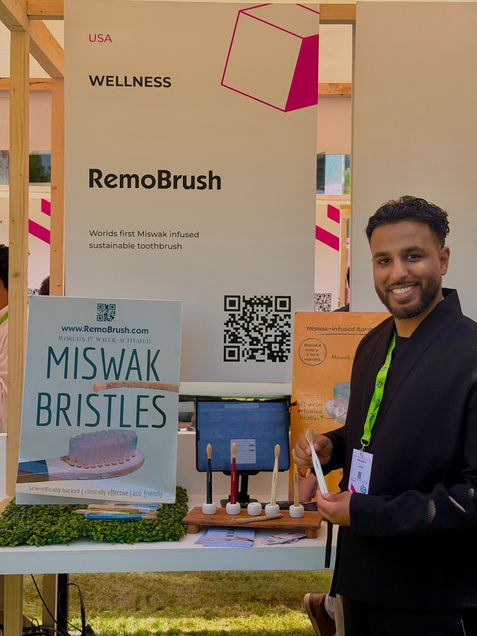 always had that kind of drive, but going in, starting a company, pitching it, and going to these startup communities has been amazing. I have a few investors who are very interested, but I’m trying to bootstrap as much as I can until I get to a certain number that I have in my head, and then kind of open it up for investments. It’s opened a lot of doors for me, for sure. They say your net worth is who you know, so it opened a lot of significant figures that can make a big difference. I’m just interviewing, meeting with people, and exploring and networking.
How does this work fit into your larger goals in dentistry?
When I was working at the Community Health Center and having that mini clinical instructor role, I didn’t realize how much I like academia as well. I love clinical dentistry a lot, and I love all sorts of dentistry, from doing implants to root canals to other restorative care, to also being able to apply it in a teaching role. As much as I’m trying to prioritize the company brand, I’m also prioritizing myself as a clinical dentist, and improving my skills so I can better patients as well. It’s a big role, and I’m constantly busy, but it’s fun.
Who are some of the mentors that stand out for you when thinking about your journey?
There are a lot. I guess a tip would be when you first start working as a dentist, the best people you should work with are people who want to invest in your skills. Early on, there was a doctor that I worked with in Manchester, New Hampshire. His name’s Dr. Foaud, and he works in Manchester Advanced Dental. He’s an exceptional dentist who is very good clinically, and a good teacher. I think he helped me grasp the overall care that you want to apply to your patients. There’s another dentist that I’ve worked with here since I moved to Virginia. Her name is Dr. Nada Elsadig. She is amazing with patient care. Just having that kind of environment where they’re investing in my skills has opened a lot of doors and had me thinking outside the box.
What advice would you give to a student entering GMS who might want to follow a similar path?
I would say OHS is going to prepare you very, very well to not only be able to succeed in dental school, but also beyond that. After speaking with a lot of students who went to the OHS program, the number one advice is you’re going to learn study habits. That will be key. A lot of students in dental school are going to try and figure out when to study, how to study, and how to prepare for these exams, and you’re already going to have that as a backbone. You’re going to be one step ahead in the game. You’ll feel more confident in dental school. Because you’re going to be feeling more confident, you’re going to have more time to volunteer, do more research, and be a very exceptional student.
In terms of career goals, because we’re dentists, we’re always having that business mindset. So, attend different conferences, speak with different dentists who are five, 10, or 15 years down the line, and just listen to their expertise and hear what they recommend. Find a mentor early on. That can help guide you through that track. That’s how you can open more doors and do things aside from just clinical dentistry that impact the oral care industry.
Is there anything else you’d like to share?
I would say going into the OHS program, or any program, make sure you have somebody who wants to invest in you as being a student (like Dr. Davies was for me). Know that when you’re going to be in Boston University OHS program, you’re not just going in there just to get a degree, but you’re going in there to establish yourself in a great university, get publications out, get a master’s degree, and grow overall as a well-rounded individual. So, aside from dentistry, you’re going to have all those kinds of benefits.