GMS Alumni Spotlight: Ana Vitantonio, PhD, ‘25
 Ana Vitantonio is a 2025 graduate of the PhD Program in Biomolecular Pharmacology at Boston University Chobanian & Avedisian School of Medicine. Her dissertation research in the lab of Professor of Anatomy & Neurobiology Douglas Rosene investigated how lifelong caloric restriction modulates brain aging.
Ana has accepted a postdoctoral position at the University of Barcelona in Spain, where she will be taking on research investigating brain cancer. Read more about Ana below!
Tell me a bit about your journey to Boston. What brought you to Boston University?
I came to Boston University in the Fall of 2020 to begin my PhD in Biomolecular Pharmacology. As I was finishing my B.S. in Neuroscience at the University of Pittsburgh, I was applying to graduate schools. Boston University was a top choice for me. I am originally from Philadelphia and while I was willing to go anywhere, I really like the Northeast and New England.
What drew you to your program at BU?
My philosophy when applying to graduate school was twofold: find a strong school with solid academic and industrial research opportunities, and to live in a city with good social opportunities… essentially, a place where I could see myself enjoying the next five or so years of my life. Boston is a beautiful city and offers a lot to do.
Boston also has a robust academic and pharmaceutical industry. Initially, when I applied to the Pharmacology PhD program at BU, I was set on working in industry. I specifically chose this program because of the industry relations we have. During the 4th year of my PhD, I had the opportunity to complete a summer internship at Biogen, which was a really important experience for me.
Did you always know you wanted to work in this field?
No, not at all! Growing up, I always wanted to be a teacher, though my interest in science didn’t come until I discovered the field of neuroscience. Initially, I was interested in psychiatric disorders, which is still a field I like to read about today. However, as an undergraduate, I become involved in a drosophila lab studying neurodegeneration, which shaped my research path from there.
Can you tell me about some of the work and/or research you completed in your program?
My thesis research was focused on investigating how lifelong caloric restriction modulates brain aging. In our model, subjects had undergone either 20+ years of a control or 30% calorie restricted diet. Using brain tissue from these subjects, we analyzed how the molecular profiles of brain cells differ in aging following decades of reduced caloric intake.
Our findings demonstrate that brain cells are protected from age-related alterations in metabolism and inflammation in response to long term calorie restriction (CR). Our data provides evidence that long-term CR supports the cellular integrity of oligodendrocytes and microglia (types of brain cells) potentially protecting neural signaling and cognitive processing during aging. This work is novel in that it is one of the first studies to investigate the effects of lifelong CR in a long-lived species to determine if the diet has detectable differences on individual profiles of aging brain cells. These results are published in Aging Cell and Neurobiology of Aging.
How did your work in the program fit into your larger goals in your field?
My overarching research goals have always been to make meaningful contributions to the biomedical field. My goal has been to uncover more about the brain, how it functions, and how these functions are altered by age and other factors.
BU has allowed me to accomplish these goals by fostering a collaborative research environment with strong resources. During my time as a PhD student conducting mostly cellular and molecular work, I had the opportunity to collaborate with biomedical engineers, bioinformaticians, clinical research specialists, and government research agencies like the National Institute on Aging. Having the resources to connect with scientists from a variety of disciplines has allowed me to publish quality work within my field to uncover more about how diet and metabolism influences brain aging.
In addition, working as a tutor and teaching assistant during my first few years at BU helped me develop my teaching skills. In the 4th year of my PhD, I began teaching at UMass Boston. This was the first time I developed curriculum and led a course independently. It was challenging, but hearing positive feedback from my students at the end of the semester made it extremely worth it.
The opportunities I had at BU allowed me not only to make meaningful research contributions, but also to develop the skills needed to propagate scientific knowledge with younger students.
What were some of your favorite memories during your time at BU?
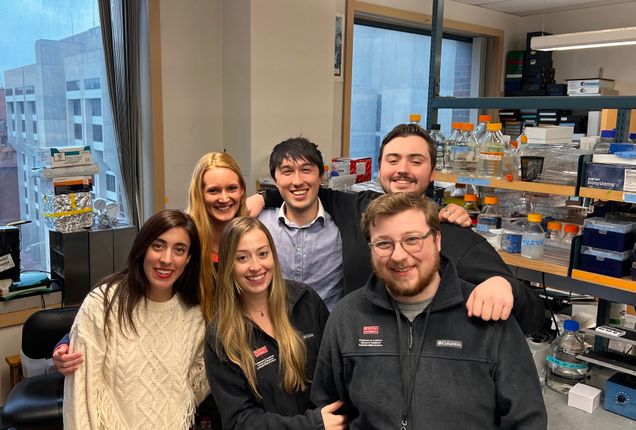
The best memories by far have been those shared with my lab members. Some of my favorite memories include going for drinks after work, holiday parties, and graduate student formals. My lab mates have become my support system and seeing them every day through the highs and lows of the PhD have fostered a bond I will never forget.
From an intellectual perspective, my favorite memories came from discussions about results and experiments with a multidisciplinary team. A large portion of my thesis utilized single-cell sequencing to assess changes in brain cells during aging. Alongside a mentor of mine, Christina Dimovasili, I worked closely with the Data Science Core here at BU. Dr. Chao Zhang, his team, and our group met weekly to interpret results and plan future analyses. Brainstorming with our team ranging from graduate students to senior PIs was genuinely so fun and stimulating. It felt like the real-world application of the training we completed in our classes.
Are there any mentors who helped you with getting to this point?
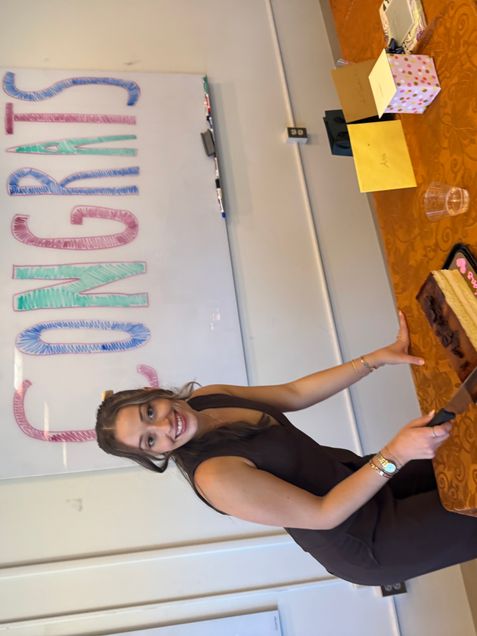
Yes, absolutely. My PhD advisor, Douglas Rosene, is a very experienced researcher at Boston University. Doug has always encouraged me to be creative, ask questions, and to enjoy science. Following almost every meeting with Doug, I always left our conversation feeling more confident in myself, inspired, and motivated to do science, which I think is not as common as it should be. His encouragement really set me up for success as a young researcher.
While Doug taught me how to think, ask questions, and always served as the voice of reason in times of self-doubt, another mentor of mine is Christina Dimovasili. Christina taught me everything I know about carrying out science from the bench to publication. Whether it be designing experiments, performing calculations, interpreting results, or finding a way to “tell the story”, Christina has shared her wisdom and knowledge to help me become a more independent researcher.
What advice would you give to a GMS student following a similar path?
My best advice for a student following in a similar path would be to work hard and hold yourself accountable, but also remember to have fun, be kind to yourself, and enjoy the process! It can be tempting to compare your progress to others but it won’t serve you in the long run. We’re all on our own path and the pace looks different for everyone.
What do you like to do around Boston for fun?
I enjoy eating around Boston. My husband is a chef so we like to try new restaurants and cuisines. I love going to cafes to read and relax. Trident Booksellers is one of my favorite cafes in Boston and a great place to grab a coffee and get some writing done. Highly recommend. I also love exercising and do cycle and sculpt classes weekly. Moving my body, even for an hour, really helps quiet my mind especially during a busy week.
Is there anything else you’d like to share?
Boston University has truly been a great launching pad for me. The next step in my journey is a postdoctoral position at the University of Barcelona in Spain, where I will be shifting gears to work on a project investigating brain cancer. Science is an international language, and having the opportunity to move to another country to continue doing research while traveling and integrating into another culture is a privilege that I am really looking forward to.