Charting a Course for Continuous Improvement
Medical Education
Charting a Course for Continuous Improvement
Inaugural Learning Environment Summit Commits to Accountability, Measurable Change
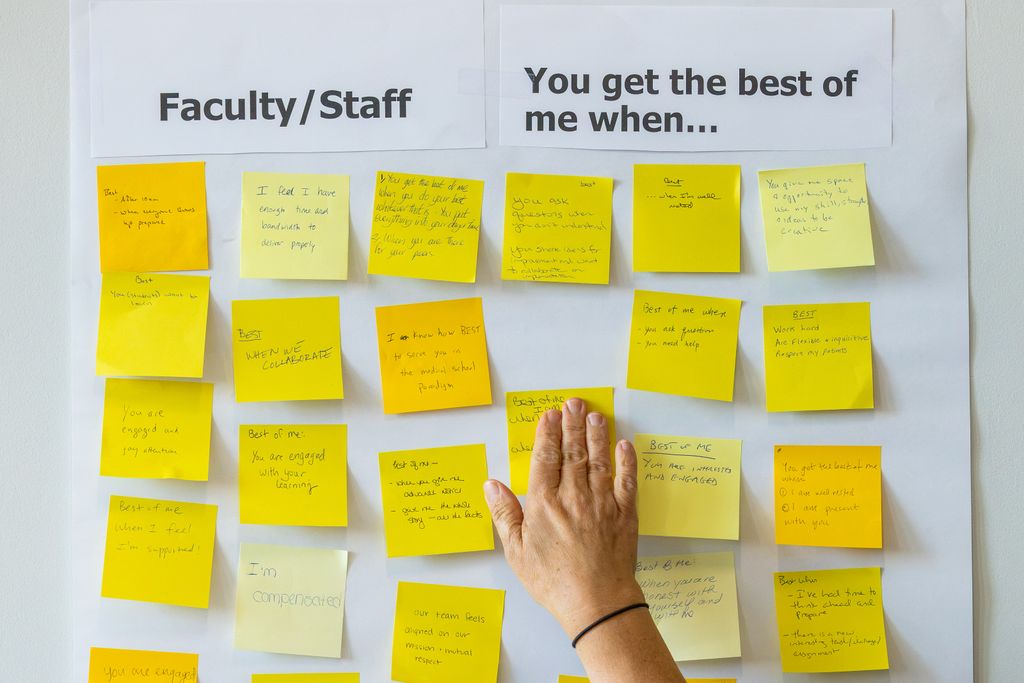
At the inaugural Learning Environment Summit students, faculty, staff and members of Boston Medical Center’s leadership team came together to discuss ways to increase collaboration and communication, participated in interactive case discussions and reviewed data on reports of unprofessional behavior.
“(The summit) reflects our shared responsibility to create the best possible learning environment for our medical students,” said Hee-Young Park, PhD, dean ad interim, at the event held in Hiebert Lounge on July 31.
The idea of a summit focused on ensuring appropriate, respectful treatment across all roles, disciplines and training levels originated with Associate Dean of Student Affairs Angela Jackson, MD, and Associate Dean of Medical Education Priya Garg, MD.
Jackson framed the meeting as an opportunity to create a sustainable, high-performing, learning environment grounded in treating everyone with fairness, respect, and with shared, clearly communicated goals.
Facilitated by Ken Freeman, MBA, dean emeritus and professor of the practice, Questrom School of Business, it included a review of the data and a mix of short talks and roundtable discussions of various topics and scenarios with the goal of creating an action plan resulting in meaningful, measurable change. Each table included a cross-section of students, faculty and staff.
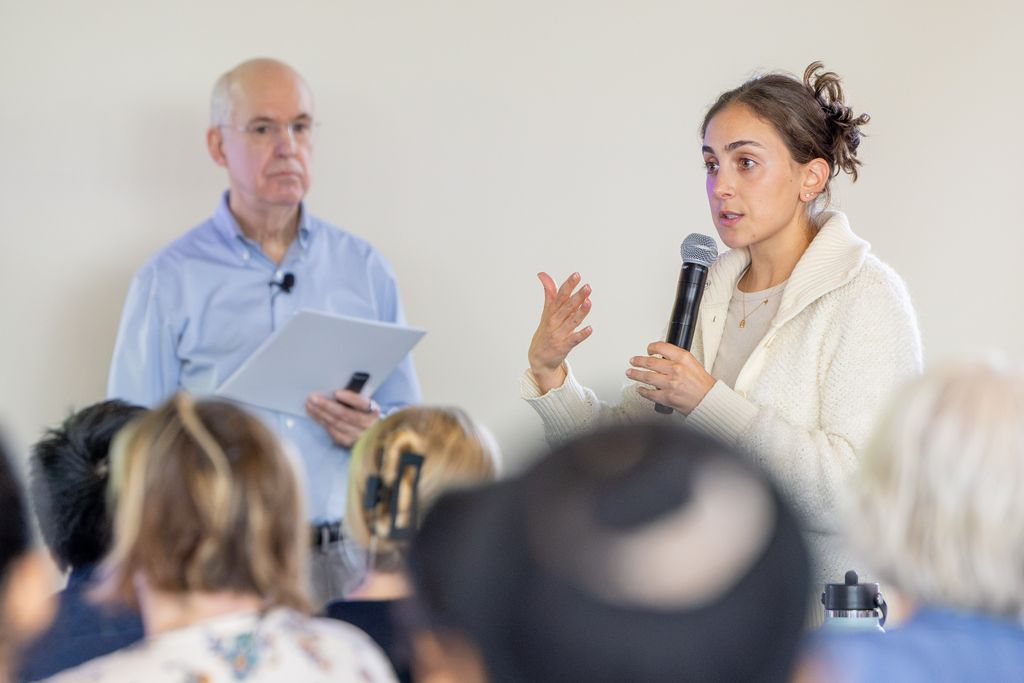
“We’re all here to further science, to care for the patients, to learn. We want to do that together, and we want folks to be excited about coming here, working here, studying here – feeling like you’re coming home when you come to work, or come to school,” she told the attendees.
Garg summarized the four major data sources the university uses to assess the learning environment. Fourth-year medical students fill out a graduate survey, which includes questions on mistreatment and the instructional atmosphere. The school also collects professionalism data, soliciting input from students on their educational experience in courses and clerkships and their assessment of professional and unprofessional supervisors and experiences. Learning environment sessions also are held for third-year students in every clerkship block, and students and residents also are able to file anonymous reports on the school website.
One concern is that for the last eight years, Garg said, BU medical students on the graduate questionnaire have reported feeling publicly embarrassed and humiliated at rates higher than the national average.

But Garg also noted a positive trend, with a 40% drop in reports of unprofessional behavior by faculty from 2023 to 2026.
“Last year we had 3,553 positive professional comments submitted by students vs. 140 comments of unprofessional behavior,” said Garg. “That’s 25 times the number of professional over unprofessional comments, but I think we would all say that even 140 unprofessional comments are not acceptable.”
“We should recognize what the data affirms; that many faculty and staff are consistently seen as models of positive professionalism,” Park said.
Brent Leung, a third-year medical student and past president of Student Committee on Medical School Affairs (SCOMSA), the student organization representing MD and MD/PhD students, said his experience generally has been positive.
“But there’s always room for improvement, and I’m very grateful that we have a (forum) now to share our perspective, to talk about these things,” he said.
Park pledged to making the summit an annual event, to act on recommendations that emerged from the summit and to “build a community where every learner can thrive.”
I’m committed to continuous improvement. Not by words, but by actions.
Hee-Young Park, PhD
“I’m committed to continuous improvement. Not by words, but by actions,” said Park.
“I’m coming away (from the summit) very optimistic that when you get together for the second annual summit, you’re going to see progress, you’re going to see excitement, and you’re going to want to go even further,” said Freeman in his closing remarks.