Skip to Main Content
Boston University Chobanian & Avedisian School of Medicine
Search

  • Admissions
  • Education
  • Research
  • Giving
  • Emergency
Search
  • Current Students
  • Faculty
  • Staff
  • Alumni
  • Parents
  • Donors
  • About
    • Frontline Medicine
    • By The Numbers
    • Organizational Chart
    • BUMC HR Resources
    • History
    • Clinical Affiliations
    • Basic & Clinical Sciences
    • Faculty Directory
    • Alumni Medical Library
  • Education
    • PhD Education
    • MD Education
    • Master’s Degree Education
    • Dual Degree Programs & Certificates
    • Center for Continuing Education
  • Admissions
    • Why Chobanian & Avedisian School of Medicine?
    • Apply for MD Program
    • Apply for PhD Program
    • Apply for Master’s Program
  • Student Affairs
    • MD Student Affairs
    • GMS Student Affairs Resources
  • Giving
    • Why Give?
    • Who Gives?
    • What Can I Give?
    • Where Can I Give?
    • What Can I Attend?
    • How Can I Give?
    • Contact the Advancement Office
    • Parents Community
    • Donor Resources
  • Research
    • Academic Research Collaboration Message Board
    • Cores, Facilities & Services
    • Find Funding
    • Centers & Institutes
    • Human Subject Research
    • Resources
    • Research Job Openings
  • Offices & Services
    • Office of the Dean
    • Faculty Affairs Office
    • MD Program Offices
    • Master’s & PhD Program Offices
    • Alumni Office
    • Advancement Office
    • Louis W. Sullivan Center
    • Communications Office
    • Events Office
  • News & Events
    • News Archive
    • Calendar

Frontline Medicine & Science

  • EditorialEditorial Deems Empowering Neurologists and Neurology Trainees to Perform Lumbar Punctures at Bedside a Worthwhile Goal
  • AlumniAnnual Alumni Awards Luncheon Honors Physicians, Researchers and Educators
  • Awards & HonorsLisa Shen, MD, Named Distinguished Faculty of the Month for October
View News & Events

Magazine

Cover of the Summer/Fall 2026 issue of Boston University medicineSummer/Fall 2026Boston University Medicine

Hui Feng, MD, PhD, Awarded NIH Grant to Further the Understanding of Neuroblastoma

Child sitting on a medical bed, smiling.

Photo by National Cancer Institute on Unsplash

NIH Grant

Hui Feng, MD, PhD, Awarded NIH Grant to Further the Understanding of Neuroblastoma

January 6, 2025
Twitter Facebook

Hui Feng, MD, PhD, associate professor of pharmacology, physiology & biophysics and medicine, has received an RO1 grant from the National Institutes of Health’s National Institute of Neurological Disorders and Stroke. The five-year, $3.1M award will support the project, “Mechanisms of Immunosuppression in MYCN-driven Neuroblastoma.” Feng will team with Derin Keskin, PhD, from the Dana-Farber Cancer Institute, on this study.

MYCN is a gene that is critical for the development of tissues and organs, particularly those in the neural system. A member of the MYC family of oncogenes, MYCN can cause normal cells to become cancerous when in excessive. Enhanced MYCN activity drives the initiation, progression, and treatment resistance of multiple solid tumors, especially those arising from the brain, the spinal cord, or neural crest. Neuroblastoma, derived from the peripheral sympathetic ganglia, accounts for the second leading cause of deaths among children with solid tumors.
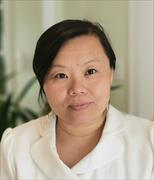
Head and shoulders shot of Hui Feng
Hui Feng

“MYCN-driven high-risk neuroblastoma harbors an immunosuppressive tumor microenvironment (TME), characterized by few cytotoxic lymphocytes and poor responses to immunotherapy.  Despite intensive efforts, the mechanisms through which MYCN promotes an immunosuppressive TME remain incompletely understood and strategies to overcome this challenge are lacking,” explains Feng, who also directs the Laboratory of Zebrafish Genetics and Cancer Therapeutics at the school.

Feng and her collaborators recently reported that MYCN-driven neuroblastoma increases the secretion of CKLF1, a chemokine-like factor (CKLF) isoform, inducing immunosuppression and tumor aggressiveness. Analyses of primary neuroblastoma samples demonstrated a strong connection between MYCN, CKLF and poor patient prognosis.  The zebrafish model of MYCN-driven neuroblastoma simulates the immune system and tumor development in children and resembles human high-risk disease. Using the unique imaging and genetic capacities of the zebrafish neuroblastoma model together with analyses of patient samples, Feng will investigate the ability of inhibiting tumor-secreted CKLF1 to alleviate immunosuppression and thus enhance immunotherapy responses.

Feng’s research interests focus on identifying novel genes and pathways that are essential for MYC-mediated tumor transformation and progression, particularly for lymphoma/leukemia, neuroblastoma and breast cancer. Her long-term research goal is to discover novel molecular therapies to target critical components of MYC-driven oncogenic pathways, thus providing treatment alternatives that are more specific and less toxic.

Explore Related Topics:

  • Cancer
  • grant award
  • NIH Grant
  • research
  • Share this story

Share

Hui Feng, MD, PhD, Awarded NIH Grant to Further the Understanding of Neuroblastoma

72 East Concord St.
Boston, MA 02118
Contact & Directions
Boston University Chobanian & Avedisian School of Medicine
  • Instagram
  • LinkedIn
  • Facebook
  • X

We are Frontline Medicine & Science.

Every day, we learn, conduct research, care, teach, discover, and pioneer in places not everyone goes: the classrooms at the frontline of medicine & science.

  • Medical Campus
  • Search
  • Directory
  • Contact
Boston University
  • © 2026 Trustees of Boston University
  • Privacy Statement
  • Accessibility
  • DMCA
© 2026 Boston University. All rights reserved. www.bu.edu
Boston University Masterplate