Immersion Training Helps New Chief Residents Diagnose, Treat, and Teach About Addiction
Denny DesRosiers pulled up in front of the Wylie Inn and Conference Center and threw open the rear doors of his van, revealing what could easily be mistaken for a tradesman’s wall of shelves and bins. But these containers were not filled with pipe clamps or nuts and bolts.
Standing at the open doors, Kiara Taquechel, MD, took a heroin “cooker” from DesRosiers, a harm reduction specialist for Healthy Streets Outreach Program providing HIV/AIDS prevention and overdose prevention services to North Shore residents with active substance use, and their families. The cooker, used to dissolve powdered or solid drugs into an injectable solution, looked like a votive candle tin; Taquechel listened as DesRosiers explained that it wasn’t perfect—people could burn their fingers using it—but it was more sanitary than using bottlecaps or other things found on the street.
“We meet people where they’re at. We do everything from blood draws to wound care out of the van. We give out supplies, anything from injection, smoke, to sniff supplies,” said DesRosiers. “We’re not doctors, but we try to take care of people the best we can.”
Of course, Taquechel is a doctor, a newly selected chief resident in internal medicine at Beth Israel Deaconess Hospital in Boston. Along with 23 other incoming chief residents and three faculty mentors from all over the US, they were getting firsthand experience talking to those with substance use disorders, combined with lectures, attending mutual support meetings (Alcoholics Anonymous) and skills training, at the 25th Annual Chief Resident Immersion Training (CRIT) in Addiction Medicine, held May 4–6 on the campus of Endicott College in Beverly, Massachusetts. The Fellow Immersion Training program for clinical subspecialty fellows and the CARE Faculty Scholars program for residency program faculty also were held at the same time, with nine fellows and 12 faculty scholars participating.
CRIT began in 2002, led by Jeffrey Samet, MD, MA, MPH, professor of medicine, and Daniel Alford, MD, MPH, professor of medicine and associate dean of the Center for Continuing Education at BU’s Chobanian & Avedisian School of Medicine. With faculty drawn mainly from Boston Medical Center (BMC) and BU’s medical school, it is funded by the NIH/National Institute on Drug Abuse.
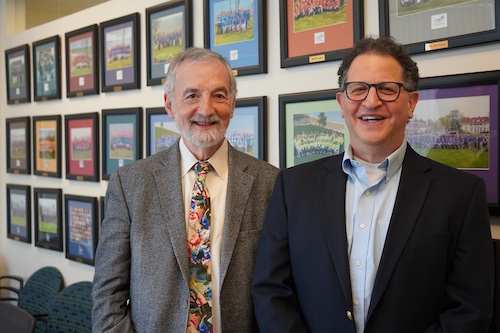 CRIT founders Jeffrey Samet, MD, and Daniel Alford, MD, standing in front of photos of 25 years of participants.
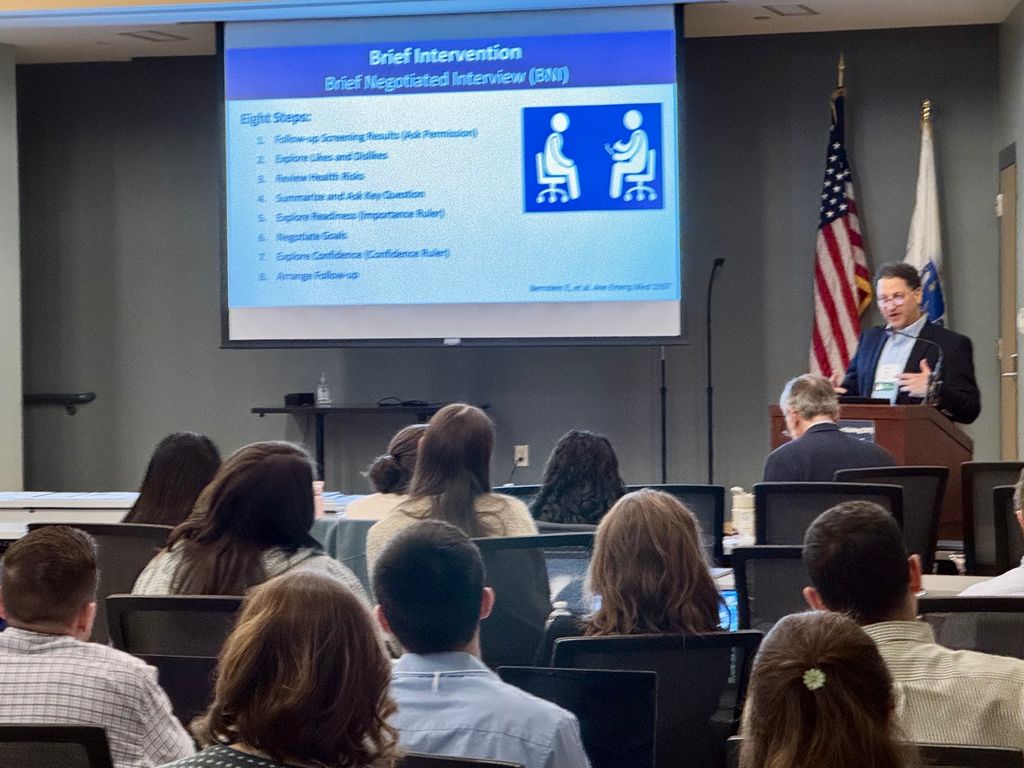 CRIT founders Jeffrey Samet, MD, and Daniel Alford, MD, standing in front of photos of 25 years of participants.
“I joined the faculty at BU in ’89, and I was interested in addiction and HIV, but there weren’t too many of my colleagues with those interests,” said Samet. “Our CRIT program has proven to be highly effective in teaching the teachers creative approaches for elevating physicians’ care of patients with alcohol and drug problems. The path is steep and long, but rewards are very satisfying—for patients, physicians, and faculty.”
“I was a chief resident and new faculty member at BU in ’96 when Jeffrey introduced me to the field of addiction medicine and the need for educating others about this important area of clinical care,” said Alford. The two decided to focus on training incoming chief residents, who are selected as outstanding clinician educators by their residency program directors, to spend a year training residents and medical students.
“It’s a clever, inspirational idea of how to be really creative in a system that’s often not very creative,” said Taquechel.
“Some of the most innovative and creative things come out of the communities that face the most stigma and adversity. People find a way to do their best to meet the needs of the people they’re trying to take care of.”
Over the past 25 years, nearly 600 chief residents have participated in CRIT, as well as 165 of their faculty mentors, hailing from more than 250 residency programs and nearly 40 states.
“We have physicians [attending the training] who are pretty well-versed in addiction medicine, but want to learn more; and then we have folks who come from areas where there are very few addiction medicine champions and they’re here to try to be one of the emerging champions at their institution,” said CRIT faculty member Hallie Rozansky, MD, assistant professor of medicine, associate director for the BMC Internal Medicine Residency Program and a CRIT alumna from 2020.
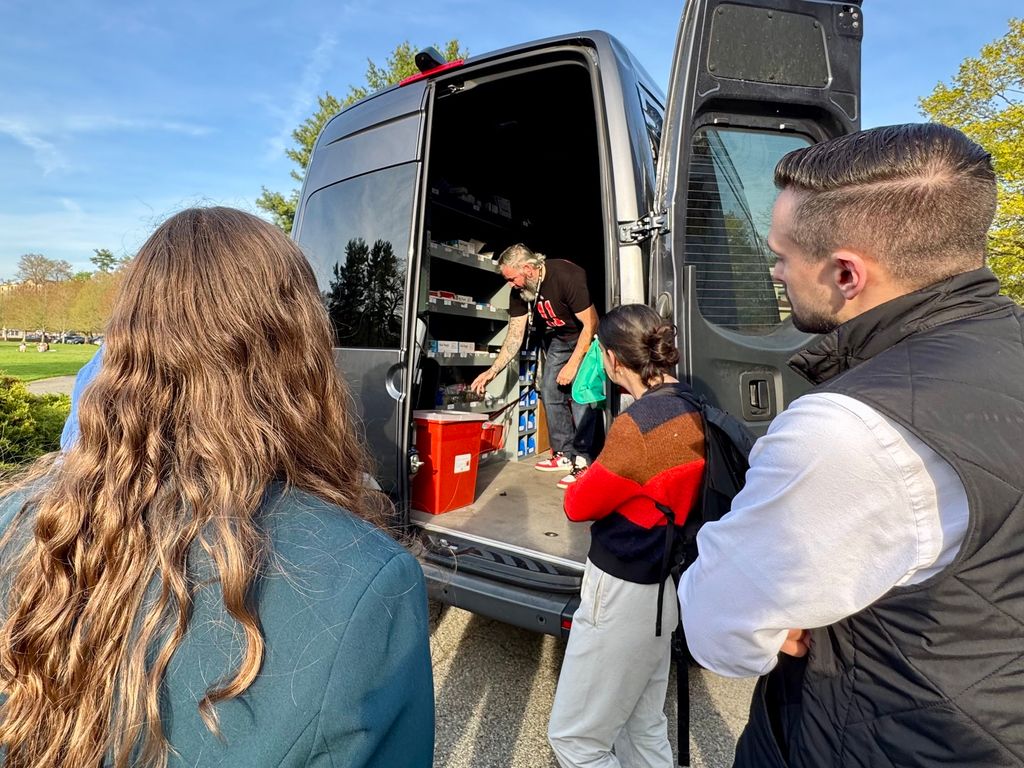 DesRosiers, a harm reduction specialist for the Healthy Street Program, explains the outreach project to chief residents.
“I’ve always had an interest in addiction medicine, but no formal training,” said Kellner Pruett, MD, who works at Cone Health Family Medicine in Greensboro, North Carolina, and was attending CRIT as a CARE (Clinical Addiction Research and Education) Faculty Scholar.
The main “deliverable” coming out of the immersion training is a project proposed by each participant as a prerequisite for admission, and refined over the three-day program, that will enhance addiction training for their residents and medical students.
“One of [Cone Health’s] biggest needs was an addiction medicine curriculum,” said Pruett, and her project for the training program reflected that.
“We’re instituting a protocol for opioid use disorder (OUD) screenings so that when someone screens positive for OUD, we’ll have a plan in place for the residents to know the medicines to prescribe, where to send patients, and what community resources are available.”
“I think it’s important for us to show what we’re able to do in Boston and Massachusetts, but it’s equally as important for us to hear how people are doing what they can do where they live,” said Alexander Walley, MD, MSc, professor of medicine, who was a CRIT participant as a chief resident in 2003, and is now the program’s co-principal investigator with Samet.
“Some of the most innovative and creative things come out of the communities that face the most stigma and adversity. People find a way to do their best to meet the needs of the people they’re trying to take care of,” he said.
CRIT faculty member Jessica Calihan, MD, also is a 2020 alumna. She recalled working as a medicine-pediatrics resident at Johns Hopkins Hospital in Baltimore, Maryland, when her chief resident returned from CRIT with a project that changed how they treated patients with substance use disorders.
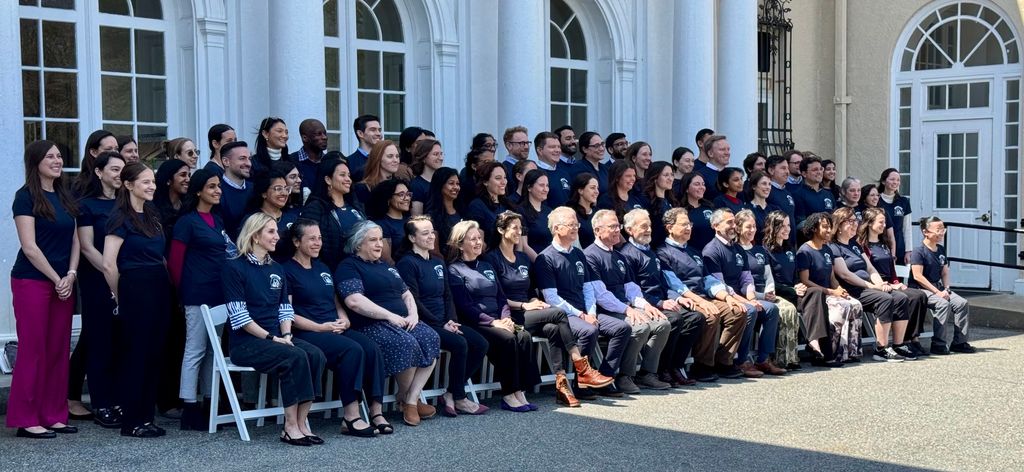 Participants at the 25th Annual Chief Resident Immersion Training pose for group shot at Endicott College’s Wylie Inn and Conference Center.
“It was really transformative,” said Calihan, now a pediatrician at Massachusetts General Hospital specializing in adolescent and addiction medicine and an instructor at Harvard Medical School. “I think it is so helpful for people to come and learn from experts, and then bring it home to their institution, where there may not be the expertise that exists in a place like Boston Medical Center.”
“We are [at BMC] to take care of some of the most medically and socially complex patients, and we love that, we get joy from it, are really good at it,” said Rozansky.
For her project, Taquechel focused on a curriculum for residents on how to manage opioid withdrawal in the hospital that included learning-based lectures and interactive case-based workshops with expert consultants. Reviews of her project by CRIT faculty prompted Taquechel to focus on how to ensure her program continued after her year as chief resident was completed. She decided to create a teaching guide, record the training process, and publish training materials online for future chief residents to use.
“I was struck by the generosity of the [CRIT] faculty,” said Taquechel. “They shared their materials with us; they shared their time. The goal is education without ego, and I’m really grateful for that.”
New chief resident of emergency medicine at Rutgers’ University Hospital in Newark, New Jersey, Nicholas Imperato, MD, said around one-quarter of their patients have substance use issues. Even so, the CRIT training was an eye-opener.
“I was struck by the generosity of the [CRIT] faculty. They shared their materials with us; they shared their time. The goal is education without ego, and I’m really grateful for that.”
“There were so many different topics, areas of research and treatments and resources,” Imperato said. “Even though we see a lot of patients with alcohol- and opioid-related complications, there are so many other resources and treatments I wasn’t aware of that we can offer patients dealing with substance use.”
“When you’re dealing with patients who have these issues, it’s empowering to know how to address them and how to treat them, what resources are available,” said Chelsea Palmer, MD, a new internal medicine chief resident working at University of Utah Health. “I came here to get training in how to teach an addiction medicine curriculum to our interns, but also to be able to provide treatment for my patients.”
According to a recent Massachusetts General Hospital Research Recovery Institute study, one in five people with substance use disorders discharged from emergency rooms returned within 30 days. Recidivism can be discouraging, even for a seasoned care provider, and CRIT exposed participants to new approaches and innovative programs.
“This is a very challenging patient population to work with, but it was very encouraging for me to see that the system can work, the medications can work, our training can work, even if it doesn’t always feel that way on a daily basis,” said Rutgers’ University Hospital emergency medicine physician Anita Mudan, MD. She came to CRIT with Imperato as his faculty mentor working on their project to integrate more addiction medicine training into the first-year EM residents’ addiction medicine rotation through an online course on substance use disorders that residents can work on in their downtime.
Lectures and skills practice are valuable, Taquechel said, but what she found particularly enriching were the first-person interactions—including the Healthy Streets van, the recovery support meetings, and other opportunities CRIT provided—that offered direct engagement with people with substance use problems. She also appreciated the knowledge and compassion CRIT faculty brought to their work.
“I left this week feeling invigorated as CRIT crystallized how education can be a powerful advocacy tool,” said Taquechel. “I’m returning home excited to strengthen our addiction curriculum with the goal that every patient, no matter where they are in their journey, is met with dignity, compassion, and thoughtful care.”