Research news
Mentor Spotlight: Jeffrey Siracuse, MD, MBA

Jeffrey Siracuse, MD, MBA, is Chief of the Division of Vascular and Endovascular Surgery and Associate Chair of Surgery for Quality and Patient Safety at Boston Medical Center and a Professor of Surgery and Radiology at Boston University's Chobanian and Avedisian School of Medicine.
Dr. Siracuse joined the BU/BMC faculty in July 2014 after completing his surgery residency at Beth Israel Deaconess, a vascular research fellowship at the Harvard-Longwood Research Training Program, and a clinical fellowship at New York-Presbyterian Hospital. His work focuses on clinical outcomes, safety, and quality improvement in vascular and endovascular surgery, primarily using large multi-center registries.
While at BU, he has had numerous medical student work with him on an institutional, regional, and national dataset projects. This includes Thomas McNamara, a recent CAMED graduate, who worked on how social determinants of health affect patients with peripheral arterial disease. Anish Patel studied penetrating neck trauma with vascular injury. Kyle Bui analyzed amputation outcomes in octogenarians. More recently, Wei Ni Zhou and Cynthia Huang were MSSRP students, funded by the Department of Surgery, who analyzed outcomes of conservative treatment of intermittent claudication and upper extremity bypass. With a few examples, he has a long history of student presentations and publications. All of these students have presented at national meetings and have published, or are in the process of publishing, first-author manuscripts.
Dr. Siracuse on mentorship: Mentorship means providing unwavering long-term support and creating clear structural pathways for a student's professional growth, critical thinking, and eventual career placement. Success is ultimately judged by how they perform and how they mentor the next generation themselves. He often advises his mentees to set early goals, make sure you make the academic time, and establish a consistent routine. Productivity in surgical research relies on structure and consistency. The best ideas are the ones that come up as day-to-day challenges.
Student Spotlight: Cynthia Huang, M3

Through this research experience, Cynthia has gained valuable insights into her own capabilities and professional growth. Most significantly, she has discovered her capacity to venture into unfamiliar research territory, contribute meaningfully to ongoing work, and work on a project through to national conference presentation and journal submission. In the process, she developed persistence in tackling complex, data-limited topics while still producing meaningful results. Yet perhaps her most important realization is recognizing that she thrives when curiosity drives her work, and that she finds the most growth in collaborative, mentorship-rich environments, precisely like the one she cultivated with Dr. Siracuse and Dr. Alonso.
Congratulations to Carolyn L. Kuckein Student Research Fellowship Recipient, Aiman Altaf, M3

Congratulations to Aiman Altaf, one of the 2026 recipients of the 2026 Carolyn L. Kuckein Student Research Fellowship! Her project, mentored by Dr. Charlene Ong, aims to evaluate the association between quantitative eye movements and neurologic outcomes in patients who experience coma after cardiac arrest. The goal is to establish a biomarker that can enhance the ability to predict neurologic outcomes, helping families and clinicians make more informed decisions about patient care.
Before medical school, Aiman spent several years doing wet lab research in neurology, but wanted to pursue research that was more directly applicable in a clinical setting. After attending a talk by Dr. Ong about a previous medical student's project which developed the machine learning algorithm that uses EOG to quantify eye movements, Aiman was struck by the novelty and clinical relevance of this work. Cardiac arrest often results in prolonged coma, and existing prognostic frameworks are limited in their ability to distinguish between patients who will recover and those who will not. This uncertainty makes decision-making challenging for clinicians and families. By demonstrating that EOG-derived eye movements are associated with outcomes, and that they can enhance existing prognostic frameworks, this work has the potential to establish a practical biomarker for early prediction of neurologic recovery. When Aiman reached out to Dr. Ong hoping to get involved, her current project became an opportunity to contribute to more objective, data-driven approaches to neuroprognostication.
Through her research experience, Aiman has learned that not having a formal background in a particular field should not be a barrier to getting involved in that work. She was initially worried that her lack of experience in data science would limit her ability to contribute to the team, but being curious and persistent helped me find meaningful ways to drive progress. This experience pushed me to step outside her comfort zone and learn new skills that will be helpful in future work too.
This year, Aiman presenter a co-authored (Anika Reza) poster at the Kase BU Neurology Research Symposium in March 2026, and she presented a poster at the American Academy of Neurology Annual Meeting in Chicago in April 2026.
Congratulations to Sarnoff Research Fellowship Recipient, Camille Shantz

Congratulations to Camille Shantz on her placement at Stanford University as a Sarnoff Fellow, supported by the Sarnoff Cardiovascalar Research Foundation! While at Stanford, she will join the Marsden Lab, primarily working with Dr. Alexander Kaiser. Camille will work in a translational research lab that uses computational modeling to study blood flow in the cardiovascular system and address problems clinically relevant to congenital heart surgeons. Blood flow involves complex forces like pressure and turbulence that influence how the heart, blood vessels, and valves function over time. By simulating these dynamics, we can better understand disease progression and support more precise, patient-specific treatments.
In joining Dr. Kaiser's Cardiovascular Biomechanics Computation Lab at Stanford University, Camille will also be mentored by postdoctoral scholar Dr. Karoline Marie Bornemann, and they will work closely with Dr. Michael Ma’s congenital heart surgery lab. Camille is also being supported by her Sarnoff Foundation Fellowship advisor, Dr. Karol Watson at UCLA, and her sponsor at Boston University, Dr. Ellen Cooper.
Camille's interest in this field stems from a longstanding love of math and problem-solving. As she became involved in medical research, she found that same intellectual satisfaction in studying cardiovascular physiology, particularly in understanding the mechanisms underlying disease to optimize treatment. During her early research at the Center for Fetal Therapy at Johns Hopkins, Camille was introduced to the complexity of diagnosing heart disease before birth through prenatal echocardiography. She later worked with congenital heart surgeon Danielle Gottlieb Sen on a project using computational fluid dynamics to study how pulmonary valve replacement angle in Tetralogy of Fallot may impact long-term durability. Through this experience, she saw how mathematical modeling could directly inform clinical care, solidifying my interest in this work.
Through her research, she has developed a deeper appreciation for the complexity of congenital heart disease. She reflects on how, despite advances in pediatric cardiac surgery that have extended patient survival into adulthood, many individuals still face evolving cardiovascular challenges. Her work with computational modeling has shown her the potential of these tools to illuminate each patient's unique physiological profile and guide more targeted interventions. She looks toward a future where such technology becomes integral to clinical decision-making and treatment planning.
Student Spotlight: Sabrina Mellinghoff, M3

Sabrina Mellinghoff, M3 and 2025 MSSRP Scholar presented her poster titled “Neighborhood Concetrated Disadvantage and Risk Recurence in a Nationwide Student of US Black Women” at American Association of Cancer Research in San Diego in April.
Under the mentorship of Dr. Mollie Barnard and Dr. Julie Palmer, her research investigates breast cancer recurrence in the Black Women's Health Study and so far has studied the association between neighborhood disadvantage and risk of recurrence. The first stage of this work involved conducting a comprehensive review to identify which of the 3,000+ study participants who developed primary breast cancer experienced a subsequent recurrence. Now, Sabrina and her team are able to pose questions and apply exposures such as an index of neighborhood disadvantage to the cohort and study their associations with risk of recurrence.
Student Spotlight: Gabrielle Ruban, M2
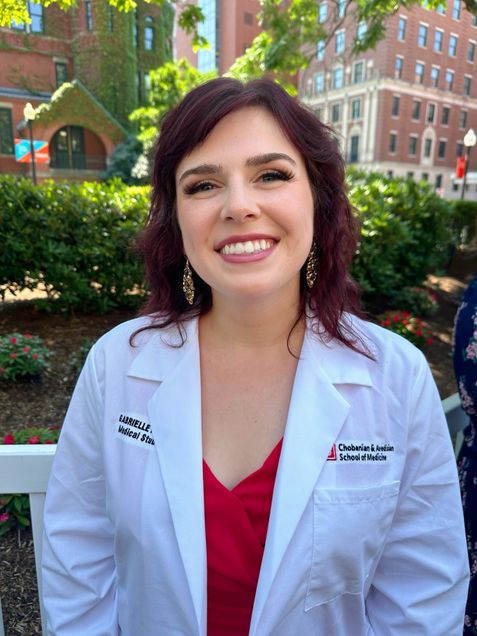 Gabrielle Ruban is a current M2 student, 2025 MSSRP/LEADS researcher, and CARE student. Under the mentorship of Dr. Karsten Lunze, she has been working on two projects that are based in Eastern Europe. Her main individual project is within the SCRIPT (Stigma Coping to Reduce HIV Risks and Improve Substance Use Prevention and Treatment) study, which is based in Russia, while the other project Gabrielle has contributed to is the Ukraine-based SUPRA (Substance Use Prevention for Recently Displaced Adults) study.
Based on data from a trial conducted in Russia, the SCRIPT (Stigma Coping to Reduce HIV Risks and Improve substance use Prevention and Treatment) study’s initial goal was to assess Acceptance and Commitment approaches as a possible intervention for people living with HIV who inject drugs, with the goal of addressing the consequences of internalized intersectional stigma related to HIV status and substance use. The aim of her main project within the SCRIPT study is to investigate whether intersectional stigma moderates the hypothesized association between exposure to intimate partner violence (IPV) and poorer health-related quality of life (HRQoL) outcomes among HIV-positive people who inject drugs in Russia. Critically, the associations between IPV and HRQoL as well as intersectional stigma have not been well explored in this population. This knowledge gap especially applies to Russia, where injection drug use, HIV incidence, and IPV exposure remain exceptionally high and often co-occur. No published studies have examined whether intersectional stigma moderates the link between intimate partner violence exposure and worse health-related quality of life outcomes in people with HIV who use drugs. In this relationship, stigma may intensify the consequences of IPV, such as by promoting shame, low self-worth, worsening mental health symptoms, and disengagement or avoidance of healthcare. Stigma might also be associated with declines across various domains of HRQoL.
The SUPRA survey, in contrast, was conducted in Ukraine and involved qualitative exploration of substance use patterns among individuals internally displaced by Russia’s war in Ukraine, with the ultimate goal of developing an intervention based on Acceptance and Commitment approaches to reduce substance use among individuals affected by this humanitarian crisis. Gabrielle's involvement in the SUPRA study has expanded her qualitative research skillset, which was a goal she explicitly outlined as wanting to achieve during her time in medical school, given that she exclusively has had quantitative research experiences up until this point. Since joining the SUPRA team last fall, Gabrielle has used her Russian and Ukrainian language skills to help translate the interview notes to English, as well as contributed to the development and execution of the rapid qualitative analysis plan. This process enables us to systematically analyze the free listing interviews to capture key substances used during the active war in Ukraine, along with their alternative names, forms, modes of use, the populations most likely to use them, and their consequences at both individual and societal levels.
For the SCRIPT-based study, Gabrielle's primary mentor has been Dr. Karsten Lunze, who is also the principal investigator of the study. During the development of the research question and analytic plan, and also received guidance from several experts, including Emily Sisson (Senior Director of Research Operations) and Dr. Jin Wei (Biostatistics) for statistical input as well as Dr. Jeffrey Samet (General Internal Medicine) for his expertise in substance use treatment among international populations with HIV, including those in Russia and Ukraine. For the SUPRA study, Gabrielle's been mentored primarily by Dr. Lunze, as well as Dr. Claire Green, Assistant Professor of Population and Family Health at Columbia University Mailman School of Public Health.
As the daughter of two Ukrainian immigrants, Gabrielle has been deeply shaped by her Eastern European heritage, culturally and linguistically. In addition to her heritage, her experiences in crisis counseling, harm reduction outreach, and addiction medicine education during the pandemic and prior to medical school sparked her interest in understanding how trauma and social determinants impact care engagement as well as confirmed her decision to pursue a career in medicine. She became particularly interested in how socioenvironmental exposures such as intimate partner violence, intersectional stigma, and substance use intersect and affect health outcomes, including healthcare engagement, infectious disease risk, and overall quality of life. Her research is both important and timely because it addresses overlapping and understudied drivers of poor health outcomes among highly vulnerable populations in active and evolving contexts.
Gabrielle and the research team are currently in the data analysis phase for the SCRIPT-based study on intersectional stigma, intimate partner violence, and health-related quality of life. She has presented two posters from the SUPRA project since joining the team. She presented gender-specific findings on substance use patterns among internally displaced individuals in Ukraine at the Chobanian and Avedisian School of Medicine Medical Student Research Symposium in February 2026. She also presented a poster focused on substance use among internally displaced women at the Seventeenth Massachusetts Medical Society Research Poster Symposium on March 21, 2026.
Student Spotlight: Milan Dolezal, M2
 Milan Dolezal is a current M2 student, 2025 MSSRP/LEADS researcher, and CARE student under the mentorship of Dr. Karsten Lunze. Her research, "Peer perspectives on the use of embodied conversational agents to improve buprenorphine retention: a community-engaged qualitative study," explores whether an embodied conversational agent can help improve buprenorphine treatment retention for people with opioid use disorder (OUD). Through focus groups with people in recovery, they identified the kinds of support that would be most useful and used those insights to shape the intervention’s design. Milan and her mentor are now using the agent in a clinical trial where we examine whether this patient-informed digital tool can help people stay engaged in treatment.
Milan was drawn to substance use research because of the prevalence of substance use disorder in our BMC community. She has had the opportunity to learn from the clinicians and researchers at BMC who are providing exceptional care and leading important research in this area. Her project has allowed her to work alongside and learn from people with OUD in crafting interventions grounded in lived experiences. Despite the efficacy of buprenorphine treatment in reducing all-cause mortality for people with OUD, discontinuation rates are high. This research is important because it aims to improve retention rates with a digital tool that has been successful in improving retention in other patient populations but has never been tested within the OUD community.
Through her research experience, Milan has learned that she is motivated when working with people with OUD and can see herself treating OUD as a physician in the future. She is in the process of submitting a manuscript now and presented a research poster at the Medical Student Research Symposium in February.
Mentor Spotlight: David Greer, MD
 David Greer, MD, Chair and Chief of Neurology
Dr. David Greer is Professor and Chair of the Department of Neurology at Boston University School of Medicine and the Richard B. Slifka Chief of Neurology at Boston Medical Center. He has been a neurointensivist since 2001, having trained at Massachusetts General Hospital, where he began his career. He was then Vice Chair at Yale from 2010-17, before joining Boston University and Boston Medical Center in 2017. Dr. Greer did not originally envision a career in research, but growing frustration with numerous unanswered and neglected questions motivated him to take action by asking, "why not me?". He began modestly by creating a database and compiling records of patients in coma, which over the years expanded into a long-term commitment and ultimately became his life's work.
Student Spotlight: Sophia Bahad, M2
 Sophia Bahad is a current M2 student and 2025 MSSRP researcher. This past summer she presented her poster at the Boston Medical Center Pediatric Research Day titled, “Comparing Area-Based Sociodemographic Measures and Their Association with Latent TB Infection at Boston Medical Center.” Mentored by Dr. Jeffrey Campbell in the Pediatric Infectious Disease Department at BMC, Sophia’s research rethinks how the “household” is defined in latent tuberculosis infection (LTBI) prevention and care. LTBI often clusters within households, yet households are typically treated as static, co-residential units in clinical care. Using a mixed-methods approach, Sophia's project characterizes household composition and fluidity among patients with LTBI in Boston and examines how household structure relates to disclosure patterns and TB-relevant risk factors. Based on patient interviews, she created participant-centered household diagrams to develop household membership phenotypes that may inform more effective household-level LTBI care strategies. Sophia also notes the project's research assistants, Ariane Garing and Dorine Lavache, who were instrumental to study execution and data collection.
Sophia studied medical anthropology as an undergraduate at Boston University, where she became deeply interested in how social context shapes health behaviors and outcomes. Medical anthropology helped Sophia understand why systems function the way they do; she carried this outlook into her medical school research. Through this project, Sophia translated that lens into practical, clinically relevant TB care work. Household-centered TB prevention depends on understanding who patients actually consider part of their household and who they choose to disclose their diagnosis to. Their findings show that real-world households are dynamic networks rather than fixed residential units, which has direct implications for how LTBI screening, treatment, and support are delivered. This is especially important in diverse, migrant-rich settings where tr aditional household definitions may miss key relationships.
Through her research experience, Sophia learned how differently qualitative and quantitative methods generate insight, and how essential both are for understanding health and disease. Working directly with patient narratives, diagrams, and lived experiences showed her how qualitative data provides context and meaning that large datasets often cannot capture alone. In contrast, earlier quantitative work using R to analyze area-based sociodemographic indices taught me how structured data can reveal population-level patterns, and together these experiences showed me the value of integrating multiple methods with strong mentorship guiding the process.
Sophia is currently preparing to present this household-focused project at the 2026 Medical Student Research Symposium.
Student Spotlight: Wei Ni Zhou, M2
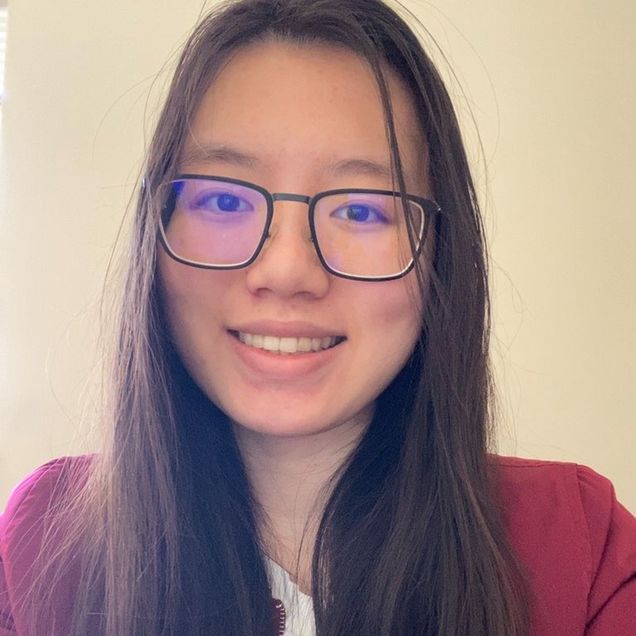
Congratulations to Wei Ni Zhou, a current M2 and 2025 MSSRP researcher, on her recent selection to present her research, Medical Optimization of Patients with Intermittenet Claudication in A Safety-Net Hospital Setting, at the 53rd Annual Symposium on Vascualr Surgery in March 2026. Her research explores the disease progression and treatment adherence in patients with lower extremity claudication (pain with walking that subsides with rest) at Boston Medical Center. Under the mentorship of Dr. Jeffrey Siracuse and surgery resident Dr. Andrea Alonso, they did a retrospective study of patients who were diagnosed with intermittent claudication (IC) at BMC from 2018-2025 and collected data on their first four clinic visits for claudication. Demographics, comorbidities, medications, symptoms, lifestyle modifications, progression to tissue loss/rest pain, and interventions were recorded.
Wei Ni enjoyed learning about peripheral artery disease in my undergraduate biochemistry class and wanted to learn about it further in a research setting. She was interested in researching disease progression over time and seeing how impactful treatment adherence was -- especially in preventing progression to the point where one needs life changing interventions like a leg amputation.
Many patients with intermittent claudication are started on conservative therapies (such as smoking cessation, optimized medication use, and supervised exercise therapy). So far, there is limited data on how IC patients fare on these therapies long term, but this project offers insight on claudication progression in the setting of variable patient therapy adherence, comorbidities, and social determinants of health. Their research demonstrates that medical optimization for patients with IC in the safety-net setting is suboptimal and highlights the importance of continuing research in the following areas: how to decrease barriers for supervised exercise therapy, have better assessments of patients' walking ability, and increase smoking cessation.
Her research experience has taught her that she truly enjoys doing clinical research. Prior to medical school, Wei Ni did not have as much exposure to retrspective chart studies and is grateful to have the opportunities to dive and explore something unfamiliar. She also learned that she enjoys translating her databases into variables that can be statistically analyzed since it involves problem solving and simple coding on Excel -- both of which she notes she hasn't done in a while!