Researchers Receive NIH Grant to Better Study Brain Cells
Photo by Hal Gatewood on Unsplash.
Grant Award
Researchers Receive NIH Grant to Better Study Brain Cells
Tarik F. Haydar, PhD, professor and chair of the department of anatomy & neurobiology at Boston University Chobanian & Avedisian School of Medicine, along with Nobuyuki Ishibashi, MD, professor of anatomy & neurobiology, have been awarded a five-year, Multiple Principal Investigators RO1 grant from the National Institutes of Health. The $3.2 million award will fund their project, “Decoding neural precursors’ role in shaping the convoluted fetal cortex.”
Fetal development remains one of the final frontiers in medical science. It is an exceptionally brief period during which rapid, precise biological processes must unfold to ensure a successful transition to life outside the womb and normal function after birth. In the fetal period, human neural precursors generate a vast number of neurons and glia in a highly regulated manner to form the intricate, gyrencephalic brain providing extraordinary computational power.
The pre- and perinatal periods are recognized as critical windows for our neurological and behavioral development, representing both a significant risk and an opportunity for intervention. Unraveling the developmental mechanisms of the fetal brain thus has far-reaching implications, extending beyond prenatal and neurodevelopmental disorders to conditions related to aging.
To better understand the diversity of neural precursors and their genetic regulation during brain development, the researchers will establish a new experimental model to study the prenatal mechanisms of gyrencephalic neocortical development – one of the key unresolved questions in neuroscience. This study will provide the first direct evidence linking the modulation of specific neural precursors to structural changes in the fetal gyrencephalic neocortex. Such insights will be transformative not only for understanding cortical formation and function but also for improving outcomes in a wide range of neurodevelopmental disorders.
 Tarik Haydar, PhD
Haydar received his doctorate at the University of Maryland School of Medicine working on brain development in the Trisomy 16 experimental model of Down syndrome with Bruce Krueger, PhD. He completed postdoctoral studies at Yale University with Pasko Rakic, MD, PhD, examining control of forebrain neural precursor development and then started his independent laboratory at Children’s National Medical Center in Washington, DC, in 2002. Haydar joined BU in 2010 where he maintains a vibrant laboratory using state-of-the-art molecular and surgical techniques to study mammalian brain development. Using in utero electroporation, in vivo genetic fate mapping and cell ablation techniques, this project is focused on how the multiple populations of neural stem cells and progenitor cells in the embryonic brain are lineally related and how their combined output leads to proper forebrain development.
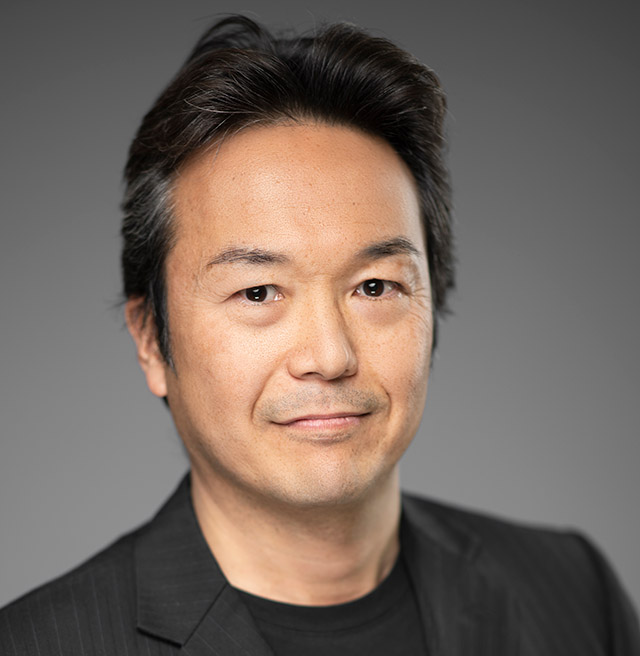 Nobuyuki Ishibashi, MD
Ishibashi joined BU in 2025. Prior to this, he spent 19 years at Children’s National Hospital in Washington, DC, where he served as a principal investigator at the Center for Neuroscience Research and director of the Cardiac Surgery Research Laboratory, and held the Foglia-Hills Chair for Pediatric Cardiac Research. He earned his medical degree from Gunma University School of Medicine in Japan in 1998. He completed clinical training in surgery, cardiovascular surgery and pediatric cardiac surgery at the Heart Institute of Japan, Tokyo Women’s Medical University, obtaining certifications from both the Japanese Board of Surgery and the Japanese Board of Cardiovascular Surgery. He further advanced his research training through a postdoctoral fellowship at the Center for Neuroscience Research at Children’s National Hospital. His research focuses on understanding the impact of congenital heart disease and subsequent cardiac surgery on brain development.