Grant Awarded to BU-Led Team Targeting Early Lung Cancer Detection
Lung cancer metastasis. Photo by National Cancer Institute on Unsplash
Grant Award
Grant Awarded to BU-Led Team Targeting Early Lung Cancer Detection
A multimodal approach to reducing false-negative rates to ensure earlier, targeted intervention while minimizing overtreatment.
Joshua D. Campbell, PhD, associate professor of medicine at Boston University Chobanian & Avedisian School of Medicine, has been awarded a five-year, $3.4M U01 grant from the NIH’s National Cancer Institute Human Tumor Atlas Network (HTAN) for the project, “Integrative biomarkers to improve clinical management of lung ground glass nodules.” Campbell and colleagues led the establishment of the Lung Pre-Cancer Atlas, a cellular map of the earliest stages of lung cancer during the first round of HTAN funding (Phase I – A. Spira). This Phase II award will allow the team to begin to translate the Lung Pre-Cancer Atlas efforts into clinically useful biomarkers.Lung adenocarcinoma is the most common type of lung cancer and remains a major cause of death worldwide despite advances in smoking cessation, early detection, and targeted and immunological therapies.
 Joshua Campbell, PhD
When hazy spots called “ground glass nodules” are identified on a patient’s CT scan of their lungs during screening, the clinical team face a high-stakes dilemma: while these spots can be early warning signs of lung adenocarcinoma, it is very difficult to tell which ones will resolve without intervention and which are actively progressing to invasive cancer. Misjudging them can result in either unnecessary, invasive surgeries for benign spots or a missed window for life-saving early intervention. To eliminate this guesswork, Campbell has assembled a multidisciplinary team of pulmonologists, pathologists, cancer biologists, and imaging and data scientists at BU, Roswell Park Comprehensive Cancer Center (Roswell), the University of Colorado Anschutz (UC) and University of California, Los Angeles (UCLA). Their research leverages new robotic-assisted tools that can safely reach and sample these small, hard-to-reach nodules deep within the lung.
Ultimately, this breakthrough will transform how early-stage lung cancer is managed, ensuring that patients with aggressive tumors receive immediate treatment while sparing healthy individuals from the anxiety and physical toll of unnecessary procedures.
Joshua D. Campbell, PhD
“By combining advanced robotic biopsies with cutting-edge artificial intelligence to analyze the scan images and high-resolution molecular mapping of the tissue, we are developing a highly accurate method to predict whether a nodule is truly cancerous or likely to grow, even when initial biopsies are inconclusive. Ultimately, this breakthrough will transform how early-stage lung cancer is managed, ensuring that patients with aggressive tumors receive immediate treatment while sparing healthy individuals from the anxiety and physical toll of unnecessary procedures,” explains Campbell, who also is director of the Bioinformatics Program and on the faculty of Computing & Data Sciences at BU.
The award aims to improve the clinical management of part-solid ground glass nodules (PSNs), which are frequently identified on low-dose CT lung cancer screening scans but present a significant diagnostic challenge. To address this, the research will systematically evaluate the utility of emerging robotic-assisted bronchoscopy (RAB) systems for the accurate and safe sampling of peripheral PSNs. A biopsy is considered successful when it retrieves enough tissue to give a definitive answer—cancer, precancer or benign. The proportion of biopsies that do so is called the diagnostic yield, and it is the key measure of whether a biopsy tool is worth using. Because PSNs are small, hazy and less dense than solid nodules, they are harder to reach and to sample, and a substantial fraction of biopsies come back inconclusive, leaving patients and their physicians without an answer and often facing a repeat procedure or surgery.
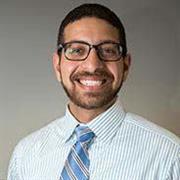 Ehab Billatos, MD
Interventional pulmonologists at Roswell in Buffalo, N.Y., led by co-principal investigator Nathaniel Ivanick, MD, and at Chobanian & Avedisian School of Medicine/Boston Medical Center, led by co-investigator Assistant Professor Ehab Billatos, MD, will collect one of the largest cohorts of PSN biopsies to date, allowing the team to assess the diagnostic yield of different RAB platforms for PSNs. Every biopsy will be reviewed by co-principal investigator Daniel Merrick, MD, a pathologist at UC, who specializes in the earliest stages of lung cancer. The team will also apply automated quantitative image analysis, led by William Hsu, PhD, at UCLA, to extract advanced radiomic features from CT scans, determining which characteristics of the nodule, the surrounding lung tissue, and the lung as a whole best predict whether a biopsy will yield a diagnosis. Knowing this in advance could help physicians decide which nodules to biopsy, which tool to use, and how to reach a diagnosis with fewer procedures.
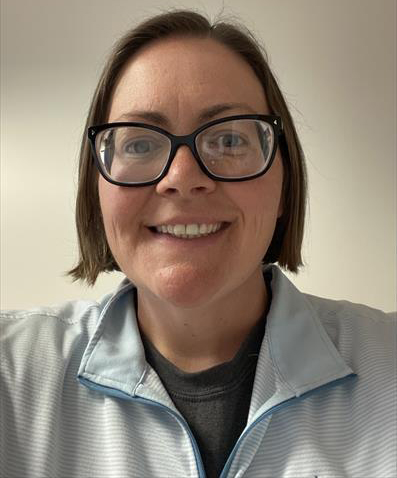 Sarah Mazzilli, PhD
Biopsies from the cohort will then be processed by the biospecimen team led by co-principal investigator Sarah Mazzilli, PhD, assistant professor of medicine at BU and Director of the BU Spatial Biology Core. Biopsy samples will be profiled using spatial transcriptomics, a technology that maps which genes are modulated in each histology region of a tissue sample. These molecular profiles will be integrated with the CT imaging and AI-based risk scores to build models that can diagnose cancer in inconclusive biopsies and predict which nodules are likely to progress.
We have built a pipeline to optimally preserve and processes each sample, profile it, and map gene activity across it at near single-cell resolution, so we can pinpoint where the earliest signs of cancer are hiding even when they are not yet distinguishable under the microscope.
Sarah Mazzilli, PhD
“Each biopsy is tiny, so every piece of tissue has to count,” says Mazzilli. “We have built a pipeline to optimally preserve and processes each sample, profile it, and map gene activity across it at near single-cell resolution, so we can pinpoint where the earliest signs of cancer are hiding even when they are not yet distinguishable under the microscope. Just as important, every profile we generate becomes part of our public atlas that researchers everywhere they can employ their novel methods to better understand how lung cancer begins and can be targeted for intervention.”
HTAN is a National Cancer Institute-funded initiative to construct three-dimensional atlases of the dynamic cellular, morphological and molecular features of human cancers as they evolve from precancerous lesions to advanced disease.