Chao Zhang, PhD, Awarded $3.2M NIH Grant
Chao Zhang, PhD, assistant professor of medicine/computational biomedicine at Boston University Chobanian & Avedisian School of Medicine, has received a four-year, $3.2M R01 grant from the NIH’s National Institute of Diabetes and Digestive and Kidney Diseases for his project, “Enhanced AI-Driven Transmission Electron Microscopy Image Analysis for Simplified Kidney Biopsy Pathology Diagnosis.”
Approximately 13% of the U.S. population suffers from chronic kidney disease (CKD). Accurate diagnosis of CKD often requires careful evaluation of glomerular ultrastructure and detection of subtle morphological changes, making transmission electron microscopy (TEM) a crucial tool in both clinical and research settings. However, generating a complete TEM pathology report can take an average of up to 26 working days, due in part to the shortage of experienced renal pathologists and the highly labor-intensive nature of TEM image analysis. Zhang’s project aims to develop a suite of deep learning models dedicated to kidney glomerular TEM image analysis to support and enhance TEM-based diagnosis.
Our project addresses practical challenges faced by clinical pathologists and nephrologists in daily practice.
Chao Zhang, PhD
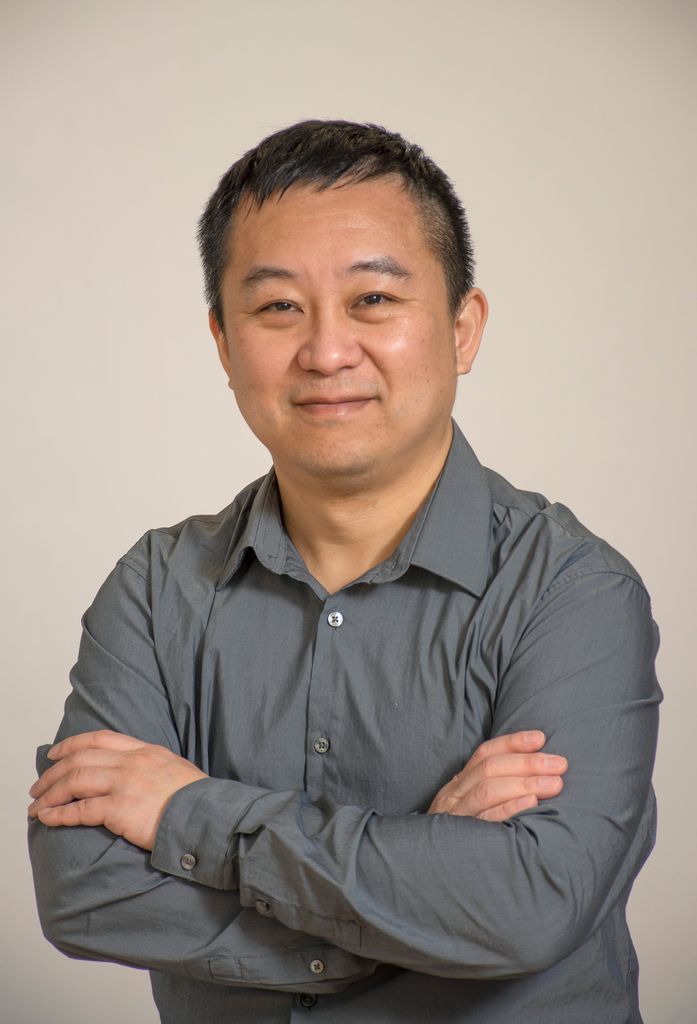 Chao Zhang, PhD, MS
“Our project addresses practical challenges faced by clinical pathologists and nephrologists in daily practice. Successful completion of this work will not only provide valuable assistance to renal pathologists, but also improve our understanding of glomerular kidney diseases through quantitative image-based measurements,” explains Zhang, the lead principal investigator on the project.
Zhang holds a PhD in computer science and an MS in statistics, and has extensive research experience in cancer, stem cell biology, and neurodegenerative diseases. He recently received an NIH R35 grant exploring the bidirectional “microbiome-epigenome axis,” investigating interactions between the microbiome and host epigenetic changes, including histone modifications, DNA methylation, and non-coding RNAs. His lab has also devoted significant effort to developing novel single-cell RNA-seq AI models to better understand the underlying mechanistic commonalities and differences between healthy aging and Alzheimer’s disease, in collaboration with multiple groups at BU.
His interdisciplinary background uniquely positions him to bridge systems biology, statistics, machine learning, software engineering, and next-generation sequencing analysis to address complex biomedical questions. This has also broadened his research scope and increased his interaction with PIs from different fields. He has worked closely with a team of nephrology physician-scientists since joining the school.
The BU team also includes co-investigators Sushrut Waikar, MD, MPH, the Norman Levinsky Professor of Medicine and a leading clinical researcher in CKD; Weining Lu, MD, professor of medicine who has extensive experience in novel drug discovery, including work with Pfizer; and Joel Henderson, MD, PhD, associate professor of pathology & laboratory medicine, who is a highly experienced renal pathologist. This complementary team brings together expertise in artificial intelligence, clinical nephrology, drug discovery and renal pathology, ensuring both technical innovation and strong translational potential in clinical settings.
This interdisciplinary team was established in 2024 as part of the Biomarkers for Disease Diagnosis and Drug Development Affinity Research Collaborative (B4D-ARC, led by Lu) within the Evans Center for Interdisciplinary Biomedical Research, founded and led by Katya Ravid, DSc, Barbara E. Corkey Professor of Medicine. With support and mentorship from the ARC program, this synergistic team generated preliminary data for collaborative publications and successfully secured both R21 and R01 funding within two years. “This type of achievements by an ARC, and its capable leaders, highlight the critical role of ARC convergence programs in fostering effective interdisciplinary collaborations across BU campuses, and supporting teams in successfully securing extramural funding” says Ravid. It also reflects the importance of further developing convergence science programs in all areas of research to address urgent societal challenges, as recently further promoted by the office of BU Vice President and Associate Provost for Research.