Skip to Main Content
Boston University Chobanian & Avedisian School of Medicine
Search

  • Admissions
  • Education
  • Research
  • Giving
  • Emergency
Search
  • Current Students
  • Faculty
  • Staff
  • Alumni
  • Parents
  • Donors
  • About
    • Frontline Medicine
    • By The Numbers
    • Organizational Chart
    • BUMC HR Resources
    • History
    • Clinical Affiliations
    • Basic & Clinical Sciences
    • Faculty Directory
    • Alumni Medical Library
  • Education
    • PhD Education
    • MD Education
    • Master’s Degree Education
    • Dual Degree Programs & Certificates
    • Center for Continuing Education
  • Admissions
    • Why Chobanian & Avedisian School of Medicine?
    • Apply for MD Program
    • Apply for PhD Program
    • Apply for Master’s Program
  • Student Affairs
    • MD Student Affairs
    • GMS Student Affairs Resources
  • Giving
    • Why Give?
    • Who Gives?
    • What Can I Give?
    • Where Can I Give?
    • What Can I Attend?
    • How Can I Give?
    • Contact the Advancement Office
    • Parents Community
    • Donor Resources
  • Research
    • Cores, Facilities & Services
    • Find Funding
    • Centers & Institutes
    • Human Subject Research
    • Resources
    • Research Job Openings
  • Offices & Services
    • Office of the Dean
    • Faculty Affairs Office
    • MD Program Offices
    • Master’s & PhD Program Offices
    • Alumni Office
    • Development Office
    • Louis W. Sullivan Center
    • Communications Office
    • Events Office
  • News & Events
    • News Archive
    • Calendar

Frontline Medicine & Science

  • Awards & HonorsAΩA Class of 2027 Inductees Announced
  • Public HealthNew Research Traces the Evolution of Wastewater and Environmental Surveillance in Carceral Settings and Analyzes the Ethical, Medical, Legal Challenges
  • Convergent ResearchInterdisciplinary BU Team Teaches AI the Biology of Antibodies, Speeds Drug Discovery
View News & Events

Magazine

Two hands in medical gloves form a heartWinter Spring 2026Boston University Medicine

“Medical Parole Needs Reform”

black and white image of prison cells
Opinion Piece

“Medical Parole Needs Reform”

Researcher proposes evaluations be done by an external review board, rather than parole boards or prison commissioners

September 3, 2025
Twitter Facebook

Compassionate release, or medical parole, describes a legal pathway for people who are incarcerated to be released because of severe illness. Almost every state has policies overseeing the release of individuals who are medically vulnerable, which includes a terminal diagnosis of less than six to 18 months. While these laws are offered as a form of compassion as well as to lessen the burden on the prison system, are they actually working?
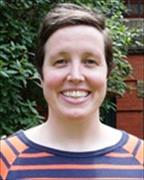
Head and shoulders of Nicole Mushero
Nicole Mushero, MD, PhD

In an opinion piece in the Viewpoint section of JAMA Internal Medicine, a researcher from Boston University Chobanian & Avedisian School of Medicine believes these compassionate release policies are not working. “As a physician who spends considerable time reviewing applications for compassionate release, I can attest that very few are approved,” says corresponding author Nicole Mushero, MD, PhD, assistant professor of medicine at the school.

According to Mushero, the data backs this up. A Massachusetts study showed that in the first five years of medical parole, only 11% of applications were granted. “This results in thousands of individuals eligible for medical parole dying in prisons each year, particularly Black people, who in addition to being more likely to be arrested, convicted and sentenced to life without parole, are less likely to receive compassionate release,” says Mushero who also is a geriatrician at Boston Medical Center.

While not all individuals with terminal illness are older, older people make up the majority of those with advanced illness, and this population is growing. Medical costs of incarcerated patients who are older than 50 years are more than twice as high as their younger counterparts because of increased health conditions.

While some cite public safety, Mushero points out that studies have shown people age out of crime, with those older than 65 approaching a near zero rate of recidivism. “The goal of public safety is not well served by continuing to incarcerate those eligible for medical parole.”

Mushero proposes that compassionate release evaluations be done by an external medical review board instead of those working within the criminal legal system which would allow decisions to be made explicitly on medical criteria and in an expedited fashion. “This board would be comprised of health care professionals, including those with expertise in palliative care, geriatrics, psychiatry and general medicine,” she adds.

Mushero believes by choosing compassion for those nearing the end of their lives, society can better define justice by reorienting the punitive lens toward one of care and repair.  “As physicians, we remain steadfast in a belief that everyone should be afforded the opportunity to die with dignity and recognize any death in prison as a policy failure. We can, and must, imagine a more just future for all our patients.”

Explore Related Topics:

  • Medical Parole
  • Share this story

Share

“Medical Parole Needs Reform”

72 East Concord St.
Boston, MA 02118
Contact & Directions
Boston University Chobanian & Avedisian School of Medicine
  • Instagram
  • LinkedIn
  • Facebook
  • X

We are Frontline Medicine & Science.

Every day, we learn, conduct research, care, teach, discover, and pioneer in places not everyone goes: the classrooms at the frontline of medicine & science.

  • Medical Campus
  • Search
  • Directory
  • Contact
Boston University
  • © 2026 Trustees of Boston University
  • Privacy Statement
  • Accessibility
  • DMCA
© 2026 Boston University. All rights reserved. www.bu.edu
Boston University Masterplate