Skip to Main Content
Boston University Chobanian & Avedisian School of Medicine
Search

  • Admissions
  • Education
  • Research
  • Giving
  • Emergency
Search
  • Current Students
  • Faculty
  • Staff
  • Alumni
  • Parents
  • Donors
  • About
    • Frontline Medicine
    • By The Numbers
    • Organizational Chart
    • BUMC HR Resources
    • History
    • Clinical Affiliations
    • Basic & Clinical Sciences
    • Faculty Directory
    • Alumni Medical Library
  • Education
    • PhD Education
    • MD Education
    • Master’s Degree Education
    • Dual Degree Programs & Certificates
    • Center for Continuing Education
  • Admissions
    • Why Chobanian & Avedisian School of Medicine?
    • Apply for MD Program
    • Apply for PhD Program
    • Apply for Master’s Program
  • Student Affairs
    • MD Student Affairs
    • GMS Student Affairs Resources
  • Giving
    • Why Give?
    • Who Gives?
    • What Can I Give?
    • Where Can I Give?
    • What Can I Attend?
    • How Can I Give?
    • Contact the Advancement Office
    • Parents Community
    • Donor Resources
  • Research
    • Academic Research Collaboration Message Board
    • Cores, Facilities & Services
    • Find Funding
    • Centers & Institutes
    • Human Subject Research
    • Resources
    • Research Job Openings
  • Offices & Services
    • Office of the Dean
    • Faculty Affairs Office
    • MD Program Offices
    • Master’s & PhD Program Offices
    • Alumni Office
    • Advancement Office
    • Louis W. Sullivan Center
    • Communications Office
    • Events Office
  • News & Events
    • News Archive
    • Calendar

Frontline Medicine & Science

  • AlumniAnnual Alumni Awards Luncheon Honors Physicians, Researchers and Educators
  • Awards & HonorsLisa Shen, MD, Named Distinguished Faculty of the Month for October
  • Awards & HonorsIna Hoti Named Distinguished Staff of the Month for October
View News & Events

Magazine

Cover of the Summer/Fall 2026 issue of Boston University medicineSummer/Fall 2026Boston University Medicine

Study Suggests that Amyloid Contributes to Calcific Aortic Valve Disease Development

Heart outlined in red against black background

Photo by Olivier Collet on Unsplash

Heart Disease

Study Suggests that Amyloid Contributes to Calcific Aortic Valve Disease Development

June 5, 2024
Twitter Facebook

Calcific aortic valve disease (CAVD) is the major heart valve disease that afflicts nearly 10 million patients globally with an annual mortality exceeding 100,000, and the numbers continue to rise. In CAVD, microcrystals of hydroxyapatite (a calcium phosphate mineral) deposit onto the heart valve leaflets and impair cardiac function. The disease has a dismal prognosis with most untreated patients dying two years after diagnosis. Currently, the only available treatment is surgical aortic valve replacement, which is not appropriate for all patients.

While previous studies of the histology samples from explanted calcified aortic valves have found amyloid deposits in or near calcified areas, the causal relationship between amyloid deposition and calcification is unclear.

Researchers from BU Chobanian & Avedisian School of Medicine, in collaboration with clinical cardiologists from New York University and University of Texas Houston, have now proposed a molecular mechanism that links amyloid deposition in the aortic valve with degenerative calcification. They also theorize that other risk factors for CAVD, such as high blood levels of lipoprotein, can contribute to calcification both directly and indirectly through the mechanisms that involve amyloid accumulation.
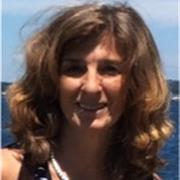
Headshot of woman with light brown hair parted on the side smiling broadly in front of a blue ocean and blue sky
Olga Gursky

Harnessing the “resolution revolution” in cryogenic electron microscopy, groups of researchers around the world were able to determine hundreds of structures of patient-derived protein aggregates called amyloid fibrils. Such fibrils are associated with major human diseases including Alzheimer’s and Parkinson’s diseases, diabetes, and heart diseases such as atherosclerosis and calcific aortic valve disease.  “We noticed that the unique geometry of amyloid fibrils, with their periodic arrays of acidic residues on the surface, provides a perfect match for the precursors of calcium phosphate crystals that deposit in the heart valve and impair its normal function,” explained corresponding author Olga Gursky, PhD, professor of pharmacology, physiology & biophysics at the school.

The researchers propose that amyloid deposits, which are often found adjacent to calcified areas of the heart valve, can modulate CAVD and accelerate degenerative calcification. This implies that blocking amyloid formation may be a much-needed novel therapeutic target for CAVD and, potentially, other diseases involving degenerative calcification and amyloid formation, such as Alzheimer’ disease.

“We hope that a better understanding of molecular mechanisms and drivers of degenerative biomineralization will help identify new therapeutic targets for major human diseases, such as calcific aortic valve disease,” adds Gursky.

These findings appear online in the journal Trends in Molecular Medicine.

Explore Related Topics:

  • Heart Disease
  • research
  • Share this story

Share

Study Suggests that Amyloid Contributes to Calcific Aortic Valve Disease Development

72 East Concord St.
Boston, MA 02118
Contact & Directions
Boston University Chobanian & Avedisian School of Medicine
  • Instagram
  • LinkedIn
  • Facebook
  • X

We are Frontline Medicine & Science.

Every day, we learn, conduct research, care, teach, discover, and pioneer in places not everyone goes: the classrooms at the frontline of medicine & science.

  • Medical Campus
  • Search
  • Directory
  • Contact
Boston University
  • © 2026 Trustees of Boston University
  • Privacy Statement
  • Accessibility
  • DMCA
© 2026 Boston University. All rights reserved. www.bu.edu
Boston University Masterplate