Student Updates
BUMC Office of Facilities Management is Moving

Effective Aug. 30, BUMC Facilities Management is moving to a new office located on the fifth floor, B500 of the Robinson Building. Facilities Management maintains building systems, custodial services, grounds keeping, receiving, construction and other special services such as furniture rearrangement on campus. The process to request Facilities services remains the same. Facilities Management can be reached at the same telephone number, 638-4211.
BUSM Professor Anand Devaiah, MD, Releases New Textbook on Otology and Neurotology
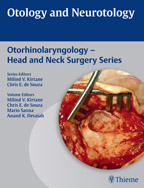
Boston University School of Medicine (BUSM) and Boston Medical Center’s (BMC) Anand Devaiah, MD, FACS, has co-authored a new textbook, “Otology and Neurotology: Otorhinolaryngology – Head and Neck Surgery.”
“This book is an invaluable reference for residents, fellows, allied health professionals, comprehensive otolaryngologists, otologists, neurologists, and skull base surgeons,” said Dr. Devaiah.
“Otology and Neurotology” provides guidance on the clinical and practical management of diseases of the ear and lateral skull base. It discusses the latest techniques and technologies that encompass the complex nature of this specialty. In this comprehensive work, experts discuss topics including chronic ear disease, cochlear and brainstem implants, robotic surgery, and many others.
Dr. Devaiah is an associate professor in the departments of Otolaryngology-Head and Neck Surgery, Neurological Surgery, and Opthalmology and chair of the Electives and Research Curriculum Subcommittee at BUSM and a physician and president of the Medical-Dental staff at BMC.
The textbook will be marketed worldwide, for more information visit the website.
Vigorous Physical Activity Linked to Lower Incidence of Obesity in Young African-American Women
The prevalence of obesity has increased markedly in the U.S. in recent years. According to a new study by researchers from Boston University Slone Epidemiology Center’s Black Women’s Health Study (BWHS), the risk of becoming obese among young African-American women decreased with increasing levels of vigorous activity. The investigators focused on younger women because most weight gain occurs before middle age.
The findings are online and will appear in the September 2013 issue of the American Journal of Preventive Medicine.
The assessment of exercise in relation to obesity was based on data from the BWHS, an ongoing follow-up study of African-American women from across the U.S. The researchers followed 20,259 African-American women who were less than 40 years old and not obese at the start of the study for 14 years, from 1995-2009. Information on weight was updated every two years and information on exercise and walking was updated four times during follow-up. The investigators found that incidence of obesity decreased as the level of vigorous exercise increased. The risk of obesity was 23 percent lower among women who exercised seven or more hours per week relative to women who participated in little or no exercise. The reduction of obesity incidence among women who exercised was evident both among those with healthy weights at baseline and among those who were overweight at baseline. There were suggestive reductions in the incidence of obesity among women who walked briskly for exercise or transport but there were no clear trends.
According to Lynn Rosenberg, PhD, lead investigator of the study, effective approaches to reduce weight gain and obesity are very much needed in view of the increased incidence of type 2 diabetes and other serious illnesses associated with obesity. “Our study suggests that increased exercise would help in that effort,” she said.
Funding for this study was provided by the Aetna Foundation and the National Cancer Institute.
Overall and Central Obesity Linked to Delayed Conception in African-American Women, According to BU Researchers
In a first of its kind study, researchers from the Slone Epidemiology Center (SEC) at Boston University (BU) found that African-American women who were overweight or obese had a greater risk of delayed conception and infertility when compared with women who were of normal weight. In addition, women who had larger waist circumferences and greater waist-to-hip ratios (i.e., apple-shaped women) had lower fertility. These findings of time to pregnancy (TTP) are published online in Human Reproduction.
“This study is important because it contributes new data on predictors of infertility in black women and suggests that both central and overall obesity are important factors influencing pregnancy rates,” said lead author, Lauren Wise, ScD, senior epidemiologist at SEC and associate professor of epidemiology at Boston University School of Public Health. “Given the small number of studies on central obesity and fertility, this study makes an important contribution to scientific literature. She noted that mechanisms to explain the findings could involve obesity-related hormonal changes and disturbances in the menstrual cycle.
 Based on the Black Women’s Health Study (BWHS), the largest ongoing follow-up study of black women in the U.S., eligible women aged 21-40 years reported at least one planned pregnancy attempt during 1995-2011. Height and weight were reported in 1995, with weight updated every two years; waist and hip circumferences were reported in 1995 and updated in 2003. In 2011, women reported how long it took them to conceive each pregnancy.
During 1995-2011, there were 2,239 pregnancy attempts reported by 1,697 women, resulting in 2,022 births. The study found that high BMI was associated with delayed conception: relative to BMI 18.5-24.9 (normal weight), the risks of becoming pregnant were 7 percent, 8 percent and 27 percent lower for women who were overweight (BMI 25-29), obese (BMI 30-34), or very obese (BMI≥35), respectively. After taking into account BMI, women with large waist circumferences (≥33 inches) and large waist-to-hip ratios (≥0.85) also experienced delays in conception.
Led by researchers at the SEC, the BWHS has followed 59,000 African-American women through biennial questionnaires since 1995 and has led to a better understanding of numerous health conditions that disproportionately affect African-American women.
Funding for this study was provided by the National Cancer Institute under grant award # CA058420. Co-authors of the study include Lynn Rosenberg, ScD, principal investigator of the BWHS and professor of epidemiology at BUSPH, and Julie R. Palmer, ScD, professor of epidemiology at BUSPH.
The study’s lead author, Lauren A. Wise, ScD, is also principal investigator of the Boston University PREgnancy STudy Online (PRESTO), which recently began recruitment for an internet-based study of female pregnancy planners in Massachusetts. If you would like to enroll in this study, visit: http://presto.bu.edu.
Marathon Bombing Victims Aided by Rapid Response, Imaging of Injuries

The Boston Marathon bombing brought international attention back to the devastating effects of terrorism. There were numerous victims with severe injuries that needed immediate attention. A novel study in Arthritis Care & Research, a journal published by Wiley on behalf of the American College of Rheumatology (ACR), presents cases from Boston-area hospitals where victims were treated, examining the medical response and imagining technologies used to save lives and limbs.
On April 15, 2013, at approximately 2:49 p.m. two pressure-cooker bombs exploded one after the other at the Boston Marathon finish line. As a result of the bombings, there were three fatalities and 264 casualties, with the most severe injuries involving lower extremities of those located closest to the blasts. Shrapnel disbursed by the bombs included pieces of metal, nails and ball bearings. Injuries resulting from the Marathon bombing are relevant to the fields of rheumatology, rehabilitation, orthopedics and musculoskeletal imaging.
“In an era of terrorism, even clinicians serving non-military patients need to understand the spectrum of injuries caused by bomb explosions,” explains lead author Dr. Ali Guermazi, Professor of Radiology at Boston University School of Medicine and one of the many specialists treating bombing victims at Boston Medical Center. “Critically ill bomb-blast patients needed quick assessments of their injuries, which had the most devastating effects to the lower limbs.”
According to the Centers for Disease Control and Prevention (CDC), bombing survivors have the highest incidence of injury to soft tissue and musculoskeletal systems with the most extreme injury being traumatic amputation, which is reported in up to 3% of cases. The CDC defines primary blast injuries as those caused by the blast wave—extremely compressed air moving away from the explosion—that can damage the lungs, bowel and ears. As the wave moves from the site of the explosion it creates a vacuum, which pulls materials and debris back toward the source of the bomb blast—the refilling of this void is known as the blast wind.
Victims from the Boston Marathon bombing were subject to blast waves and blast wind resulting in soft tissue damage, limb fractures, and amputations. The study demonstrates the systematic need to exam each extremity for musculoskeletal, neurological and vascular damage. In accordance with previous evidence, radiography (X-ray) and computed tomography (CT-scan) should be used liberally to detect foreign objects, to define basic penetration patterns, and assess bony and soft tissue injuries.
Dr. Guermazi concludes, “While blast injuries within civilian populations are rare in the U.S., when they do occur it challenges the medical community to rapidly respond to concurrent evaluation and treatment of many victims. We suggest that in urgent situations, like the Boston Marathon bombing, radiology resources be used liberally to save the lives and limbs of patients.”
Experiences of Racism Linked to Adult-Onset Asthma in African-American Women
According to a new study from the Slone Epidemiology Center (SEC) at Boston University, African-American women who reported more frequent experiences of racism had a greater likelihood of adult-onset asthma compared to women who reported less frequent experiences.
The study, which currently appears on-line in the journal Chest, was led by Patricia Coogan, DSc, senior epidemiologist at SEC and research professor of epidemiology at Boston University School of Public Health.
This study followed 38,142 African-American women, all of whom are participants in the Black Women’s Health Study (BWHS), between 1997 and 2011. They completed health questionnaires every two years. In 1997 and 2009 they provided information on their experiences of “everyday” racism, like poor service in stores or restaurants, and “lifetime” racism, which was discrimination encountered on the job, in housing and by police.
The results indicate that as experiences of everyday and lifetime racism increased, the incidence of adult-onset asthma also rose, up to a 45 percent increase in women in the highest compared to the lowest category of the racism measures. Furthermore, the incidence of asthma was increased even more in women who were in the highest category of everyday racism in both 1997 and 2009, and who may have had more consistent experiences of racism over time.
“This is the first prospective study to show an association between experiences of racism and adult-onset asthma,” said Coogan. “Racism is a significant stressor in the lives of African American women, and our results contribute to a growing body of evidence indicating that experiences of racism can have adverse effects on health.” The hypothesized mechanism linking experiences of racism to asthma incidence is stress and its physiological consequences, particularly effects on the immune system and the airways. “Given the high prevalence of both asthma and of experiences of racism in African Americans, the association is of public health importance,” she added.
BWHS is the largest follow-up study of the health of African American women in the United States. Led by researchers at the Slone Epidemiology Center, the BWHS has followed 59,000 African-American women through biennial questionnaires since 1995 and has led to a better understanding of numerous health conditions that disproportionately affect African-American women.
Funding for this study was provided by the National Institute of Health’s National Heart, Lung, and Blood Institute (grant award #HL107314) and the National Cancer Institute (grant award #CA058420).
Study Finds Physicians Need to Better Recognize Maternal Use of Herbal Supplements while Breastfeeding
In an article published in this month’s issue of Pediatrics In Review, researchers from Boston University School of Medicine (BUSM) stress the importance of physicians recognizing that many mothers use herbal supplements while breastfeeding in order to make accurate health assessments for both mother and child.
In the US, no existing regulatory guidelines set a standardized risk assessment of herbal supplement use during breastfeeding. Because of the highly limited number of studies on herb use during lactation, numerous resources have mixed reports and safety recommendations, making it confusing for both mother and clinician.
After completing a systematic review of human lactation and herbal medicine literature, the researchers found poor methodology in the few available studies and concluded that further research is needed to assess the prevalence, efficacy and safety of commonly used herbs during breastfeeding.
“It is important for physicians and clinicians to be more aware that mothers are using herbal supplements and how vital it is to ask the mothers, who are seeking a doctor’s opinion when having trouble breastfeeding, about their use before making an assessment,” said senior author Paula Gardiner, MD, MPH, assistant professor at BUSM and a physician of family medicine at Boston Medical Center.
Although there is little scientific evidence to support the efficacy or safety of herbal supplements, it is a common practice both nationally and internationally.
“The use of herbal supplements while breastfeeding is two-sided—there are benefits, but there are also safety concerns,” she added. “About 18 percent of the US population use herbs and dietary supplements. We just want to make sure physicians and clinicians are aware of this prevalent use when communicating with breastfeeding mothers about their health.”
Herbal remedies may be used to increase the milk supply, relieve engorgement, treat mastitis, or for other therapeutic uses unrelated to lactation.
“Since there is very limited research, it is difficult to develop accurate information on the safety and effectiveness of specific herbs during breastfeeding,” said Gardiner. “It is crucial that more research is conducted in this area, including national prevalence studies and safety and efficacy studies.”
Gardiner is supported by grant K07AT005463 from the National Center for Complementary & Alternative Medicine. The content is solely the responsibility of the authors and does not necessarily represent the official views of the National Center for Complementary & Alternative Medicine or the National Institutes of Health.
BU Gives $8,500 in Grants for Summer Programs and Local Non-profit
Boston University recently gave $8,500 to support programs that support the arts and cultural environment in Roxbury and a summer biotech program for local youth. The grants are part of the on-going program to provide community assistance to local nonprofit organizations. In the last two years, these BU community grants have provided over $20,000 in assistance to local neighborhood based organizations.
A grant of $2,500 was made to Discover Roxbury to support its ArtROX! series , which highlights and promotes Roxbury’s art and culture and includes tours of Roxbury’s public and private art studios. Discover Roxbury collaborates with other partners under the ArtROX! brand to sponsor the Wake Up the Earth Parade, the Franklin Park Kite Festival, Jazz at the Fort and Roxbury Open Studios.
BU awarded six scholarships to Boston students to participate in the SummerLab Biotechnology Program at BU CityLab. SummerLab provides high school students the opportunity to get hands-on biotechnology lab experience. The scholarships were awarded to students from: Madison Park Technical Vocational High School, Cathedral High School, City on a Hill Charter School and Boston Latin Academy.
Under the ArtROX! brand , Discover Roxbury finds new and innovative ways to increase the visibility of Roxbury’s artists and to bring new art resources into our community. We are extremely pleased to have Boston University support our ongoing work,” said Derek Lumpkins, Executive Director, Discover Roxbury.
“The SummerLab Biotechnology Program is a great way to for us to engage with local kids and help high school students continue exploring science over the summer. BU’s support of our programs is tremendously helpful,” said Julia Hammer Mendez of BU CityLab.
“Boston University is committed to providing resources to community organizations and agencies that benefit local residents. Discover Roxbury events are fun and informative and showcase the creativity and history that is a vital part of Roxbury. Providing high school students with a hands-on laboratory experience expands and stimulates their desire to learn more about science. We are pleased to welcome these students to our program this summer.” said Valeda Britton, Executive Director-Community Relations Medical Campus, BU Government and Community Affairs.
Learn more about SummerLab here.
Biotechnologist for a Week
In the video above, participants in BU’s SummerLab program imagine they are employees in the research department of a biotechnology company. Photos by Cydney Scott
Most 16-year-olds’ appreciation of jellyfish is colored by the creature’s tendency to sting anything it comes in contact with, but a group of area high school students got over that this summer when they learned that a protein derived from jellyfish enables researchers to see processes that were previously invisible, such as the development of nerve cells in a brain or the spread of cancer from cell to cell.
That revelation was one of many for students enrolled in a weeklong intensive SummerLab session held at BU’s Medical Campus last month. SummerLab, a nirvana for students with a passion for things having to do with proteins, purification, and pipettes, asks students to imagine that they work in the research department of a biotechnology company and throughout the week teaches the budding scientists how biotechnology harnesses the power of nature at the cellular level.
Program director Don DeRosa (SED’91,’01) says the program is designed to encourage high school students to consider careers in science, technology, engineering, and math (STEM), and to demonstrate that much of what is learned in the lab is applicable to other courses and subjects.
“We have a saying,” says DeRosa, a School of Medicine research assistant professor in the department of biochemistry and a School of Education clinical assistant professor of curriculum and teaching. “‘It’s not just about teaching science; it’s using science to teach thinking.’ We really want students to get some taste of what it might be like to be in a laboratory and to find out what it’s like to be able to work your way through a problem. Science is about knowing what to do when you don’t have an answer.”
Programs like SummerLab are intended to bolster the uncertain future of the STEM fields. The National Math + Science Initiative, a group dedicated to improving student performance in STEM fields that is funded by private donors, including the Bill & Melinda Gates Foundation and the ExxonMobil Corporation, notes that US students recently finished 25th in math and 17th in science when compared with students in 31 other countries. The same report found that only 30 percent of US high school students are prepared for college-level science.
SummerLab is run through MED’s CityLab, a program offering state-of-the-art facilities and workshops to educational groups, mostly from around Massachusetts (the program also visits schools in its MobileLab bus). DeRosa says roughly one quarter of CityLab’s attendees come from underserved populations, which often lack access to the lessons or facilities that CityLab delivers.
Once students sign up for SummerLab, they can choose from one of five sessions, either on the Medical Campus or at secondary schools in Braintree and Waltham (the last session is being held this week). Depending on the week, students will either purify protein or participate in a mock clinical trial, where they test drugs for sickle cell anemia.
In the purified protein session, students are asked to imagine that they work for a biotechnology company that needs to produce and market green fluorescent protein (GFP). The company has copies of the gene that encodes the GFP, and the students must figure out how to insert the gene into E. coli bacteria.
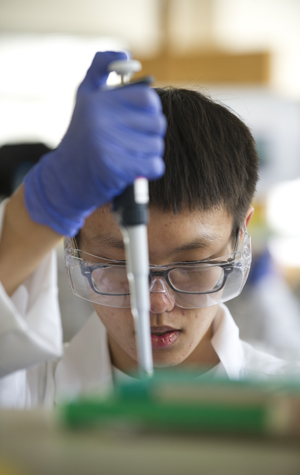
The first day of the program, students get a crash course in basic laboratory skills, safety procedures, and how to keep a scientific notebook, with much help from DeRosa and Crystal Shah (CAS’14, SED’14), who hopes to one day become a biology teacher. Students look the part, too, in white lab coats, blue latex gloves, and plastic safety glasses.
The students learn about the magic of GFP, which was discovered by Osamu Shimomura (Hon.’10), a MED professor emeritus of physiology, whose finding was rewarded with a Nobel Prize in chemistry in 2008. The protein glows green when exposed to ultraviolet light, making it an ideal marker to help researchers study internal biological processes. Research made possible by GFP’s unusual powers has helped scientists better understand brain diseases like Alzheimer’s, improve cancer diagnosis and treatment, and detect poisons in drinking water. While GFP can be harvested from the jellyfish Aequoria victoria, the demand for the protein by researchers is so great that it must be grown in massive quantities.
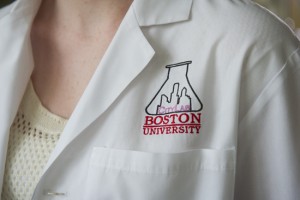
At SummerLab, the “biotechnologists” divide into three groups, and each group learns a technique, such as bacterial transformation, cell lysis, or protein purification. The next morning, the students are assigned to teams of three, with a specialist in each technique, and work together to purify the protein. The program ends with the students presenting their findings in a poster session.
The excitement in the lab can be seen as one student elbows his teammate to hurry up with lunch so they can get back to their lab stations. James Bauer, a 14-year-old from nearby Arlington High School, says he had two reasons for signing up for SummerLab: he was curious to learn how scientists from large pharmaceutical companies work, and he wanted work in a real lab setting. “This isn’t the fake stuff, you’re using real E.coli bacteria,” Bauer says. “This is the first time I’ve done a real experiment like this, because so far in my high school biology class we’ve only boiled water.”
This BU Today story was written by Amy Laskowski. Rich Barlow contributed reporting to this story.


Successful Fourth Annual Summer Research Program (SURP) Symposium
The Division of Graduate Medical Sciences (GMS) at Boston University School of Medicine (BUSM) hosted the fourth annual summer research symposium on Thursday, Aug. 1, showcasing research projects conducted by visiting students. Karen Antman, MD, BUMC Provost and BUSM Dean welcomed attendees and thanked them for contributing to the success of the program.
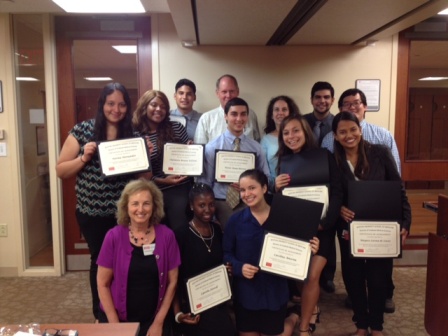
The SUmmer Research Program (SURP), a pipeline program initiated by GMS Associate Provost Linda Hyman, PhD, offers exceptional basic science research opportunities to academically talented students who are traditionally underrepresented in the biomedical sciences. Students in the program aspire to professional careers as medical scientists and other roles within the research enterprise. The progression of SURP from pilot program to competitive summer internship for underrepresented (URM) students began in the summer of 2010 with ten students from Xavier University in Louisiana. Over four years, SURP Program Manager Linda Zimmerman, increased the number of applicants by 200 percent through marketing and outreach activities.
Key components of SURP include daily, mentored scientific research under the guidance of a faculty mentor and lab community; weekly professional development activities and journal club; cohort-based housing on the Boston University campus; social activities focused in Boston and led by a peer group leader; and an end-of-program symposium. Graduates of SURP are encouraged to present their research at national meetings such as the Annual Biomedical Conference for Minority Students (ABRCMS) and Advancing Hispanics, Native Americans and Chicanos in Science (SACNAS), and to continue pursuing career interests in medical research and health care.
The following is a list of student presenters and abstract titles with full abstracts available in the Program Booklet.
- Jasmin Alves (Farmer Lab): Gelsolin Expression is Regulated during Brown and White Adipogenesis and is more prominent in White compared to Brown Adipose Tissue
- Carolina Amorim (Genco Lab): Regulation of small RNA in Neisseria Gonorrhoeae.
- Lynisha Farrell (Corkey Lab): Alterations in Extrecellular Redox States Affect Pancreatic Beta-Cell Insulin Secretion Levels
- Norma A. Hernandez (Wolozin Lab): Protein translation inhibitor reduces TDP-43 inclusion formation
- Mayara Lorena de Souza (Cruikshank Lab): Cockroach allergen changes the balance between ciliated and secretory cells in the respiratory epithelium