Student Updates
School of Dental Medicine Celebrates Completion of Three-Year $115 Million Expansion, Renovation

Boston University held a ribbon-cutting ceremony on Tuesday, September 21, to celebrate the opening of the redesigned and expanded Henry M. Goldman School of Dental Medicine. The event, held under a cloudless sky at the school’s newly designed 635 Albany Street patient entrance, was attended by approximately 100 people, including University leaders, faculty, alumni, donors, students, architects, and construction executives. The ribbon-cutting marked the capstone of a three-year $115 million project designed to incorporate state-of-the-art technologies in both the education programs for future dentists and the treatment facilities they use to provide care for patients from nearby Boston neighborhoods.
“Today’s opening is the culmination of over a decade of work, seven years of careful planning, and three and a half years of construction. As much as any construction project I have seen, this physical addition was driven by a careful program aimed at keeping dental education at Boston University at the forefront of the field,” said President Robert A. Brown at the ceremony. “In physics, a quantum jump is an abrupt change in energy level. In common usage, a quantum leap is a big change. This new building is a quantum leap in the quality of the facilities for our great faculty and students.”
The event included the announcement by Cataldo Leone, SDM dean ad interim, of support from Dentsply Sirona that has allowed the school to equip its newly updated and expanded patient treatment center with state-of-the-art technology, including new dental chairs in 100 patient treatment spaces, digital radiography equipment, and a team of lab technicians to assist faculty and students. In recognition of this support, the school is naming the patient treatment center after the company.
Read the entire BU Today story by Michael S. Goldberg.
Medical Campus Study Space Finder
An application is available to help students on the Medical Campus find study space.
This mobile-friendly website displays rooms that are available for study in real time http://www.bu.edu/medstudy.
Students may look for rooms in a specific building, date, time and room type (group study or individual). Students can control what they want to view, add rooms as favorites, set favorite rooms as the default home page and see detailed room attributes, such as AV & IT capabilities, seating arrangement, lighting and more. No login is required to access the site, but it cannot be used to reserve rooms.
The website categorizes rooms for “individual (quiet) study” or for “group study.” Larger rooms (with a maximum occupancy greater than 20) are classified as “individual,” and are for parallel quiet study for individuals up to the capacity of the room. Smaller rooms (maximum occupancy up to 20) are classified as “group study.” These are for interactive discussion groups of three or more students. While “group study” rooms can be used by individuals, preference must be given to groups if they need to use the space.
The “About” page within the application provides more information.
If you have any issues, suggestions or questions, please use the “Contact” page within the system.
Human Resources Moves to J Building
Human Resources is moving on Thursday, Sept. 2, from Crosstown to 609 Albany St. (J Building), first floor.
During the move and technology set up, staff may be delayed in responding to inquiries. If you need immediate assistance, please contact the Human Resources Service Center (hr@bu.edu or 617-353-2380). The HR Service Center representative will either answer your question, provide needed information, or direct your concern to an appropriate person. If there is an urgent need, please contact your HR Business Partner on their cell phone.
Changing COVID Testing Categories
Based upon the recent revision to the COVID testing categories sent by Amanda Bailey, Vice President of Human Resources, on Aug. 17, managers must make the following changes by Tuesday, Aug. 31:
- Move employees currently in category 2 who are coming to campus regularly each week to category 1, or who are coming intermittently to campus to category 3.
- Move employees currently in category 4 who will be returning to campus work to category 3. Note:
- If the employee will be coming to campus at least weekly on a regular schedule, once they have done their first test, move them to category 1.
- If the employee will have an intermittent campus work schedule, keep them in category 3.
Please use the decision tree below as a guide.
To change a category:
- Go to www.bu.edu/mybuworks
- Click “Community Testing Category”
- Change category (if needed)

June 2021 Faculty Promotions Announced
Congratulations to the following faculty on their recent promotion to clinical associate professor.
 Eduardo Pena, BUSM, Psychiatry, is a clinician-educator who delivers mental health services to the underserved and those with opioid addiction problems. Medical Director of the Methadone for Opioid Use Disorder Clinic at VA Boston Healthcare, he provides medication-assisted therapy, addiction psychopharmacology, addiction psychosocial treatment and general mental health treatment. He has a special interest in the overlap of chronic pain and addiction, serves on the Pain Steering Committee and Opioid Safety Initiative, and is the psychiatrist for the Interdisciplinary Pain Clinic and the Opioid Reassessment Clinic at the VA. As an educator, he trains residents and fellows in Addiction Psychiatry.
 Julien Dedier, BUSM, Medicine/General Internal Medicine, is co-founder of the Hospital Medicine Unit – a driver of patient care, quality improvement and education at Boston Medical Center. As associate director of the BUSM medicine clerkship Dedier spearheaded structural changes to standardize student write-ups and to introduce the clerkship’s educational goals/expectations to inpatient teams. In the outpatient domain, Dedier developed EHR-based systems for referring patients to community gyms and to an interdisciplinary hypertension management team. He and colleagues currently partner with Black churches in Boston to foster church cohesion and healthy behaviors using culturally tailored mobile applications.
May 2021 Faculty Promotions Announced
Congratulations to the following faculty on their recent promotion.
Professor
 John Berk, BUSM, Medicine/Pulmonary, Allergy, Sleep & Critical Care, specializes in familial transthyretin and lung amyloidosis. Berk designed and conducted the first international randomized controlled trial for familial amyloid polyneuropathy. This NIH- and FDA-funded study found that Diflunisal, an obsolete non-steroidal anti-inflammatory drug, inhibited neurologic disease progression, validated a neurologic metric to map disease progression, generated natural history data critical to future study design, and provided proof-of-concept that protein stabilization could alter the course of a protein folding disorder. The study design also established a blueprint for subsequent ATTR amyloid neuropathy trials that subsequently led to two FDA- approved TTR gene silencing drugs. Berk serves on two Scientific Advisory Boards on the development of gene editing applications for ATTR amyloidosis and the development of TTR stabilizing drugs for leptomeningeal amyloidosis. Berk also described low-dose, external beam radiation to treat tracheobronchial amyloidosis, inducing apoptosis of clonal plasma cells generating airway amyloid, a non-surgical option for disease management.
Associate Professor
 Anuradha Saokar Rebello, BUSM, Radiology, Chief of Thoracic Imaging, focuses on lung cancer and lung cancer screening, management strategies in patients with pulmonary nodules. She played a key role in the creation of Cardiothoracic Imaging section and Boston Medical Center’s lung cancer screening program, and has created comprehensive cardiothoracic imaging curricula for radiology residents. Rebello is dedicated to the mentorship of students, trainees and early-career faculty.
 Varsha Vimalananda, BUSM, Medicine/Endocrinology, Diabetes & Nutrition, focuses on measuring and improving coordination of specialty care delivery. She develops and applies novel survey measures of coordination. The Veterans Health Administration (VA) adopted a survey that she developed for routine national administration among community-based providers. Her research on electronic consultations (e-consults) to improve access to and outcomes of specialty care led to a regional e-consult improvement initiative in the VA New England Healthcare System. She is a Core Investigator at the Center for Healthcare Organization and Implementation Research (CHOIR) and Site Director and PI of the Endocrinology Advanced Research and Clinical Fellowship at the Bedford VA, where she mentors BUSM endocrine fellows in health services research.
Public Safety Escorts, Shuttle Services Update
Public Safety will resume providing evening shuttle and walking escort services to employees and students on Monday, Aug. 16.
Campus Public Safety Escorts
At certain times BUMC Public Safety can provide walking escorts on campus and to the Medical Student Residence (MSR), and vehicle escorts to adjacent areas upon request. Please note that this service (particularly wait-times) is dependent on security-based activities, emergencies, and officer availability. Vehicle escorts can only go to closely adjacent locations. Examples of these adjacent locations include: nearby MBTA Stops, such as Broadway, Andrew Square, and the Mass Ave. stations. Public Safety does not drop-off students at their individual residences. Vehicle escorts can be provided after 7 p.m., Monday through Friday.
To use this service the student or employee would call the Public Safety Dispatch Desk (617-358-4444), or notify an Officer on post to request an escort. The Dispatch Officer will acknowledge the call and attempt to provide an approximate time for the officer to arrive. If requesting an escort from an Officer on post the Officer will get an approximate arrival time from the Dispatch Center. The approximate time given may be substantially delayed due to security or emergency developments.
Safety Questions? Arrange a Meeting
Public Safety is glad to meet with any student, employee, or interested group to discuss safety strategies and planning. To arrange for a safety planning meeting call the BU Medical Campus Public Safety business number 617-358-3517.
BUMC Evening Shuttle Service
Public Safety escorts should not be considered a mode of commuting. It is HIGHLY suggested that students and employees utilize the BU Medical Campus Parking and Transportation Shuttle. This shuttle runs 7 days a week starting at 5 p.m. and ending at 11:30 p.m. (Ending time will be changed to 12:15 a.m. at a later date). The Parking and Transportation Shuttle travels on request to: Parking Facilities; MBTA Stations including Broadway (Red), Ruggles, Back Bay (Orange), and Copley (Green); and Nearby South End neighborhood locations (within one mile).
Learn more about the Transportation Shuttle.
April 2021 BUMC Faculty Promotions
Congratulations to the following faculty on their recent promotion.
Professor
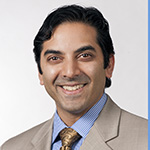 Anand Devaiah, BUSM, Otolaryngology/Head & Neck Surgery, Ophthalmology and Neurosurgery, is an expert in anterior and lateral skull base surgery. He has helped advance the field of minimally invasive endoscopic skull base surgery through his research, surgical innovations, collaborations and leadership roles. His research uses data analytics to studying diseases such as cancer and those affecting the skull base. He served as a Fellow/Medical Officer in the Food and Drug Administration's ENT Branch at the Center for Devices in Radiological Health. He stepped down from this role in 2017 to Direct the Biomedical and Health Technology Development and Transfer Domain for the BU Institute for Health System Innovation & Policy, where he facilitated the transdisciplinary work across BU’s schools and colleges and with external partners. He received the American Academy of Otolaryngology – Head and Neck Surgery’s John Conley Lecturer on Medical Ethics and is the Immediate Past President of the Society of University Otolaryngologists.
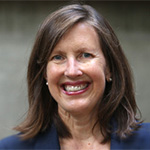 Ann Rasmusson, BUSM, Psychiatry, has focused her research career on elucidating the neurobiology of posttraumatic stress disorder (PTSD) to better inform development of treatments for this widespread and disabling disorder. She has earned an international reputation in the neuroendocrinology of stress/PTSD, having discovered the role of neuropeptide Y (NPY) and GABAergic neurosteroids, such as allopregnanolone, in the pathophysiology of PTSD with implications for treatment not only of PTSD, but of several highly prevalent PTSD-comorbid conditions (e.g., depression, alcohol dependence, chronic pain, TBI). Rasmusson leads a national working group tasked with developing biomarkers for use in a new DOD-funded, precision medicine-based adaptive clinical trial platform (intended to de-risk pharmaceutical development for PTSD). She also is a founder and Director of the VA OAA funded Neuropsychiatry Translational Fellowship Program, which since 2018 provides collaborative mentoring by prominent research faculty at VABHS, BUSM and Harvard Medical School (McLean and Massachusetts General Hospital) to young psychiatrists, psychologists and neuroscientists developing research careers in precision medicine for the treatment of neuropsychiatric disorders. Rasmusson is the recipient of a $3.8 million NIMH R01 investigating the role of phasic increases in allopregnanolone in consolidating extinction learning and/or interrupting reactivated aversive memory reconsolidation in women and men with PTSD.
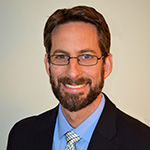 Allan Walkey, BUSM, Medicine/Pulmonary, Allergy, Sleep & Critical Care, excels at analyzing and applying clinical data from patients in the critical care setting to improve the practice and outcomes of critical care medicine. In a series of funded studies, Walkey published highly cited papers in JAMA and other high impact journals that initially characterized – and more recently evaluated approaches to – the problem of new-onset atrial fibrillation that complicates critical illness in the ICU. His current funded work has expanded upon the paradigm that complications during sepsis have long-term cardiovascular ramifications and focuses on predicting and mitigating the long-term cardiovascular risks of sepsis. In other work, Walkey’s research team evaluates the use and potential long-term consequences of opioids prescribed during critical illness. He serves as co-Director of the Evans Center of Implementation and Improvement Sciences, a research team focused on rigorously evaluating efforts to change healthcare delivery in the safety net setting. During the pandemic, he co-created an international registry for critically ill COVID-19 infected patients, which includes more than 60,000 patients hospitalized in Intensive Care Units across more than 300 hospitals in 28 countries including Asia, South and North America and Africa, has produced multiple research manuscripts characterizing critical care delivery during the pandemic, and now serves as an international platform for practice improvement.
Associate Professor
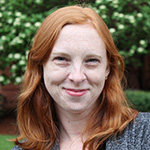 Kimberly Bertrand, BUSM, Medicine, is a cancer epidemiologist studying racial disparities in cancer incidence and outcomes. She is a co-Investigator on the long-running Black Women’s Health Study (BWHS), a large prospective cohort of Black women. Her research efforts focus primarily on identifying risk factors for breast cancer, hematologic malignancies, and other cancers in Black women. In 2017, she was awarded the Shamim and Ashraf Dahod Breast Cancer Research Assistant Professorship at BUSM, which she held through 2019. Currently, she is principal investigator of an NIH grant to understand the association of high mammographic breast density with breast cancer subtypes in Black women. She also leads research on multiple myeloma within the BWHS and recently received funding to study the contribution of socio-environmental factors to racial disparities in this disease. Bertrand has served on the steering committees of several national and international cancer consortia. As a founding representative of the Associate Member Council of the National Cancer Institute Cohort Consortium, she spearheaded efforts to engage early career researchers in Cohort Consortium activities.
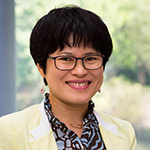 Gyungah Jun, BUSM, Medicine/Biomedical Genetics, is a genetic epidemiologist who focuses on “big data” driven drug discovery for Alzheimer’s disease (AD). Jun has been involved in the large U.S. and international consortia to identify AD risk genes with or without stratification by APOE genotypes across multi-ethnic populations. This effort led to an innovative and novel therapeutic concept for AD based on the well-established protective effect of the APOE ε2 allele, while she is a site PI for a new cohort for prevention and treatment trials to target APOE in AD therapeutics. Jun is a Director of the Genome Guided Drug Discovery (GGDD) Core at the AI4AD consortium, which is a large coordinated national initiative for AD therapeutics and features transformative Artificial Intelligence (AI) approaches using human big data. She is a founding member of the Asian Cohort for Alzheimer’s Disease (ACAD) Consortium and Chairs two workgroups, Data Management and Data Analysis, as well as a steering committee member for the Framingham Heart Study Brain Aging Program (FHS-BAP), leading to identify genetic and molecular signatures from blood and brain. Jun recently joined in BU Alzheimer’s Disease Research Center as an Associate Director of the Genetic and Molecular Profiling Core.
BUMC Faculty Promotions Announced
Congratulations to the following faculty on their recent promotion.
Professor
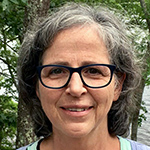 Elizabeth Mitchell, BUSM, Emergency Medicine, is an expert on narrative medicine and medical humanities. She developed an innovative radiology of emergency medicine curriculum and co-authored a book to facilitate medical student transition from the basic sciences to clinical rotation in the ED. She has mentored medical and allied health students in the ED and has taught Introduction to Clinical Medicine (ICM-1, 2) for first- and second-year medical students for many years. Mitchell uses narrative writing and the humanities to alleviate physician burnout and improve patient care. She led the “Open Mic” event at the national American College of Emergency Physicians annual meeting as a forum for participants to share music and narrative writings. Her poetry and essays are widely published and “The Apocalypse,” a poem about the pandemic published in The New York Times, has received international recognition. She has received numerous awards from the Mayor and City of Boston, the Boston Celtics and many other organizations.
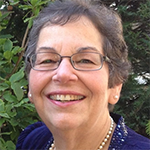 Ruth Rose-Jacobs, BUSM, Pediatrics, a researcher, clinician, teacher and mentor in the Division of Developmental-Behavioral Pediatrics (DBP), addresses the many important complex issues affecting the health and well-being of children and families experiencing poverty. Her NIH and private foundation grants supporting her research have explored the often, inter-related issues of prenatal and youthful substance exposure, exposure to violence, social determinants of health and parenting interventions. As the Director of the Infant and Child Development Laboratory and in the clinic, she teaches and mentors the next generation of clinicians and researchers. A frequent national conference presenter, her leadership roles include state and federal committees, professional, university and state boards associated with clinical education, and organizations associated with serving at-risk children, parents and adults.
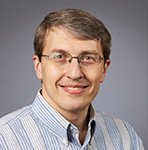 Eugene Y. Kissin, BUSM, Medicine/Rheumatology, is an expert on musculoskeletal ultrasound. For the past 15 years, Kissin, among the earliest North American rheumatologists to formally train in this area, then developed a formal Musculoskeletal Ultrasound Training program, which he directs.
Dr. Kissin, a founding member of the Ultrasound School of North American Rheumatologists (USSONAR) in 2007, has been its Program Director since 2008, and served as President from 2014 to 2016. Kissin has trained more than 400 rheumatology fellows from more than 50 US fellowship programs with personalized ultrasound scans submission feedback, reading and ultrasound technique practice assignments, and a hands-on workshop. He has also recruited and trained 50 faculty members who now train other rheumatologists and developed a competitive enrollment pathway for trainee participation. He also developed a website to disseminate musculoskeletal ultrasound teaching with a focus on ultrasound study submission by participants for personalized feedback over an eight-month course of study, as well as training manuals, video demonstrations, scanning technique assignments, written examinations and the annual hands-on observational skills-based examination.
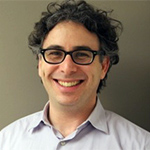 Benjamin P. Linas, BUSM, Medicine/Infectious Diseases, focuses on health economics and public health policy to address the syndemic of HIV, HCV and substance use disorders. He has advanced the syndemic concept which is now the organizing philosophy of the U.S. Centers for Disease Control and Prevention (CDC) and many Departments of Public Health. Linas established the evidence base that informs current U.S. CDC and U.S. Preventive Services Task Force (USPSTF) guidance for HCV screening in the U.S. and his work is changing the way that CDC and Departments of Public Health estimate the burden of drug use. He has been an invited speaker at the National Academies of Science Engineering and Medicine, and served on the AASLD-IDSA HCV Guidance Panel, CDC/HHS HCV Advisory Council (CHAC) and on the Executive Leadership of the NIDA Center for Health Economics of Treatment Interventions for Substance Use Disorder, HCV and HIV.
Linas, a dynamic leader during the COVID-19 pandemic, organized COVID-19 research at BUMC in March 2020. He developed and streamlined a COVID-19 research infrastructure that includes two biorepositories, an electronic health record data repository and a robust clinical trials program. Under his leadership, Boston Medical Center became a founding member of the NIH-sponsored initiative, Community Engaged Alliance against COVID-19 Disparities (CEAL), which places BU faculty and community partners at the epicenter of the ongoing national effort to address medical and scientific mistrust among BiPOC communities.
Associate Professor
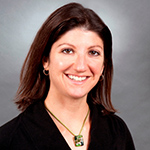 Amy M. Linsky, BUSM, General Internal Medicine, focuses on shared decision-making to foster de-implementation of low-value care. Specifically, she studies deprescribing, the process of intentionally discontinuing medications via patient-provider communication to reduce the use of medications whose potential benefits no longer outweigh potential harms. The goal is to reduce polypharmacy and adverse drug events while simultaneously using limited healthcare resources more efficiently and improving patient quality of life. She also studies shared decision-making in the context of goals of care conversations and preferences for life sustaining treatment.
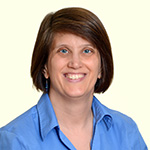 Amy E. Sobota, BUSM, Pediatrics is a pediatric hematologist whose major clinical and research focus is on the transition from pediatric to adult care for adolescents and young adults with sickle cell disease. Her work has better defined the issues with this transfer of medical care, identified resources that improve outcomes, and defined novel interventions to improve transition readiness and self-management in this vulnerable population. She also studies social determinants of health (e.g. food insecurity or lack of reliable transportation) that directly or indirectly impact the health of her patients with sickle cell disease. She developed innovative programs (e.g. screening for social determinants of health in the outpatient clinic and partnering with Uberhealth to provide rides to clinic for families with transportation insecurity), that decreased no-show rates in clinic and are now being replicated throughout the hospital.
July update: BUMC COVID Compliance
As of July 1, the Medical Campus has returned to 100 percent occupancy.
Masks are still required indoors in classrooms, shared offices, public common areas, the BU Shuttle, and healthcare facilities regardless of vaccination status. Masks are not required outside, or in private offices, private rooms in residence halls or private apartments.
Masks may be removed while eating, but only in designated locations such as lunch and break rooms. Eating is not allowed in classrooms. Physical distancing is encouraged whenever masks are removed.
Physical Distancing is no longer required indoors or outdoors, although patient research or care facilities (e.g. Dental School clinics, Clinical Research Unit) may choose to continue physical distancing).
Testing and Attestation will continue throughout the summer with no change.
Visitors invited by a BUMC host are permitted on campus if approved by the host’s dean. Hosts should complete this form.
Visitors must follow federal, state, local and University health and safety regulations including:
- self-monitoring of COVID-19 symptoms before coming on campus,
- complying with the University’s face-covering policy, and
- regular hand washing, sanitizing.
For the specific Henry M. Goldman School of Dental Medicine visitor policy, click here.