Congratulations to Arjun Patel and DJ Wu Wong for Accepted Manuscript
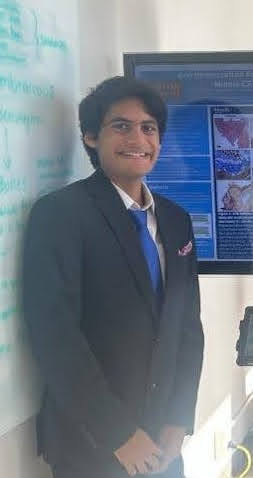
Arjun was named co-author on the accepted manuscript, “Indoxyl Sulfate Promotes Uremic Arterial and Venous Thrombosis by Stabilizing IDO1 via the E3 Ligase SHFM3,” which will be published in the Journal of the American Society of Nephrology.
During his first year of medical school, Arjun participated in the LEADS Research Track program. We asked him a few questions to learn more about his experience in the program, his research journey, and the impact of mentorship on his medical education.
What is your research project about?
The research project is about the identification of a new E3 ligase of the IDO-1 enzyme, an enzyme which mediates adverse effects in patients with CKD, which gets downregulated in the setting of uremic toxicity. Discovery was mediated through western blot analysis of protein interactions, super-resolution microscopy and various animal models with specific ligase gene knockout in endothelial cells.
What have you done as part of this research project?
I mainly contributed to data collection in this project. Specifically, I assisted in immunofluorescence staining and imaging of vessels of the various mice groups studied. Through this staining and imaging, I was able to identify the presence of specific biomarkers that contributed to thrombogeneity in the different experimental groups and confirm the mechanism by which the SHFM3 E3 ligase mediates its effects.
How has this research experience influenced your understanding of medicine, research, or your potential career path?
Research has given me an appreciation for the incredible amount of hard work that underpins each of the medical discoveries I have the privilege of learning about. I am grateful to be surrounded by fabulous mentors and colleagues both in the lab and in the classroom and I aim to pursue a career in medicine that bridges the strengths of both of these fields, such as a physician-scientist.
What advice would you give to other medical students who are considering getting involved in research?
I would advise medical students to pursue research topics in fields they are interested in and to maintain a positive attitude when results don’t go their way. Research can often be a frustrating process, but hard work will eventually pay off.
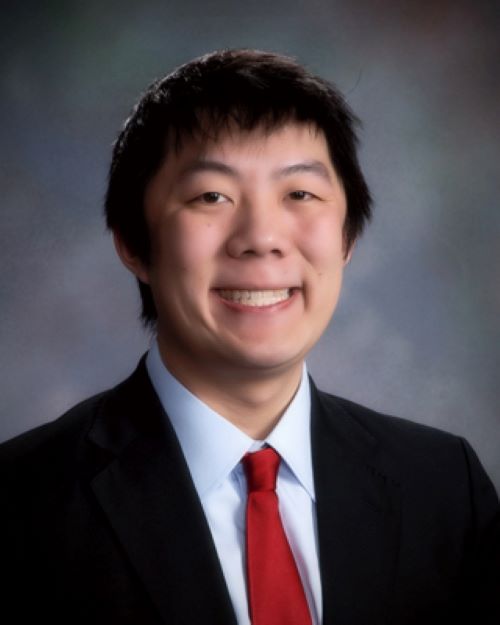
What is your research project about?
IDO1 or indoleamine 2,3-dioxygenase 1 is an enzyme that plays a large role in tryptophan metabolism. Downstream, IDO1 activity contributes to the pro-thrombotic environment of chronic kidney disease. This study investigated the proteasomal degradation of IDO1 by the E3 ligase SHFM3/FBXW4 and the role that uremic toxins play in modulating IDO1’s degradation. Using targeted metabolomics, nanoparticle-mediated gene delivery, and a murine thrombosis model, the lab also demonstrated the functional implication of SHFM3 regulating the uremic toxin-mediated upregulation of IDO1.
What have you done as part of this research project?
I mostly assisted with the earlier stages of the project. Much of the earlier investigative work involved narrowing down the specific E3 ligase from a “family” of E3 ligases that were suspected to interact with IDO1. After helping to identify SHFM3/FBXW4, I assisted with the cell culture experiments that helped describe the biochemical interaction between IDO1 and FBXW4 (ubiquintination, half life, binding domain, etc.)
I’d also like to emphasize the work that the first authors of this paper, Ricardo Almiron and Abbas Brahim Malloum, did for this project as well as the work that my fellow medical students Anna Natrakul and Arjun Patel contributed.
How has this research experience influenced your understanding of medicine, research, or your potential career path?
This experience and my time in Dr. Chitalia’s lab has been integral in developing my understanding of the types of translational research that can be pursued as a physician. It’s been helpful to see how many projects (clinical trials, basic science, literature review, etc.) are taken from start to finish.
Time in the Chitalia’s lab has also emphasized that research, especially in the medical field, is often a collaborative effort. I would say that having a supportive environment is one of the most important parts of the research experience.
What advice would you give to other medical students who are considering getting involved in research?
The most important practical piece of advice that I’ve received is that controls are the most important part of any study. I’d also say don’t be afraid to try new things, whether it be a new technique at lab, proposing an idea to your PI, a completely different project, or looking for new research. Putting yourself out there can help you learn a lot about what you want to do in the future and what type of research is right for you.