Student Spotlight: Gabrielle Ruban, M2
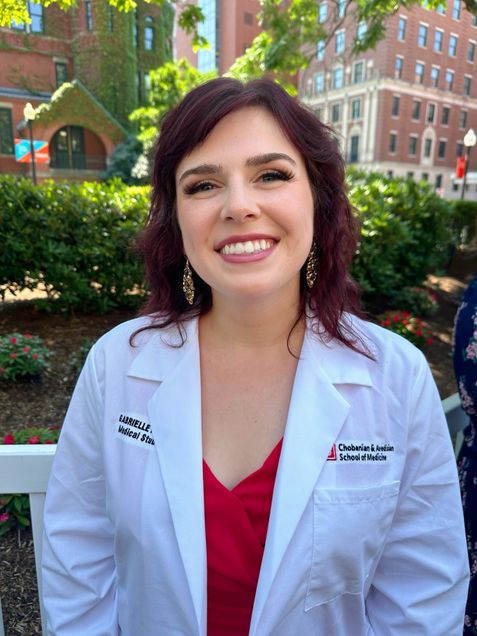 Gabrielle Ruban is a current M2 student, 2025 MSSRP/LEADS researcher, and CARE student. Under the mentorship of Dr. Karsten Lunze, she has been working on two projects that are based in Eastern Europe. Her main individual project is within the SCRIPT (Stigma Coping to Reduce HIV Risks and Improve Substance Use Prevention and Treatment) study, which is based in Russia, while the other project Gabrielle has contributed to is the Ukraine-based SUPRA (Substance Use Prevention for Recently Displaced Adults) study.
Based on data from a trial conducted in Russia, the SCRIPT (Stigma Coping to Reduce HIV Risks and Improve substance use Prevention and Treatment) study’s initial goal was to assess Acceptance and Commitment approaches as a possible intervention for people living with HIV who inject drugs, with the goal of addressing the consequences of internalized intersectional stigma related to HIV status and substance use. The aim of her main project within the SCRIPT study is to investigate whether intersectional stigma moderates the hypothesized association between exposure to intimate partner violence (IPV) and poorer health-related quality of life (HRQoL) outcomes among HIV-positive people who inject drugs in Russia. Critically, the associations between IPV and HRQoL as well as intersectional stigma have not been well explored in this population. This knowledge gap especially applies to Russia, where injection drug use, HIV incidence, and IPV exposure remain exceptionally high and often co-occur. No published studies have examined whether intersectional stigma moderates the link between intimate partner violence exposure and worse health-related quality of life outcomes in people with HIV who use drugs. In this relationship, stigma may intensify the consequences of IPV, such as by promoting shame, low self-worth, worsening mental health symptoms, and disengagement or avoidance of healthcare. Stigma might also be associated with declines across various domains of HRQoL.
The SUPRA survey, in contrast, was conducted in Ukraine and involved qualitative exploration of substance use patterns among individuals internally displaced by Russia’s war in Ukraine, with the ultimate goal of developing an intervention based on Acceptance and Commitment approaches to reduce substance use among individuals affected by this humanitarian crisis. Gabrielle’s involvement in the SUPRA study has expanded her qualitative research skillset, which was a goal she explicitly outlined as wanting to achieve during her time in medical school, given that she exclusively has had quantitative research experiences up until this point. Since joining the SUPRA team last fall, Gabrielle has used her Russian and Ukrainian language skills to help translate the interview notes to English, as well as contributed to the development and execution of the rapid qualitative analysis plan. This process enables us to systematically analyze the free listing interviews to capture key substances used during the active war in Ukraine, along with their alternative names, forms, modes of use, the populations most likely to use them, and their consequences at both individual and societal levels.
For the SCRIPT-based study, Gabrielle’s primary mentor has been Dr. Karsten Lunze, who is also the principal investigator of the study. During the development of the research question and analytic plan, and also received guidance from several experts, including Emily Sisson (Senior Director of Research Operations) and Dr. Jin Wei (Biostatistics) for statistical input as well as Dr. Jeffrey Samet (General Internal Medicine) for his expertise in substance use treatment among international populations with HIV, including those in Russia and Ukraine. For the SUPRA study, Gabrielle’s been mentored primarily by Dr. Lunze, as well as Dr. Claire Green, Assistant Professor of Population and Family Health at Columbia University Mailman School of Public Health.
As the daughter of two Ukrainian immigrants, Gabrielle has been deeply shaped by her Eastern European heritage, culturally and linguistically. In addition to her heritage, her experiences in crisis counseling, harm reduction outreach, and addiction medicine education during the pandemic and prior to medical school sparked her interest in understanding how trauma and social determinants impact care engagement as well as confirmed her decision to pursue a career in medicine. She became particularly interested in how socioenvironmental exposures such as intimate partner violence, intersectional stigma, and substance use intersect and affect health outcomes, including healthcare engagement, infectious disease risk, and overall quality of life. Her research is both important and timely because it addresses overlapping and understudied drivers of poor health outcomes among highly vulnerable populations in active and evolving contexts.
Gabrielle and the research team are currently in the data analysis phase for the SCRIPT-based study on intersectional stigma, intimate partner violence, and health-related quality of life. She has presented two posters from the SUPRA project since joining the team. She presented gender-specific findings on substance use patterns among internally displaced individuals in Ukraine at the Chobanian and Avedisian School of Medicine Medical Student Research Symposium in February 2026. She also presented a poster focused on substance use among internally displaced women at the Seventeenth Massachusetts Medical Society Research Poster Symposium on March 21, 2026.