Neurocritical Care Fellowship
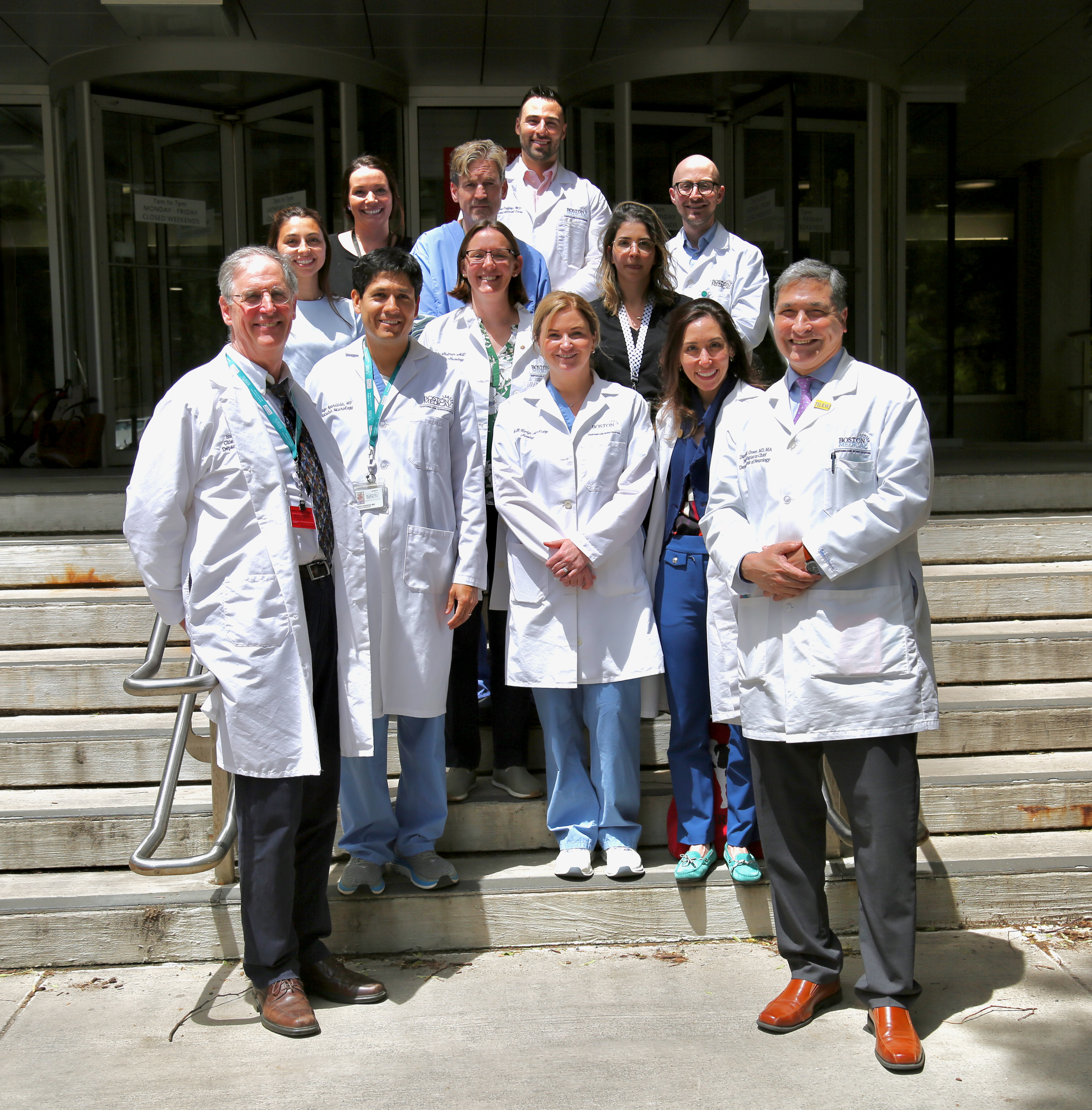
Welcome to neurocritical care at Boston Medical Center! BMC is the largest safety net hospital in New England. We are a comprehensive stroke center, level four epilepsy center, and the highest volume level one trauma center in New England. Our neurocritical care primary and consult services manage 1,300-1,400 patients per year with diverse diagnoses across the spectrum of neurologic and neurosurgical disease.
Clinical Training
We are deeply committed to the development of clinically excellent neurointensivists. We train up to four fellows per year in 1- and 2-year programs customized to the training background of the individual fellow. We offer a general critical care-focused program for fellows with neurology and neurosurgery backgrounds and a neurology-focused program for graduates of anesthesia, internal medicine, emergency medicine, and critical care training programs. NCC fellows act in the sole/primary fellow role during their core rotations in the MICU, SICU, CT-ICU, and sometimes CCU.
Two-year fellowships include eight months of elective time, and one-year fellowships include two months of elective time. We partner with our colleagues in pulmonary critical care, surgical critical care, anesthesia critical care, cardiac critical care, cardiothoracic surgery, emergency medicine, neurosurgery, interventional neuroradiology, vascular neurology, and general neurology to offer fellows a wide range of electives tailored to their individual training background to ensure program graduates are well-rounded neurointensivists and general intensivists. Many fellows take advantage of elective time to pursue one or more scholarly (education, research, or quality) projects.
By graduation, all NCC fellows will develop competence in central venous catheter (including hemodialysis and subclavian line) placement, arterial line placement, lumbar puncture, bronchoscopy, advanced airway management, ultrasound guided IV placement, and administration of moderate sedation. Airway management training is through a dedicated airway rotation and on unit intubations facilitated by our close relationship with our anesthesia critical care colleagues. Additional procedural learning opportunities include tracheostomy/PEG tube placement, ICP monitor/EVD insertion, lumbar drain placement, paracentesis, thoracentesis, and chest tube placement.
We pride ourselves in our history of training fellows from diverse backgrounds who have gone on to become leaders in neurocritical care across practice settings.
Block Schedule (Effective AY 27-28)
| Training Background | Neurology | Anesthesia | IM | EM | Neurosurgery | Critical Care |
| Program Length (months) | 24 | 24 | 24 | 24 | 12 | 12 |
| NCC | 9 | 12 | 12 | 12 | 8 | 8 |
| MICU | 2 | 1 | 0 | 1 | 0.5 | 0 |
| SICU | 2 | 1 | 1 | 1 | 0.5 | 0 |
| CCU | 1 | 0 | 0 | 0 | 0 | 0 |
| CT-ICU | 1 | 0 | 0 | 0 | 0 | 0 |
| Airway | 1 | 0 | 1 | 0 | 0.5 | 0 |
| Critical Care EEG | 0 | 0.5 | 0.5 | 0.5 | 0.5 | 0.5 |
| Vascular Neurology | 0 | 0.5 | 0.5 | 0.5 | 0 | 0.5 |
| Neuroradiology | 0 | 0.5 | 0.5 | 0.5 | 0 | 0.5 |
| General Neurology | 0 | 0.5 | 0.5 | 0.5 | 0 | 0.5 |
| Research/Electives | 8 | 8 | 8 | 8 | 2 | 2 |
| *4 weeks of vacation per year are included as 1- or 2- week intervals during elective blocks. | ||||||
Didactic and Simulation Education
 BMC is the primary teaching affiliate for the Boston University Chobanian and Avedisian School of Medicine. Fellows gain experience teaching students, residents, and advanced practice providers on the unit, through formal didactics, and in simulation courses. BMC established and directs the New England Neurocritical Care Didactic series, through which fellows have their own didactics in neurocritical care, general critical care, and neurosurgical disease. Clinical and procedural simulation training is also included in the fellowship curriculum. Fellows gain additional teaching experience presenting at neurocritical care journal club, morbidity and mortality, and weekly case conferences
Research Opportunities
BU and BMC faculty are committed to engaging trainees in clinical and translational research to advance the science of neurocritical care. We are a site for multiple ongoing stroke and interventional trials and have NIH-funded faculty leading innovations in non-invasive monitoring in acute brain injury and neuroprognostication after cardiac arrest. Several neurocritical care faculty members are leaders of national or international research consortia and other professional organizations. Faculty are additionally engaged in neurology education research, regularly collaborating with fellows to advance the science of medical education.
Application and Interview Process
Applicants to the BU/BMC neurocritical care fellowship must be graduates of a training program in neurology, neurological surgery, internal medicine, anesthesiology, general surgery, child neurology, emergency medicine, critical care medicine, or surgical critical care that is accredited by the Accreditation Council for Graduate Medical Education (ACGME) or the Royal College of Physicians and Surgeons of Canada (RCPSC). Applicants who have matriculated in neurologic surgical residency are also eligible. If you are interested in applying, please register with the SF Match Neurocritical Care Central Application Service (CAS). Virtual interviews typically occur from February through June. Highly qualified applicants will be contacted by our program office to schedule an interview date.
Benefits
BMC offers a range of benefits for trainees. Additional details are available here.
Accreditation
The BU/BMC neurocritical care fellowship is accredited by the United Council of Neurologic Subspecialities (UCNS) and ACGME.
Contact:
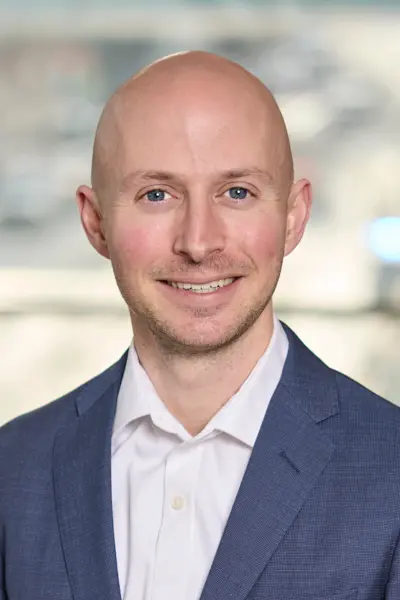 |
Daniel S. Harrison, MD Associate Program Director, Neurocritical Care Fellowship Department of Neurology/BUSM Daniel.Harrison@bmc.org |
Fellows
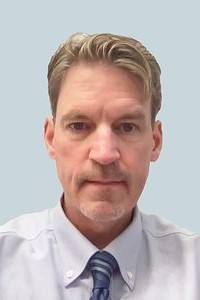
| 2025-2027 | 2025-2027 | 2026-2028 |
 |
 |
 |
| Reem El-Ghawanmeh, MD |
Matthew Wall, DO | John Erdman, MD |
Program faculty
David M. Greer, MD, MA
Professor and Chair of Neurology
Program Director, Neurocritical Care Fellowship (AY26-27)
Immediate Past President, Neurocritical Care Society
Daniel S. Harrison, MD
Assistant Professor of Neurology
Associate Program Director, Neurocritical Care Fellowship
Program Director, Neurocritical Care Fellowship (AY27-28)
Steven K. Feske, MD
Professor of Neurology
Vice Chair for Education
Charlene Ong, MD, MPHS
Associate Professor of Neurology
Neurointensivist
Ali Daneshmand, MD
Assistant Professor of Neurology
Neurointensivist
Brian J. Coffey, MD
Assistant Professor of Neurology
Neurointensivist
Karan Hingorani, MD PhD
Assistant Professor of Neurology
Neurointensivist
James W. Holsapple, MD
Associate Professor and Chair of Neurosurgery
Program Director, Neurosurgery Residency
Christine C. Reardon, MD
Clinical Professor of Medicine
Program Director, Pulmonary and Critical Care Medicine Fellowship
Nurse Practitioners
Jennifer Becklehimer
Adela Medina
Jason Murphy
Stacy Osterhoudt
Denise Martin
Erin Wilson
Sarah DiBari
Katherine Mohr
Lisa Lucero
Program Alumni
Post-graduate appointments
Class of 2026
Paulina Henriquez, MD
Assistant Professor of Neurology, Brown University
Neurointensivist, Rhode Island Hospital
Class of 2025
Fnu Sameeullah, MD
Intensivist, Flowers Hospital
Catherine Christie, MD
Neurosurgeon, Locum Tenens
Class of 2024
Brian Coffey, MD
Assistant Professor, Boston University
Neurointensivist, Boston Medical Center
William Spears, MD
Clinical Assistant Professor, University of South Carolina
Neurointensivist, Prisma Health
Class of 2023
Deepti Virmani, MD
Assistant Professor, Tufts University
Maine Medical Center Neurology
Class of 2022
Jeffrey Ruta, MD
Neurointensivist, Christiana Care
Class of 2021
Thomas Mayo, MD
Neurointensivist, Norton Neurosciences Institute
Director, Neurocritical Care