Student Updates
$30 Million from AHA Bolsters Framingham Heart Study
Sponsors collaboration between BU, University of Mississippi

Thanks to a $30 million commitment from the American Heart Association (AHA), researchers from Boston University and the University of Mississippi will collaborate for at least five years on a shared mission to find better preventive measures and treatments for heart disease—the leading cause of death in the world, according to the World Health Organization.
The Framingham Heart Study (FHS), with more than 15,000 participants and 65 years of data, is the nation’s longest running heart study. It has been supported almost since its 1948 beginning by the National Heart, Lung, and Blood Institute (NHLBI) of the National Institutes of Health, and run by Boston University since 1971. The study was the first large-scale investigation to link risk factors—such as smoking, high blood pressure, and high cholesterol—to cardiovascular disease. In 2000, the University of Mississippi Medical Center, along with its partners at Jackson State University and Tougaloo College, replicated the FHS model in creating the Jackson Heart Study (JHS), with a focus on the genetic factors related to cardiovascular disease in African-Americans. With 5,000 participants, it is the largest study in history to focus on this population.
Researchers from both studies have collaborated over the years, but the new renewable funding from the AHA will facilitate a closer working relationship through what the organization has coined Heart Studies v2.0.
AHA CEO Nancy Brown told the Wall Street Journal that the organization sees this project as critical to its goal of achieving a 20 percent improvement in cardiovascular health in the United States while reducing deaths from heart disease and stroke by 20 percent for the decade ending in 2020.
The collaboration “gives us the opportunity to extend what we’ve been doing into the newest avenues of research,” particularly in genetics, says FHS principal investigator Philip Wolf, a School of Medicine professor. Vasan Ramachandran, a MED professor and chief of preventive medicine and epidemiology, will take over from Wolf as principal investigator in January.
Combining the Framingham and Jackson studies’ findings could reveal “differences in the causes of heart disease in the two populations,” says Karen Antman, MED dean and provost of the Medical Campus. African-Americans suffer disproportionately from cardiovascular disease, with annual death rates up to 64 percent higher for black males.
Scientific and oversight committees are still being formed, so details on how the collaboration will play out in coming months and years are not yet available, according to Wolf and Antman.
This $30 million in funding is very good news for the Framingham Heart Study, which was notified over the summer that its budget would be cut by $4 million, or about 40 percent of the money it receives through its core contract with the NHLBI. Those cuts forced the elimination of participants’ biennial exams, which Wolf describes as “the lifeblood of the study,” because they engender participant loyalty and include blood pressure readings, MRIs, and CT scans.
The exams are also important because they provide an opportunity for technicians to collect blood, urine, and cell samples, which are eventually frozen in biobanks. The FHS already has more than one million samples, while Jackson holds 40,000. Wolf considers the biobanks genetic gold mines, in that they may enable the development of tests that link certain genes to cardiovascular disease. Researchers could search for the frozen white blood cells or plasma of participants known to have suffered a heart attack or a stroke, analyze the DNA, and confirm a new test’s efficacy for predicting health risks.
Wolf believes the technique will open doors to more personalized health care. For example, he says, people living with hypertension get better results from one drug over another, but the more effective drug is apparent only after weeks of trial and error with a cocktail of medications that could have uncomfortable—or life-threatening—side effects. He and his colleagues think they will someday be able to analyze participants’ genomes and categorize them according to who would benefit the most from a given medication. Wolf hopes Heart Studies v2.0 will allow for the collection of more real-time data, such as daily miles walked or calories consumed by participants, to provide greater context for genetic analyses.
This BU Today story was written by Leslie Friday. She can be reached at lfriday@bu.edu; follow her on Twitter at @lesliefriday.
The Addiction Puzzle
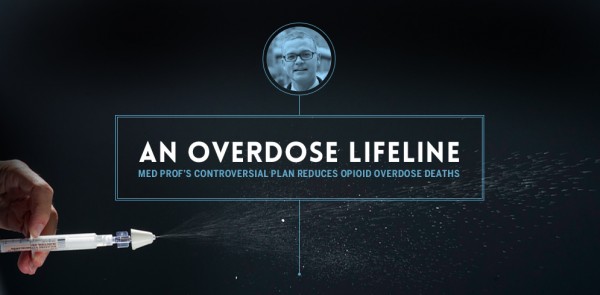
As part of a week-long series on addiction research, BU Today highlighted the work of Alexander Walley, School of Medicine assistant professor of medicine and the medical director of the Massachusetts Department of Public Health’s Opioid Overdose Prevention Pilot Program.
Drug or alcohol addiction affects nearly 23 million Americans and costs the United States an estimated $428 billion each year. Modern science has dispelled many misconceptions about the disease and scientists are working hard to find effective treatments. At Boston University, more than 100 researchers have been awarded over $130 million in addiction-related research and services grants since 2006, and faculty currently direct over 50 funded addiction-related research projects.
Still, many questions remain: why do some people become addicted and others don’t? Why are some recovering addicts able to maintain sobriety while others have chronic relapses? Does evidence-based research contradict what has been assumed to be effective screening and treatment programs? In what ways does addiction impact men and women differently?
Brigitte knew there was something wrong with her son. The day after Thanksgiving in 2011 he left their Foxboro home early in the morning, saying he wanted to get some Black Friday deals. “I knew something was up right then,” she says. After all, how many 21-year-old men care about sales at the mall?
When he returned that afternoon, her suspicions were confirmed. “I could just tell from his posture that he had been using,” she recalls. Brigitte (not her real name) had been shocked several months earlier to learn that her son was addicted to heroin. The rest of that day, she followed him around the house, unwilling to let him out of sight. At 1:30 a.m., she checked on him one last time. He was typing on his laptop and told her with a smile, “Mom, don’t worry. I’m too young to leave yet. I’m not going anywhere.”
A half hour later, his father was awakened by the sound of the laptop thudding to the floor. He checked, saw his son wasn’t breathing, and woke his wife and daughter in a panic. “We were all screaming at each other,” says Brigitte. “He looked totally lifeless. His lips and eyes were dark blue. It was horrible.”
While her daughter called 911 and her husband started rescue breathing, Brigitte ran downstairs and grabbed a small pouch from the top of the fridge. It contained two doses of naloxone—often called by its brand name, Narcan—an antidote for heroin overdose. With shaking hands, she sprayed a dose into her son’s nose. Usually, naloxone reverses the effects of an overdose almost immediately, but because the heroin had been laced with fentanyl, an opioid that can be hundreds of times more potent than heroin, nothing happened. She gave him another dose, and when the EMTs arrived, they gave him another.
Her son was finally revived in the emergency room over an hour later, and recovered fully. “All the doctors were surprised we had the Narcan and knew how to use it,” says Brigitte. “It’s a powerful tool to have.”
Bringing people back to life
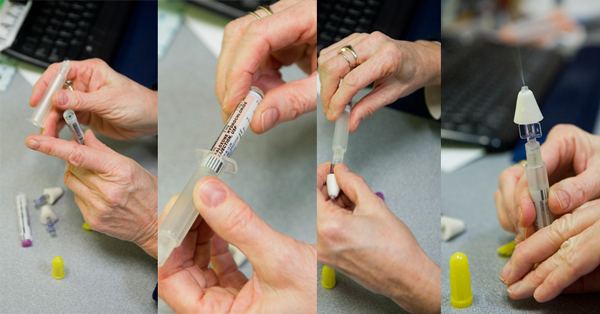
Narcan would not be so accessible to parents like Brigitte if not for Alexander Walley (SPH’07), a School of Medicine assistant professor of medicine and the medical director of the Massachusetts Department of Public Health’s Opioid Overdose Prevention Pilot Program. Through the program, the state distributes free naloxone kits to people likely to witness an overdose, and teaches them how to administer the drug. “Now they have this tool that they can use to literally bring people back to life, and that is a powerful experience,” says Walley. “It represents something that’s much bigger than just the medication.”
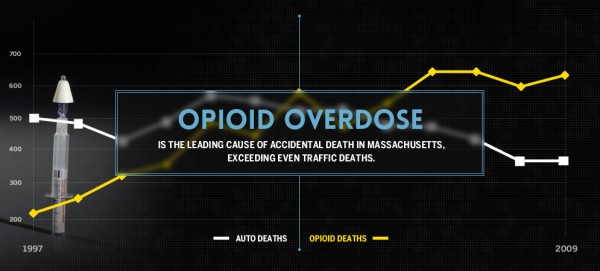
Opioid overdose is the leading cause of accidental death in Massachusetts, exceeding even traffic deaths. The overdose prevention program, which costs the commonwealth about $400,000 a year, has been a success: since it began in 2007 the program has trained more than 20,000 people to administer naloxone. They’ve used the drug to reverse more than 2,300 overdoses in Massachusetts, and the death rate from opioid overdose has leveled off.
The program has generated controversy, however, mostly from critics who argue that making the antidote widely available will encourage people to use heroin more recklessly, an argument that Walley dismisses. “For people who reach the point of overdosing, their judgment often has been hijacked by the drive to use,” he says. “Having naloxone around is not going to affect whether they’re going to use or not. It’s going to give them an opportunity to live longer, so they can go into treatment and try to beat their addiction.”
The program is unique in that it distributes a prescription medication to nonmedical personnel through trained public health workers under a standing order signed by Walley. Not all doctors like the idea.
“It’s a little edgy,” acknowledges Jeffrey Samet (SPH’92), a MED professor of medicine, a School of Public Health professor of community health sciences, and chief of general internal medicine at Boston Medical Center. “It’s giving a drug to someone to give to someone else, without ever seeing that someone else,” Samet says. “That’s just an uncomfortable feeling for doctors. But you step back, put on your public health hat, and say, ‘Well, it actually works.’”
“When this program started, it was not popular,” says Hilary Jacobs, director of the Bureau of Substance Abuse Services at the Massachusetts Department of Public Health. “It was risky business for Dr. Walley to get involved. But he totally understands opioid addiction and is committed to helping this population. He’s been a great partner.”
Overdose is preventable
Walley became interested in addiction volunteering at a homeless shelter in Harvard Square as an undergraduate at Harvard. In medical school at Johns Hopkins, and during his residency in San Francisco, he witnessed firsthand the devastation caused by HIV and intravenous drug use, but also the great potential for healing. He came to Boston University to work with Samet and Richard Saitz (CAS’87, MED’87), an SPH professor of community health sciences and a MED professor of medicine, who also work to treat HIV and addiction through primary rather than acute care. In Boston, as in Baltimore and San Francisco, he watched as many of his patients suffered through—or died from—an overdose. “It’s such a waste and it’s devastating for families,” Walley says. “Overdose is preventable and we have effective treatments now for HIV and addiction. If we can keep people from dying from overdose long enough for treatment to work, their lives get better.”
Heroin has been a problem in New England for decades, but since opioid painkillers like OxyContin became more widely available in the 1990s, use and abuse has risen dramatically. In 2002, 884 people were hospitalized for opioid overdose in Massachusetts; by 2012 that number had more than doubled, to 1,857. Opioids are risky because they bind to receptors in the brain stem, which controls automatic processes such as blood pressure and respiration. Even at low doses, opioids decrease a person’s respiratory rate. Naloxone works by attaching to opioid receptors, kicking the opioids off, and reversing their effects. Naloxone is not addictive and will not produce euphoria, but in someone who has a high tolerance for opioids, it sometimes causes immediate withdrawal symptoms.
About 15 states now have naloxone distribution programs, and Massachusetts has been a national leader. One of Walley’s major contributions has been gathering data to prove that the system works. In a study funded by the Centers for Disease Control and Prevention and published in the British Medical Journal in 2013, Walley and coauthors found that opioid overdose death rates were reduced by as much as 46 percent in communities where the program was implemented.
“The real success is if we can demonstrate it works and get it out there to the rest of the world,” says Samet. “Even if Alex goes out there and speaks about it, it just doesn’t have the same weight as being written up in a prestigious journal. That was huge.”
The Massachusetts program, under Walley’s medical direction, has also expanded the number of trained health workers who can distribute naloxone, and has helped put it into the hands of parents whose children are addicted to heroin. One of them, Joanne Peterson, founded and directs a support network for parents called Learn to Cope. In 2007, health workers began coming to the group’s meetings to train parents and distribute naloxone kits, but access wasn’t meeting demand. At Peterson’s request, the Department of Public Health and Walley authorized Learn to Cope to distribute naloxone, and the group now has 35 parents who train others. Since 2007, 16 parents have used it to save their children.
Peterson says that Walley’s help has been invaluable. “He just cares so much about this problem,” she says. “Think about the number of lives he’s saved. To me and other parents, he’s a hero.”
This BU Today story was written by Barbara Moran (COM’96.) She is a science writer in Brookline, Mass and can be reached through her website WrittenByBarbaraMoran.com.
Mayoral Prize for Innovations in Primary Care Ceremony Celebrated at BUSM

Mayor Thomas M. Menino and Dr. Paula Johnson, Chair of the Board of the Boston Public Health Commission, honored recipients of the 2013 Mayoral Prize for Innovations in Primary Care at a reception hosted by the Boston University School of Medicine. The annual celebration, now in its fourth year, raises awareness about best practices for improving the delivery of primary care services in health care, community-based and workplace settings.
“Five years ago we convened a task force of leaders from health care, academia and the community to create a roadmap for improving Boston’s primary care system, and I couldn’t be more proud of the successes we’ve had since then,” Mayor Menino said. “Access to affordable health care is a hot button issue these days, but Boston will continue to be a model for other cities thanks to innovative efforts like those of our award winners.”
This year’s awardees included Boston Medical Center’s (BMC) Office-Based Opioid Treatment program (OBOT). It received the Mayoral Prize for Innovations in Primary Care in a health-care setting for expanding access to addiction treatment. BMC’s OBOT, the largest such program in New England, provides medication-assisted treatment integrated into primary care and targets underserved hard-to-reach patients in a setting that also reduces the social stigma associated with substance abuse treatment.
The model relies on physician-supervised nurse care managers, which has dramatically improved access to addictions treatment. Within a year of opening, the hospital eliminated a treatment waiting list that exceeded 300 patients. Patients now can access treatment within 1-4 weeks of their first contact.
HIV-Infected Russians with Depressive Symptoms at Higher Risk for Subsequent Alcohol Use

Researchers from Boston University School of Medicine (BUSM) and the College of Arts and Sciences (CAS) have found that among heavy-drinking Russian HIV-infected patients, elevated depressive symptoms were associated with long-term alcohol use. These findings suggest that HIV-infected populations who are depressed are more likely to drink heavily. The study is published online in the journal Drug and Alcohol Dependence.
Previous studies have shown that heavy drinking has been linked with HIV disease progression and may interfere with treatment. However, few studies have examined whether depressive symptoms are associated with subsequent alcohol use. The researchers used the National Institute for Alcohol Abuse and Alcoholism (NIAAA) definition of risky drinking, meaning men consuming more than four drinks on a single day or more than 14 per week and women consuming more than three drinks on a single day or seven per week.
“Approximately one-million individuals are living with HIV in
The researchers recruited HIV-positive individuals from 18–70 years old who reported unprotected sex and heavy drinking in the past six months from addiction treatment facilities in

According to the researchers, among heavy drinking HIV-infected patients, elevated depressive symptoms were associated with greater subsequent alcohol use. They also found that depressive symptoms were more strongly associated with the amount of drinks per day, rather than the number of days of heavy drinking.
“These results suggest an additional mechanism through which depressive symptoms may negatively influence HIV-related outcomes among this population. Findings from this study highlight the importance of addressing depressive symptoms among HIV patients who engage in heavy drinking,” said Tibor Palfai, PhD, professor of psychology in CAS and lead author of the study. The researchers propose that more studies are needed to address more specific subsets of HIV-positive populations.
The current study was supported in part by NIAAA, R01AA16059 (PI: Samet).
MED to Launch Physician Assistant Program
More than 1,000 apply for 28 slots in inaugural class

In an effort to address the critical shortage of physicians—especially in the field of primary care—forecast for the coming decade, the School of Medicine recently announced a new Master of Science Physician Assistant (PA) Program, to be administered by MED’s Division of Graduate Medical Sciences.
The Association of American Medical Colleges estimates that the United States will face a shortage of 91,500 doctors by 2020, up from the 62,900 forecast for 2015. The reasons for the shortage? An aging baby boomer generation that will require increasing medical resources and the health insurance coverage to some 32 million currently uninsured Americans made possible by the Affordable Care Act by 2019.
Physician assistants are licensed to practice medicine as part of a team that includes physicians. They have become a growing part of medical practices, along with nurse practitioners, largely because the bill for their services is less than that for physicians. The US Bureau of Labor Statistics estimates that the number of PA jobs is expected to grow by 39 percent between 2008 (74,800) and 2018 (nearly 104,000).
“The United States needs a larger health professional workforce to care for aging baby boomers, and the demand for midlevel medical providers is increasing rapidly,” says Karen Antman, MED dean and Medical Campus provost and John Sanderson Professor of Health Services. “The currently available PA programs are turning down very qualified candidates for lack of slots.”
Like their medical school counterparts, physician assistant students enrolled in the new BU program will learn medical sciences, clinical sciences, and clinical skills. The 28-month curriculum, divided into seven semesters, will consist of 12 months of traditional lectures and seminar sessions, followed by 16 months of hands-on clinical education in hospitals and clinics. PA students will also be required to submit a thesis proposal.
Physician assistants are educated as generalists, says Mary L. Warner, a MED assistant professor of medicine and program director of the Physician Assistant Program. “Unlike physicians, physician assistants change specialties at least three times over the course of their career,” Warner says. “The most common way PAs learn to practice in new specialties is the apprentice model, with on-the-job training by their supervising physicians.” While PAs are not required to do residencies after earning their degree, short-term residency programs in specialties like obstetrics are available.
Physician assistants perform many of the same tasks as doctors. Among their responsibilities are performing physical exams, ordering lab tests and diagnosing illnesses, prescribing medications and developing treatment plans for patients, and when working in surgical settings, assisting in surgery.
First launched in 1965 at Duke University, the physician assistant profession was initially intended to address the primary care shortage in rural and underserved areas. The BU degree program is designed to educate PAs who will care for a diverse population of patients in a variety of health care settings.
BU’s PA program will offer several innovations not found at most other schools. Students will benefit from a flipped classroom, where professors assign video lectures and online reading to be completed at home, with classroom time reserved for problem solving and answering questions. The anatomy lab, says Warner, will offer a full dissection lab, unusual for PA programs, and a physiology lab, also not widely available at other programs, as well as a strong research curriculum. “In our partnerships with Boston Medical Center and the VA Boston Healthcare System,” she says, “the clinical education will focus on learning to care for patients from vulnerable populations.”
Warner says that more than 1,000 people have applied for the 28 slots in the inaugural class. She attributes the strong interest in the program to the shortage of primary care providers and the strong projected growth prospects for the profession, as well as MED’s national reputation. Those accepted into the program will be notified by December 1 and will begin their studies in April.
More information about BU’s Physician Assistant Program can be found here.
This BU Today story was written by John O’Rourke. He can be reached at orourkej@bu.edu.
University’s Health, Clinical Rankings Climb
Times Higher Education puts BU 22nd among schools worldwide

For the second year in a row, BU’s health and medical education programs have been named among the top 100 worldwide in the 2013–2014 Times Higher Education World University Rankings, conducted by Thomson Reuters. The influential survey ranked BU 22nd for clinical, preclinical, and health programs, an advancement from 29th place last year.
The ranking applies to the School of Medicine, the School of Public Health, the Henry M. Goldman School of Dental Medicine, Sargent College of Health & Rehabilitation Sciences, and the School of Social Work, according to Thomson Reuters.
The Times Higher Education (formerly part of the Times of London) uses 13 criteria to compile the ratings. The criteria are grouped in five areas—teaching, international outlook, research, research income from industry, and citations of faculty research. “While BU received an overall score of 74.8 out of 100, our citation of research influence score is 95.8, highlighting the widespread impact of our research,” says Karen Antman, dean of MED, provost of the Medical Campus, and the John Sandson Professor of Health Sciences.
“I join my fellow deans from the Medical Campus in celebrating the high ranking that Boston University received,” says Jeffrey W. Hutter, dean of the Henry M. Goldman School of Dental Medicine. “I am particularly proud of the role that the faculty and staff of the School of Dental Medicine played in achieving the Times ranking.”
The rankings examine research influence by tracking the number of times a university’s published work is cited by scholars globally. This year Thomson Reuters examined more than 50 million citations to 6 million journal articles published over five years in assembling the rankings, according to the Times website.
“This recognition is gratifying and is made possible by the hard work, talent, and dedication that you and all in our educational community contribute to the University’s health sciences programs,” Antman wrote in an email to MED, SPH, SDM, SAR, and SSW faculty and staff.
This BU Today story was written by Susan Seligson. She can be reached at sueselig@bu.edu.
GSDM’s Shenkin Third in Command among Dentists Nationwide

The American Dental Association (ADA) announced on Nov. 4, that Dr. Jonathan Shenkin of Freeport, Maine, clinical associate professor at Boston University Henry M. Goldman School of Dental Medicine (GSDM), was elected ADA second vice president.
ADA vice president is a two-year position, with two VPs (first and second) serving at any time. In his second year next year, Dr. Shenkin will become first VP. Both VPs and the president-elect serve as voting members of the Board of Trustees, along with 17 others.
The election makes Shenkin the youngest member of the Board. The ADA House of Delegates also appointed Dr. Maxine Feinberg president-elect.
Dr. Shenkin is a faculty member in both the Department of Pediatric Dentistry and the Department of Health Policy & Health Services Research at GSDM. He joined Boston University in 2003.
“On behalf of all of us at GSDM, I extend my congratulations to Dr. Shenkin for this significant accomplishment,” said Dean Jeffrey W. Hutter. “We look forward to seeing how he will continue to positively influence the dental profession in this new role.”
Dr. Shenkin is well-known as an ADA spokesperson for pediatric dentistry topics. He regularly comments on public policy issues related to tobacco, unhealthy beverages, and a broad range of dental topics.
Dr. Shenkin’s early policy efforts centered on reducing the availability of soda in public schools. He was appointed to the Maine Legislature’s Commission to Study Public Health, and served as the chair of the subcommittee on Children, Nutrition and Schools. This role led to an invitation by the Institute of Medicine to serve on an expert panel on school nutrition.
Later policy efforts focused on banning smoking in cars with children, leading to the successful effort to ban smoking in cars in Bangor, Maine, the first city in the nation to do so. He later led the successful effort on the state level in Maine.
His current interests are in clinical decision making by pediatric and general dentists. He continues his long term interest in reducing the dental disease risk among young children.
Dr. Shenkin served as chair of the ADA’s Council on Communications for 2012–13 and was a longtime consultant on nutrition and community issues to the ADA Council on Access, Prevention and Interprofessional Relations. He has been an ADA member for 21 years. He is a past president of the Maine Dental Association and served on the board of the Maine Dental Political Action Committee.
He maintains private practices in pediatric dentistry in Augusta, and Waterville, Maine.
He is a member of the of the American Academy of Pediatric Dentistry, American Academy of Pediatrics, American College of Dentists, International College of Dentists, and the Academy of General Dentistry.
He earned a DDS from Columbia University in New York. He also received an MPH and Certificate in Health Care Finance and Management from Johns Hopkins University and a Certificate of Advanced Graduate Study in Pediatric Dentistry at the University of Iowa. He completed a dental public health residency at the National Institutes of Health.
Submitted by GSDM Communications.
Few Patients with Newly-Diagnosed Hyperlipidemia Receive Recommended Thyroid Screening
Despite current guidelines that recommend newly diagnosed high-cholesterol patients have a TSH blood test done to make sure they do not have hypothyroidism, researchers from Boston University School of Medicine (BUSM) and Boston Medical Center (BMC) have found that only about half of these patients were screened for thyroid dysfunction. The findings, which appear online in JAMA Internal Medicine, show the current guidelines may be underutilized.
Hypothyroidism (an underactive thyroid) is a relatively common cause of high cholesterol. Between one and 13 percent of patients with high cholesterol are thought to have hypothyroidism. Current guidelines recommend that patients newly diagnosed with high cholesterol should have a TSH blood test done to make sure they do not have hypothyroidism.
Researchers reviewed the records of adult patients with a new diagnosis of high cholesterol between 2003-2011 and found 8,795 patients with new high cholesterol diagnoses within the study period. Thyroid function was checked within six months of the high cholesterol diagnosis in 49.5 percent of the patients. Of those, 226 (5.2 percent) had an elevated TSH level consistent with hypothyroidism. Among the patients with hypothyroidism, 114 (50.7 percent) were treated with thyroid hormone. Only 25 percent of the patients treated with thyroid hormone (versus. 44 percent of the patients not treated with thyroid hormone) were also prescribed a lipid-lowering medication within one year.

“We performed this retrospective study to see how many patients with newly diagnosed high cholesterol were having their thyroid function checked and found that only about half of these patients were screened for thyroid dysfunction, despite current guidelines,” explained corresponding author Elizabeth Pearce, MD, associate professor of medicine at BUSM and endocrinologist at BMC. “We conclude that the low rate of thyroid function testing in patients with new-onset hyperlipidemia demonstrates the need for greater awareness of current guidelines.”
According to Pearce, future studies are needed to better understand reasons for low thyroid function screening rates among patients with high cholesterol, and the cost-effectiveness of hypothyroidism screening and treatment for patients with high cholesterol.
Funding for this study was provided in part by the National Institutes of Health (7K23HD068552).
Study Shows Decrease in Sepsis Mortality Rates

A recent study from Boston University School of Medicine (BUSM) and Boston Medical Center (BMC) shows a significant decrease in severe sepsis mortality rates over the past 20 years. Looking at data from patients with severe sepsis enrolled in clinical trials, researchers found that in-hospital mortality rates decreased from 47 percent between 1991 and 1995 to 29 percent between 2006 and 2009, a time period when no new pharmacological treatments were developed for severe sepsis. The results suggest that substantial improvements in patient outcomes can be accomplished by improving processes of care and working with existing treatments in a novel way.
The study, which is published online in Critical Care Medicine, was led by senior author Allan J. Walkey, MD, MSc, assistant professor of medicine, BUSM, and attending physician, pulmonary, critical care and allergy medicine, BMC.
Severe sepsis, which affects approximately one million Americans each year, occurs when a local infection causes other organs in the body to fail. For example, a patient with severe sepsis could have an infection that starts as pneumonia, but a counterproductive immune response results in damage to distant organs, such as new onset kidney failure, altered mental status and/or dangerously low blood pressure (shock). It can be imminently life threatening - approximately one out of three patients die from severe sepsis during their hospitalization.
Because prior studies suggesting a decrease in severe sepsis mortality rates used only billing codes from administrative data, it was thought that billing code changes may be responsible for the mortality decline. To avoid administrative data issues and determine trends in patients prospectively identified as having severe sepsis, this study looked at data from patients with severe sepsis enrolled in 36 multicenter clinical trials from 1991-2009.
The results showed that despite no change over time in the severity of illness of the patients with severe sepsis enrolled in the clinical trials, mortality rates declined significantly over 20 years, and the decline occurred without the development of new pharmacological therapies targeted to treat severe sepsis.
Previous studies have suggested that having more critical care physicians providing care, earlier initiation of antibiotics, more targeted delivery of intravenous fluids and more gentle mechanical ventilation may improve outcomes of patients with severe sepsis. However, whether findings from these past studies were implemented into routine practice and were associated with improved severe sepsis patient outcomes in the real world was previously unclear.
“Even without new drugs or technologies to treat severe sepsis, our study suggests that improving the ways in which we recognize and deliver care to patients with severe sepsis could decrease mortality rates by a magnitude similar to new effective drug,” said Walkey.
Additional studies are needed to determine what specific changes in care have had the most impact on decreasing the mortality rates of patients with severe sepsis.
This study was funded in part by the National Institutes of Health’s National Heart, Lung, and Blood Institute under grant award number K01HL116768.
Robert Meenan to Step Down as SPH Dean
At helm 21 years, led school to national prominence

University President Robert A. Brown has informed School of Public Health faculty and staff in a letter sent yesterday that Robert Meenan has decided to step down after more than two decades as dean of SPH.
A rheumatologist with master’s degrees in public health and in business administration, Meenan (MED’72, GSM’89), who is also a School of Medicine professor of medicine, oversaw a period of growing student enrollment, expanding research support, and rising national rankings during his tenure as dean. He also oversaw the establishment of SPH’s international health department and the BU-wide Center for Global Health and Development, based at SPH. Under his leadership, the school also took on a more prominent role in the greater Boston community.
Meenan will remain as dean until a successor is in place, after which he’ll move to the Charles River Campus as a special assistant to Brown.
“This is the right time for me to make this change,” says Meenan, who, with 21 years on the job, is the longest serving dean of a school of public health nationwide and the longest serving dean at BU. “With the recent reaccreditation of the school and the timing of the school’s planning process, my stepping down now will give the school and the University time to search for my successor before we have to tackle the next round of internal and external reviews.”
“In his more than two decades as dean, Bob Meenan has led the transformation of SPH into one of the preeminent schools of public health in the nation,” says Brown. “He has nurtured vibrant educational and research programs, and he has built and supported an outstanding faculty. His legacy will be found in the generations of SPH graduates who are helping to transform public health and health care delivery around the world.”
Meenan “has led a succession of strategic plans and their implementation and evaluation, providing a firm base of goals and priorities,” says Karen Antman, provost of the Medical Campus and dean of the School of Medicine. Under Meenan’s watch, she points out, SPH has moved up steadily in the US News and World Report rankings, from 15th to 13th to, most recently, 11th, even as new schools of public health have been established at competitive universities.
“I feel like I have an opportunity to go out on top,” Meenan says. “We have reached an all-time high in student enrollments, our research program continues to grow despite a very difficult funding environment, and we recently achieved a record budget surplus that can be used going forward to support strategic initiatives and space improvements.” He notes that the school has also passed the 60 percent mark of its goal for the Campaign for Boston University. “I am very proud of what we’ve accomplished together.”
It was under Meenan that the department of international health was created. Founded and chaired for many years by the late William Bicknell, the department now offers one of the most popular concentrations in the school’s Master of Public Health program. The other concentrations are biostatistics, environmental health, epidemiology, health policy and management, maternal and child health, social and behavior sciences, and health law, bioethics, and human rights.
“Bob Meenan further expanded international health at SPH by recruiting Jonathon Simon and his colleagues from Harvard School of Public Health 10 years ago,” says Antman. Simon, who is the inaugural Robert A. Knox Professor, leads the Center for Global Health and Development. “Bob Meenan has very ably managed finances at SPH, skillfully steering the school through an expensive space expansion into the Crosstown building, and more recently, through the financial challenges of sequestration and cuts in federal funding for research,” Antman says.
Initial steps to launch a national search process for a new SPH dean, led by Antman and Jean Morrison, University provost, are expected in the coming weeks.
This BU Today story was written by Susan Seligson. She can be reached at sueselig@bu.edu.