Student Updates
Commemorating GSDM Excellence: The Kramer Symposium

On Oct. 24, the Boston University Henry M. Goldman School of Dental Medicine (GSDM) held the inaugural Gerald M. Kramer Symposium on Periodontology, led by Dr. Serge Dibart, Chair of the Department of Periodontology and Director of the Advanced Specialty Education Program in Periodontics. Former colleagues, students, and acquaintances of Dr. Kramer along with other alumni, clinicians, faculty, and residents gathered in Keefer Auditorium for a day of reminiscence, commemoration, and learning. The day highlighted both the lasting impact that Kramer had on virtually everyone he came into contact with and his contribution to the strength and character of the GSDM periodontics department.
Dean Jeffrey W. Hutter addressed the attendees, “I cannot begin to tell you how much it means to me that our Kramer era alumni have returned to the Boston University Henry M. Goldman School of Dental Medicine, at long last. You are and always have been important members of the alumni family and it is deeply gratifying to me to be your host for this important symposium, in honor of Dr. Kramer.”
Dean Hutter continued, “It is thrilling for all of us to host the first Kramer Symposium during Alumni Weekend 2013 and I trust that, with the support of our periodontic alumni, this will become an enduring tradition.”
Dean Hutter commended Dr. Dibart for all of his efforts in planning the symposium. He also thanked each of the featured moderators and speakers. He said to them: “Your presence and participation today truly honors your mentor and I know he would be proud to see you onstage today.”
Before introducing the first speaker, morning moderator Dr. Luigi Montesani reflected on the characteristics that made Dr. Kramer such an exceptional person. Even as only an acquaintance, Montesani was tremendously impressed by Dr. Kramer’s excellence and passion. Montesani noted that, in everyone’s experience with Kramer, “perfection was the common denominator.”
The first lecture was presented by Myron Nevins PERIO 67, who practiced and taught with Kramer for 30 years and co-edited with him the Journal of Periodontics & Restorative Dentistry. Dr. Nevins interwove reminiscences of his work with Kramer with clinical discussions in his lecture “Long-term treatment regimens for the periodontally compromised patient.” Nevins supported Montesani’s observation of Kramer’s continuous quest for perfection, and pointed out, however, that while Kramer viewed perfection as a goal, he himself never saw a case without a flaw. Dr. Nevins identified this as a part of his excellence and dedication to lifelong learning.
Dr. Nevins shared with the audience many of the valuable lessons imparted to him by Dr. Kramer. In his clinical discussion, Nevins revealed the great care that he and Kramer had for their patients as people. Before advising a treatment plan for a patient, he learned to ask, “What would I do if it were my tooth?”
The overarching message imparted by Dr. Nevins was the importance of long-term dedication to a patient’s total well-being. As Nevins put it, he and Kramer treated patients as if they were running a marathon with them, rather than a sprint. “That is,” said Nevins, “they ended up ‘marrying’ their patients.” He cited one patient who, when she began treatment, had children in prep school. Later, when he saw this patient, those children had children in prep school. “The hallmark of the BU program,” said Dr. Nevins, “was setting up a case for long-term care.”
Burton Langer PERIO 66 also had many positive memories of Dr. Kramer to share over his lecture, “Soft and hard tissue reconstruction: from teeth to implants.” He spoke of Kramer as a “role model in therapy” and likened his hands during clinical work to delicately flitting butterflies. He reiterated Kramer’s care for the patient as a person. “The BU mantra is to not only provide therapy, but to treat the individual.”
Paul Fugazzotto PERIO 81 presented a lecture, “Dr. Kramer: A teacher, a clinician, a philosopher and a paradigm for life.” He conveyed the deep impact that Kramer’s teaching had had on him. Dr. Fugazzotto relayed one of a number of memorable words of wisdom that he has retained from his time with Kramer: “Our definition of success is limited by our perception of possibilities.”
After lunch, the afternoon moderator Phil Melnick PERIO 81 said to the residents in the audience, “This is a day you’ll talk about later in life.” Dr. Melnick likened the residents to “progenitor cells”: The residents would model themselves after role models in their field, such as Dr. Kramer, and carry on the GSDM tradition of excellence.
Reminiscences of Kramer continued through the afternoon lectures. The lectures were “Peri-implantitis: What do we know and can we treat it?” presented by Richard Lazzara PERIO 76; “LANAP, clinical outcomes in private practice after 4 years,” presented by Thomas Mone PERIO 77; and “Kramer’s inspiration—Thinking out of the box,” presented by Paul Ricchetti PERIO 78.
Following the lectures, the attendees were welcomed to share additional memories of Dr. Kramer.
Gordon L. Pattison PERIO 75 gave a moving reminiscence. He said that he was eternally grateful to Dr. Kramer as someone who had changed his life. “Despite his elegant exterior, he was a very humble man and the kindest man I’ve ever met,” Pattison said. He described a time when he had been feeling down and Dr. Kramer noticed, took him aside, and cheered him up. Pattison described Kramer as a father figure and said, “In fact, I think we were all his children.”
Dr. Montesani concluded the reminiscences by saying that the vivid memories of Dr. Kramer that had been shared throughout the day “proved that when you die, you don’t really die.”
Dean Hutter closed the program with thanks and appreciation. Although they were not able to attend the Symposium, he thanked Mrs. Sylvia Kramer and her children, Leslie and Lloyd, for their support and involvement in seeing the symposium come to fruition. Dean Hutter also thanked the special guests who were present: the Kramers’ niece Sandy Griffel; family member Dr. Peter Cahn and his partner, BU School of Medicine faculty member Dr. Donald Hess; and Dr. Kramer’s first secretary Annie Delli Santi and her husband, Tony. Additionally, he thanked everyone present for making the effort to be there to experience and hear the respect, devotion, and gratitude that Dr. Kramer’s students have for him to this day.
“Dr. Kramer’s legacy continues to impact residents and patients at the School every day and alumni and friends around the world put his legacy into practice each and every day in their offices,” said Dean Hutter. He continued, “Dr. Kramer was a founder of the field, and his efforts in building the Department of Periodontology at our School had a profound influence on our School. For the last 50 years, the department has been an internationally recognized leader in the profession, and his spirit and philosophy live on.”
Following the symposium, attendees gathered for a reception at the BU Castle.
Photos are available on Facebook (symposium, reception) and Flickr (symposium, reception).
This story was submitted by GSDM Communications.
Vitamin D Guru to Deliver University Lecture Nov. 6
MED’s Holick will discuss the sunshine nutrient and why we need it

“Vitamin D chose me,” says Michael Holick, who has been an outspoken advocate worldwide for awareness of the ravages of vitamin D deficiency. As tonight’s 2013 University Lecturer, the School of Medicine professor of medicine, physiology, and biophysics will speak about his long career studying what he dubs the “D-Lightful” nutrient and share the story of how he became consumed by a subject he once considered boring.
Director of Boston Medical Center’s Bone Health Care Clinic and of MED’s Vitamin D, Skin and Bone Research Laboratory, Holick is a winner of the Linus Pauling Institute’s Linus Pauling Prize for health research and the author of The Vitamin D Solution: A 3-Step Strategy to Cure Our Most Common Health Problem (Plume, 2011). He believes the world is in the throes of a vitamin D defiency pandemic, which is causing bone disease and osteoporosis in adults as well as increasing the risk of a range of diseases, including some cancers, tuberculosis, influenza, diabetes, stroke, heart disease, and schizophrenia. About a third of all Americans are at risk for vitamin D deficiency, he says, and that the risk is higher for young children. It’s estimated that vitamin D deficiency affects nearly two billion people worldwide, making it, he says, one of the world’s leading medical problems.
Vitamin D regulates insulin production in the pancreas as well as in genes that control cell growth, and it helps the immune system, says Holick, who has been studying how skin makes vitamin D for more than 30 years. “Every tissue and cell has a vitamin D receptor. We estimate that as many as 2,000 genes—up to one-sixth of the total human genome—are directly or indirectly regulated by vitamin D.”
Holick’s zeal for the “sunshine vitamin,” which has earned him some detractors, has its roots in his early research as a resident at Massachusetts General Hospital, which shed light, so to speak, on the elegant way that our bodies synthesize the vitamin in our skin during sun exposure. His research resulted in what he calls “the concept of sensible sun exposure” coexisting with protection from skin cancers and other damage. Recently he worked with a California-based software engineer to develop an app that he says “not only tells you how much Vitamin D you are producing anywhere at any time of the year, but also provides a warning when you’ve made enough Vitamin D and that further sun exposure can increase the risk of skin damage.”
“The major cause of the vitamin D deficiency epidemic is the lack of appreciation that sun exposure has been, and continues to be, the major source of the vitamin worldwide,” says Holick, who in his lecture will elaborate on his three-step strategy to treat and prevent vitamin D deficiency.
The University Lecture was established in 1950 to honor faculty engaged in outstanding research and to offer an opportunity to hear a distinguished scholar discuss a favorite topic. All faculty members are invited each spring to nominate the subsequent year’s lecturer. University Lecturers from the previous five years act as the selection committee.
Michael Holick will give the 2013 University Lecture, titled The D-Lightful Vitamin D for Health, tonight, Wednesday, November 6, at 7 p.m. at the Tsai Performance Center, 685 Commonwealth Ave. Admission is free and open to the public.
This BU Today story was written by Susan Seligson. She can be reached at sueselig@bu.edu.
Researchers Model Familial Amyloidosis in vitro Using iPSC Technology

Researchers from Boston University School of Medicine (BUSM) and Boston Medical Center (BMC) have generated the first known disease-specific induced pluripotent stem cell (iPSC) lines from a patient with familial transthyretin amyloidosis (ATTR). The findings, which are reported in Stem Cell Reports, may lead to new treatments for genetic diseases such as familial amyloidosis.
iPSCs are a form of stem cells that come from skin or blood cells reprogrammed into cells that have the ability to become any type of tissue in the body. ATTR is a lethal, autosomal dominant protein-folding disorder caused by one of more than 100 distinct mutations in the transthyretin (TTR) gene. In ATTR, protein secreted from the liver aggregates and forms fibrils in target organs, chiefly the heart and peripheral nervous system, highlighting the need for a model capable of duplicating the multisystem complexity of this clinically variable disease.
According to researchers using iPSC technology, cell lines can be established that are genetically identical to the individual from whom they are derived, allowing for disease modeling and development of novel therapeutics in the personalized genetic context of the patient from which they are made.
In this study, the researchers used the iPSC to generate liver cells that secrete the disease-specific mutant protein as well as cardiac and neuronal cells, the downstream target tissues of the disease. Upon exposure to the mutant protein, the heart and neuronal cells displayed signs of stress and an increased level of cell death as compared to those exposed to normal protein, thereby recreating essential aspects of the disease in vitro. Furthermore, small molecule stabilizers of the mutant protein that are being tested in clinical trials show efficacy in this model, validating this iPSC-based, patient-specific in vitro system as a platform for testing therapeutic strategies.
“Our work demonstrates that it is possible to model a complex, multisystem genetic disease in a relatively short space of time, using lineage-specified cells derived from patient stem cells," explained George J. Murphy, PhD, assistant professor of medicine in the section of Hematology and Oncology and co-director of the Center for Regenerative Medicine (CReM) at BUSM and BMC.
“This is a major breakthrough that will facilitate testing novel targeted therapies that are being developed for ATTR amyloidosis,” said coauthor John Berk, MD, clinical director of the Amyloidosis Center at BUSM and BMC, where these rare diseases have been studied for more than 50 years. “Patients and families from all over the world who come to us for treatment may soon benefit from this research.”
Funding for the study was provided by the Amyloidosis Foundation, the Young Family Amyloid Research Fund and the Boston University Clinical and Translational Science Institute.
BUSM Professor, BMC Physician Appointed to National Health Information Technology Policy Committee

Devin Mann, MD, MS, assistant professor of medicine at Boston University School of Medicine (BUSM) and attending physician at Boston Medical Center (BMC), has been appointed to the Health Information Technology (HIT) Policy Committee by the U.S. Government Accountability Office (GAO).
Mann, who was one of three new appointments, will serve as a researcher on the committee and will complete a full, three-year term through October 2016.
“In developing policy for health information technology, it’s important to take into account expertise related to privacy and security, health care research, as well as the views of health care workers who are the users of HIT,” said Gene L. Dodaro, Comptroller General of the United States and head of the GAO. “A number of individuals with backgrounds in these areas responded to GAO’s request for nominations, and I am pleased to announce the addition of today’s new appointments.”
The American Recovery and Reinvestment Act of 2009 established the HIT Policy Committee and gave the Comptroller General responsibility for appointing 13 of its 20 members. The HIT Policy Committee makes recommendations to the National Coordinator for Health IT on the development and adoption of a nationwide health information infrastructure, including standards for the exchange of patient medical information.
“I am honored to have been selected to serve on this prestigious committee and I look forward to representing BUSM and BMC over the next three years,” said Mann.
To this role, Mann brings years of experience in healthcare IT. His research has focused on the use of health information technology in improving clinical care, such as developing decision support systems with electronic health records to support advanced medical home care. He serves as the lead physician in ambulatory implementation of the Epic system at BMC and co-leads Epic optimization at East Boston Neighborhood Health Center.
Mann has served as the HIT lead on the Evidence-Based Medicine Task Force of the Society of General Internal Medicine. He received his medical degree from the New York University School of Medicine and his MS of Science in Clinical Epidemiology and Health Services Research from Weill Cornell Medical College.
For more information visit the GAO Health Care Advisory Committees web page at http://www.gao.gov/about/hcac/.
2013 University Lecture Nov. 6: The D-Lightful Vitamin D for Health, Given by BUSM’s Holick

Professor of Medicine, Physiology, and Biophysics at BU School of Medicine Michael F. Holick, PhD, MD, will be delivering the 2013 University Lecture on Wednesday, Nov. 6 on the Charles River Campus. Dr. Holick will speak on The D-Lightful Vitamin D for Health.
Since 1950, the University Lecture has offered members of the BU community and the general public an opportunity to hear from distinguished faculty about the outstanding and often groundbreaking research and scholarship in which they are actively engaged.

University Lecturers represent a vast array of disciplines and research topics, yet share a common commitment to excellence in scholarly inquiry and discovery. The annual lecture provides an opportunity to highlight the work of a distinguished scholar and engages both the University community and the broader public in the vibrant intellectual life of Boston University.
Dr. Holick is Professor of Medicine, Physiology and Biophysics at BU School of Medicine; Director of the General Clinical Research Unit; Director of the Bone Health Care Clinic; and Director of the Vitamin D, Skin and Bone Research Laboratory at Boston University Medical Center.
He has made numerous contributions to the biochemistry, physiology, metabolism, and photobiology of vitamin D for human nutrition, among them, establishing global recommendations advising sunlight exposure as an integral source of vitamin D. He has also helped increase awareness regarding vitamin D deficiency pandemic, and its role in causing not only metabolic bone disease, and osteoporosis in adults, but increasing risk of children and adults developing preeclampsia, common deadly cancers, schizophrenia, infectious diseases including TB and influenza, autoimmune diseases including type 1 diabetes and multiple sclerosis, type 2 diabetes, stroke and heart disease.
Dr. Holick is a Diplomate of the American Board of Internal Medicine, a Fellow of the American College of Nutrition, and a member of the American Academy of Dermatology and the American Association of Physicians. He has received numerous honors, including the General Clinical Research Centers Program Award for Excellence in Clinical Research from NIH, American College of Nutrition’s Communication Media Award, Best Docs in America, and the Linus Pauling Prize for Human Nutrition. He has authored more than 400 peer-reviewed publications, edited or co-edited 13 books, written The UV Advantage (2004) and The Vitamin D Solution (2010), and helped develop the dminder.info app.
2013 University Lecture
- Dr. Michael F. Holick
- The D-Lightful Vitamin D for Health
- Wednesday, Nov. 6, 7 p.m.
- Tsai Performance Center
- 685 Commonwealth Avenue
- Charles River Campus
Admission is free. The public is invited.
Higher-Level TB Research to Begin at NEIDL
Boston Public Health Commission gives go-ahead
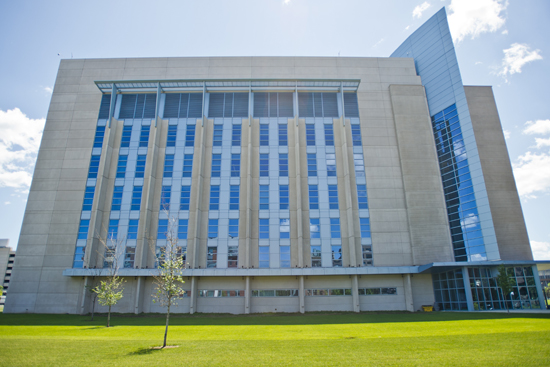
BU’s National Emerging Infectious Diseases Laboratories will begin doing tuberculosis research at a higher biosafety level in the coming months, following approval of the work by the Boston Public Health Commission. The research will be transferred from another lab on the Medical Campus.
TB researchers Igor Kramnik, a School of Medicine professor of medicine and director of NEIDL’s Aerobiology Core, and James Galagan, a College of Engineering professor of biomedical engineering and NEIDL associate director of systems biology, have also received approval from BU’s Institutional Biosafety Committee (ISB) to begin preparing for Biosafety Level 3 (BSL-3) research at NEIDL. BSL-3 research at the lab was green-lighted by a federal court in September.
Kramnik says his research probes the “mechanisms of host susceptibility to tuberculosis, to determine how to prevent destructive lung inflammation caused by the pathogen.” He and his colleagues have managed to stem the disease’s lung lesions in mice, and they are now trying to figure out how to activate such protection in humans and prevent TB transmission by coughing.
“We’ll be able to start training in the new BSL-3 lab within a month,” says Kramnik. “We’ll start working with the pathogenic strain as soon as we are comfortable using the space.” Additional ISB review may be required before the BSL-3 work begins.
NEIDL associate director Ronald Corley, Medical Campus associate provost for research and a MED professor and chair of microbiology, says Boston is the only city he knows of that requires municipal health commission approval of BSL-3 research. The approval adds important external oversight to the high-containment laboratory, he says.
Kevin Tuohey, executive director for research compliance at BU and Boston Medical Center, says the Boston Public Health Commission’s review “is a comprehensive process that requires the submission of project-specific information and a variety of safety plans addressing biological safety, employee health, emergency response, security, transportation, training, and the maintenance of the laboratory space.” The submission of that information, he says, is followed by a commission inspection of labs and their procedures and equipment.
Biosafety Level 4 (BSL-4) research at NEIDL is not expected to begin until after the resolution of a state court case and approval by the Boston Public Health Commission and the federal Centers for Disease Control and Prevention. The lab was cleared two years ago for BioSafety Level 2 (BSL-2) research, which has included Dengue fever virus and some TB work using “surrogates” of human TB.
TB is “one of the areas of research we are planning to expand in NEIDL,” Corley says, “because it is one of the biggest health problems in the world, and it is also a disease that exists in Boston. There are more and more drug-resistant varieties that are emerging. It’s quite appropriate for NEIDL to be studying it.
This BU Today story was written by Rich Barlow. He can be reached at barlowr@bu.edu.
Families Prone to Longevity Offer Clues to Disease Risk
People with longer life spans also are less likely to suffer from osteoporosis, cancer and other health problems, suggesting that longevity-prone families may be “an important resource to discover genetic and environmental factors” that keep people healthy longer, a study led by a BUSPH researcher has found.
The study, published in the open-access journal Frontiers in Public Health, Epidemiology, found that compared to a control group, older subjects with family histories of longevity had lower risks for cancer, cardiovascular disease, severe dementia, diabetes, hypertension, osteoporosis and stroke. The age at which 20 percent of the longevity-prone families had one or more age-related diseases was approximately 10 years later than the controls.
“The analyses . . . suggest that this aging cohort provides an important resource to discover genetic and environmental factors that promote prolonged health-span, in addition to longer life-span,” said the research team, headed by Paola Sebastiani, professor of biostatistics at BU School of Public Health.
Sebastiani and colleagues compared the “health-spans” of older-generation subjects of the Long Life Family Study (LLFS), who have family histories of longevity, to controls that have no family longevity, and to centenarians of the New England Centenarian Study. The LLFS is an ongoing study of longevity and healthy aging in 583 families and almost 5,000 family members demonstrating clustering for longevity. The median age of the subjects and their siblings at enrollment was 92 years, with an age range of 72–109 years.
The study found that the LLFS subjects’ overall disease-free survival was almost comparable to that of the NECS centenarians, with the exception of severe dementia, where the LLFS subjects demonstrated an even greater delay. Pulmonary disease was much less prevalent in the LLFS group and the centenarians, compared to the controls.
A similar pattern of delay in age-of-onset was observed for nearly all the age-related diseases included in the analyses.
“Perhaps members of these families age at slower rates and they have biological factors that impact upon both rate of aging and pathogeneses of age-related diseases,” the researchers wrote.
Sebastiani and her co-authors said future analyses that integrate genetic data with other risk factors will be needed to further explore “health-span.”
Co-authors on the study include: Dr. Thomas Perls, a geriatrician and researcher at the BU School of Medicine and director of the New England Centenarian Study; and Fangui X. Sun of the BUSPH Department of Biostatistics.
Also contributing were researchers from the Taub Institute for Research on Alzheimer’s Disease and the Aging Brain at Columbia University; the Department of Genetics at Washington University; the Department of Epidemiology, Graduate School of Public Health, at the University of Pittsburgh; and the Social Science Research Institute at Duke University.
Submitted by Lisa Chedekel
BUSM Researchers Study Epigenetic Mechanisms of Tumor Metastasis for Improved Cancer Therapy
A review article by researchers at Boston University School of Medicine (BUSM) suggests that epigenetics may be a useful target to stop the growth, spread and relapse of cancer. The findings are published online in Volume 14 of the International Journal of Molecular Sciences.
The term epigenetics refers to the external modifications to DNA that turn genes "on" or "off." These modifications do not change the DNA sequence, but instead, they affect how cells read genes.
The researchers propose that epigenetic and other changes mediate the development of cancer progenitor cells. These cells represent the early stage of cancer cell development and can grow rapidly to become full-fledged cancer. According to the researchers, progression of different cancer stages and development of metastatic potential requires differentiation of these cancer progenitor cells.
“These findings are not only important in understanding how cancer progresses, but also help in understanding how cancer progenitor cells grow and differentiate via epigenetic regulators,” said Sibaji Sarkar, PhD, instructor of medicine at BUSM.
Mutated cells are more vulnerable to the environment. Some of these mutations may alter epigenetic regulation in addition to epigenetic changes occurring by external and internal influences, which impacts gene expression and regulates cell behavior, playing a profound role when normal cells develop into progenitor cancer cells.
Sarkar and his colleagues hypothesize that when the progenitor cancer cells metastasize, rapid growth halts. When differentiation is complete, the rapid growth resumes.
The researchers believe that epigenetic mechanisms are involved in this process. Once a degree of metastatic form of cancer is achieved, the genes, which cause the change, become inactive and the genes causing rapid growth are again turned on.
“The acknowledgement of epigenetic changes as key regulators of this switching is expected to generate better epigenetic drugs. It has been suggested that epigenetic drug treatment in combination with standard chemotherapeutic drugs may have better outcomes in preventing and treating drug-resistant cancers,” he added.
This study was funded in part by the American Cancer Society. Garrick Horn, Kimberly Moulton, Anuja Oza, Shannon Byler, Shannon Kokolus and Mckenna Longacre are co-authors of the review article.
Apply for New Endowed Professor Position: Genetics
BUSM has established a new endowed professor position, the Aubrey Milunsky Professor of Human Genetics. Any faculty member with a superb research program in a discipline related to human genetics is encouraged to submit an application. For the purposes of this position, human genetics is broadly defined. It is considered to encompass diverse interests including but not limited to genetics, epigenetics, genomics, personalized medicine and gene regulation. While human relevance is essential, genetic research based on human subjects or model organisms (such as mice, fish, worms, flies, or yeast) are all of great interest.
Applicants must have strong records of accomplishment in an area or discipline broadly related to human genetics. An outstanding and well-established independent research program is required. Basic, translational and clinical research avenues are all equally valued. Creativity, innovation and fundamental advances will distinguish the strongest applications. Perceived potential for future connections and synergies with existing or developing research strengths on the BU Medical Campus will be important considerations. In addition to relationships with faculty and research groups in the BU Schools of Medicine, Dental Medicine and Public Health, applicants may also benefit from connections to programs on the Charles River Campus in BU Schools of Arts & Sciences, Engineering or others.
The primary appointment may be in any department of the BU School of Medicine, and will be guided by the search committee and determined by the natural fit of the incoming faculty member with a goal of maximizing productivity of the research program.
BU is committed to building a culturally diverse faculty and strongly encourages applications from female and minority candidates.
Candidates should already be at the Professor or at minimum Associate Professor level (or comparable achievement levels, if outside academia) to be considered.
To guarantee consideration, applications should be submitted by Jan. 1, 2014, but applications will continue to be considered until the position is filled. Interested applicants should send a CV and brief summary of research interests and plans to Dr. Joseph P. Mizgerd, Chair of the Search Committee for the Aubrey Milunsky Professor of Human Genetics, at jmizgerd@bu.edu.
BUSM Professor, BMC Physician Receives Award for Advancing Research on Tobacco Smoke’s Effect on Lungs

Avrum Spira, MD, MSc, the Alexander Graham Bell professor of medicine and chief of the division of computational biomedicine at Boston University School of Medicine, is the recipient of the Alton Ochsner Award Relating Smoking and Disease. The award will be presented to Spira today at the Opening Session of the Annual Meeting of the American College of Chest Physicians in Chicago.
This award recognizes Spira’s seminal research contributions that have enhanced the understanding of the biological response of lung tissue to tobacco smoke, which can cause lung cancer and chronic obstructive lung disease (COPD). Spira has applied innovative approaches to measure gene expression in populations of lung cells damaged by tobacco toxins and was the first to define the reversibility and permanent impact of cigarette smoke on gene activity in the bronchial airway. Spira’s lab has leveraged this genomic response in the airway to develop an early detection biomarker that can enable physicians to diagnose lung cancer earlier among smokers at risk for disease. This has important scientific, clinical and therapeutic implications. More recently, his group has extended this genomic approach to develop molecular biomarkers that can guide treatment decisions in COPD and identify novel therapeutic opportunities for this chronic debilitating disease.
Spira, who also is a physician in the pulmonary, critical care and allergy department at Boston Medical Center, is a graduate of Vanier College, Montreal, Canada, the McGill University Faculty of Medicine, also in Montreal, and Boston University (BU). He also is the Director of the Translational Bioinformatics Program within the Clinical Translational Science Institute of BU.
The Award is named in honor of Doctor Alton Ochsner, co-founder of the Ochsner Clinic in New Orleans. In 1939, Ochsner was the first to publish evidence relating cigarette (tobacco) smoking as the primary cause of lung cancer.