Student Updates
BUSM researcher awarded the prestigious Research Scholar Award from the American Cancer Society

Mikel Garcia-Marcos, PhD, assistant professor in the department of Biochemistry at Boston University School of Medicine (BUSM) was recently awarded a Research Scholar Award from the American Cancer Society. The four-year, $650,000 award will fund his project titled “molecular mechanisms and validation of a novel target in cancer.”
One out of four people in the U.S. are at risk of dying of cancer. The progression of cancers like breast, colon, prostate, skin or pancreas involves a complex and multi-step process that culminates in metastasis, i.e., the systemic spread of tumor cells from the primary site to distant organs in the body. Metastasis is still the cause of more than 90 percent of cancer-related deaths and despite advances in the field of cancer therapeutics metastasis remains poorly understood and incurable.
Garcia-Marcos is investigating a novel mechanism by which tumor cells become metastatic. He has found a protein, called GIV/ Girdin, which is aberrantly overexpressed in aggressive cancers. “We believe that this overexpression results in hyperamplification of signaling cascades that promote metastasis. More specifically, GIV/ Girdin activates a critical group of signaling molecules (G proteins) via a novel and unconventional mechanism,” he explained. According to Garcia-Marcos, his current goal is to dissect how this novel mechanism is regulated at the molecular level to control the fate of tumor cells and cancer progression towards metastasis. “The achievement of our goals will translate into the development of novel therapeutic strategies to blunt the deadliest phase of cancer, i.e., metastasis,” he added.
Garcia-Marcos completed his PhD in European labs located in the Basque Country and Belgium. He joined BUSM as an assistant professor in 2012 after completing a five-year postdoctoral training at University of California, San Diego. Garcia-Marcos has assembled a dynamic research team with two postdoctoral fellows, a research assistant and several BU undergraduates.
BMC, BUSM Geriatrician Honored with Ewald W. Busse Award

Thomas Perls, MD, MPH, a geriatrician at Boston Medical Center (BMC) and professor of medicine at Boston University School of Medicine (BUSM), has been honored with the Ewald W. Busse Research Award. One of the most prestigious in the field of gerontological research, the award is given every four years in conjunction with the World Congress of Gerontology and Geriatrics in Seoul, Korea.
The award recognizes the achievements of late junior or mid-career scientists, encouraging their continued contributions to aging research. Perls presented a lecture based on his research and received a certificate and a $6,000 award.
The award is named after Ewald W. Busse, MD, one of the world's foremost authorities on human aging and a founder of the field of geriatric psychiatry. He was founding director of the Duke Center for the Study of Aging and Human Development. This award is supported by an endowment made by Gerontology International in honor of Busse.
“I’m honored to receive this award. My hope is that this tremendous recognition will help spread awareness about the importance of research in healthy aging,” said Perls.
Perls has dedicated much of his career to deciphering the genetic and environmental factors that contribute to exceptional longevity. He is the director of the New England Centenarian Study (NECS) at BMC, the largest study of centenarians and their families in the world, as well as a principal investigator of the National Institute on Aging’s Long Life Family Study.
The recipient of numerous honors and grants for his work on aging, Perls co-authored the award-winning book, Living to 100: Lessons in Living to Your Maximum Potential At Any Age. He has appeared on the Today Show, NBC's Dateline, CNN, NPR and the BBC and his work has been featured in the New York Times, Newsweek and The Wall Street Journal. In addition, he served as an issue expert at the 1995 and 2005 White House Conferences on Aging.
Perls earned his medical degree from the University of Rochester School of Medicine and completed his residency and internship in internal medicine at the Harbor-UCLA Medical Center. He completed his geriatrics fellowship at Harvard Medical School and his master’s degree from the Harvard School of Public Health.
Four MED Profs Earn Top Honors
Recognized for teaching, mentorship, and medical expertise

Four School of Medicine faculty members were recently honored for their excellence in teaching, devotion to students, and respect for patients.
“Boston University School of Medicine very much values its master teachers,” says Karen Antman, Medical Campus provost and MED dean. “Alumni comment on the dedication of the faculty to teaching and mentoring and on their importance as role models in both science and patient care.”
Shoumita Dasgupta, MED associate professor of medicine
Dasgupta, assistant dean of admissions and codirector of the Graduate Program in Genetics and Genomics, earned the Stanley L. Robbins Award for Excellence in Teaching, MED’s highest teaching honor. The award was established in 1980 in recognition of Robbins, a former MED professor and chair of pathology, who was known for his exceptional teaching and devotion to students.
“The focus of my efforts in the classroom has always been to give students the tools they need to become accomplished doctors—to have those same students support my nomination for this award couldn’t be a bigger honor,” Dasgupta says. “It was also incredibly gratifying to have the support of my peers, and joining the group of past Robbins award winners puts me in the company of truly dedicated and engaging educators.”
In the classroom, Dasgupta applies classic genetics and modern genomics to biomedical research and clinical practice. She has presented and published nationally and internationally, regrading innovative teaching approaches to genetics and cultural competency education.
“Dr. Dasgupta genuinely cares about students and wants to make sure we learned as much as we could from the course,” wrote one nominating MED student. “She was always kind, engaged, and approachable. It is inspiring to see someone with so much enthusiasm for, and commitment to, teaching and to helping students.”
On a personal note, Dasgupta says that her parents made many sacrifices when they immigrated to the United States to raise her and her brother. “Being able to share this moment with my family, including my mother, made it even more meaningful,” she says.
Lorraine Stanfield , MED clinical assistant professor of medicine
Stanfield, director of the Clinical Skills and Simulation Center, received the Leonard Tow Humanism in Medicine Award, which is given to an educator who demonstrates clinical expertise, compassion in delivery of care, and respect for patients, students, and colleagues. The award is supported by the Arnold P. Gold Foundation.
Describing herself as both humbled and honored by the award, Stanfield says that she is “barely at the mean in terms of clinical acumen, teaching ability, or kindness” when compared to her peers. “It is my good fortune that in addition to having a rich primary care internal practice at the Dorchester House, I get to work with medical students,” she said. “Through their eyes I can marvel anew at how physical and emotional problems present in loud and subtle ways.”
Stanfield also won the Educator of the Year in Preclinical Sciences award. Among her many roles, she has directed and taught the Introduction to Clinical Medicine 2 course for the past 20 years, is a member of the school’s Office of Medical Education, and cares for patients and teaches MED students basic clinical skills at the Dorchester House Multi-Service Center.
The second award took Stanfield by surprise and made her wonder “is it because I am bald?” Diagnosed with breast cancer last fall, she has worked and taught through chemotherapy treatments that drained her energy and robbed her of her brunette bob. She was open about her condition and students and colleagues reached out in numerous ways. Students brought her fuzzy socks; colleagues and staff covered for her and sent home hot meals. “For someone used to being a caregiver, it was quite a role reversal,” she says.
In her clinical skills courses, Stanfield teaches medical students how to interview and examine patients. “We coach students on their communication skills,” she says. “’How can you use your words and your actions to help someone tell their story? How can you offer comfort to someone who is suffering?’ This year I have gained new perspective on all of this.”
“I love this work,” notes Stanfield. She says the two awards represent “a wonderful stimulus to continue to innovate. In the coming years at BUSM, I hope to grow as an educator truly deserving of these awards.”
David McAneny, MED associate professor of surgery
McAneny, vice chair for clinical quality and patient safety, received the Educator of the Year in Clinical Sciences award.
“I practice with so many worthy and accomplished teachers that it is a great honor to have received this award,” McAneny says. “Physicians and surgeons are natural teachers, based upon our calling to constantly educate patients and their families, as well as students and residents.”
McAneny is a previous recipient of the Stanley L. Robbins Award for Excellence in Teaching and of the Massachusetts Medical Society’s Grant V. Rodkey Award for his contributions to medical education and medical students. He specializes in tumors and other diseases of the endocrine system, the gastrointestinal tract, the pancreas, the hepatobiliary system, and the spleen.
Matthew Nugent, MED professor of biochemistry and ophthalmology and College of Engineering professor of biomedical engineering
Nugent, who teaches biochemistry and cell biology in the Master’s in Medical Sciences Program, received the Educator of the Year in Graduate Sciences award.
“I had been nominated a few times in previous years but, knowing that there are so many excellent faculty at the Medical School, I never really gave much thought to winning this award,” Nugent says.
Nugent recently worked with a team of faculty to create a new curriculum for graduate students and mentors many students in his research lab in the biochemistry department. He has published more than 100 peer-reviewed papers that have been cited nearly 4,500 times. From 2006 to 2012, he directed the Massachusetts Lions Eye Research Laboratory.
The awards were presented during MED’s Convocation ceremony on May 18.
This BU Today story was written by Leslie Friday.
A Vacation Home Becomes a Dental Sanctuary in Teacapan, Mexico

A group of American and Canadian ex-patriots once found a beautiful, but poor fishing village in Mexico and chose to live half the year there. They wanted to give back to this community that gave them the chance to live in such beautiful surroundings. So they teamed up with Project Stretch to build and run a dental clinic for the community.
Now, our students and alumni go to Teacapan, Mexico, at least twice a year on international elective externships.
Europa Yang DMD 13 went with President and founding board member of Project Stretch, Dr. John Ficarellifrom February 23 to March 2, 2013. Andy Brito, Michael Donovan, Parsia Koleini, and Jenny Lorenzo volunteered in the same pediatric clinic from March 2 to 10 with supervisors Frank Schiano CAS 01, DMD 06, AEGD 07 and Ismael Montane DMD 10, AEGD 11.
“The group this year was fantastic,” says Dr. Schiano. “We all worked almost non-stop throughout the week, treating as many children as we possibly could. I was extremely pleased with the teamwork from our students. Because of their hard work, we were able to provide a record number of treatments to the children. The volunteers in Teacapan are very grateful for our students’ efforts.”
Yang had attended Project Stretch meetings and helped raise money for the organization a year and a half before she entered dental school. She shadowed Dr. Ficarelli to determine if she wanted to pursue dentistry. (She did, of course!) While at GSDM, she completed her APEX rotation in Dr. Ficarelli’s Brookline practice.
“But when the time came, she didn’t apply for this externship!” says Assistant Professor Kathy Held. Yang apologizes, noting, “It was a very busy time.”
Held says, “She had been an active part of Project Stretch. The team was already full, but Dr. Ficarelli was going the week before and I knew he would find room on his team for Europa.”
Yang, Ficarelli, and the rest of the volunteers saw 500 children in one week. Yang was thrilled to gain experience working with children. She will begin a residency in pediatric dentistry at Lutheran LMC in Holyoke, Massachusetts, this year.
Koleini says that during their week, his team members did very few extractions because the advanced dental equipment at the clinic allowed them to focus on restorations. Project Stretch recently received a donation of a Panoramic X-ray machine; the organization is now working on getting it to Mexico.
Yang adds that the children’s teeth are improving due to Project Stretch’s ongoing effort in the area. “Many of these children have four or five years of records at this clinic,” she says. “The volunteers are seeing improvements and less need for extractions. We would see a restoration from years ago that is still arresting caries.”
Oral health education helps, too. Upon arrival at the clinic, students take a class on proper tooth brushing. Preceptors Schiano and Montane also go to the local school one day during the trip to give a presentation on oral health. The town recently prohibited candy sellers from selling within schools, where many shop owners made their livings.
That said, volunteers were still motivated to work hard and fast. Koleini says, “If you don’t finish the work, the child may not see another dentist for 365 days, so that puts a lot of pressure on you.”
Many adults in the area are migrant workers. Children more than 11 years old are permitted to work in the fields with their parents; those who are younger stay home alone. Five- and six-year-olds regularly came to the clinic alone during the two weeks GSDM students were there.
Despite the enormous responsibility on these youngsters, they’re still normal children. They exploded in cheers when volunteers gave out what Koleini estimates to be 600 toys they brought with them to Mexico. Volunteers also brought hundreds of toothbrushes and toothpaste, for which the children clamored as volunteers drove into town. They brought peanut butter to make nutritious sandwiches for the children, who sometimes have little to eat.
Lorenzo says, ”I’m from the Dominican Republic and I’ve seen poverty there, but I’ve never been able to help. Now that I have this talent, that’s what made this trip so much better. I’m so happy and appreciative that I can help.”
Schiano adds, “I would like to thank Dr. Montane for his annual commitment to this mission, and certainly the GSDM Alumni Association for its continued support of these international elective externship experiences for our students.”
Photos are available on Facebook and Flickr.
This story was written by the GSDM Communications and External Relations staff.
BUMC’s TranSComm Receives Silver Award as a Bike Friendly Business

Transportation Solutions for Commuters (TranSComm), the transportation management association serving BU Medical Campus and Boston Medical Center, accepted a Silver Award at Mayor Menino’s Bike Friendly Business Awards on May 17.
Maureen Lacey, director of TranSComm, said she is “delighted that our medical center has been awarded the Silver Award for the last four years!”
TranSComm has actively promoted bicycle use and safety on campus. The campus now has three bike cages and multiple bike racks. Hubway, the bike sharing rental system, has stations on Harrison Avenue and Washington Street in the medical campus neighborhood. In addition, TranSComm hosts Bike Maintenance workshops and Bike Safety Check-ups.
“TranSComm works with various local and state agencies to ensure that cycling is safe and welcoming for our students and employees,” said Lacey. For example, TranSComm is an active member of the Massachusetts Bicycle Coalition (MassBike), which promotes a bicycle-friendly environment and encourages bicycling for fun, fitness and transportation
“Bicycling in Massachusetts is a safe, respected, convenient, and enjoyable way to get around especially here at the medical campus,” said Lacey.
Mayor Menino's annual Bike Friendly Business Awards recognize companies and institutions that incorporate bike-friendly practices that encourage their employees, customers and students to ride bikes. Gold, Silver, and Bronze Awards are distributed according to the number and scope of bike friendly practices. Forty-one businesses were honored at the sixth annual ceremony held at City Hall Plaza this year.
Transportation Commissioner Thomas Tinlin also recognized BU’s Charles River Campus as a Bike Friendly Business with a Bronze Award. The main road on campus, Commonwealth Avenue, is home to the city’s first bike lanes as well as four Hubway stations with 100 bike docks. South Campus has one station with 14 bike docks. Parking and Transportation Services has also launched several bike-safety awareness campaigns in partnership with the Dean of Students’ Office and the BU Police Department.
To find out more about biking at BU, visit BU Bike Safety, Parking and Transportation Services and TranSComm websites where you can find maps of bike storage locations as well as many other useful resources.
Learn About the Impact of Digital Simulation Technology on Medical Education and Surgical Practice

Dean of the University of California, Irvine, School of Medicine Ralph Clayman, MD, will present, “Digital and Simulation Technology: Impact on Medical Education and Surgical Practice,” on Thursday, June 20 in Keefer Auditorium from 2:30-3:30 p.m.
A pioneer in minimally invasive techniques, Clayman revolutioned kidney and urinary tract surgical procedures and is listed among the “Best Doctors in America” for urology. In 1990, Clayman and his associates performed the world’s first laparoscopic removal of a kidney for a tumor, as well as the first laparoscopic removal of a kidney and ureter to treat cancer.
Clayman established the nation’s first fellowship program in minimally invasive urology in 1984. He has written multiple textbooks and more than 400 peer-reviewed papers and chapters on laparoscopic and percutaneous urologic surgery. He is the co-founder and co-editor of the Journal of Endourology and has 14 minimally invasive surgical instrumentation patents to his name.
Digital and Simulation Technology: Impact on Medical Education and Surgical Practice
- Ralph Clayman, MD, Dean of the University of California, Irvine, School of Medicine
- Thursday, June 20
- 2:30-3:30 p.m.
- Keefer Auditorium
June 19 Seminar: Systems and Software to Support Research at BUMC
Come to the MISU/BUMC Medical Informatics Seminar, “Systems and Software to Support Research at BUMC,” to learn about the current state of informatics support for research at BUMC and see where the institute is heading. The seminar will also cover how BUMC is navigating important HIPAA privacy issues that affect informatics research support.
BUMC currently provides a range of powerful software solutions to help researchers conduct clinical and basic scientific research, such as open-source software (RedCap and OpenClinica to collect, store, manage and analyze research data over time). BUMC also facilitates partnerships with private research management vendors (such as Qualtrics and FreezerPro), and has developed in-house informatics-based systems to support clinical and basic research.
Robert Sprinkle, the executive information technology director for BUMC’s Department of IT, will present the seminar. Sprinkle’s primary responsibilities have been support for research IT initiatives and plans to continue increasing support for research IT and biomedical informatics at BUMC.
Systems and Software to Support Research at BUMC
- Date: Wednesday, June 19
- Time: 4 – 5 p.m.
- Location: Crosstown Center
- 801 Mass. Ave., 2nd Floor, Conference Room 2127/2128
- Speaker: Robert Sprinkle, Executive IT Director, BUMC Dept. of IT
For more information please contact MISU or call, 617-638-7580.
LAW’s Hylton, MED’s Costello Named Warren Distinguished Professors
Join eight faculty in career honor
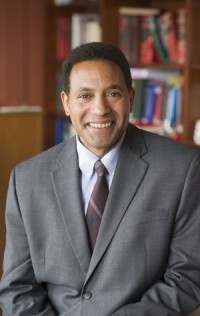
With a PhD in economics from MIT and a law degree from Harvard, Keith Hylton has melded the two disciplines in his teaching and research, using each to illuminate the other. A leader in the increasingly important field of mass spectrometry, Catherine Costello teaches and collaborates with medical researchers, pharmacologists, chemists, and clinicians around the world. For their scholarly contributions, both have been named William Fairfield Warren Distinguished Professors, joining eight other faculty in an honor that will stay with them through their careers.
“Their intellectual and scholarly contributions are exemplary and help contribute to Boston University’s growing recognition as one of the best research universities in the world,” says BU President Robert A. Brown in announcing the appointments.
A former tenured professor at Northwestern University School of Law, Hylton joined the School of Law faculty in 1995 and was previously the school’s Honorable Paul J. Liacos Professor of Law. He is well known for his scholarship in law and economics and teaches courses in antitrust, torts, and labor law. Hylton says he was surprised, flattered, and honored when he was told of the professorship at a meeting in Brown’s office.
“I already know some of the holders of a Warren chair, and one thing that’s clear is at BU there are many professors who are at the top of their fields, who are the best academics in the world,” he says. “I’m honored to be part of this group and will do my best to make what’s good about this institution better known.”
He describes the thrust of his work as nurturing a greater understanding of economic concepts as they relate to the law. “The primary function of law school is to make students think like lawyers, and sometimes a lawyer has to think like an economist; for example, when they decide whether to pursue a case or settle, that’s an economic question,” he says. “I look at topics that lawyers have been arguing about for a long time and try to use economics to make sense of these arguments, and try to find some theory or explanation to allow judges to better understand what’s good or bad about what they’re doing.”
Hylton is the author of four books, most recently Laws or Creation: Property Rights in the World of Ideas (Harvard University Press, 2012), coauthored with Ronald A. Cass, a former dean of LAW. Hylton has written articles and filed amicus briefs on the function of punitive damages in cases such as lawsuits targeting Big Tobacco, an area of the law that has sparked debate among laypeople, politicians, and legal scholars. “You’re talking about penalties designed to change people’s behavior, and we must understand what people’s motivations are and how penalties would change them,” he says. “My main criticism is that the US Supreme Court has issued several decisions that cut back on punitive damages without looking very seriously at their function.”
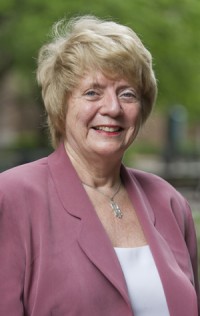
Costello, a School of Medicine professor of biochemistry and of physiology and biophysics, has a secondary appointment as a College of Arts & Sciences professor of chemistry. She arrived at BU in 1994 and established the internationally recognized BU Center for Biomedical Mass Spectrometry. She is one of four MED faculty working together to develop and apply high-end instrumentation and methods. “Having appointments in several departments is sometimes regarded as odd, but this professorship underscores the value of crossing boundaries,” says Costello, whose list of honors includes the 2010 Field and Franklin Award from the American Chemical Society.
Funded by the National Institutes of Health, her lab is devoted to improving the sensitivity and applications of mass spectrometry, an analytical technique used to determine the composition of large molecules such as the proteins and carbohydrates that make up blood and other body tissues. Mass spectrometry is an increasingly valuable tool in clinical and diagnostic medicine. Used to analyze inorganic as well as organic solids, liquids, or gases, it determines the composition of compounds by ionizing them and comparing their molecular weight, or mass, before and after the process. Asked to explain her work in lay terms, Costello likes to say, “I do puzzles.”
“We can look at the structure of even very large molecules and look at how they change with the development of a disease,” she says. “If these molecules are on the surface of a cell, such as a cancer cell, we can look at markers that take the cell somewhere, and examine subtle differences in the structure of carbohydrates or proteins.” In her years of developing and refining mass spectrometry applications, Costello, who collaborates on research of cancer, infection, and antibiotic-resistant Lyme disease, has seen the field grow exponentially. “We now have the sensitivity to do things you couldn’t even think about doing before,” she says. “We can look at molecular changes contributing to cardiovascular disease in people who are obese or have diabetes.”
The William Fairfield Warren Distinguished Professorships are named for the University’s first president, who led BU for three decades, beginning in 1873. The endowed professorships are supported by the William Fairfield Warren Fund. Among the honorees are George Annas, a School of Public Health professor and chair of the department of health law, bioethics, and human rights and a School of Law and School of Medicine professor, and James Collins, a College of Engineering professor of biomedical engineering.
This BU Today story was written by Susan Seligson.
June 14 BUMC Housing Fair
 Are you looking for a new roommate or an apartment during the upcoming year? Housing Resources is hosting a free Housing Fair on Friday, June 14, 11a.m.–1p.m. in the Hiebert Lounge.
Incoming and continuing students on the BU Medical Campus are welcome to attend. Meet property managers, realtors, landlords, BU Rental Property Management, Boston's Rental Housing Resource Center, City of Boston Inspection Services, Public Safety and more. Find a potential roommate in the Roommate Lounge. Question the panel of current students for their expert housing advice and more.
For more information contact Barbara Attianese, Housing Resources.
BUMC Housing Fair
- Friday, June 14
- 11 a.m.-1 p.m.
- BUSM Instructional Building, Hiebert Lounge
- A light brunch available to all fair participants
BU Professors Call on Physicians to Speak Out against Unethical Force-Feeding
Three BU professors from the schools of public health and medicine – concerned that the Guantanamo Bay detention center has become a “medical ethics-free zone” -- are calling on individual physicians and medical groups to speak out against the force-feeding of mentally-competent hunger strikers and to support military physicians there who refuse to participate.
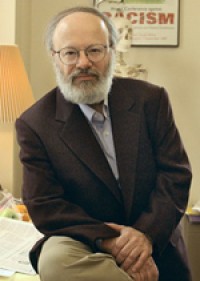
In a perspective article in The New England Journal of Medicine, George Annas and Leonard Glantz, professors of health law, bioethics and human rights, and Dr. Sondra Crosby, an associate professor of medicine and assistant professor of health law, bioethics and human rights, urged physicians to “use their political power to stop the force-feeding, primarily for the prisoners’ sake but also for that of their colleagues,” referring to military physicians who are ordered by the base commander to feed the striking inmates.
As many as 100 of the detention camp’s 166 remaining prisoners have participated in a mass hunger strike, and more than 40 have been force-fed, officials have reported. The number of hunger strikers continues to grow.
The BU professors referenced recent remarks by President Barack Obama, who expressed frustration over delays in closing Guantanamo Bay: “Look at our current situation, where we are force-feeding detainees who are . . . on a hunger strike . . . Is this who we are?” Obama had said.
The professors said physicians should be asking themselves the same question.
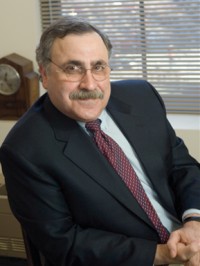
“Physicians at Guantanamo cannot permit the military to use them and their medical skills for political purposes and still comply with their ethical obligations,” the three professors wrote. “Force-feeding a competent person is not the practice of medicine; it is aggravated assault. Using a physician to assault prisoners no more changes the nature of the act than using physicians to ‘monitor’ torture makes torture a medical procedure. . .
“Guantanamo is not just going to fade away, and neither is the stain on medical ethics it represents.”
Annas, Crosby and Glantz said the defense department had sent 40 additional medical personnel to Guantanamo in recent months to help force-feed the strikers – a process that they described as painful and degrading, as recalcitrant inmates have been known to be strapped into "restraint chairs," sometimes for hours a day, and fed through nasogastric tubes.
The constant turnover of physicians makes the situation worse, they said, as it disrupts any sense of continuity of patient care.
The authors argued that the Department of Defense’s 2006 medical instruction on prisoners’ hunger strikes -- issued during the last mass hunger strike at Guantanamo -- “mistakenly conflates hunger striking with suicide.” It directs that, “in the case of a hunger strike, attempted suicide, or other attempted serious self-harm, medical treatment or intervention may be directed without the consent of the detainee to prevent death or serious harm.” But the professors argued that the goal of hunger strikers is not to die, but to risk death to have their perceived grievances addressed. The article notes that a March 2013 policy on Guantanamo strikers no longer alleges that suicide is a relevant consideration for force-feeding.
“The fact that hunger strikers have medical problems that need attention and can worsen does not make hunger striking itself a medical problem,” the professors wrote. They said physicians can and should provide medical care to consenting hunger strikers by treating specific physical ailments and helping to determine the mental competence of the detainees.
The authors noted that the World Medical Association, comprised of medical associations from nearly 100 countries, has condemned force feeding as unethical in its 2006 Malta Declaration, which states: "Forcible feeding (of mentally competent hunger strikers) is never ethically acceptable."
The American Medical Association also spoke out in an April letter to the secretary of defense, saying that forced feeding of competent detainees “violates core ethical values of the medical profession.”
But Annas and colleagues said more action by civilian physicians is needed to support military physicians who refuse to violate medical ethics.
“It’s time for the medical profession to take constructive political action to try to heal the damage and ensure that civilian and military physicians follow the same medical ethics principles,” the professors said.
The full NEJM article is available here.
Submitted by: Lisa Chedekel.