Student Updates
Boston University Medical Group
The Faculty Practice Foundation (FPF) has adopted Boston University Medical Group as its new operating name. This was formally approved by the Board of Trustees in September.
Boston University Medical Group is an integrated multi-specialty academic group practice with 18 clinical departments that collectively employ over 910 physicians, non-physician clinicians, educators, and researchers. Members have faculty appointments at Boston University School of Medicine and focus on clinical care, research, and teaching at Boston Medical Center and Boston University School of Medicine.
The impetus for this change came from a strategic planning process that started three years ago. The Governance Task Force, led by David Coleman, MD, was charged to review various options for the new name. After receiving input from practice plan members and various other FPF committees, Boston University Medical Group was selected to further amplify relationships with parent organizations, Boston University and Boston Medical Center.
Boston University Medical Group will be used for most internal and external communications; legal documents will maintain the legacy FPF name to avoid the complexities of changing these official papers.
The Mission Statement has been updated to reflect the new name and is available here.
Crime Prevention and Campus Safety
Daylight Savings Time ends Sunday, Nov. 5, resulting in fewer hours of daylight. At this time each year, the Public Safety Department reminds our community about safety awareness. Personal safety and security are the shared responsibility of everyone. By following some simple and effective practices you can decrease the likelihood of being victimized. Take precautions to protect your personal and BUMC/BMC property from theft or loss. Remember if you "See Something, Say Something."
The following safety tips can help keep you stay safe and secure.
When traveling on or off campus:
- Pay attention to your surroundings; stay alert as to those around you, as well as, what is happening around you at all times.
- Use the Buddy System when walking to or from work.
- Walk along well-lit, populated areas. Avoid unfamiliar shortcuts and remain alert.
- Become familiar with the locations of the Blue Light Emergency Call boxes around the campus. These provide communication with Public Safety personnel 24x7.
- Avoid using devices that will distract you from recognizing danger signs or reduce your level of awareness to your surroundings. These include cell phones, mobile device or earphones while in public places. Being distracted can make you an easy target.
- When assisting strangers with directions or engaged in conversation always keep a safe distance.
- Be conscious of strangers using distracting techniques, which may give them the opportunity to take your belongings.
- Be conscious not to publicly display cash or expensive electronic devices.
- Have your car or home key in your hand before you reach the door. Do not spend time at your destination searching for your keys.
- When approaching your vehicle always look into your rear seat area before getting in.
- Once inside your vehicle keep the doors locked until you are ready to exit.
- Keep valuables and other items such as packages, briefcases and backpacks out of view when leaving your vehicle unattended.
In the Workplace:
- Wear your BU or BMC Identification badge at all times.
- Never compromise safety or security for the sake of convenience. Please do not prop doors that are intended to be locked.
- Always close and lock your office or work area when you leave for any period of time
- Be familiar with Campus escort service schedules and how to access them.
- Avoid granting access to anyone you're unfamiliar with when entering "Card Access" areas. This is called "piggy-backing" and can allow unauthorized persons access to restricted areas.
- Avoid leaving personal electronic devices and laptop computer unattended.
- Keep your purse, wallet, keys and other valuables with you at all times or secured in a locked drawer or cabinet.
- Carry only a minimal amount of cash while at school or in the workplace.
- Avoid carrying important personal documents such as passports, visa, or social security cards unless absolutely necessary.
- Immediately report any suspicious activity or persons to Public Safety at414-4444.
Visit the Public Safety website for additional crime prevention information and brochures on personal protection, workplace safety and home security.
Questions or concerns about personal safety? Contact:
Bill Gibbons
Director of Public Safety,
gibb9@bu.edu | 414-4443.
Transportation Information for Veterans Day
Due to the observance of Veterans Day on Friday, Nov. 10, please note:
Shuttles
All medical center and patient shuttles will be operating. The Boston University shuttle (BUS) will operate as usual.
MBTA
All buses will be operating on a weekday schedule. Commuter rail trains will operate on regular schedules. For additional information on routes, schedules, and fares, please call the MBTA Customer Service at 617-222-3200 or www.mbta.com
Parking
All parking facilities will be open and regular rates apply. Monthly parkers should park in their assigned lot.
If you have any questions regarding this holiday schedule, please call TranSComm at 638-7473 or the Parking Office at 638-4915.
BUMC Telephone Conversion Project
As part of a Boston University initiative to modernize services and reduce operating expenses, BU IS&T will be replacing telephones on the Medical Campus with new Cisco phones supported by the same service as currently deployed on the Charles River Campus. The project involves more than 3,000 devices and will take about 18 months to complete.
Since the current BU Medical Campus telephone service has been provided by BMC, this conversion will require a telephone number change for all BU faculty and staff. To facilitate this transition, main department telephone and other key numbers will be forwarded to the new BU numbers through the end of 2018.
For more information on this project and the tentative building conversion schedule, please visit New Telephone Service for BUMC.
BUMC Public Safety Officers Recognized for Hard Work, Dedication
On Tuesday, Oct. 10, BUMC Public Safety officers were honored for the work they do to ensure the safety of our patients, students, faculty, staff and visitors every day.
Congratulations to the officers who were recognized, and thank you to all members of the Department for your hard work and dedication.
11/15: “Precision Medicine: Precision Health” at the Museum of Science

"Precision Medicine: Precision Health"
Wednesday, Nov. 15 | 7-9 p.m.
Museum of Science - Cahners Theater
Learn what is possible now and what may be possible in the near future in Precision Medicine, aided by interdisciplinary research and Team Science, using examples of research from Alzheimer's Disease (AD) and an Affinity Research Collaborative group at Boston University.
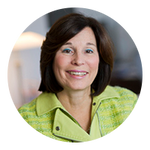 Welcome | 7:00 p.m.
Gloria S. Waters, PhD, vice president and associate provost for research, professor of speech, language and hearing services, will open the night's discussions.
 Introduction | 7:05 p.m.
Katya Ravid, DSc, founding director, BU Interdisciplinary Biomedical Research Office and Evans Center for Interdisciplinary Biomedical Research, will explore "The Value of Team Science."
 Speakers | 7:10 p.m.
Lindsay Farrer, PhD, chief of biomedical genetics, and professor of medicine, neurology, ophthalmology, epidemiology and biostatistics, will discuss how genomics is paving the path for Precision Medicine in neuropsychiatric disease.
 Rhoda Au, PhD, professor of anatomy and neurobiology, neurology, and epidemiology, and senior investigator at the Framingham Heart Study, will discuss why Precision Health and Precision Medicine are not the same and what it takes to do both. Preventing Alzheimer's presents a different challenge than trying to treat it.

Conversation | 7:40 p.m.
Alice Cronin-Golomb, PhD, professor of psychological and brain sciences, will join the speakers to discuss mood/emotional disorders and other common complications associated with AD.
Q&A | 7:50 p.m.
The audience is encouraged to ask questions and engage with the BU Team.
Admission is free but registration is required. LEARN MORE!
Stepped Care Beneficial After Hurricanes
 Stepped care is more effective than usual care in reducing the prevalence of posttraumatic stress disorder in the aftermath of hurricanes, according to a new study led by a School of Public Health researcher.
The study, published in JAMA Psychiatry, suggests that the stepped care (SC) approach would have a greater population impact than previously applied interventions for early treatment of individuals with PTSD. The findings are also consistent with previous studies examining stepped care approaches to treating other mental health disorders.
“We expect that our findings will apply to areas hit by Hurricanes Harvey, Irma, and Maria, and also man-made disasters, including acts of mass violence,” said lead author Gregory Cohen, statistical analyst in the epidemiology department.
In the aftermath of Hurricane Sandy, the New York State Office of Mental Health provided crisis counselling and education sessions to an estimated 250,000 individuals between mid-November and late March 2014. A treatment modality called Skills for Psychological Recovery (SPR)—a skills-building intervention to reduce stress and improve coping among survivors—was used in the effort. However, studies have shown that PTSD prevalence in New York state remained high approximately 1 to 1.5 years after the storm. Moreover, more than half of those with perceived need for mental health services did not received such services. Similar patterns were observed following a variety of disasters, such the terrorist attack on the World Trade Center on September 11, 2001.
The authors argued that a potential reason for the persistence in mental health conditions, despite provision of usual care such as SPR, could be ascribed to the lack of effective triage to appropriate levels of care. Evidence suggests that a stepped care (SC) approach providing screening and triage is more effective and may provide greater reach for mental health care services. The approach has been recommended in the context of disasters but has not be tested on the field.
The researchers used an agent-based model to simulate the stepped care approach for 2,642,713 agents using the sociodemographic characteristics derived from the American Community Survey estimates for New York City. Using an observational survey of residents of affected areas after Hurricane Sandy, the investigators estimated the initial distribution of the prevalence and exhibited PTSD symptoms to be 4.38 percent. They then simulated treatment scenarios starting four weeks following the landfall of Hurricane Sandy and ending two years later. Under the stepped care approach, individuals identified as PTSD cases were referred to cognitive behavioral therapists and non-cases were referred to SRP, while those receiving usual care were all referred to SRP.
The study found that three to six months after the hurricane, stepped care delivered greater reach, treatment effectiveness, and cost-effectiveness than usual care when it came to hurricane-related PTSD. The authors cautioned that the SC model would still require substantial resources for deployment: $50.94 million to $101.87 million in the simulated scenario after Hurricane Sandy.
In the absence of randomized trials, the authors wrote, the simulation results present the best evidence for establishing stepped care in the treatment of PTSD following large-scale disasters.
“These results provide further proof of concept for the SC approach to treating PTSD after a disaster, and they warrant further study and application in real-world settings,” the authors wrote.
Other SPH authors on the study were: Shailesh Tamrakar, research programmer in epidemiology; Laura Sampson, statistical analyst in epidemiology; Catherine Ettman, director of strategic development; and Sandro Galea, dean and Robert A. Knox Professor. Authors from other institutions included: Sarah Lowe, assistant professor of psychology at Montclair State University; Ben Linas, associate professor of medicine at the School of Medicine, and; Kenneth Ruggiero, professor of nursing and psychiatry at Medical University of South Carolina.
Submitted by Salma Abdalla
GSDM Student Participates in International United Nations Innovation Lab
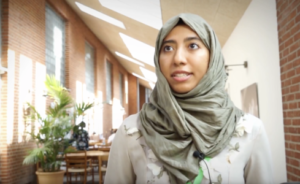
Dr. Alaa Qari, DScD candidate in Dental Public Health at the Henry M. Goldman School of Dental Medicine (GSDM), was selected as one of the 1000 global talents from 129 countries to participate in UNLEASH, a fully-sponsored innovation laboratory that took place in August 2017 in Copenhagen, Denmark.
UNLEASH was an immersive experience designed to have participants co-create innovative, implementable, and scalable solutions to the sustainable development goals (SDGs) of the United Nations. Dr. Qari was one of three dentists invited to attend the program and focused her efforts on designing an innovative solution to address the third UN SDG, which aims to ensure healthy lives and promote well-being for all ages.
Over the nine-day challenge, Dr. Qari’s team tackled the mothers and families subtheme – specifically addressing lack of access to emergency care for women who experience pregnancy complications due to difficulty in reaching proper health facilities in Sub-Saharan Africa. Their solution is to leverage big data to optimize health resource deployment to maximize coverage of pregnant women.
After designing the intervention and fine-tuning the product with Deloitte facilitators, the prototype was tested in the community, and then pitched to fellow competitors and potential investors. UNLEASH is preparing a project catalog for distribution to investors, companies, mentors, and others in UNLEASH’s network who are interested in helping competitors move their solutions forward.
A video interview with Dr. Qari at UNLEASH can be seen here: https://www.youtube.com/watch?v=85T2D-fVO9A&feature=youtu.be
Glenn Markenson Appointed Director, Center for Military and Post Deployment Health
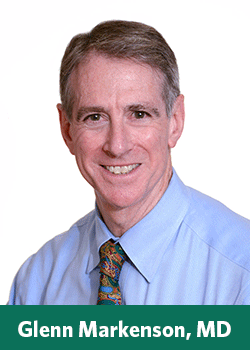
Glenn Markenson, MD, professor of Obstetrics and Gynecology, has been appointed Director of the Center for Military and Post Deployment Health at Boston University Medical Campus (BUMC).
Markenson joined the BUMC community in 2016 as professor of OBGYN and director of Maternal Fetal Medicine and the Antenatal Fetal Testing Unit at Boston Medical Center.
A retired colonel, Markenson's military career spanned more than 25 years including active duty Army, the Army Reserves and the Air National Guard. Deployed as a physician during Desert Storm and Iraqi Freedom, he has hands-on experience regarding the unique health concerns of our military members, both during war and peacetime operations. Serving as a military physician, flight surgeon and medical group commander, he has extensive experience in pre- and post-deployment medicine.
He has a long interest in research to improve the health of military personnel. His first published paper was on the impact of women's health during Desert Storm. An active investigator, he also chairs the Green IRB Panel providing a broader view of BUMC's research programs.
Markenson received his BA in 1982 and his MD in 1986 from Tulane University. He completed a residency in obstetrics and gynecology at Tripler Army Medical Center in Honolulu and a fellowship in maternal-fetal medicine at Madigan Army Medical Center in Tacoma, Wash. He returned to Tripler in 1994 and served as assistant director of maternal-fetal medicine. In 1997, he was recruited as an assistant professor of Tufts University School of Medicine and an attending maternal-fetal medicine physician at Baystate Medical Center in Springfield, where also directed the Perinatal Diagnostic Center as well as division of maternal-fetal medicine. He also chaired the IRB and was the medical director of the human research protection program, eventually rising thru the ranks to professor of OBGYN.
We thank Anna Hohler, MD, for serving as the center's inaugural Director and we wish her well in her new position as Chair of Neurology at Steward-St. Elizabeth's Medical Center and Director of Medical Student Education for the Steward HealthCare Group.
The Center for Military and Post Deployment Health was created to facilitate interdisciplinary research and programming on military health for active service members and veterans, including environmental exposures, trauma, post traumatic stress disorder and traumatic brain injury. The Center builds on the work of the Joining Forces conference held annually at BUSM. Any faculty interested in participating in the Center should contact Monica Parker-James at monicapj@bu.edu.
Parking and Transportation Services for Monday, Oct. 9
Transportation information for Columbus Day
Shuttles:
All medical center and patient shuttles will be operating, except the BU BUS. The daytime shuttle is not in service on Columbus Day, but the late night shuttle will operate according to the normal schedule.
MBTA:
All buses will be operating on a weekday schedule· Commuter rail trains will operate on regular weekday schedules. For additional information on routes, schedules and fares, please call the MBTA Customer Service Center at (617) 222-3200 or www.mbta.com
Parking:
All parking facilities will be open and regular rates apply. Monthly parkers should park in their assigned garages.
Questions? Call the Office of Transportation Services at 638-7473 or the Parking Office at 638-4915.