Student Updates
Twenty-five BUMC Faculty Participate in 2011 Emerging Leaders Forum
Nominated by their department chairs 25 junior faculty members from the Boston University Medical Campus (BUMC) participated in the Emerging Leaders Forum. The two-day event, organized by the BUMC Faculty Affairs Office under the leadership of Mya Mangawang, PhD, assistant provost for Faculty Affairs, focused on exploring and developing the characteristics of highly effective leaders. The faculty participants were nominated by their Chairs based on their record of effectiveness, innovation, reliability and capacity to energize and motivate others.

“As a campus, we must be steadfast in our support of the faculty as our most precious resource and core strength, and I believe in many important ways this Forum serves to concretize our on-going investment in and commitment to our faculty,” explained Dr. Mangawang.

Seminars and workshops were presented by faculty and administration from both the Medical and Charles River campuses and topics included: Assessing Your Leadership Style, Stephen Brady, PhD; Establishing Your Message & Conveying It Successfully, Tobe Berkovitz, PhD; Conflict Management, Francine Montemurro, JD; Collaborative Solutions: Describe & Frame Challenge, Jane Mendez, MD; Organizational Behavior and Choosing Your Team, Victoria Parker DBA, EdM and Mark Prashker, MD, MPH; Establishing Measure to Evaluate Success, Deborah Fournier, PhD; Execution: Leaders Who Produce, Patricia O’Brien, DBA.


Associate Professor Jane Mendez, MD, who provided an overview of the program was a participant in the first iteration of the Emerging Leaders Forum held one time in 2007. Though this year’s forum was very different from the 2007 program, Dr. Mendez noted that “The Emerging Leaders Forum is an opportunity for the institution to identify, cultivate and retain talent on the Medical Campus. It is important for today’s participants to serve as mentors for future participants and for this to be an ongoing program where faculty have an opportunity to network and build a community.”

“It is always very interesting for us on the Medical Campus to interact with colleagues,” said Clinical Assistant Professor Negar Nasseripour, DMD. “We are so busy teaching, seeing patients, and doing research that not much time is given to discussion topics like leadership. "

The 2011 Emerging Leaders include: Ruben Azocar, MD; Anand Devaiah, MD; Gheorghe Doros, PhD; Rachel Fearns, PhD; Neal Fleisher, DMD; Amit Garg, MD; Joel Henderson, MD, PhD; Anna Hohler, MD; Scharukh Jalisi, MD; Darrell Kotton, MD; Keli Kwok, MD; Jeffrey Markuns, MD; Candice Miller, PhD; Jeffrey Moore, PhD; Negar Nasseripour, DMD; Hari Parvataneni, MD; Khiem Pham-Nguyen, DMD; Emily Rothman, PhD; Greg Russo, MD; Andrew Salama, MD, DMD; Manju Subramanian, MD; Devaki Sundararajan, BDS; Tkacz Jaroslaw, MD; Lauren Wise, PhD.
For more information on the Emerging Leaders Forum contact Dr. Mangawang at myammang@bu.edu.
GSDM: Scenes from a Mission to Nicaragua
Recently three fourth-year DMD students from GSDM, Ali Mahin Arastu, Gulia Muca, and Maria Honorado, traveled to Rio San Juan, Nicaragua with the San Juan Rio Relief Organization to bring oral health outreach to the poverty-stricken region.

Learn what their experience was like from this collection of videos that they filmed during the trip:
- Clinic Introduction
- Tour of the Clinic
- The Setup
- Lunch Break
- Chalkboard Tallies
- Clinic Experience
- Transportation
- Accommodations
- Monkeys in the Morning
Photos from their trip are also available on facebook and flickr.
Study Finds Racial Disparities Among Developmentally Delayed Toddlers in Early-Intervention Programs
Black toddlers are five times less likely than their white counterparts to receive early-intervention services for developmental delays -- a disparity that should be addressed by clinicians working proactively with families, according to a study led by a BU School of Public Health researcher.
In a study published in the Journal of Developmental and Behavioral Pediatrics, a team led by Emily Feinberg, assistant professor of community health sciences at BUSPH, examined enrollment in early-intervention programs of children at 9 months old and 24 months old. At the earlier age, there were no black-white racial differences in receipt of services, the authors found. But at 24 months, a racial gap opened up among those children who qualified for services based on developmental delays.
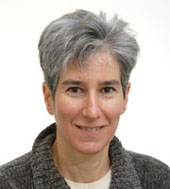
“Disparities in service receipt did not emerge until 24 months after birth and were observed more consistently among black children who did not have an established medical condition and qualified for services based on developmental delay alone,” Feinberg and her co-authors said.
“Clinicians who work with young children may wish to be more alert to developmental delays, particularly in black children,” the team recommended. “Clinicians play a critical role in assisting families whose children demonstrate developmental delays to secure appropriate services.”
Children from birth to 3 years old who are identified as having, or being at risk for, developmental delays are eligible for early intervention [EI] services, under the Individuals with Disabilities Education Act. In 2009, almost 340,000 infants and toddlers nationwide received such services. Prior studies have suggested that many young children eligible for such programs are not participating in them.
In the new study, the research team examined associations between a child’s race and receipt of services among 1,000 children who met inclusion criteria at 9 months old, and 1,000 children who met the criteria at 24 months old.
The team hypothesized – correctly – that racial differences would be less pronounced among children with established medical conditions than among those with less obvious developmental delays that required screening and detection to determine eligibility.
Overall, the proportion of children receiving services was low: At 9 months, only 9 percent of children presumed eligible for intervention services were receiving them, and at 24 months, just 12 percent were receiving services.
Race was a significant factor in enrollment among the older children, researchers said.
“We found that black children who qualified for EI services based on development delay alone were more than eight times less likely to receive services,” the study found. There were no such racial differences in services provided to children who qualified based on an established medical condition, however.
The authors noted that detection of at-risk children requires proactive identification by parents or clinicians.
“It is possible,” they said, “that clinicians, who play a major role in identifying children with developmental delay and referral to EI services, are less likely to identify such delays in black children.”
Another possible explanation Feinberg and her team pointed to is a variation in cultural values concerning child development. They noted that studies of black mothers identified factors such as stigma, fear of blame and worry about child protective services as barriers to women’s willingness to discuss their own mental health concerns.
“Future studies are needed to determine whether these same factors influence the willingness of black parents to discuss concerns related to their young children,” the authors said.
Besides Feinberg, who has done prior studies on participation in early intervention programs, researchers included: Michael Silverstein of the Department of Pediatrics, BU School of Medicine and Boston Medical Center; Sara Donahue, a DrPH student in the community health sciences department; and Robin Bliss, who recently received her PhD in biostatistics.
Submitted by Lisa Chedekel
On the Road to Residency, the Class of 2011 Match Across the Country
With a countdown from Dean Antman to the stroke of noon, members of the BUSM class of 2011 excitedly stepped forward to receive their Match Day letters from faculty and administrators. With 161 BUSM students in the match this year, 33 of them will be staying on campus for residency at Boston Medical Center, others are heading across the country from New England to California and Canada. Forty-five percent of the class is pursuing internal medicine, pediatrics and family medicine. See the video here.
The annual event held this year on March 17 marks the day when medical students around the nation receive notification from the National Residency Matching Program about which residency program they will be attending and where they will spend the next three to five years of their lives following graduation.

“You were already accomplished on your arrival to BUSM,” said Dean Antman. “We know when we survey residency program directors, we will hear that you are exceptionally prepared clinically, with exemplary professional behavior.”
The students and their guests, who were gathered for an awards ceremony prior to the event, made their way up to the 14th floor of the Instructional Building minutes before noon where the letter-opening ritual was held for the first time in the Hiebert Lounge.
“This year’s graduating class is quite special in their support for each other. They didn’t sit down to lunch today until they were sure of how everyone else had done in the Match,” said Phyllis Carr, MD, BUSM associate dean for student affairs. “Our students all did extremely well, getting into many top programs across the country, and the students matched to BMC will bring a great esprit de corps.”
Less Weight Gain Found Among African American Women in Dense Urban Areas Than in Auto-Oriented Sprawling Areas
Researchers from Boston University School of Medicine’s (BUSM) Slone Epidemiology Center have found that African-American women who live in more densely populated urban areas gain less weight than those in more sprawling auto-oriented areas. The results, which appear in the current issue of the American Journal of Preventive Medicine, were based on data collected in the Black Women’s Health Study, an ongoing study of the health of 59,000 African American women conducted by the researchers since 1995.
While studies conducted at a single point in time have found higher levels of obesity among residents of sprawling areas compared to residents of more urban areas, there has been little information on this topic from studies that have followed residents over time.

The researchers assessed the association of women’s residential environments with weight change and the incidence of obesity during a six year period of follow-up in the Black Women’s Health Study. They focused on nearly 18,000 women who lived in the New York, Chicago or Los Angeles metropolitan areas. The women’s residential neighborhoods were characterized by an “urbanicity score”— considered dense urban neighborhoods.
They found that both six year weight gain and the incidence of obesity were lower among women who had high urbanicity scores as compared to those with low scores. Women who lived in suburban or rural neighborhoods were considered to have low urbanicity scores.
According to the researchers, a previous study of these women, found those who lived in denser neighborhoods walked more than women in more sprawling areas. “Policies that encourage more dense and urban residential development may have a positive role to play in addressing the obesity epidemic,” said lead author Patricia Coogan, MPH, D Sc, a senior epidemiologist at the Slone Center and an associate professor of epidemiology at Boston University School of Public Health.
Funding for this study was supported by grants from the National Cancer Institute and the National Heart, Lung and Blood Institute.
What Kids Drink: Teens' Alcohol Preferences
Nearly half of underage drinkers prefer liquor to beer and are more likely to binge drink, drink and drive, and engage in risky sexual behaviors, according to a new study led by a Boston University School of Public Health researcher.
"We know a lot about the consumption of alcohol beverages among youth in terms of the volume of consumption," said lead author Michael Siegel, professor of community health sciences at BUSPH. "What we don't know a lot about is what underage drinkers are drinking."

See the video here.
The results, to be published in the April edition of the American Journal of Preventive Medicine, http://www.ajpm-online.net/home found that 44 percent of underage drinkers surveyed favored liquor, while only 19 percent preferred beer. The study looked at 2007 data from the Youth Risk Behavior Survey conducted among public schools in eight states. The results were limited to the 7,723 youth who reported consuming at least one drink of alcohol in the past month.
"The study results suggest that youth might initiate drinking with sweeter, more-flavored alcoholic beverages like malt beverages and wine coolers, and that they progress toward harder alcoholic drinks, like beer and hard liquor and the high-risk behavior," Siegel told the Journal.
Researchers found that boys were more likely to prefer liquor and beer than girls, and that teens "graduate" to liquor and beer from malt beverages such as Smirnoff Ice, Bacardi Silver or hard lemonade and wine coolers as they get older. Black and Hispanic teens preferred malt beverages to beer, but not to liquor. Teens who prefer liquor are much more likely to indulge in high-risk behavior, such as binge drinking, drinking and driving, smoking tobacco or marijuana and having multiple sexual partners, researchers also found.
"Liquor was the clear choice of almost half of high school students. I think it's important to recognize that 10 or 15 years ago, that would not have been the case," said co-author Timothy Naimi, MD, of Boston Medical Center. "In those times, beer was clearly the beverage of choice."
Siegel and Naimi say marketing contribute to the changing preferences. In the last decade, they note, there has been a dramatic increase in advertising on cable TV "whose audiences are "disproportionately youthful compared to the general population."
There are roughly 4,600 deaths among underage youth each year due to excessive alcohol consumption. Identifying the types of alcoholic beverages teenagers choose to drink could provide a better understanding of why they drink, said the authors, and help develop better measures to reduce youth drinking.
Submitted by Elana Zak
GSDM Volunteers Fight Cavities in Teacapan
For three weeks in a row each year the children of Teacapan—a small fishing village in Mexico—receive dental care from Project Stretch volunteers. The other 49 weeks of the year dental care is largely unavailable to them. GSDM volunteers, under the leadership of Assistant Director of Extramural Programs Kathy Held, have participated in a week-long portion of this trip for several years running.
Repeat volunteers, such as Clinical Assistant Professor Dr. Frank Schiano say that you can see a difference between the oral health of the children that visit the clinic each year and those who don’t always make it. Positive improvements are visible in those that are diligent about their yearly visits.
This year volunteers decided that the visits weren’t all they were going to do to help the children of Teacapan. They wanted to introduce an educational component to teach and empower the children to take better care of their teeth. So Liz Montero DMD 11 took what she had learned as a long-time Program Whitecoat volunteer and translated it into a Spanish-language presentation that included her flying into a local classroom, filled with 125 children, while dressed in a very special Captain Cavity Fighter purple cape. During the interactive presentation Montero taught the children about the negative impact that some of their favorite sugary food and drinks can have on their teeth and had a few of them dress up as teeth with germs and bacteria to show the benefits of brushing regularly.
“On the last outreach trip we realized that an educational component would be useful when we saw many of the children waiting to see the dentists,” said Held. “They were brushing their teeth in preparation for their turn in the chair and they were brushing for less than ten seconds.”
After Montero gave the initial presentation she and Held taught the Amigos de Teacapan—a group of mainly retired expatriates who oversee the operation of the clinic—how to give the lesson and they continued teaching the children throughout the week.
Montero, Held, and Schiano, along with other GSDM volunteers Alexandra Antonescu DMD 11 and Clinical Assistant Professor Dr. Jennifer Soncini performed 350 dental exams, placed 900 sealants, and extracted 31 teeth. During this busy week they all say they had a wonderful experience and learned a great deal. Guess the children of Teacapan weren’t the only ones who learned something from this trip!
Photos from the trip are available on facebook and flickr . There is also a wonderful video and story created by Producer/Editor of BU Today Robin Berghaus, click here .
BUSM’s Jackson Appointed to HHS Advisory Committee on Training in Primary Care Medicine and Dentistry
Vice Chair for Education, Department of Medicine and Director of the Primary Care Training Program at BUSM Angela Jackson, MD was appointed by the Secretary of the US Department of Health and Human Services, Kathleen Sebelius, to the Advisory Committee on Training in Primary Care Medicine and Dentistry.

The committee advises and makes recommendations to the Secretary concerning policy, program development and other matters of significance concerning the HRSA Bureau of Health Professions family medicine, general internal medicine, general pediatrics, general dentistry, pediatric dentistry and physician assistant programs. Jackson, who is also an associate professor at BUSM and a practicing general internist at Boston Medical Center, is the only internist appointed to the committee.
BUMC Research Symposium touts interdisciplinary research and collaboration
The inaugural Boston University Medical Campus (BUMC) research symposium, held on March 10, brought together researchers from multiple disciplines to discuss traumatic brain injury (TBI) as it relates to sports and combat deployment.
Medical Campus Provost Karen Antman, MD, delivered opening remarks that highlighted the collaborative efforts behind the creation of the symposia.
“These symposia were established to help familiarize faculty, students and post docs with their colleagues’ research projects,” said Antman, who also is dean of the School of Medicine.

Terence Keane, MD, director of the behavioral science division of the National Center for Post Traumatic Stress Disorder (PTSD) at Boston University (BU), discussed the important relationship between the consequences of combat and sports injuries and focused on the importance of collaboration among researchers.
“Boston University has tremendous interdisciplinary strengths that position us in an astounding way to address the problems associated with PTSD and TBI,” said Keane, who also is a professor and vice-chair of the Department of Psychiatry at BUSM. “These presentations represent a culmination of our collaboration to identify how we can learn from one another and work to improve the outcomes among those suffering from PTSD and TBI.”
Jennifer Vasterling, PhD, professor of psychiatry and chief of psychology at the VA Boston Healthcare System, discussed her research projects on how mild TBI and PTSD affect the neuropsychological performance of military personnel before and after deployment. Ann Rasmusson, MD, associate professor of psychiatry and staff psychiatrist at VA Boston Healthcare System, spoke about the Translational Research Center for Traumatic Brain Injury and Stress Disorders (TRACTS) and the work being done to better understand the impact of TBI on the consequences of stress-related emotional disorders.
From BUSM’s Center for the Study of Traumatic Encephalopathy (CSTE), Ann McKee, MD, professor of neurology and director of the VISN 1 neuropathology lab at Bedford VA Medical Center, and Robert Stern, PhD, associate professor of neurology, presented their current research on Chronic Traumatic Encephalopathy (CTE), a progressive brain disease believed to be caused by repetitive trauma to the brain, including concussions or subconcussive blows to the head.
Lee Goldstein, MD, associate professor of neurology, discussed his research on blast injury and TBI using mouse models. Neil Kowall, MD, professor of neurology and director of the Alzheimer’s Disease Research Center, as well as chief of neurology at VA Boston Healthcare System, rounded out the symposium with a brief discussion of how acute injury in TBI can initiate a chronic progressive neurodegenerative disorder.
Upcoming symposia topics include community-based strategies for reducing health disparities and current research on addiction. For more information, visit https://www.bumc.bu.edu/research/.
Learn about Common Statistical Issues in Medical Research March 17
Join Howard Cabral, PhD, MPH, co-director, Biostatistics Graduate Program, and director, Biostatistics, Epidemiology, and Research Design Core, CTSI, as he speaks about Common Statistical Issues in Medical Research. This one hour lecture is sponsored by the BU Clinical and Translational Science Institute (CTSI).

Successful biomedical and public health studies require careful planning and conduct. Study design and data analysis are key components in research. This presentation will address common statistical and design issues to be considered. The lecture will cover concepts in basic statistics, discuss the issue of sample size and statistical power and will present an overview of study designs most commonly used in clinical research. Attendees will better understand the need to incorporate the expertise of biostatisticians and data management professionals early in the development of their research projects.
Common Statistical Issues in Medical Research
- Thursday, March 17
- 12:00-1:00 p.m.
- Boston University School of Medicine, room L-112
For additional information, please contact Howard Cabral at hjcab@bu.edu.