Student Updates
GSDM's Philippe Gauthier ENDO 13 Receives Grant from AAEF
Philippe Gauthier ENDO 13 recently received a grant from the American Association of Endodontists Foundation (AAEF) for his research project titled, “De Novo Regeneration of Periodontal Ligament Using Stem Cell Sheet Technique.” The grant amounts to $16,470 and will fund Gauthier’s research for two years, as he works to complete the combined CAGS and MScD in Endodontics that he is currently pursuing at GSDM. Also, because his research proposal received the top ranking score of all resident applicants, the Research and Scientific Affairs Committee of the AAE awarded him an extra $500.

Gauthier describes his research, “Basically what we are planning to do is to use dental stem cells from the periodontal ligament. We’ll grow them and assemble a multi-layer stem cell sheet which will be adapted to cover the entire root of a tooth. The cells should this way be able to regenerate the entire periodontal ligament of the tooth.” He continues, “This will be done using a mouse model, but our goal is to develop a technique that could eventually be used to treat avulsed teeth.”
Avulsed teeth are teeth that fall out following a trauma. According to Gauthier, the only treatment for avulsed teeth right now is to replace them as fast as possible following the trauma, but the prognosis is poor because the treatment does not allow for complete regeneration of the periodontal ligament.
He adds, “If successful, this could be the first breakthrough in the treatment of avulsed teeth in almost 50 years.”
Gauthier’s P.I. and research mentor is Chair and the Herbert Schilder Professor in Endodontics Dr. George Huang.
Changes Suggested to Stem Afghan Child Marriage
Reducing the number of Afghan child brides will require policy changes, legal initiatives and a far-reaching public awareness campaign, according to a research team led by a BU School of Public Health professor.

Although the overthrow of Taliban rule in Afghanistan in 2002 led to a number of human rights reforms, at least half of Afghan girls still marry before the legal age of 16, and many are forced into marriage, a recent United Nations report shows. In a paper published in the journal Violence Against Women, Anita Raj, professor of community health sciences, and colleagues found that Afghani police, teachers, government workers and religious leaders were well-aware of the negative impacts of child marriage, including increased risks of maternal and child mortality. But the researchers found that conflicting civil and religious laws, inadequate policy enforcement and a lack of support for girls and women are fueling the continuing trend in underage marriages.
The group recommended a four-pronged approach to stemming such marriages: Conduct a public education campaign to clarify a conflict between civil law and Sharia law, which sanctions marriage after puberty; require legal marriage registration, to ensure that brides and grooms are of legal age; develop programs to support young girls who are already married; and, on a larger scale, improve educational and job opportunities for women.
“Overall, findings document a number of prevention opportunities that should be considered to help alleviate the pervasiveness of child and forced marriage of girls in Afghanistan,” Raj and her co-authors wrote. “Given the substantial changes for the better made since 2001. . . it is not unrealistic to remain optimistic about the status of women and girls in Afghanistan.”
The study was based on more than 100 interviews conducted by Medica Mondiale, an international organization dedicated to supporting women and girls in troubled regions. The interviews revealed a widespread awareness that civil law sets the legal age of marriage at 16, and that early marriage poses risks to women’s and babies’ health, as well as negative social consequences, such as stymieing the young mother’s education.
Of concern to the research team was a belief expressed by some participants that early marriage could be “protective and beneficial for girls, and that such benefits outweigh the understood risks.” Such beliefs were more often noted by religious leaders than by other interest groups, the authors said.
They noted that “conflicting civil and religious laws – both are recognized by the government of Afghanistan – may be inhibiting implementation of civil law against child marriage in situations where a girl has reached menarche [first menstruation] but has not yet reached the age of 16 years. More work is needed to bring together interpretation of Sharia and civil laws to ensure that such conflicts do not facilitate child marriage, but rather collectively support the health and well-being of women and girls in the country.”
Prior studies have suggested that girls with access to education, health services and financial resources are less likely to marry at an early age. In Afghanistan, early marriage of girls has been linked to debt bondage and child trafficking, with some parents or elders offering their daughters in order to preserve the financial or physical security of their families, reports indicate.
Raj and her co-authors said that in addition to awareness-building efforts, structural changes are needed in Afghanistan to improve the country’s economic stability and security, as well as to extend job and educational opportunities to girls. “These sorely needed social changes would likely reduce families’ reliance on girl child marriage as a means of economic and physical survival,” the researchers said.
In addition to Raj, co-authors were: Charlemagne S. Gomez of the United Nations Development Programme in Kabul, Afghanistan; and Jay G. Silverman of the Harvard School of Public Health.
Submitted by: Lisa Chedekel
Renowned Cardiologist Presents First Annual Howard D. Kirshenbaum, MD, Lecture

Joseph Loscalzo, MD, PhD, cardiovascular scientist, clinician and teacher, presented the first annual Howard D. Kirshenbaum, MD, Lecture to the medical campus community including members of Dr. Kirshenbaum’s family on Wednesday, April 6.
Loscalzo is the Hersey Professor of Theory and Practice of Medicine and chair of the Department of Medicine at Harvard Medical School; and physician-in-chief at Brigham and Women’s Hospital. He served on the faculty of BUSM for 11 years first as chief of cardiology before being named the Wade Professor and Chair of Medicine, professor of biochemistry, and director of the Whitaker Cardiovascular Institute. He has authored or co-authored 600 scientific publications and authored or edited 27 books. He holds 31 patents for his work in the areas of vascular biology, thrombosis, and atherosclerosis over the past 25 years.
“Dr. Loscalzo is the quintessential physician-scientist whose work has advanced our knowledge and practice of cardiology and cardiovascular medicine,” said Karen Antman, MD, provost of the Medical Campus and Dean of the School of Medicine. “We are fortunate to have him with us today.”
His presentation, “Pulmonary Arterial Hypertension: Lessons and Challenges for the Cardiovascular Community,” marked the inauguration of the lecture named in memory of Dr. Kirshenbaum, a highly regarded cardiologist, who died May of 2010. The Kirshenbaum Lecture was established by Elaine Kirshenbaum, wife of Dr. Kirshenbaum. A graduate of BU College of Liberal Arts, BU School of Education and BUSPH, Mrs. Kirshenbaum is a member of the Boston University Board of Trustees and a member of the School of Medicine Dean’s Advisory Board. Son, Daniel, is graduating from BUSM this May and daughter, Jennifer, is a graduate of BU School of Law.
Rabbi Joseph Polak, director of the BU Hillel House, offered welcoming remarks and noted that Dr. Kirshenbaum loved ideas and said, “It is most appropriate that a lecture in his name should honor his memory and be presented by Dr. Loscalzo, a pre-eminent physician and researcher.”
“It is a privilege to give this lecture,” said Loscalzo. “Howard Kirshenbaum exemplified what it means to be a clinician teacher and outstanding care giver. We miss him.”
BUSM’s Mizgerd Awarded Five-Year NIH Grant
Joseph P. Mizgerd, ScD, a Professor of Medicine, Microbiology, and Biochemistry and Director, Pulmonary Center at BUSM, was recently awarded a five-year grant valued at $410,194 per year from the National Institutes of Health for his project titled Cytokine-stimulated systemic defenses during pneumococcal pneumonia. Dr. Mizgerd and colleagues will be testing the hypotheses that macrophages recognizing pneumococcus in the lungs send signals to the liver to activate blood-borne innate immune responses that fight off the bacteria, and that pneumococci which subvert these signaling pathways are especially virulent and capable of causing bacteremic pneumonia. Participating investigators on the grant include Assistant Professors Lee Quinton and Matt Jones from the Pulmonary Center and Professor Stephen Pelton, Director of BMC Pediatric Infectious Diseases.
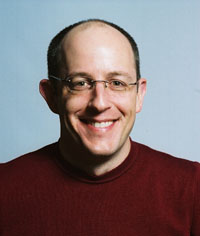
The major focus of work in Dr. Mizgerd’s laboratory is on acute lower respiratory tract infections. Inflammatory responses in the lungs require the coordinated expression of diverse mediators including adhesion molecules, chemokines, colony stimulating factors, and cytokines that are absent or present only at low levels in uninfected lungs, but are expressed at high levels during infection. Similar mediators are induced during most lung infections, although individual mediators can have different roles during different infections. Dr. Mizgerd studies the coordinated expression of these mediators focusing on gene regulation. NF-kB transcription factors are critical to the gene expression program directing inflammation in the lungs, with RelA inducing inflammatory genes mediating host defense and p50 counteracting this gene induction to prevent lung injury. These transcription factors have cell-specific roles during infection. In addition expression of these mediators is regulated post-transcriptionally by miRNAs that target cytokine mRNAs to limit their expression, and modifications of these miRNAs to relieve miRNA-mediated repression to facilitate cytokine expression. An improved knowledge of the molecular mechanisms directing inflammation in the lungs will provide new directions for preventing acute lower respiratory tract infections.
GSDM's Dr. Janket Shares Key Diabetes and Pregnancy Findings in Austria
Research Associate Professor Dr. Sok-Ja Janket is back from the 6th International Symposium on Diabetes and Pregnancy in Salzburg, Austria. She was one of just two dentists in attendance (most attendees were OB-GYNs) and her poster was honored as one of the most innovative by the section chair and other dignitaries.

Her project, “Salivary Immunoglobulin A, C-reactive protein in Overweight Gravidae,” looks at the association between the salivary immunoglobulin A (sIgA) and body mass index (BMI), which is a significant risk factor for diabetes in pregnancy. Her results highlight the importance of sIgA in diabetes and pregnancy because the relationship of sIgA and BMI was independent of C-reactive protein, a most touted molecule associated with obesity. However, Dr. Janket adds that the study design makes it hard to say whether sIgA is contributing to being overweight or the result of it.
Using data from 328 women who were part of the Finnish Oral Health and Adverse Birth Outcomes (FOHABO) study, researchers found that sIgA is not only associated with BMI but also with immune tolerance dysregulation. Dr. Janket points out that pregnancy is an immune-compromised state, in which nature provides very careful balance between “not rejecting the fetus” and “fending off serious infections”.
“As an oral health cardiovascular relationship researcher,” Dr. Janket continued, “I find oral health and birth outcomes research is very complex and fascinating. In cardiovascular disease (CVD), most risks (except heredity and age) are self-inflicted, i.e. smoking, being overweight/obese, and eating an unhealthy diet. So the relationship of risk factors and CVD manifestation is straightforward.”
She also said, “In birth outcomes, the same risk factors and similar disease relationship gets convoluted because of the maternal immune response and the hidden contributors in the outcome. These are the father and the fetus. I have learned a lot from this conference and hope to use this knowledge in my future research.”
Dr. Janket is supported by the American Heart Association and worked with Drs. Jukka H. Meurman and Aura Heimonen of the University of Helsinki, GSDM alum Prashanti Bollu DMD 08 of the University of Southern Nevada, and Dr. Risto Kaaja of the University of Turku. Additional funding for the study came from Helsinki University Central Hospital and the Finnish Medical Society.
Worker Sickness a Legacy of the Arms Race: SPH prof tests for work-related illnesses in nuclear arms industry
After a dozen years probing for work-related sickness among nuclear weapons workers, Lewis Pepper can say he’s made a difference. Prodded in part by his work, Congress a decade ago compensated more than 28,000 workers for a variety of illnesses. Now Pepper, a School of Public Health assistant professor of environmental health, is pushing to expand a Department of Energy (DOE) initiative providing CT scans to some workers in hopes of detecting lung cancer early.
The CT scan program has screened 10,000 workers already; Pepper would like to increase that number by half again. Meanwhile, he’s in the second year of a five-year, $6 million DOE grant to continue other testing of workers who were employed at a half dozen sites for possible illnesses. Many nuclear arms workers, especially during the Cold War, were exposed to various carcinogens, such as asbestos, radon, and beryllium, a commonplace metal in materials used to make nuclear weapons.
In addition to cancer, ailments that Pepper and his team have found include chronic beryllium disease (CBD), a lung affliction that is treatable, but can be fatal. They also look for beryllium sensitivity, a condition similar to an allergy that’s often a precursor to CBD.
Illness isn’t just the concern of a bygone era: in 2002, more than 5 percent of workers at a DOE office building in Las Vegas that was once a beryllium-machining site were found to have beryllium sensitivity.
Pepper’s current research focuses on workers who were employed at such places as the Nevada National Security Site, Lawrence Livermore National Laboratory, and Lawrence Berkeley National Laboratory. Researchers from SPH, the University of California at San Francisco, and the University of Nevada School of Medicine are collaborating on the testing. Pepper spoke with BU Today about his work and his advocacy for compensating workers.
BU Today: Why are you are pushing for CT scanning?
Pepper: For individuals who are at high risk of developing lung cancer, based upon their work history of exposure to a variety of carcinogenic agents, among them asbestos, beryllium, radon, and diesel exhaust. Chronic beryllium disease is associated with an increased risk of developing lung cancer in a series of studies. There’s a scientific basis to go forward, but one of the impediments is the uncertainty around the federal budget. I think they’re going to say it’s a great idea, but we’ve got to wait for the money. The program has incredible bipartisan support. There are facilities in many states.
Isn’t the scientific evidence that early detection of lung cancer can save lives in dispute?
In November, the National Cancer Institute released results of its national 10-year, 53,000-person randomized clinical trial of low-dose CT scanning for lung cancer screening. The study found a 20 percent lung cancer mortality reduction among the scanned group, compared to the group screened with a chest X-ray. Additional details are expected in the spring.
Who are the folks you’re still testing 20 years after the Cold War ended?
We continue to bring in people who worked during that era, people who are retiring. There are people who are maybe 70 now, people who worked in the ’60s and ’70s.
Aren’t you also testing people found to have beryllium sensitivity who worked for DOE in office buildings that had been rehabbed?
Yes. Beryllium was thought not to be a problem outside the machine shops where it was milled until then. And not to be alarmist, but the Department of Energy is very active in nanomaterials research. The department put in several oversight mechanisms to provide medical screening and surveillance to these individuals. It’s not entirely clear whether nanomaterials cause disease. There are recommendations from the National Institute for Occupational Safety that traditional medical screening and surveillance be used. It’s not unlikely, I think, that at some point, someone’s going to suggest CT scans. In 2007, the U.S. Air Force asked the National Academy of Sciences to look at beryllium exposure in their population and what should they be doing in terms of medical screening—not jet pilots, but people who work on the engines.
Since you’ve been doing this research, how many workers have you tested?
About 6,000, I think.
What got you interested in this?
I come out of the 1960s, so I guess that’s my problem. When I was in medical school, I heard a guest lecturer—at that time, I thought I was going to be a primary care internist—who said, “If you’re interested in social justice and making things better through your career as a physician, choose occupational medicine.”
This BU Today story was written by Rich Barlow. He can be reached at barlowr@bu.edu.
Forum: When Public Health and Journalism Collide
In an era of earthquakes, tsunamis, oil spills, mine explosions and wars, public health professionals and journalists often find themselves drawn to the same scene, grappling with the same issues – sometimes collaborating and other times colliding.
These complex interactions are the focus of a unique, one-day conference at BU, “When Disaster Strikes: Reporting and Responding.”
The event is co-sponsored by the Pulitzer Center on Crisis Reporting and BU’s Center for Global Health and Development, School of Public Health and College of Communication. It will be held on April 14, from 8:30 am to 5:00 pm, at the Boston University Photonics Center.
The aim of the conference is to bring journalists, health care professionals and other aid workers together to share information about their roles and responsibilities – to their work, the public, and to one another. Journalists rely on public health specialists to provide information, context and real-life narratives to make a crisis come alive, often under pressing deadlines. Health professionals and aid workers, meanwhile, are sometimes untrained in dealing with the media and can be left feeling ambushed.
The conference will feature a wide range of experts from the fields of global health, NGOs and journalism, as well as citizens and volunteers who will use this first Pulitzer Center-BU collaboration to examine the complicated aftermath of the earthquake in Haiti. The gathering is an attempt to establish strategies to allow journalists and aid workers to function collaboratively, with minimal interference.
Kerry Sanders, NBC’s Miami-based correspondent since 1996, will serve as keynote speaker. He has covered news mainly in the South and throughout Latin America. Sanders contributes regularly to “NBC Nightly News with Brian Williams,” “Today,” MSNBC and occasionally to “Dateline NBC.” He was a member of the NBC Nightly News reporting team that was awarded a Peabody and the RTNDA Edward R. Murrow Award for coverage of Hurricane Katrina. He also was one of NBC’s embedded reporters during the Iraq war, traveling with the U.S. Marine Corps, and has extensively covered the war on terror in Iraq, Kuwait, Saudi Arabia and Afghanistan.
For more information on the conference, go to http://www.bu.edu/cghd/news/calendar/when-disaster-strikes/.
Submitted by Lisa Chedekel
GSDM's Dr. Michelle Henshaw Honored at 2011 ADEA General Session
The 2011 American Dental Education Association (ADEA) General Session took place in San Diego, California from March 12-16. At the Session the ADEA Gies Foundation honored Assistant Dean for Community Partnerships & Extramural Affairs Dr. Michelle Henshaw with the 2011 William J. Gies Award for Innovation in the Dental Educator category. Dr. Henshaw was selected for the award based on her successful integration of teaching, translational research and clinical service, and outreach activities within the GSDM curriculum.

Dean Jeffrey W. Hutter attended the General Session and had the honor of presenting the award to Dr. Henshaw. He said, “Dr. Henshaw has been deeply committed to the integration of teaching, research, and service. She successfully fostered partnerships that resulted in more than 50 community-based service programs that provide oral health care to underserved populations throughout Massachusetts. Her efforts have served to transform the institutional culture of our School.”
Also at the Session Clinical Associate Professor Dr. Mark Ferriero presented a poster titled, “The OSCE: A Picture IS Worth a Thousand Words!,” Professor and Director of Predoctoral Restorative Dentistry Dr. Celeste Kong presented a poster titled, “Electronic Portfolios That Make Learning Visible,” and Associate Director of Extramural Programs Ms. Meg Loadholt presented a poster titled, "Development of Critical Thinking Skills In Dental Students and Methodology of Evaluation." In addition, Clinical Assistant Professor Dr. Negar Nasseripour, Clinical Assistant Professor Dr. Frederick Hains, and Clinical Associate Professor Dr. George Keleher presented a lecture titled “Treatment Planning and Risk Assessment.”
More than 2,300 people attended including many others from the GSDM community. A collection of photos from the General Session is available on flickr.
More Than Just Skin Deep: BUSM Center Transforms Skin Cells into Stem Cells
Darrell Kotton, Gustavo Mostoslavsky, and George Murphy roll up their sleeves and proudly display small oval marks on their forearms. Biopsies from which the medical researchers harvested their own skin cells to create—well, actually the sky may be the limit.
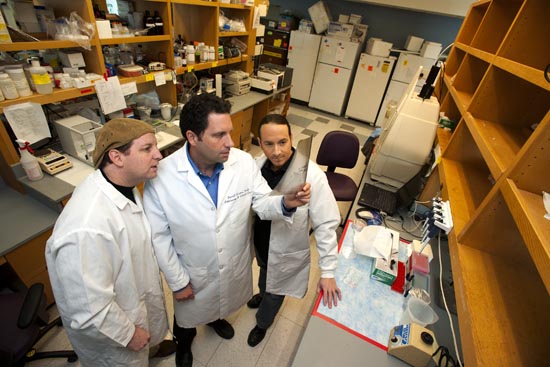
“Pretty much all the biology books are wrong now,” says Murphy, a School of Medicine assistant professor of medicine, who specializes in hematology. “Because they all say that your skin cells, your skin fibroblasts are always going to be fibroblasts. Turns out now they can become cells like an embryonic stem cell, which can then differentiate into any kind of cell it wants.”
Murphy is talking about human induced pluripotent stem cells, or iPSC, which form the core of the work at BU’s Center for Regenerative Medicine (CReM), a research facility he codirects with Kotton and Mostoslavsky that seeks to advance stem cell research. The collaborative effort among scientists on the Medical and Charles River campuses unites teams of stem cell biologists, physician-researchers, and biomedical engineers. CReM focuses on developing new treatments for diseases commonly seen at Boston Medical Center, such as cystic fibrosis, sickle cell anemia, emphysema, amyloidosis, and inflammatory bowel disease. The use of iPSCs, first developed in 2006 at the University of Kyoto, reduces dependence on the controversial, and federally limited, embryonic stem cell lines.

Last fall, the three CReM codirectors announced the creation of a bank of more than 100 lung disease–specific stem cell lines from patients with inherited diseases, including cystic fibrosis, alpha 1 antitrypsin deficiency emphysema, and sickle cell anemia. The lines mark the first time lung disease–specific iPSC have been created in a lab. The research was funded by the National Institutes of Health, the Cystic Fibrosis Foundation , and an ARC award from BU’s Evans Center for Interdisciplinary Research .
Led by pulmonary specialist Kotton, a BUSM associate professor of medicine, the team took tissue samples from patients with the diseases. Using a tool that Mostoslavsky, a BUSM assistant professor of medicine specializing in gastroenterology, engineered in 2008, called the stem cell cassette (STEMCCA), the team was able to reprogram adult skin cells into clinical-grade pluripotent stem cells. Mostoslavsky’s design, which BU has since patented, is now used by hundreds of labs around the world and is considered the industry standard.
“Our dream was to make a better tool, a viral vector to pop these genes into cells and do the equivalent of the University of Kyoto experiment that was better, safer, more efficient, and allowed translation to human beings in a way that was very simple and elegant,” Kotton says.
Many scientists believe that stem cells will play a crucial part in the fight against Parkinson’s, Alzheimer’s, and a range of genetic diseases, but in the United States, because of the use of human embryos, government injunctions against their use have been issued and lifted and issued again. Even with the high-quality iPSC lines CReM has developed, embryonic stem cells are still necessary to serve as a positive control: “a roadmap for developmental biology,” as Kotton puts it.
“Using induced pluripotent stem cells removes the necessity of using a human embryo and thus avoids all of the ethical problems of egg donation, embryo creation, and embryo destruction for research purposes,” says George Annas, William Fairfield Warren Distinguished Professor and chair of the School of Public Health health law, bioethics, and human rights department. “The primary scientific research issue is determining whether or not iPSCs are as pluripotent as human embryonic stem cells, and whether they are as predictable and abnormality-free from a genetic and epigenetic standpoint.”

From lab to bedside
Murphy often uses a “flight recorder” analogy when he explains his work.
“When there’s a plane crash, investigators look for the flight recorder so they can determine each event that led up to the catastrophic event,” he says. “In much the same way, we can take skin cells from sick patients and differentiate those cells into the affected tissue type and go through all the molecular events that led up to the disease and that catastrophic event. It creates the ability to intervene early.”
Human induced pluripotent cells also allow drug developers and scientists more precision, offering a quality even embryonic cells don’t offer. The use of a person’s own skin or blood to create embryonic-like stem cells means the patient’s body won’t reject them, thereby eliminating the need for immunosuppressive drugs.
“You’re looking at cells and the disease in the context of the exact genetic background of that patient,” Murphy says. “So it becomes possible to test therapeutic drugs in the test tube before using them on patients. It’s patient-specific medicine.”
A seminal CReM project, which got under way in 2009, involves an infant in New York City with inherited long QT syndrome, which causes a serious heart arrhythmia. Kotton and his team took skin cells from the baby, as well as from the parents, and generated iPSC, which in turn were programmed to differentiate into heart muscle cells, or cardiomyocytes. CReM researchers are coordinating with laboratories in New York and Toronto to test available pharmaceuticals on those cardiomyocytes, which in essence act as the disease in miniature, to determine how best to treat the sick child.
The team has also collaborated with researchers at Massachusetts General Hospital to engineer a bioartificial rat lung that allowed a living rat to breathe for six hours. Further, they’ve developed a gene therapy that offers lifetime protection against an inherited form of emphysema in mice.
Fast friends
The three researchers have a tight bond and play well off each other. They first met as postdocs in the lab of prominent stem cell biologist Richard Mulligan at Harvard Medical School. They became fast friends and fit together like puzzle pieces.
“Darrell’s the mature statesman, Gustavo’s the passionate Argentinian, and I’m the crazy adolescent,” says the 37-year-old Murphy, who sports a ponytail and an earring in each ear.
Kotton first arrived on campus as a fellow in pulmonary and critical care medicine in 1998, and after his subsequent postdoctoral research fellowship at Harvard, he returned to MED in 2004, starting his own lab focusing on lung stem cell work. In 2008, Mostoslavsky was recruited, followed soon after by Murphy.
“Like many centers, ours is formed on scientific passion, but it’s also formed on a deep friendship that came before the center,” Kotton says. “Our main interest is love of science. We’re in love with the cells and what controls their cell fate decisions and their biology, and a wonderful side effect of all these projects is they may end up helping people, which is a great thing.”
This BU Today story was written by Caleb Daniloff. He can be reached at cdanilof@bu.edu.
GMS Doctoral Student Nadia Krasner Selected for 2011 ASN Predoctoral Fellowship
Nadia Krasner, a PhD student in the Graduate Program in Medical Nutrition Sciences, has been selected to receive a $5,000 fellowship through the American Society of Nutrition. The award recognizes Ms. Krasner's excellence in her proposed project Does GLP-1 Mediated Activation of AMPK have an Anti-Inflammatory Effect in Vascular Endothelium. The grant, sponsored by Pfizer, will be presented at the ASN Awards Ceremony on Sunday April 10, during the ASN Scientific Sessions and Annual Meeting at Experimental Biology 2011 in Washington, DC.
The overall goals of the project are to determine whether the GLP-1 (glucagon like peptide-1) activates AMPK in vascular endothelial cells, and if in doing so, it inhibits the potentially atherogenic effects of hyperglycemia, the saturated fatty acid palmitate and the inflammatory cytokine TNF. Ms. Krasner’s mentors are Dr. Neil Ruderman and Dr. Jose Cacicedo in the Section of Endocrinology, Diabetes, and Nutrition, Department of Medicine, BUSM.
The Graduate Program in Medical Nutrition Sciences, part of the Division of Graduate Medical Sciences, the branch of the School of Medicine focused on graduate education, is directed by Susan K. Fried, PhD. This doctoral program prepares students to conduct research directed at understanding how nutrients affect health at the molecular, clinical and population levels.