Student Updates
Medication Use Among Pregnant Women Increasing
A research team led by a Boston University School of Public Health epidemiologist has reported widespread and increasing medication use among pregnant women.
The study, done in collaboration with the Centers for Disease Control and Prevention (CDC) and Harvard School of Public Health, which currently appears online in the American Journal of Obstetrics and Gynecology, also found that medication use varied by socioeconomic status, maternal age, race/ethnicity and state of residence.
"These data identify prescription medications that are currently most commonly used and therefore urgently require research on their risks and safety; they also reinforce the need for ongoing surveillance regarding medication use in pregnancy and its consequences," said lead author Allen A. Mitchell, MD, director of BU's Slone Epidemiology Center and professor of epidemiology.

"Not only is it critical to identify how many OTC (over-the-counter) and prescription medications are taken by pregnant women and what those specific medications are, but it is also important to know how use of medications changes over time," he added.
Although a number of antenatal medication exposures are known to cause birth defects, there is insufficient information on the risks and safety for the vast majority of medications, whether they are obtained by prescription or OTC. As a result, pregnant women may unknowingly take a medication that poses risk to their fetus; on the other hand, anxiety about the potential harmful effects to the fetus may discourage women from adhering to beneficial treatments.
The findings came from data collected by the Slone Epidemiology Center's Birth Defects Study (1976-2008) and the CDC's National Birth Defects Prevention Study (1997-2003), which together interviewed more than 30,000 women about their medication use during pregnancy. The results included information not only on use of prescription drugs but also OTC medications, which are more commonly used and are not typically recorded in electronic medical/insurance records.
The following is an outline of the study's findings:
1. During the first trimester of pregnancy
- 70-80 percent of women reported taking at least one medication; and
- By 2008, about 50 percent of women reported taking at least one prescription medication.
2. Over the last 30 years
- First trimester use of prescription medications increased by more than 60 percent;
- Use of 4 or more medications during the first trimester tripled; and
- Antidepressant use during the first trimester increased dramatically.
3. In addition, this study reported that
- Medication use increased with a woman's age and education level;
- Use was higher among non-Hispanic white women compared with women of other races or ethnicities that were studied; and
- Use during pregnancy varied by state of residence.
According to the researchers, defining research priorities requires an understanding of patterns and factors associated with actual use of the wide range of specific medications that are taken during pregnancy and particularly during the first trimester, when concerns about development of birth defects are greatest.
This study was supported in part by a Cooperative Agreement with the Centers for Disease Control and Prevention through the Massachusetts Department of Public Health, cooperative agreements from the Centers for Disease Control and Prevention to the centers participating in the National Birth Defects Prevention Study, and the Eunice Kennedy Shriver National Institute of Child Health and Human Development.
GSDM Students Descend on Beacon Hill
On April 13, a group of GSDM students headed to the State House for Beacon Hill Day 2011. On this day each year MDS relies on its dentist and student members to come together at the Massachusetts State House and explain the importance of oral health to legislators.
"Beacon Hill Day was a great opportunity to meet with legislators and discuss the issues,” said Ana Serrenho DMD 13. “Participating in the day allows the dental community to take some of the power back by working with lawmakers to rein in insurance policies that negatively impact quality of care and the ability of a dentist to make a living."
Amit Patel DMD 12 added, “I found lobby day to be a great event, where not only do we get to meet the legislature and educate them on dental-related legislation, but we also get to participate in a great networking event.”
This year’s Beacon Hill Day focused on two important issues: Senate Bill 409 & House Bill 323, which if enacted will prevent dental benefit companies from setting fees for non-covered services; and the MassHealth Adult Dental Benefit, which Governor Patrick has recommended cutting by $56 million. MDS believes it is critical that legislators maintain full funding in the fiscal year 2012 budget.
After learning about the issues, students visited legislators in their offices to explain why these issues are important.
"It was really great to see how the legislative process works in this state,” said
Olga Krikunenko DMD 12. “Meeting with congressmen, senators, and chiefs of staff was really enlightening. I now have a better understanding of how bills and laws get passed and how the Mass Dental Society helps to fight for the rights of dentists and dental professionals."
Seth Caldon DMD 12 added, “I was surprised to find how little the congressmen knew of the bills we wanted passed, but was impressed that they wanted to learn more."
Sonja Evans DMD 13 also said, "Members of MDS were very appreciative that BU had such a large turnout of students. MDS president Dr. John Fisher told us that legislators listen to students more than professionals on these issues. Having us lobby with them gave legislators a different perspective on the issues."
What do recombinant DNA, cell lysis, protein purification and gel electrophoresis have in common? BUSM SummerLab students know!
Since 1996 more than 600 students from myriad of countries including China, Germany, Nigeria and Spain as well as from many states across the US, have participated in Boston University School of Medicine’s SummerLab program.

 Over the week-long 30-hour program, students participate in a series of laboratory experiments. Working in student-run teams, they learn to collaborate and negotiate to produce the best possible results for a variety of laboratory challenges. At the end of the week the student teams share their findings with each other, their families, and the greater BU community during a poster session.
Boston University CityLab Director Don DeRosa describes the SummerLab program as “an opportunity for students to explore the fundamentals of biotechnology in an authentic, hands-on laboratory setting.” CityLab educators guide students to become increasingly independent during a week of exploration and inquiry based lab work. This opportunity allows students to use scientific ways of thinking as they develop vital lab skills and experience work as research scientists.
While SummerLab may be seen as an individual educational experience, students who attend find working with like-minded peers enriching and rewarding.
According to Isabella a SummerLab 2010 participant, “Some people may say that spending a week at science camp is nerdy or geeky. Honestly, there’s nothing nerdy about it. It’s just a bunch of smart people in a room who are passionate about science. SummerLab just gives us the opportunity to expand that passion!”
“People thinking about signing up for SummerLab should know the basics of biology and that they will be in for an amazing and beneficial experience where they can learn more about biology, meet new people, and have fun,” explained Joe, a SummerLab 2010 participant.
Jordan, a former SummerLab participant who is majoring in pharmacy summed it up when she said, “SummerLab helped me to understand where I wanted to go in life, and it opened my eyes to how amazing science can be.”
SummerLab is open to students entering the 10th, 11th or 12th grades as well as recent high school graduates. The only pre-requisite is a motivation and desire to learn. For additional information and an online application, visit https://www.bumc.bu.edu/citylab/summerlab/ or call 617-638-5665.
Register Now for the 2nd Annual CTSI Translational Research Symposium
The Second Annual Translational Research Symposium, sponsored by the Boston University Clinical and Translational Science Institute (CTSI) takes place on Thursday, May 26.
Robert S. Langer Jr., ScD, David H. Koch Institute Professor, Massachusetts Institute of Technology, known for his work at the interface of biotechnology and materials science, will give the keynote address. He will be speaking on “Engineering and Health Care: From the Discovery of the First Angiogenesis Inhibitors to the Development of Controlled Drug Delivery Systems and the Foundation of Tissue Engineering.” Click here to learn about Dr. Langer.

In addition to the keynote address, there are a variety of activities at the symposium including: a poster session with prizes; short talks about translational research challenges and successes at Boston University; opportunities for cross-campus networking; and Information on translational research resources at Boston University
In addition, monetary awards will be presented to exceptional scientific posters with a trainee as the first author. The awards will be to the first ($2500), second ($1000) and third ($500) place winner of the competition
The on-line registration with poster abstract submission deadline is May 6, 2011 at 5:00 p.m. Online registration for attendees without poster abstract submission is May 11, 2011 at 5:00 p.m.
Information and notification of acceptance for posters, and attendance confirmation will be sent on May 13, 2011. Set-up time is 7:30 a.m. the morning of the event.
Please register to attend the Symposium even if you are not submitting an abstract for poster presentation. There is no fee but pre-registration is required. Register early as seating is limited. Breakfast and lunch will be provided and we will need a count for food as well as poster spaces.
CLICK HERE TO REGISTER FOR THE SYMPOSIUM (with or without abstract).
Second Annual Translational Research Symposium
Thursday, May 26, 2011, 8:00 a.m. – 2:00 p.m
Boston University School of Management,
595 Commonwealth Avenue, 4th Floor
Boston, MA 02115
Location/Parking/Transportation
For information regarding event location and parking, see http://management.bu.edu/about/visit/index.html.
Green and gold parking stickers are valid at the School of Management garage. For those without a green or gold parking sticker, parking is available at 549 and 665 Commonwealth Avenue.
For information regarding BU shuttle service, see http://www.bu.edu/thebus/
Questions?
For questions regarding the Symposium, contact:
David Seldin, MD, PhD, Telephone: 617-638-7027, email: dseldin@bu.edu or
Courtney Alpert, Telephone: 617-638-4544, email: alpertc@bu.edu
For questions regarding poster submissions, contact:
Tai Chen, PhD, Telephone: 617-638-4543, email: taichen@bu.edu
Attend VA Research Week Symposium on Women’s Health Issues May 6, BUSM Faculty to Present
Medical Campus faculty, postdocs and researchers are encouraged to take advantage of a one day event in support of National VA Research Week. This year’s event highlights women’s health issues. Research by VA and VA-affiliated researchers at Boston University School of Medicine, Harvard Medical School, and the VA Boston Healthcare System’s National Center for PTSD will be featured. For maximum convenience the event has been configured to last one day, May 6, and includes a plenary session followed by a poster session.
The program includes:
- 11:00 am, "Psychological Stress and Cardiovascular Disease Risk: Current Data and Directions in the Women's Health Study," Michelle Albert, MD, MPH, Director of Behavioral and Neurocardiovascular Cardiology, Assistant Professor of Medicine, Harvard Medical School;
- 12:00 p.m., luncheon
- 12:30 p.m., "Women at War: Stressors Faced by a New Generation of Women Veterans," by Amy Street, PhD, Clinical Psychologist, VA Boston Healthcare System and Associate Professor of Psychiatry, BUSM;
- 1:00 p.m., "What Research in Women Is Revealing About Pathophysiology and Treatment of PTSD," by Ann Rasmusson, MD, Research Affiliate, VABHS and Associate Professor of Psychiatry, BUSM.
- 2:00-5:00 p.m., Poster Session at West Roxbury Elk's Club (across street)
The plenary session takes place at the Barsamian Auditorium (building 1, room 3C108) of the West Roxbury VA Medical Center, 1400 VFW Parkway, Jamaica Plain and the poster session follows immediately across the street, at the West Roxbury Elks Club.
For more information contact Kirsten Levy at klevy@bu.edu.
Pulse Oximetry Training Video Produced by Rafael Ortega Published in NEJM
A pulse oximetry training video produced by Rafael Ortega, MD, professor of anesthesiology at Boston University School of Medicine (BUSM) and vice-chair of academic affairs for the department of anesthesiology at Boston Medical Center (BMC), and his colleagues is featured in the New England Journal of Medicine. It provides best practices for physicians utilizing pulse oximetry.

Pulse oximeters are small, non-invasive sensors placed on a patient’s finger or ear to monitor their blood oxygen levels. As the current standard of care used in operating rooms, intensive care units and hospital wards worldwide, pulse oximeters continuously monitor the patient’s oxygen blood levels and sound an alert when abnormal values are detected.
“While pulse oximetry is widely used, there are many concepts included in the training video that would help nurses and physicians understand how best to utilize the technology and keep patients as safe as possible,” said Ortega.
The training video filmed at BMC features volunteer patients, BUSM medical students and BMC physicians in real and simulated conditions where pulse oximetry would be used. The NEJM also created digital illustrations and graphic animations for the video. Developed for practicing physicians, it provides detailed information on the principles of pulse oximetry and instructions on how to best interpret the information derived to ensure patient safety.
“Training videos published in academic journals offer a greater number of health care practitioners access to significant clinical practice tools,” said Ortega, who also received a Letter of Commendation from the World Health Organization (WHO) for another pulse oximetry training video this past March.
The publication date for this video coincides with the recent passing of Ellison Pierce, MD, an anesthesiologist who is responsible for the widespread acceptance of pulse oximetry. “His legacy represents one of the pivotal chapters in the history of anesthesiology and Dr. Pierce is arguably one of the most influential anesthesiologists of modern times. Every day, we administer anesthetics and take care of patients following the safety concepts he promulgated,” said Ortega.
This video was done in collaboration with BUSM Graduate Medical School (GMS) students, medical students and members of the department of anesthesia at BMC, including Christopher J. Hansen, MA, and Albert Woo, MD. Kelly Elterman, MD, a former internal medicine intern at BMC, also worked on the project.
BUSM's Lewis Braverman Recognized for Teaching Excellence by AACE
BUSM Professor of Medicine in the Section of Endocrinology, Diabetes and Nutrition within the Department of Medicine, Lewis E. Braverman, MD, FACE, was presented the H. Jack Baskin, MD, Endocrine Teaching Award from the American Association of Clinical Endocrinologists (AACE) at its 20th Annual Meeting in San Diego, on April 14. This award is given annually to an AACE member in good standing who has made a profound impact in teaching fellows-in-training and who is actively involved in teaching either in a university setting or through AACE.

“I am truly honored to receive the H. Jack Baskin, MD Endocrine Teaching Award from the American Association of Clinical Endocrinologists,” Dr. Braverman said. “It is especially meaningful to me since Dr. Baskin has been such an outstanding teacher for many years. I am most indebted to the large number of superb fellows whom I have worked with over the past 50 years for teaching me so much and trying their best to keep me up to date.”
Dr. Braverman earned his undergraduate degree in Biology from Harvard University in Cambridge, Mass., and received his MD from Johns Hopkins University School of Medicine, Baltimore, Maryland. He also received an Honorary Doctorate in Medicine from the University of Parma, Parma, Italy. Internal Medicine Residency and an Endocrinology Fellowship under the direction of the late Sidney H. Ingbar, MD, were completed on the II-IV Medical Services (Harvard) and Thorndike Memorial Laboratory (Harvard), Boston City Hospital. As an author and co-author, Dr. Braverman’s work has been published in many leading clinical and research medical journals. He is co-editor of the leading thyroid textbook, has served as Editor-in-Chief of the Journal of Clinical Endocrinology and Metabolism and currently as the Editor-in-Chief of Current Opinion in Endocrinology, Diabetes & Obesity and Endocrine Practice, serves on many journal editorial boards, and is a member of many national and international research and clinical organizations.
BUSPH Public Health Forum: Urban Indian Slums Fertile for Change
Urban slums in developing countries remain a "blind spot" for policy makers, but basic initiatives to empower women can have huge impacts on maternal and child health, Dr. Kiran Martin, founder of the Delhi-based Asha Society, told a BUSPH public health forum.
''Asha’s women’s associations have brought about remarkable transformation in slum communities,'' said Martin, whose agency has been working in the slums of Delhi, India, since 1988. Asha works in partnership with 50 slum communities, helping 400,000 residents to gain access to healthcare, financial services and education through direct-service and community-empowerment programs.
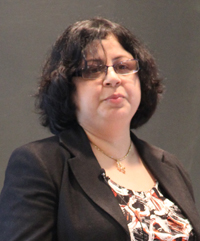
Martin described the early challenges of intervening in the urban slum community of Delhi, including meeting with resistance from slumlords, ''quack doctors'' and local male leaders. The program's focus is on empowering women, including training them as community health workers and midwives, and organizing them into associations to press for improved conditions.
''At first, it was very uncomfortable for the men. It caused a huge amount of trouble,'' Martin said. ''But we tried to involve them so they would not feel threatened.''
Twenty-three years later, Martin can reel off a litany of successes, some of them intangible and others measurable. Deaths from diarrhea, once a serious problem, are now extremely rare. The under-age-5 mortality rate in slum areas served by Asha is 28.2 [per 1,000 live births] — significantly lower than the average for Delhi as a whole. Nearly all Asha clients – 99 percent – who give birth have skilled attendants during delivery, compared to 47 percent in India as a whole.
More recently, Asha hs helped to provide opportunities for dozens of children in the slums to go to college, and for families to receive loans and other financial-management resources from banks. The agency also has empowered slum residents to press for access to safe water and sanitation, drastically improving their overall health.
Martin, who spoke at the invitation of BUSPH's Department of International Health, said improving maternal and child health is not just a matter of opening health clinics, but of taking a "comprehensive approach" to improving a population's quality of life.
"Direct interventions require a supportive environment," she said. Creating that environment means addressing issues beyond health care, such as access to education, employment, housing and micro-credit.
Martin said intervening in urban slums is a different experience than working among the rural poor. Slum dwellers "are so used to being at the bottom of the pile" and to being sold "empty promises" by politicians, that agencies such as Asha struggle against an ingrained sense of fatalism, distrust and suspicion. Martin’s recommended remedy: form partnerships with the residents themselves, from the start, so that they become the agents of change. The agency itself becomes a facilitator.
Jonathon Simon, chair and professor of International Health and director of BU’s Center for Global Health and Development, praised Asha's work as an example of what a determined NGO can accomplish.
He said the department hopes to work with Asha in the future to document and analyze the progress in health outcomes that the agency has achieved.
Submitted by Lisa Chedekel
GSDM Students Launch New Monthly Program at Rosie’s Place
Spearheaded by Josephine Verde DMD 13 of the GSDM chapter of the American Association of Women Dentists (AAWD), the student group launched a monthly community service initiative named, “Women to Women,” that is aimed at improving the oral health of the women of Rosie’s Place. GSDM has volunteered at Rosie’s Place in the past, but this initiative steps the efforts up a notch with a standing monthly commitment.
Verde said that the AAWD came up with the plan for Rosie’s Place after brainstorming ways to get involved with women of the local community and speaking with CHP Oral Health Promotion Director and organizer Kathy Lituri. Verde said, “I met with Ms. Lituri and she suggested getting involved in the Wellness Fair at Rosie's Place. In cooperation with CHP, AAWD launched the outreach program in March. We have two upperclassmen scheduled to attend the Wellness Fair each month until June and it's really been successful so far.” She continued, “It was touching to be able to be there for the women who go to Rosie's Place. The main goal of the events is to improve the oral health of the women by providing screenings and educational information. In addition, we are there to answer any medically-related questions.”
Thus far, the AAWD has attended Wellness Fairs on March 11 and April 8, and volunteers have screened 18 women, with many more stopping by for information or a toothbrush. An added bonus for the student volunteers has been getting to know some of the other groups volunteering at the Wellness Fair, including a group of nursing students from Regis College, and learning about their perspective on health and oral health.
BU Researchers Find Majority of Substance-Dependent Individuals Report Poor Oral Health
A team of Boston University researchers has found that the majority of individuals with substance dependence problems report having poor oral health. They also found that opioid users, in particular, showed a decline in oral health over the period of one year. These findings appear online in the Journal of Substance Abuse Treatment.
Public health, dental medicine and internal medicine faculty from Boston University investigated the affects of different substances on oral health among a sample of substance-dependent individuals. Alcohol, stimulant, opioid and marijuana users were included. The subjects were asked to self-report their oral health status on a five-point scale ranging from poor to excellent.
Statistical analysis of the patients’ reports found no significant associations between the types of substances used and oral health status. The results did show, however, that 60 percent of all subjects reported fair or poor oral health. Opioid users in the sample also exhibited worse oral health compared to one year ago.
“We found that the majority of our sample reported fair or poor oral health,” said Meredith D’Amore, MPH, a researcher in the Health/care Disparities Research Program at Boston University School of Medicine and Boston Medical Center. “Thus, oral health should be considered a significant health problem among individuals with substance dependence and providers should be aware of potential oral health issues.”
The researchers hope that their findings prompt more oral health interventions targeted toward individuals with substance dependence in the future. They also suggest that engaging addicts in medical care discussions may be facilitated by addressing oral health concerns.