Student Updates
BUSPH Students Raise $28,000 for Charities
BU School of Public Health students raised $3,400 in cash and $24,800 in donated vitamins this semester to benefit seven global health charities, as part of a class project that included special events, online donations, and grant writing.
As part of the project in Financial Management for International Health, the MPH students wrote case statements for charitable organizations, developed and executed fundraising plans, and wrote professional fundraising reports. One group decided to write a grant as its fundraising strategy, to benefit Circle of Health International’s program in Haiti.
Students Katie Clifford, Sara Gille, Lauren Whaley and Rebecca Young approached the organization Vitamin Angels to request in-kind donations of vitamin A and multivitamins for pregnant and nursing women and children served by the Christ Pour Tous (CPT) clinic in Haiti. The grant was approved, and will supply 3,400 women and 3,300 children with vitamins for a year, helping to improve their nutritional health and well being. The vitamins are valued at $24,866.

"We were able to raise a large donation which will really help the CPT clinic. I feel we were very successful," said Clifford.
"This was an awesome experience," added Young. "The team was great, and I'm happy we were able to work together."
Over the past four years, students have raised a total of $14,711 in cash, along with the in-kind donation of vitamins, said Taryn Vian, associate professor of International Health, who teaches the course. The class had 28 students this year.
Besides Circle of Health International, the students raised funds for the following organizations this year: 4K for Cancer, a group which cycles across the country to spread awareness about cancer; Containers to Clinics, which provides innovative health care services for mothers and children; Global Greengrants Fund, a grassroots social justice organization; the SPARK Center at Boston Medical Center, which provides services to high-risk children in the Boston area; Wellshare International’s Positive Livelihoods Program in Uganda; and Snehalaya, an organization providing welfare services to children and women in distress in India.
Submitted by Lisa Chedekel
GSDM Dentist Serving on Mass Dental Society Board
Dr. Margaret Errante, director of the Boston University Dental Health Center at 930 Commonwealth Avenue in Boston, is now a Guest Board Member on the Board of Trustees of the Massachusetts Dental Society (MDS). She will offer input on issues affecting the MDS and organized dentistry in this role. The Guest Board Member program began in 2006 to provide a more representative governing body.

Dr. Errante has more than 30 years of experience in the dental field and more than 18 years of experience as a principal in a multi-location group practice. She received her DDS from University of the Pacific in San Francisco and an associates in applied sciences from the University of New York, Farmingdale. She is a registered dental hygienist.
Dr. Errante completed the MDS Leadership Institute, which trains dentists to lead in organized dentistry, the community, and in practice, in 2010. In addition to the MDS, Dr. Errante is a member of the American Dental Association, the Academy of General Dentistry, TKO Honor Fraternity, Pankey Alumni Association, and the University of the Pacific Alumni Association. She has received the Peabody Award for her clinical excellence in dental hygiene and received an award from the International College of Dentists for her clinical excellence in dentistry.
Submitted by Jackie Rubin.
GSDM’s Huang Speaks at Groundbreaking Conference
The First International Conference on Dental and Craniofacial Stem Cells was held April 27-29, at the New York Academy of Sciences. Associate Professor in Endodontics Dr. George Huang was a speaker at the Conference and presented a lecture titled, “Molecular Markers of Dental Stem Cells.”
The Conference brought together the world's leading scientists in the field of dental and craniofacial stem cells. Stem cells derived from dental and craniofacial tissue possess a wealth of possibilities for regeneration and clinical applications that can potentially be used to treat craniofacial tissues affected by chronic diseases, trauma, congenital anomalies, and tumors.
Making Healthcare Responsive to Women Victimized by Violence, Lynne Stevens Lecture & Award May 31
The BUSM Department of Family Medicine, invites the BMC campus-wide Domestic Violence Advisory Committee as well as all members of the Boston University Medical Campus and BU and BMC affiliated health centers to attend the second annual Lynne Stevens Lecture on Tuesday, May 31. Lynne Stevens, MSW, served as an assistant professor of Family Medicine at BUSM and director of the Responding to Violence Against Women Program at BMC. Prior to her death in 2009, she was a clinician, tireless advocate and researcher dedicated to make healthcare responsive to women victimized by violence. In her memory generous donations have allowed for the creation of this annual lecture and research award.

This year’s Lynne Stevens Lecturer is Karin Rhodes, MD, MS. Rhodes is an assistant professor and director of Health Care Policy Research in the Department of Emergency Medicine at the University of Pennsylvania. Her lecture is titled “What Are We Going to Do About What We Know? Improving Healthcare’s Response to Patient-Disclosed Intimate Partner Violence and Other Psychosocial Risks.”
Dr. Rhodes has been a principal investigator on a number of federally-funded projects targeted at intimate partner violence (IPV) and public health, including a RCT of computer screening that enrolled over 800 women patients at two emergency departments to assess provider-patient IPV communication outcomes and a study tracking the health and safety of women victims of domestic violence involved in the criminal justice system. With an overall goal of developing an effective clinical response for IPV with both men and women, Dr. Rhodes is interested in both broader system-level interventions and the more contextual and cultural aspects of health among primarily urban men and women who are willing to disclose risk factors for IPV (both victimization and perpetration) in a health care setting.

On May 31, the Department of Family Medicine will additionally announce the 2011 Lynne Stevens research award recipient, Katherine Iverson, PhD. Dr. Iverson is a Clinical Research psychologist at the Women's Health Sciences Division of the National Center for Posttraumatic Stress Disorder at the VA Boston Healthcare System and assistant professor of Psychiatry at BUSM. Dr. Iverson's research focuses on improving detection of intimate partner violence (IPV) among women and coordination of health care services, particularly mental health treatments to address the emotional wounds of IPV and reduce revictimization.

Lynne Stevens Lecture and Award
- Tuesday, May 31
- Lecture: 12 - 1 p.m.
- Q&A: 1-2 p.m.
- Dowling Amphitheatre, 771 Albany Street
Study Finds Many Gastroenterologists Unaware of Appropriate Immunizations for IBD Patients
Researchers from Boston University School of Medicine (BUSM), along with clinicians from Boston Medical Center (BMC), have found gastroenterologist knowledge of the appropriate immunizations to recommend to the inflammatory bowel disease (IBD) patient is limited. These findings, which currently appear on-line in Inflammatory Bowel Diseases, may be the primary reason why the majority of gastroenterologists believe that the primary care provider (PCP) should be responsible for vaccinations.
Current therapy for IBD patients often involves agents that suppress the immune system, placing patients at an increased risk for developing infections, of which several are potentially vaccine preventable. According to the studies’ authors, many IBD patients are not being vaccinated appropriately.
One thousand gastroenterologists, randomly selected from the membership of the American College of Gastroenterology, were asked to complete a 19-question electronic survey regarding suitable vaccines for the immune-competent and immunosupressed IBD patient and the barriers to recommending the vaccines. The researchers also assessed the perceived role of the gastroenterologist versus the PCP.
The researchers analyzed 108 responses and found only 56 (52 percent) of the gastroenterologists took an immunization history most or all of the time. There was no significant difference between gastroenterologists with smaller practices (less than 40 IBD patients) compared with those with larger practices (greater than 40 IBD patients) in how often they asked their patients about immunization history. In contrast, more academic physicians (67.5 percent) asked their patients about immunization history most or all of the time compared to 42.4 percent of private physicians. Sixty-nine (64 percent) of the respondents thought the PCP was responsible for determining which vaccinations to administer to the IBD patient and ninety (83 percent) believed the PCP was responsible for administering the vaccine. Sixteen of the 108 surveyed gastroenterologists did not regularly recommend immunization against influenza. The most common reasons included “too busy/forgot,” “no specific reason,” and “did not know my patient needed it”.
In addition, the researchers found 20 to 30 percent of gastroenterologists would erroneously recommend any of the three queried live, attenuated vaccines (MMR, herpes zoster, varicella) to their immune-suppressed IBD patient. In addition, 24 to 35 percent of gastroenterologists would incorrectly not give the three queried live, attenuated vaccinations to their immune-competent patients. Of the inactivated vaccines, knowledge regarding the HPV vaccine was particularly poor, with only 71 (66 percent) recommending the vaccine to their immune-competent patients and only 51 (47 percent) recommending the vaccine to their immune-suppressed patients).

In general, gastroenterologists were more likely to make the correct vaccine recommendations for their immunocompetent IBD patients. “Gastroenterologist knowledge of the appropriate immunizations to recommend to the IBD patient is limited and may be the primary reason why the majority of gastroenterologists believe that the PCP should be responsible for vaccinations,” said primary author Sharmeel Wasan, MD, MSc, an assistant professor of medicine at BUSM and a gastroenterologist at BMC.
Over the last five years, the problem of vaccine preventable illnesses in patients with IBD have been described, including case reports of fulminant hepatitis and fatal varicella. “Despite an increased risk for infections on these agents, many IBD patients are not being appropriately vaccinated. Barriers to vaccination described by patients include a lack of awareness and concern for side effects, suggesting that providers are not adequately educating and recommending vaccinations to their immunosuppressed patients,” said Francis Farraye, MD, MSc, a professor of medicine at BUSM and a gastroenterologist at BMC.
The authors recommend educational programs on vaccinations directed to gastroenterologists who prescribe immunosuppressive agents.
Wayne LaMorte Wins 2011 Metcalf Award for Excellence in Teaching
Wayne LaMorte's painful, heartfelt description of his first foray into teaching sounds like a primer of exactly how not to teach.
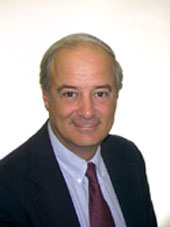
"I was so uncomfortable. I had reams of notes, I was tied to the podium, I over-rehearsed my notes, and had things underlined. I'm sure I was very stiff. It was awful," said LaMorte, professor of epidemiology and assistant dean for education at the School of Public Health. "I at least prepared the lectures carefully, and they were very logical, but I wasn't very engaging."
Nearly two decades after this rocky start, LaMorte was announced last week as a winner of Boston University's highest teaching award, the Metcalf Award for Excellence in Teaching. Lamorte will receive his Metcalf Award at BU’s 2011 Commencement ceremony on Sunday, May 22, along with two colleagues, David Walker, from the School of Law, and Judith Chaffee, from the College of Fine Arts. LaMorte has previously received the Norman Scotch Award for Excellence in Teaching, the highest teaching award at BUSPH.
Now that he has won several teaching awards, LaMorte feels more comfortable revealing what an uncomfortable teacher he initially was. He recalls being asked to teach a section of epidemiology for medical students and an introductory class for SPH students. "Both times I said, 'No. I'm not a teacher, I don't know how to teach' but really…I was deathly afraid of public speaking”, Lamorte said. "I had a disabling phobia. I was completely paralyzed."
Fortunately, LaMorte said, "They kept asking me to teach this section. I thought to myself that I have to solve this problem, so I finally said yes.
"If you have that kind of a phobia, the only thing you can do is gradually put yourself in situations where you have to stand and deliver."
While transforming himself into a master teacher, LaMorte has been an early adopter of technology. He was among the first BU professors to develop multimedia web sites for his courses, to test “clickers” to enhance classroom instruction, and to utilize other high-tech tools such as LCD projection and streaming video.
"So now I never use notes, I never stand behind the podium, and if someone asks me a question I don't have the answer to, if I can turn that into a teaching moment and get a discussion going," LaMorte said. "If you can get everyone in the room thinking, all 120 of them, that's the best. “
With the help of Rob Schadt, director of the Office of Teaching, Learning, & Technology, LaMorte has created multimedia modules that students can access on laptops or other mobile devices. Colleagues have reported seeing students riding the bus while watching LaMorte’s epidemiology lectures on their smartphones.
"One of the things I'm really excited about is revamping both of the courses that I'm teaching here during the summer,” LaMorte said. "I'm going to a very web-based format to kind of flip the classroom. I want to use technology more for content delivery."
Lisa Sullivan, BUSPH associate dean for education and a 2001 Metcalf Award winner, said LaMorte is an educator in every sense of the word, and spends countless hours preparing his lectures to engage students.
“He uses technology efficiently to maximize students’ learning. In fact, Wayne is the leader in the use of technology at our School. He doesn’t use technology for the sake of it – he uses technology to illustrate key concepts with real and relevant examples and to provide students the opportunity to work through realistic problems to build their skills and confidence levels,” Sullivan said. “His courses are exciting and practical. Students work extremely hard in his courses and feel a tremendous sense of accomplishment and real pride in their learning.”
LaMorte’s embrace of novel teaching methods was recognized in 2009 with the first BUSPH Educational Innovation Award, which recognizes "creative contributions to the development of innovative tools for the presentation of coursework, new curriculum design, and contributions to an improved teaching and learning environment at the School."
In 2008, LaMorte was awarded an Advisor of the Year honor for his work with the Undergraduate Public Health Association, an advocacy group for undergraduate students studying or interested in public health.
LaMorte's own interest in public health was an unanticipated offshoot of his medical background. LaMorte began training in surgery, but realized that it wasn’t what he wanted to do and shifted into research, eventually becoming the chief of the research section at BUSM. While his focus on research led to a PhD in biochemistry, he said he eventually became disenchanted with the medical model of health care.
"I was moonlighting in the emergency room while I doing some of my research, and I constantly had this feeling that…they just keep coming. I patch them up and send them out and they just keep coming again," LaMorte said. "Over time, that basic notion just grew in my mind, the importance of trying to prevent disease rather than just treat it."
The proactive, knowledge-based aspect of public health appealed to LaMorte, but he says he was drawn to it for good by the people he met while pursuing his MPH at BUSPH. "The school is a collection of bright people who don't have attitudes. I found that really refreshing," LaMorte said.
"Not only is the faculty and staff here different, but the students are different. By and large, we have a student body of people who are not really motivated by making huge amounts of money. They basically want to go out and save the world. To be part of that, to be part of their education, to feel like you're playing some sort of a role, it's the beast feeling in the world. It's absolutely special."
The Metcalf Cup and Awards are were established in 1973 by a gift from the late Dr. Arthur G. B. Metcalf to create “a systematic procedure for the review of the quality of teaching at Boston University and the identification and advancement of those members of the faculty who excel as teachers.”
The search for the Metcalf Award winners is a months-long process, during which nominees are thoroughly vetted by the Metcalf Committee. The group is chaired by the Associate Provost for Undergraduate Education and consists of several past Metcalf Award recipients and two undergraduate students. The committee solicits statements from candidates on their approaches to teaching, reviews student evaluations and grading patterns, examines course syllabi and graded assignments, considers letters of recommendation from current and former students and observes candidates teaching.
Submitted by Michael Saunders
Stress Rx: Med Campus Band Rocks
Rafael Ortega is a mean lead guitarist and harmonica player who hails from the Dominican Republic and is happy to jam in any style from soul to rock to jazz to reggae to calypso. His day job demands that he and his band “get down” during the church/brunch/family hours of Sunday mornings, and even then, one of the musicians might be summoned elsewhere by a pager in the middle of, say, “Dirty Water.”

Combining the assorted talents of doctors, nurses, and medical students letting off steam, the Boston University Medical Campus Band can do gyrating justice to “I Heard It Through the Grapevine,” as well as providing “a great venue for faculty, staff, and students to interact,” says head and neck surgeon—and singer and guitarist—Anand K. Devaiah, a School of Medicine associate professor of otolaryngology.
The BUMC band performs Wednesday, May11 at 8 p.m. at the Berklee College of Music’s Café 939, an all-ages, student-run music venue and coffeehouse showcasing emerging student performers and local Boston artists. Tonight’s performance, which benefits the Berklee scholarship fund, will be the BUMC Band’s third appearance at the Berklee venue.
“Berklee students have reciprocated by giving a concert here at the medical school to benefit one of our causes,” says anesthesiologist Ortega, a MED professor and associate dean of diversity and multicultural affairs. Ortega says the band, which now “lives permanently at the medical school,” accepts any instrument and any person moved to sing. “We’ve had saxophones, violins, Spanish guitar, harmonica, timbales, congas, djembe, and bongos.”
Not only are there no auditions, but band members have been known to call, “C’mon up and join us” to curious passersby who poke their heads into the Medical Campus room where the musicians rehearse. Depending on who shows up that day, the band can segue from blues to heavy metal. “We don’t have a recognizable sound,” says Ortega. “What we lack in musical ability we more than compensate for in mass appeal.”
The ensemble is a hit among colleagues and administrators alike. “The band contributes in a major way to the well-being of our faculty, staff, and students,” says Karen Antman, MED dean and provost of the Medical Campus. “They work long hours, but at the end of the day, full professors, first year medical students, as well as OR and ER staff, share their commitment to a diverse musical repertoire.”
A YouTube search reveals a succession of BUMC band video clips: the sultry blonde in the little black dress crooning “Wild Thing” is Caroline Apovian, a MED professor of medicine and pediatrics and director of the Nutrition and Weight Management Research Center at Boston Medical Center. The man leaning into the mike beside her is Fernando Almenas, a BMC anesthesiology resident. That joyful backup singer along with Apovian on “I Heard It Through the Grapevine”? She’s reconstructive surgeon Monica Miller, a MED assistant professor of surgery. And that’s Ortega on guitar.
Born three years ago out of informal gatherings of BUMC musicians, band members rehearse (they prefer amplified music to acoustic) on Sunday mornings in a storage room tucked behind a lecture hall. “It’s an ensemble that’s fairly diverse and ever-changing,” Ortega says. Drawing on their varied ethnicity and ages, the musicians play popular music with influences from around the globe. “We have musicians from Puerto Rico, China, and Armenia.” Other backgrounds represented are Indian, Jamaican, Korean, Sri Lankan, Trinidadian, and Iranian. “We have senior faculty to younger faculty to medical students to staff, with a range of capabilities,” he says.
One virtue of the BUMC Band is its function as an equalizer—a student might be playing the bass line for his professor of surgery. As for, to put it delicately, the reputed outsized egos of people in certain professions, these are preempted by the music, camaraderie, and sheer fun factor. “Surgeons tend to be aggressive, but we have plenty of surgeons in the band so the effect is neutralized,” says Ortega. Although he acknowledges that “ego always plays a role” and some “individuals may feel they’re more talented than others,” he points out that making music “is a laboratory for all of us, to negotiate and make compromises. We must try to keep egos in check.” And for the most part, he says, it works. Flexibility is a requirement too; it’s not uncommon for musicians to be on call during rehearsals.
Guitarist Mike Andreoli (MED’11) and bass player Alex Vezeridis (MED’11) are medical students. “Something I really loved seeing was one day when I was in the OR on my otolaryngology rotation, our guitarist, Dr. Devaiah, and our percussionist, Dr. Hiran “Chrish” Fernando, were at the head of the patient, teaming up on a bronchoscopy,” says Vezeridis. Oddly, the band has a lot of overlapping subspecialty surgeons from otolaryngology, anesthesia, neurosurgery, and thoracic surgery, “so collaboration outside of music practice is quite common,” Vezeridis says. And with all these specialists making music together, the jokes are unavoidable. “When someone can’t keep the beat, we say, take your pulse,” says Ortega. “Or if someone’s too loud, we refer them to the otolaryngologists.”
The band “is therapy,” says Ortega. It has become such a popular diversion that it’s even used as a recruitment tool. “One faculty member chose our institution so he could play drums.”
The Boston University Medical Campus Band performs tonight, May 11, at 8 p.m., at the Berklee College of Music’s Café 939, 939 Boylston St., Boston. General admission is $10; free with Berklee ID. Proceeds benefit the Berklee scholarship fund. More information can be found here.
This BU Today story was written by Susan Seligson. She can be reached at sueselig@bu.edu.
Elizabeth Bouhmadouche Receives John S. Perkins Distinguished Service Award from GSDM
During a special awards ceremony on May 3, Registrar & Director of Enrollment Services Elizabeth Bouhmadouche received the John S. Perkins Distinguished Service Award, from the Faculty Council. This award honors members of the Boston University community who have served the University with great distinction and have made important contributions toward the goals of BU.

Bouhmadouche earned a BS in Psychology from Bridgewater State College and a Master of Urban Affairs Degree from Boston University Metropolitan College. She joined the staff of GSDM in 1980 as an Admissions Clerk. In 1984, she was promoted to Postdoctoral Admissions Coordinator, and in 1988, Registrar—a position she held until 2002. In 2002, the scope of her responsibilities increased and her title was changed to Registrar and Director of Enrollment Services.
Bouhmadouche is a member of both the American Association of Collegiate Registrars and Admissions Officers and the New England Association of Collegiate Registrars and
Admissions Officers. She has served on numerous committees within the Dental School and the University and was the first recipient of the Henry M. Goldman Distinguished Service Award in 1996.
“Beth is a pillar of the GSDM community,” said Dean Jeffrey W. Hutter. “I know I speak for the entire School, when I congratulate her on receiving this well-deserved honor.”
GMS PhD Candidates & Post-docs: Jobs Beyond the Bench
There are a myriad of career options and professional paths available to young scientists beyond the traditional academic setting. Some of these include government laboratories, independent research institutions, pharmaceutical companies, law firms, secondary schools and consulting organizations.
Explore these opportunities on Thursday, May 5 when the Division of Graduate Medical Sciences invites PhD candidates and Post-docs to a panel discussion from 4:00 – 6:00 pm in room L-110 in the BUSM Instructional Building. See the agenda here.
Panelists, all of whom hold a doctorate in a scientific discipline, include a registered patent attorney and member of the intellectual property group at a law firm focusing on domestic and foreign patent prosecution; an executive officer for a national scientific research foundation; a director of science for grades K-12 in suburban town with a population of approximately 38,000 residents; and an entrepreneur who has established a life sciences search and career development firm focused on networking, mentoring and career development.
This panel discussion is one of several career development opportunities available to GMS PhD candidates and Post-docs. For more information on these events, please contact Julie Shine at 617-638-5250.
Researchers Show Heparan Sulfate Adjusts Functions of Growth Factor Proteins
When the human genome project produced a map of human genes, the number of genes in humans turned out to be relatively small, approximately the same number as in primitive nematode worms. The difference in complexity between human and primitive organisms results from the ways in which the functions of genes are elaborated, rather from just the number of genes. Boston University School of Medicine (BUSM) researchers are showing how heparan sulfate, a carbohydrate that is expressed on the surface of all human cells, adjusts the functions of growth factor proteins. These findings currently appear on-line in the Journal of Biological Chemistry.
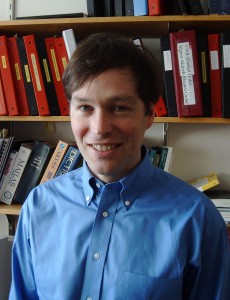
Each cell responds to signals in the form of growth factor proteins that bind to cell surfaces. “The heparan sulfate on each cell helps the growth factor proteins connect with a growth factor receptor that is necessary for the signaling to occur,” explained Joseph Zaia, PhD, an associate professor of Biochemistry at BUSM. Cells can change the way they respond to growth factors by altering the structure of the heparan sulfate on their surfaces.
Under the direction of Zaia, researchers from BUSM’s department of Biochemistry have produced a new picture of the structure of the heparan sulfate and how it interacts with growth factor proteins. These new results demonstrate that growth factors home into regions of the heparan sulfate chains known as non-reducing ends. “Such binding of growth factors to the non-reducing ends of heparan sulfate chains may be a general means whereby normal cell growth is maintained. Conversely, a breakdown in such signaling may contribute to abnormal cell growth,” he added.