Student Updates
Higher Adherence to DASH-style Diet Reduces Excess Weight Gain in Adolescent Girls
Girls who followed the Dietary Approach to Stop Hypertension (DASH) diet pattern had a lower incidence of excess weight gain as measured by body mass index (BMI) over the 10-year period of their adolescence according to BUSM researchers. These findings are reported in the Archives of Pediatrics & Adolescent Medicine.
Obesity is a major public health problem, with 17 percent of American children overweight and 67 percent of adults either overweight or obese. Excess weight during childhood leads to numerous health problems and is even associated with premature death as an adult. Few studies have examined the relation of food-based dietary patterns with weight gain, especially in children.

The researchers, led by Jonathan Berz MD, MSc, an assistant professor of medicine at BUSM, used data from the National Growth and Health Study to examine the effects of adherence to a DASH-style eating plan and its components on the change in (BMI) in a racially diverse sample of adolescent girls.
The DASH diet emphasizes increased intake of low-fat dairy products, fish, chicken, and lean meats, and nuts, fruits, whole grains, vegetables, and legumes. Thomas Moore, MD, professor of medicine at BUSM, and associate provost and director of the Office of Clinical Research for Boston University Medical Campus, was the chair of the steering committee that created the DASH diet and is the senior author of The DASH Diet for Hypertension.
The National Growth and Health Study was initiated by the National Heart, Lung, and Blood Institute to investigate racial differences in dietary, physical activity, family, and psychosocial factors associated with the development of obesity in black and white girls. The study cohort enrolled 2,379 girls aged nine and 10 years in three cities starting in 1987 to 1988 who were followed for the next 10 years.
“We created a modified DASH food-group score and focused on the seven DASH-related food groups,” said Berz. “We found that study participants with the highest intake of DASH-like food groups had the smallest gains in BMI over time and the lowest BMIs at the end of follow-up, and those with the lowest DASH food pattern score (representing lowest adherence) had a mean BMI that was greater than the threshold for overweight as defined by the 85th percentile by age.”
“The DASH eating pattern is endorsed by the USDA and others but very few studies have looked at its potential benefit in children or adolescents,” said Lynn Moore, DSc, senior investigator for the study. “This study is important because it shows that a very simple dietary message focused primarily on increasing intakes of fruits and vegetables and low-fat dairy products has the potential to reduce the risk of overweight and obesity in adolescent girls,” she added
The study was supported by a grant from the National Institute of Diabetes and Digestive and Kidney Diseases.
Rising Rate of Cesareans Slowing in Industrialized Countries
After decades of steadily climbing cesarean deliveries, the rate of increase is slowing in many industrialized countries, Boston University School of Public Health researchers found.
In a study published online in the journal Birth: Issues in Perinatal Care, researchers counter the belief that rising cesarean delivery rates in industrialized countries are inevitable.
"The general slowing of the rise in cesarean delivery rate suggests that "inevitable" is too strong a description for the current trends and that national cesarean rates may be nearing a plateau," wrote the authors.
There are multiple reasons why the number of cesarean deliveries have increased in many industrialized countries, leading many to believe that an increase in cesareans is unavoidable, said Eugene Declercq, the study’s lead author and a professor of community health sciences at BUSPH. Clinicians are increasingly comfortable performing cesareans rather than assisting vaginal births, Declerq said, and mothers, while rarely requesting primary cesareans, are more open to surgery. Also, as hospitals perfrm more cesareans, many will set up structures (e.g. 24-hour anesthesia coverage) that facilitate additional surgery.

Declercq and his team compared the cesarean delivery rate trends from 1987 to 2007 in 22 industrialized countries, such as the United States, Spain and Switzerland. They found that from 2003 to 2007, 18 countries experienced a slowing of rate increases, yet the cesarean delivery rate continued to rise.
"It may be that these more modest recent increases are a forerunner of a general leveling in national rates," the authors wrote. "Alternatively, this slowing in growth might be but a brief pause in a long-term upward trend."
There is no exact cause for the slowing rate of increase, said Declercq, and more research is necessary. Birth and delivery customs differ between countries, between regions within countries, or and between hospitals. For example, the study notes that cesarean rates in southern Italy are more than twice those in the central and northern regions of the country and recent rates in New Jersey are 50% higher than those in Utah.
While cesarean rates increased in all studied industrialized countries, the authors noted that the pace of increase varied widely across countries. Between 1992 and 2007, five countries more than doubled their cesarean rates while five countries experienced rate increases of 50 percent or less. During that time span, the cesarean rate in Ireland rose from 12 percent to 27 percent but Finland’s rate only increased from 14 percent to 16 percent. In the same period, the cesarean rate in the U.S. increased from 22 percent to 32 percent.
In addition to Declercq, co-authors of the study are Howard Cabral, PhD, MPH, a BUSPH associate professor of biostatistics; Robin Young, PhD, and Jeffrey Ecker, MD.
Older Men More Likely to Lose the Ability to Orgasm Due to Gabapentin According to BUSM Researchers
BUSM researchers have found that Gabapentin, (trade name Neurontin) a medication commonly used to treat neuropathic pain, seizures and biopolar disease in older and elderly patients, seems to have a higher incidence of anorgasmia, or failure to experience orgasm, than previously reported. This study was published in the current issue of American Journal of Geriatric Pharmacotherapy.
Anticonvulsants are the fastest growing prescribed medication in the baby boomer generation. In patients 44-82 years old, anticonvulsants are more commonly prescribed than opioids. Gabapentin is a preferred medication, given its perceived benign side effects, typically limited to somnolence and dizziness that resolve with time.

Since its introduction in 1993, only 10 cases of anorgasmia have been reported, mostly in younger patients with an average age of 38 years. In this case study, three of the 11 patients who were over the age of 50 experienced anorgasmia. These male patients were 73, 76 and 78 years old. Interestingly, another case in a 59-year-old female was noted by colleagues at Tufts Medical Center.
“This is a much higher incidence than was reported in the original clinical trials. Gabapentin induced anorgasmia may be more common in older patients,” according to lead author Michael D. Perloff, MD, PhD, an assistant professor neurology at BUSM. “Further, anorgasmia appears to be dose dependent. In all cases orgasm returned when Gabapentin was reduced or stopped.”
The researcher recommends that clinicians should review the potential for anorgasmia with patients taking Gabapentin or discuss it at follow up. “If anorgasmia does occur, patients should be reassured that it is reversible and likely dose dependent,” added Perloff.
GSDM Alums Make Up Half of Mass Dental Society 2011 Ten Under 10
Five GSDM alums were named in the Massachusetts Dental Society’s prestigious Ten Under 10 list for 2011. The alums: Mark Doherty Jr. ENDO 05; Yael Frydman DMD 05; Jared Reid DMD 04; Anubha K. Sacheti PEDO 08; and Frank Schiano DMD 06, AEGD 07 attended a combination of both DMD and postgraduate programs at GSDM and have all gone on to achieve great success in their careers.
Since 2005, the Journal of the Massachusetts Dental Society has annually selected 10 MDS member dentists for this list who have been in the profession for 10 years or less and have made a significant contribution to the profession, their community, or organized dentistry. GSDM is extremely proud this year to call five of these 10 their own.
Each of the dentists were interviewed by the Journal about their careers and what they like best about dentistry.
Dr. Doherty said, “I love interacting with patients, diagnosing disease, and eradicating oral infection and pain.”
For orthodontist Dr. Frydman, “The most fulfilling moments are when the braces come off and patients see their beautiful white, wireless smile for the first time.”
Dr. Reid said, “…I wake up every morning thrilled to get to practice dentistry.” He also shared his experience working in private practice with his father and fellow alum James Reid ENDO 80, 82 adding, “It’s been hugely helpful to work alongside a resource like my dad—he is a constant source of wise advice. Having a trusted, caring partner with 40 years of experience is invaluable to me as a young dentist.”
Dr. Sacheti also mentioned her family. She said, “I think being a parent makes me a better pediatric dentist. I have a greater understanding of the challenges that my patients’ parents face. I have learned many tricks to convince my 2 ½-year-old daughter to brush her teeth.”
Dr. Schiano talked about what it’s like to work in a community health center setting. He said, “As a community health center dentist, I get to travel the world without leaving my office. I have met people from almost every ethnic, cultural, and religious background you can imagine.”
“Congratulations to the five distinguished GSDM alums who were selected for this honor,” said Dean Jeffrey W. Hutter. “They are all very deserving of this recognition and should be proud of what they have accomplished in just the beginning of their very promising careers.”
Read the full article here.
GSDM Class of 2011 Celebrated with Unique and Personal Ceremony
On Friday, May 20, GSDM honored new graduates at the School's 47th annual Convocation. The late afternoon ceremony boasted 185 DMD and 76 postdoctoral student participants.
Dean of Marsh Chapel Reverend Dr. Robert Allan Hill began the ceremony with an invocation. Dean Jeffrey W. Hutter followed by welcoming the graduating students, family and friends, and faculty and staff adding, "You should feel very proud to be a member of such a prestigious graduating class. The Class of 2011’s list of accomplishments is long. You have experienced both challenging times and exciting times, and I know that when you look back on your experience at the Henry M. Goldman School of Dental Medicine, it will be these good times and the superb education that you received that will stand out in your minds.”
Valedictorian Susan Snyder gave a moving speech which was accented by her performance of Claude Debussy’s Claire de Lune on the piano. She said, “Each of us is leaving here with the tools and background to continue to become an excellent Doctor of Dental Medicine. You not only represent Boston University Henry M. Goldman School of Dental Medicine, but your chosen profession. Practice dentistry in a way that may give dentistry the good name it deserves. Honor, fairness, quality, care, kindness, whatever description you want to give it that gives the dental profession the seriousness and meaning it deserves.”
The Spencer N. Frankl Award for Excellence in Teaching was presented during the ceremony to Clinical Assistant Professor and Director of Predoctoral Periodontology Dr. Neal Fleisher.
“Dr. Neal Fleisher is a proud 1984 DMD and 1986 CAGS in Periodontology alumnus of our own Boston University Henry M. Goldman School of Dental Medicine,” said Dean Hutter. “Dr. Fleisher began his career at the Dental School immediately following his graduation. He has also maintained a private periodontics practice in the greater Boston area for more than 25 years. His contributions to the field of dental medicine are numerous, but his contributions to the School are even greater. He truly personifies the Spencer N. Frankl Award for Excellence in Teaching and it is with great pleasure that I present him with this award.”

“I am here today as much because of the efforts of others as compared to my own efforts,” said Dr. Fleisher. “My teachers showed me so much support, and allowed me to move at my pace. All were instrumental not just because they taught me dentistry, but because I also learned how to teach, retaining their finer points. I steal from each of them, discarding some things, mixing and matching others, and then calling it my own.”
Commencement Speaker, poet, and Clinical Assistant Professor Dr. Thomas Moran addressed the graduates next. He said, “You who have come to this day of accomplishment have demonstrated the necessary command of dentistry, no small triumph. For this, you will be highly regarded in your lifetime. But let them say of you something more, that you were compassionate, that you shared your time, that you listened. That you were earnest when attention was called for, a mentor when counsel was asked for, a source of solace when comfort was needed.” Dr. Moran closed his remarks with a poem written especially for his students titled, “Passages.”
A small excerpt:
“Our shared wish,
only to arrive at this place,
evoked in a dream.
Our names are so many.
Our way’s end, begins here.”
Following Dr. Moran’s speech Class of 2011 President and Vice President Stephanie Trahan and Bradley Woland ascended the stage to present the 2011 Class Gift. It was also announced that Chief Commencement Marshall and Professor Dr. Carl McManama had generously agreed to match this year’s gift.
Added Dean Hutter, “Words cannot describe the significance of this gift and what it means to me and our School. You have now set a precedent for future classes to emulate and I thank you from the bottom of my heart.”
The graduates of 2011 then walked across the stage to receive their diplomas. Following this Dean Hutter brought the ceremony to close adding, “As you look beside you, behind you, and in front of you–realize that these special individuals have been your support, your comrades, your colleagues, your friends and your family for the time of your tenure at Boston University. Protect them, stay close to them–the experiences you have shared will remain with you for the rest of your lives. You will always be a graduate of the Boston University Henry M. Goldman School of Dental Medicine; and you are now an official alumnus.”
Photos from the reception following Commencement are available on facebook and flickr . Additional Commencement photos will be available at a later date.
Array of Flame Retardants Found in Baby Products
Baby products containing polyurethane foam -- such as car seats, changing table pads, crib mattresses and nursing pillows -- contain flame retardants that could pose health risks to children, a new study co-authored by a BU School of Public Health researcher has found.
The study in Environmental Science & Technology co-authored by Tom Webster, associate professor of environmental health at BUSPH, found that manufacturers of baby products have turned to other potentially dangerous flame retardants since the phase-out of a compound known as PentaBDE in 2004.
The research team collected 101 commonly used baby products and found that the most common flame retardant in use was a chlorinated organophosphate known as TDCPP. That compound was removed from use in children’s pajamas because of concerns that it could be toxic when absorbed.
The team also found several samples containing PBDE congeners that are closely associated with PentaBDE, "suggesting products with PentaBDE are still in use," the authors said.
"To the authors' knowledge, this is the first study to report on flame retardants in baby products," the team said. "In addition, we have identified two chlorinated [flame retardants] not previously documented in the environment or in consumer products."
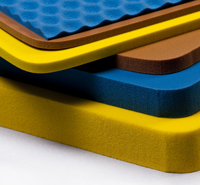
Baby products containing polyurethane foam must meet California state furniture flammability standards, which affect the use of flame retardants in most such products. However, the authors said it was unclear to the public prior to the study which products contain flame retardants and at what concentrations. In all, 80 percent of the cushions used in car seats and other baby furnishings were found to contain chemical flame retardants that can accumulate in babies' bodies.
"Based on exposure estimates conducted by the Consumer Product Safety Commission [CPSC], we predict that infants may receive greater exposure to TDCPP from these products, compared to the average child or adult from upholstered furniture, all of which are higher than acceptable daily intake levels of TDCPP set by the CPSC."
The researchers said future studies are needed "to specifically measure infants' exposure to these flame retardants from intimate contact with these products, and to determine if there are any associated health concerns."
In 2006, the Consumer Product Safety Commission released a risk assessment of flame retardant chemicals, including TDCPP, in upholstered furniture foam. The report said that furniture manufactured with TDCPP-treated foam "might present a hazard to consumers, based on both cancer and non-cancer end points."
The CPSC estimate of children’s exposure to TDCPP from treated furniture was five times higher than the agency’s acceptable daily intake, with most of the exposure from inhalation of the chemicals volatilized from treated furniture.
The new study, led by Heather Stapleton of the Nicholas School of the Environment at Duke University, used a portable X-ray fluorescence analyzer to estimate the bromine and chlorine content of the foam, in part to investigate whether the technique was a useful analysis tool for predicting the presence of flame retardant additives. The team found the analyzer was useful for detecting bromine, but had no significant correlation for chlorine.
Previous studies conducted at BUSPH have found that flame retardant additives can escape from products over time, accumulate in dust, and are a primary route of exposure to humans. Exposure for children is of particular concern, due to their frequent hand-to-mouth behavior, especially in products with which they are in close contact for long periods of time.
The authors urged further investigation into infant exposure to flame retardants in foam products, "particularly since infants are in a very sensitive development stage and may be more susceptible to adverse effects than an older child or adult."
Submitted by Lisa Chedekel
GSDM Gets a “Thumbs Up” From Local Children
The 8th annual Orchard Gardens field trip to GSDM took place on May 16. Around 40 first and second grade children made the trip from the nearby Orchard Gardens K-8 School for a day filled with educational and fun activities.
“This day is a lot of fun and a good way for the dental students to inspire a young child to pursue a higher education and a maybe even a career in dentistry,” said organizer and CHP Oral Health Promotion Director Kathy Lituri.
The highlight of this year’s field trip was a new activity introduced to the program where the children took an alginate impression of their thumb and then used dental stone to create a model. Volunteer GSDM students helped mix the alginate and stone, while explaining to the children the more common dental uses for the materials.
During this activity the Simulation Learning Center (SLC) was filled with the sounds of laughter and a few “ewws” when the children had to stick their thumbs into the gooey mixture.
Said one child, “I am having soooo much fun today!”
After the projects in the SLC were completed the children moved on to lunch where Dean Jeffrey W. Hutter was there to welcome them. He said, “I was pleased to have an opportunity to meet with the students from Orchard Gardens. They were very enthusiastic about the day’s activities and I was thrilled to see so many of our GSDM students getting involved in this day of meaningful interaction with the children of our local community. I hope to see some of these children return to GSDM in the future as dentals students."
128 Master of Arts and Sciences Degrees Conferred at Graduate Medical Sciences Commencement
The Boston University Division of Graduate Medical Sciences celebrated the commencement of 128 members of the Division who earned the Master of Arts and Master of Sciences degree on May 20 at the George Sherman Union.
Representing 15 different departments and programs in the Division, the graduates are launched into careers including medical anthropology and cross-cultural practice, medical nutrition sciences, pathology and laboratory medicine, as well as mental health counseling and behavioral medicine and biomedical forensic science.
 “Part of your job as graduate students has been to learn ‘lots of things,’” said Linda Hyman, associate dean for the Division of Graduate Medical Sciences, to the graduates. “Your harder job has been to learn to think critically and independently.
“The notion of ‘ownership of your ideas’ is the basis of the thesis, which all of you have successfully completed. Yet as you move forward in your careers you will find that it is critically important to work as teams. In a recent career panel we hosted each of our distinguished guests cited the ability to work within a team as the number one skill they felt enhanced their career trajectory. So, even though you may take ownership and indeed be very proud of your independent work and thinking – remember you rarely work in isolation and you will be more effective in achieving your goals if you think beyond yourself.”
Three student speakers selected by their peers addressed the gathering. Alexandra Wink offered advice gleaned from her forensic anthropology coursework. “Learn to adjust your strategy, “she said. “As anthropologists in the field, we make neat and organized plans for a systematic search and excavation effort, but the world is messy, and more often than not, human or environmental factors force us to reevaluate the scene and adapt to a situation that is far from our ideal. The same applies to our lives: What we have planned for ourselves isn’t always what the future has in store for us.”
Master’s in Medical Sciences candidate Gregory Fenton shared, “We should all be very proud of what we have accomplished up to this point, and whether or not we have met our goals, we should take a look at what we have gained from this experience, and take it with us. As for me, the best lesson that I learned here was to actually look for the lesson.”
The Robert F. Troxler Award in Biochemistry, instituted in 2005 and named in memory of a legendary member of the biochemistry faculty at BUSM, was presented by Gwynneth Offner, PhD, director of the Master’s in Medical Sciences program, to Flavien Leclere, and the Educator of the Year Award in Graduate Medical Sciences was presented to Judith Saide, PhD, associate professor of physiology and biophysics, for her excellence in teaching, mentoring and devotion to students.
 “We believe you are equipped with the proper skills and competencies,” said BUSM Dean Karen Antman. “The habits and dispositions, the methodologies, and the technical skills of physicians and research scientists are the toolkit. If we do our jobs well in great centers of research and inquiry, the toolkit will soon need refreshment and renewal. Call it planned obsolescence. We believe we helped to give you the most important tool of all--the capacity for continued, disciplined inquiry.”
Submitted by Mary Hopkins
Celebrate GMS Student Research at Russek Day, May 27
Celebrate the accomplishments of GMS students at Russek Day on Friday, May 27 in Hiebert Lounge. The event honors the accomplishments of doctoral and master degree candidates and their mentors. Participants present poster presentations and answer questions about their research. Campus faculty, staff and students are encouraged to stop by. The Achievement Award will also be announced at this event
“Personalized and Participatory Genomic Medicine,” is the topic of this year’s keynote speech, which will be given by George Church, PhD. Dr. Church is a molecular geneticist at Harvard Medical School, professor of Health Sciences and Technology (Harvard and MIT) and a core faculty member at the Wyss Institute for Biologically Inspired Engineering.
Dr. Church initiated the Personal Genome Project (PGP) in 2005, and in 2007, he co-founded the U.S. personal genomics company Knome. In addition to his work in synthetic biology, he is also director of the National Institutes of Health (NHGRI) Center of Excellence in Genomic Science at Harvard, and senior editor for Nature EMBO Molecular Systems Biology.
BUSM’s 164th Commencement Celebrates Achievement
Boston University’s Agganis Arena is the scene of many proud moments in the lives of BU students, faculty, and staff. There could be no more satisfying and rewarding event for the Boston University School of Medicine (BUSM) Class of 2011 and their families than the medical school commencement ceremony held there May 21.
“I speak for my colleagues in saying that it has been a great privilege to work with you,” said BUSM Dean Karen Antman, MD. “We know you are resilient and adaptive, smart and serious. We hope you find fulfillment in the work that you have chosen and that the occasional bumps and diversions prove, with time, to be instructive. The faculty hopes you do well. Even more, we hope that you do good.”

The vibrant red of the academic robes of the 158 medical degree and 44 doctor of philosophy graduates coupled with the green (for medicine) and blue (for science) hoods received by each graduate only added to the celebratory nature of the ceremony. “With or without the colorful robes and the elegant diplomas, it is entirely fitting that before friends, family, and the broader community, we affirm that graduates have met standards that make them worthy of their credentials and of the public trust,” added Antman.
Linda Hyman, PhD, associate dean for graduate medical sciences and professor of microbiology, speaking on behalf of the Division of Graduate Medical Sciences offered, “The pomp and circumstance that we share this morning reminds us of the seriousness of your accomplishments and that the degree is a ticket to the next phase of your life, and this is indeed serious business.
“Docendo discimus,” continued Hyman. ‘By teaching we learn.’ I honestly believe there is no better way to learn than to teach. As students you have challenged us to think about we what do as scholars and professionals and hopefully to relay that information to you in a palatable fashion.”
 Graduation speaker Steven Borkan, MD, displayed his old doctor bag filled with symbols of important events and people in his life that help him remember — a pacifier and forceps that reminded him of his childhood family doctor who saved the life a new-born baby neighbor and inspired him to become a physician; and a toy rocket that recalled the time he asked not how high the rocket had flown as did the other children, but why and how the rocket was able to fly.
An associate professor of medicine at BUSM and the Robert Dawes Evans Educator and attending physician in the Department of Medicine at Boston Medical Center, Borkan had a newly minted , never been used 25- cent piece placed on each graduate’s seat as a symbol of the event.
He urged the graduates to always probe and listen. ”Think and say, ‘that’s odd’ to remind yourself to question and ‘take a seat’ to remember to really listen to your colleagues and your patients.” Borkan also asked of the graduates, “Put your hand on your heart and take 10 seconds of silence to think of those you love and who have helped you get to this point,”
Three Educator of the Year awards, established to honor outstanding BUSM faculty, were presented during the ceremony. Based on student nominations, the 2011 awards for graduate sciences went to Judith Saide, PhD, associate professor of physiology and biophysics; for preclinical sciences to Deborah W. Vaughan, PhD, professor of anatomy and neurobiology; and for clinical sciences to Melissa Dipetrillo, MD, assistant professor of general internal medicine.
Steve R. Williams, MD and Philipa G. Sprinz, MD, were the recipients of The Leonard Tow Humanism in Medicine awards in recognition of their outstanding compassion in the delivery of care, respect for patients, their families, and health-care colleagues, as well as demonstrated clinical excellence. One student nomination noted that Williams, a spinal chord injury specialist and associate professor and chair of rehabilitative medicine at BUSM, “has taught the greatest lesson of them all: how to provide hope in the face of adversity.”
Sprinz, an assistant professor of pediatrics at BUSM, was described by another student as having, “innate gifts for communication, empathy, mutual respect and constant teaching that were reflected in every interaction I witnessed whether it was with medical students, members of the interdisciplinary team, patients, or their families.”
The School of Medicine’s highest teaching award, The Stanley L. Robbins Award for Excellence in Teaching, was presented to Carl J. O’Hara, MD, professor of pathology and laboratory medicine for his extraordinary contributions to medical education at Boston University.
“We love a challenge,” said Eustathia Giannaris, student speaker and PhD candidate in neurobiology, of her and her classmates. “We question everything around us and want answers. We want to have a deeper understanding of how things work. We want to improve the quality of life. Most of all, we do it for the greater good.”