Student Updates
Tenth Year for GSDM at Countdown to Kindergarten Celebration
For the tenth year, Boston University Henry M. Goldman School of Dental Medicine (GSDM) volunteers participated in Boston’s Annual Countdown to Kindergarten Citywide Kindergarten Celebration. This year, the celebration took place at the Boston Children’s Museum.
Countdown to Kindergarten Boston is a non-profit collaborative that offers resources and events throughout the year to celebrate and support the transition into kindergarten, a significant educational and developmental milestone for children and their families. The Citywide Celebration is part of Countdown’s Step 2 “Get Ready for School.”

At the event, enthusiastic children and families toured the museum exhibits, climbed aboard real school buses, had last minute school questions answered, received information about health and community resources, and had the opportunity to meet Mayor Thomas Menino and Superintendent of Boston Schools Dr. Carol R. Johnson.
The 29 GSDM volunteers promoted oral health to the children and families, provided dental screenings, and offered hands-on interactive activities. The School’s participation was organized by GSDM chapter members of the American Student Dental Association (ASDA) in collaboration with Community Health Programs. Neelam Shah DMD 14 and Ingy Alhelawe DMD 15, the community outreach co-chairs for ASDA, contributed significantly to organizing GSDM’s participation in the event. Oral Health Promotion Director Kathy Lituri, Director of School-based Programs Dr. Corinna Culler, and Clinical Instructors Ana Keohane and Martin Ugarte-Chavez worked alongside the students.
Kathy Lituri said, “This is by far one of my favorite events. It provides such a great opportunity to interact with young children and their caregivers at a very important juncture in their lives, when they are ready to start school!” She continued, “It’s a perfect time to emphasize the importance of a healthy mouth and how a healthy mouth is so vital to a child’s ability to learn and grow. It is also a favorite event among many GSDM students and often inspires them to consider a post-graduate program in pediatric dentistry.”
Neelam Shah said, “This is my third year attending Countdown to Kindergarten and it’s such a great event! We were able to screen over 120 soon-to-be kindergarteners and their siblings. We love coming back every year to teach them and their parents about maintaining good oral hygiene and making cute tooth necklaces with them.”
Said Ingy Alhelawe, “Countdown to Kindergarten is so much fun. I loved seeing all the kids eager to get their teeth checked. Who knew a sticker can make a child so happy? It’s a great way to teach the children proper dental home care and emphasize the importance of taking care of their teeth. I’m looking forward to next year’s event as well.”
James Lee DMD 14 was there for the sixth year in a row representing BU, having begun as a pre-dental undergraduate, attending then as a Graduate Medical Sciences student, and finally as a GSDM student. Kathy Lituri reports that James’ help and expertise is critical.
Lee said, “Countdown to Kindergarten continues to be my favorite outreach event because it provides an opportunity to serve the larger Boston community outside our treatment center through oral health promotion to pre-kindergarten children and their families.”
The decay-fighting hero Captain Cavity Fighter, played by Andrea Lam DMD 16, made a repeat showing at the event. Making her first public appearance alongside Captain Cavity Fighter was Lieutenant Fluoride, played by Shelly Curtis DMD 16. The duo greeted children with smiles and dental health promoting stickers and also posed for pictures with them.
Thank you to the student volunteers: Ingy Alhelawe DMD 15, Eman Alsagob DPH 16, Ahmed A Alsulaiman DPH 16, Ella Botchevar DMD 14, Julian Camastra DMD 15, Shelby Curtis DMD 16, Zeilig David DMD 14, Ingrao Destinee DMD 15, Jessica Finkielszstein DMD 16, Sammy Gill DMD 14, Marina Gonchar DMD 14, Dr. Rohit Gupte (GSDM post-doc research fellow 2010–13), Delphine Jeong DMD 15, Camestra Julien DMD 15, Courtney Knapik DMD 16, Andrea Lam DMD 16, Dave Lane DMD 16, Lana Le DMD 16, James Lee DMD 14, Brian Leibtog DMD 15, Linda Linsinbigler DMD 15, Matt Mara DMD 16, Mike Mayr DMD 16, Neelam Shah DMD 14, and Kali Stewart DMD 15.
Dean Jeffrey W. Hutter said, “The Annual Countdown to Kindergarten Citywide Kindergarten Celebration is an important event for Boston families and, as such, is also important to the Henry M. Goldman School of Dental Medicine. I am extremely proud of the School’s continuing participation in this citywide event.” He continued, “Thank you to the coordinators and numerous volunteers, including Kathy Lituri and American Student Dental Association members who once again made our participation a success.”
Photos are available on Facebook and Flickr.
Submitted by GSDM Communications.
BUSM and BMC to Investigate Risk Factors for Parkinson’s Disease
Michael J. Fox Foundation sponsored study seeks people without Parkinson’s disease to participate in landmark biomarker study
Boston University School of Medicine (BUSM) and Boston Medical Center (BMC) announced that they will participate as one of 23 clinical sites of the Parkinson’s Progression Markers Initiative’s new arm to study populations who may be at increased risk for developing Parkinson’s disease (PD). The additional arm of the $55 million landmark observational clinical study was added to better understand potential risk factors of the disease. People who volunteer will not have any of the classic motor problems associated with PD. The “pre-motor” arm of PPMI will enroll participants over the age of sixty, who do not have Parkinson’s disease and are living with either a reduced sense of smell, rapid eye movement sleep behavior disorder (RBD) or a mutation in the LRRK2 gene (the single greatest genetic contributor to PD known to date). If one of these risk factors clearly leads to PD, the risk factors could enable earlier detection of PD and open new avenues in the quest for therapies that could slow or stop disease progression.
The initial study was launched in 2010 and is focusing on defining biological markers of PD in order to better diagnose and track PD. Enrollment in the initial study is complete with over six hundred participants. BUSM and BMC have been part of PPMI for three years and are expected to begin enrollment for the new, pre-motor arm of the study immediately.
“Understanding risk factors for Parkinson’s disease could help to identify therapies that may prevent the onset of motor symptoms in future generations of PD patients,” said Samuel Frank, MD, principal investigator. “We are proud to participate in this innovative research and will look to the local community to continue to volunteer for this key study.”
People can easily get involved in this research by being one of 10,000 individuals needed to complete a brief online survey about their sense of smell. People over the age of 60 who do not have Parkinson’s disease are needed to take the survey at https://www.michaeljfox.org/get-involved/smellsurvey-screen.php. Most respondents will be sent a scratch-and-sniff smell test and brief questionnaire in the mail to be completed at home. Some individuals may also be asked to undergo more extensive testing.
“In the third year of PPMI, it is evident that a large-scale biomarker study is not only possible in Parkinson’s disease, but is already yielding scientific insights that could help transform the field of Parkinson’s research,” said Todd Sherer, PhD, CEO of The Michael J. Fox Foundation for Parkinson’s Research. “None of this progress would be possible without the willing volunteers who donate their time and energy to the pursuit of a cure.”
To learn more about this study, visit the website www.ppmi-info.org or call 617-638-7745.
Information Security Awareness Week on BUMC; Free Secure Shredding and Hard Drive Disposal
BUMC IT and Information Security is sponsoring several events on the BU Medical Campus Oct. 9 and 11, so mark your calendar. This coincides with Information Security Awareness Week!

Secure Shredding
Take this opportunity to get sensitive papers out of your office or home and get them properly destroyed. A shredding truck will be on the BU Medical Campus located between BUSM and BUSPH, adjacent to Talbot Green, Oct. 9, 11 a.m.-1 p.m. BUMC IT and Information Security personnel will be available to accept custody of your sensitive paper documents and ensure they are immediately shredded. CDs or old floppy disks will also be accepted and destroyed.
Hard Drive and Computer Disposal
Personnel will also be available to answer questions about computer and IT security, and will accept old computers and hard drives at a table near the Shredding truck on Wednesday, Oct. 9 and in the BUSM lobby Friday, Oct. 11, 11 a.m.-1 p.m.
If you have questions or need more information about this event contact the BUMC IT service desk at 617 638-5914 or email bumchelp@bu.edu
Play Me, I’m Yours!
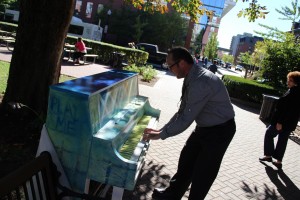
A piano was delivered to the Talbot Green on the BU Medical Campus today as part of “Play Me, I’m Yours,” Street Pianos Boston Festival 2013. Students & faculty are invited to play the multicolored instrument. Tweet your photos to @BUMedicine and use hashtag #streetpianosboston.
Sept. 24 Reception to Celebrate BUSM History, Restoration and Faculty Support
 The BUMC community is invited to a dedication and reception to celebrate recently restored historical pieces at the School of Medicine and Medical Campus. Recent improvements include the newly created picnic area on Talbot Green, a display of BUSM artifacts and artwork on the first floor of the Instructional Building, and the refurbished marble fountain in front of the School of Medicine.
“We are pleased to recognize the philanthropic support of BUSM faculty, staff, alumni and friends whose generous contributions made these restorations possible,” said BUSM Assistant Dean for Development Lawrence Crimmins. There will be a brief program followed by a reception with light food and beverages.
This event will be held Tuesday, Sept. 24, 4-5 p.m., in the BUSM Instructional Building, Conference Room L-107. RSVP to busmdev@bu.edu or (617) 638-4570.
Chronic Care Management Program Does Not Result in Increased Abstinence From Alcohol and Other Drug Dependence According to BUSM’s Saitz
Persons with alcohol and other drug dependence who received chronic care management including relapse prevention counseling and medical, addiction and psychiatric treatment were no more abstinent than those who received usual primary care, according to a study in the September 18 issue of JAMA.
Chronic care management (CCM) is a way of delivering care that has been shown to be effective for chronic medical and mental health conditions. “Chronic care management is multidisciplinary patient-centered proactive care, a way to organize services that provides coordination and expertise, and has been effective for depression, medical illnesses, and tobacco dependence (a substance use disorder),” the authors write. Trials of integrated medical and addiction care suggest that CCM may be effective for treating addiction, particularly since care elements long known to be effective for addiction overlap with CCM approaches.
Richard Saitz, MD, MPH, of Boston University Schools of Medicine and Public Health and Boston Medical Center, and colleagues conducted a study to examine whether CCM for alcohol and other drug dependence improves substance use outcomes compared with usual primary care. Participants (n = 563) were recruited between September 2006 to September 2008 from a freestanding residential detoxification unit, and from referrals to an urban teaching hospital and from advertisements; 95 percent completed 12-month follow-up. Participants were randomized to receive CCM (n=282) or no CCM (n=281).
The chronic care management group received longitudinal care coordinated with a primary care clinician; motivational enhancement therapy; relapse prevention counseling; and on-site medical, addiction, and psychiatric treatment, social work assistance, and referrals (to specialty addiction treatment mutual help). The primary care group received a timely appointment and a list of addiction treatment resources including a telephone number to arrange counseling.
The researchers found no difference in abstinence from stimulants, opioids, and heavy drinking between the CCM intervention and control group (44 percent vs. 42 percent, respectively, at 12 months). In a subgroup of patients with alcohol dependence, there were fewer alcohol problems among those who received the intervention.
The authors did not detect differences in secondary outcomes of addiction severity, health-related quality of life, or drug problems.
The authors write that current health care reforms in the United States include a focus on CCM in patient-centered medical homes to reduce chronic disease burden and to reduce costs (both of which are among the highest for those with addiction), in part because numerous studies have found such benefits for medical and mental health conditions. “Even though CCM is effective for a number of chronic conditions, it may be premature to assume that CCM will be the solution to improve the quality of care for and reduce costs of patients with addiction,” the authors write. Further research is warranted to determine whether more intensive or longer-duration CCM, or CCM designed differently, might do so.”
Sustainability Festival on Talbot Green Sept. 18
 sustainability@BU is holding a festival on Wednesday, Sept. 18, 11 a.m.-2 p.m. on Talbot Green for BUMC students, faculty and staff. Receive a free travel mug in exchange for pledging to participate in BU’s sustainability effort Join the Challenge, a campus-wide campaign in which school and college teams compete for points by performing one sustainable action each month.
Learn about other sustainable products and environmentally friendly service providers including Office Depot's Greener Office, and TranSComm, the hub for alternative transportation information for Medical Campus commuters.
“We want to educate the BUMC community about the sustainability opportunities available,” says University sustainability director Dennis Carlberg. “People are thinking about what they can do to get involved, and this is a chance to do it, hopefully on a beautiful day.”
PA Program Receives Accreditation
The Accreditation Review Commission on Education for the Physician Assistant Inc., had approved the BU School of Medicine Physician Assistant Program for provisional accreditation. Provisional accreditation is granted to programs that have not yet enrolled students but have demonstrated preparedness to initiate a program in accordance with accreditation Standards.
The Physician Assistant profession, which began in 1965 at Duke University, was developed to address the primary care shortage in rural and underserved areas. Physician assistants practice medicine with physician supervision. The profession now includes medical providers in a variety of health-care delivery settings and in virtually all medical and surgical specialties. According to the US Bureau of Labor Statistics, it is among the fastest growing profession with an expected increase in PA positions of 30% during this decade. There are nearly 84,000 physician assistants practicing in the United States and the average salary is 92,460.
Capitalizing on these statistics the Boston University School of Medicine Physician Assistant Program will educate physician assistants in a novel interprofessional education and practice model. In this first year up to 28 highly qualified candidates will be admitted to the program; in the following years it will comprise a class of 36 students. The 28-month (seven semesters) program, housed in the BUSM Division of Graduate Medical Sciences, includes 12 months of traditional lectures and seminar sessions in medical sciences and pathophysiology, while the second 16 months provides clinical education in hospitals and clinics, and two months dedicated to the thesis proposal. Graduates will receive a Master of Science degree.
The application deadline is Oct. 1, 2013. Applications to the program are submitted through the Centralized Application Service for Physician Assistants.
For more information, visit the PA program website.
MED Grapples with Major Sequestration Cuts
Centers bracing for cuts, layoffs as NIH budget slashed
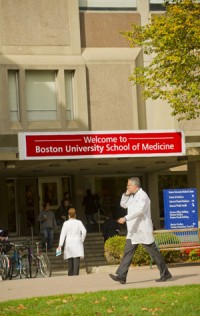
No one knows the ultimate toll that federal sequestration will take on the Boston University Medical Campus. But its research centers have already seen cuts of up to 100 percent for fiscal 2013, necessitating layoffs and a renewed, urgent push to secure nongovernment funding sources.
Research funding for the School of Medicine has fallen 16 percent from last year, says Karen Antman, MED dean and provost of the Medical Campus and the John Sandson Professor of Health Sciences. Virtually all of the drop is in funding for centers. “Big center grants are being hit hardest,” Antman says. And a conversation with MED researchers makes it clear the cuts are having a large ripple effect already.
The National Institutes of Health (NIH) “is making the right choices given the terrible position the Congress put them and us in, but it’s awful for researchers and for the country,” says Joseph P. Mizgerd, a MED professor of medicine, microbiology, and biochemistry and director of the Pulmonary Center. Mizgerd says the NIH’s National Heart, Lung and Blood Institute (NHLBI) did not renew funding for a multiproject lung development center grant, now in its 20th year, a decision being appealed by principal investigator Wellington Cardoso, a MED professor of medicine and pathology. Sequestration “is only the latest event in a decade of fading congressional support for biomedical research,” Mizgerd says.
David Atkinson, who lost federal funding for a 30-year multiproject center grant of cell biology and cardiovascular disease, says NIH cutbacks in the number of grants “puts people’s livelihoods in jeopardy. It impacts students halfway through their PhD research projects.” Atkinson’s ongoing, NHLBI-funded study had been receiving nearly $1.3 million a year, a grant that supported a staff of 30. “I’ve been here 38 years, and we went through a bad period in the 1980s, but it has never been this bad,” he says. The sequestration cuts are being felt acutely by graduate students. “I can’t recruit PhD students,” he says. “Science is in danger of losing a whole generation because the positions are no longer there.” Like his colleagues, Atkinson is looking for bridge funding and other means of support to continue his work “by hook or by crook.”
Although the NIH budget was cut 5 percent, MED faculty have been told to assume a 10 percent budget reduction, according to Antman. Faculty are on notice that they must carefully monitor spending on staff, supplies, and travel in this “time of uncertainty,” when most federal funding agencies face deep cuts. The NIH is the largest sponsor of medical research, and its cuts translate to an estimated $1.5 billion nationwide.
“We are already used to being lean and efficient,” says Antman. “All health science campuses are subject to these NIH cuts. How we manage them will determine if we remain competitive.” She says that MED’s “relative lack of endowed chairs make it more difficult to recruit in competition with institutions with larger endowments.” For now, the school is hiring only research faculty who already have grants in place. “For new grants, faculty need to write more proposals to be funded at the same rate,” Antman says.
“It’s a very unfortunate situation,” says Gloria Waters, recently named vice president and associate provost for research for both the Charles River and the Medical Campus. Waters cited the recent 40 percent reduction in funding for the ongoing Framingham Heart Study, one of the world’s largest and longest-running epidemiological studies, begun in 1948 by the NIH and run by Boston University since 1971. Those cuts will result in 19 layoffs of clinical and administrative staff beginning November 1, Antman says.
Despite the sequestration cuts, the Medical Campus is “still recruiting some fabulous faculty members,” Waters says, and the amount of research continues to increase as MED hires research-active faculty to replace retiring faculty less actively engaged in research.
On its sequestration fact sheet, the NIH, the world’s leading supporter of biomedical research, estimates that federally mandated cuts will translate to 700 fewer research grants to institutions compared to the previous year. On August 1, University President Robert A. Brown was among 186 university leaders to sign an open letter, published in the print edition of Politico, calling for a restoration of federal funding for research and warning of a coming “innovation deficit” if funding cuts persist. In 2011, with nearly $132 million in grants, BU’s Medical Campus ranked 47th of approximately 2,600 organizations receiving NIH funding for research. NIH-funded research is the foundation of a medical innovation sector that employs one million US citizens.
“There really is no replacement for this money, so basically faculty are needing to figure out how to carry out work on smaller budgets,” says Waters. “For some it can mean taking a technician off a grant; others may need to let several people in their lab go.”
Most at risk is basic research, the high-risk projects that ask fundamental questions without any attempt to “artificially infuse the research with clinically oriented questions,” says Darrell Kotton, a MED professor of medicine and pathology and director of the Center for Regenerative Medicine (CReM). “Sequestration comes on the heels of the downturn of availability of funding, so investigators are already low on their reserves.” Kotton predicts that if basic research cuts persist, “scientists will tend to be a little less adventurous and more risk-averse. That’s a paradigm shift,” and the “real exciting science” will suffer—something Kotton says the next generation will pay for.
This BU Today story was written by Susan Seligson.
Celebrate National Postdoc Appreciation Week Sept. 17-19
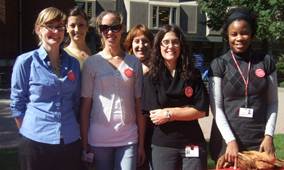 The GMS Office of Professional Development and Postdoctoral Affairs is celebrating National Postdoc Appreciation Week (NPAW) Sept. 17-19. The list of events includes an ice cream social, seminar on scientific storytelling and a communication styles workshop.
- Tuesday, Sept. 17, 1:30-3 p.m., the NPAW kicks off with an ice cream social on Talbot Green in front of the BU School of Medicine Instructional Building. Join us in celebrating the contributions and achievements of our postdocs!
- Wednesday, Sept. 18, Dr. Rafael Luna presents a seminar on “Scientific Storytelling” relevant to trainees. The seminar will be held noon-1:50 p.m. in room L-212/214 and lunch will be provided.
- Thursday, Sept. 19, features Sarah Cardozo Duncan a career strategist who will be presenting a workshop on “Communication Styles” that is relevant for all trainees. This seminar will be held 5:30- 7 p.m. with a reception preceding the presentation.
Since 2009, the National Postdoc Association has sponsored NPAW to recognize the significant contributions that postdoctoral scholars make to U.S. research and discovery. Institutions from across the country and other parts of the world participate by holding special events. In 2010, this week was officially recognized by the U.S. House of Representatives. In 2012, 112 institutions in 32 states and Canada hosted 203 events to show their appreciation of postdocs.
All of those who support the postdoctoral community at BU Medical Campus are invited to attend these special events. Please email Yolanta Kovalko to register or for more information.