Student Updates
GSDM’s Helmerhorst Delivers Keynote Address at AADR Boston Meeting
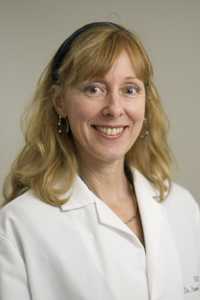
Boston University Henry M. Goldman School of Dental Medicine (GSDM) Associate Professor in the Department of Molecular & Cell Biology Dr. Eva Helmerhorst delivered the keynote lecture at the American Association for Dental Research (AADR) Boston Section Semiannual meeting in December, on the BU Medical Campus.
Boston Section President and Associate Professor in the Department of Periodontology Dr. Robert Gyurko opened the meeting by welcoming everyone and summarizing the Boston Section’s role in the AADR. He described open Boston Chapter Officer positions and began the election process.
The newly elected Boston Section Officers are:
- Councilor – Dr. Ricardo Teles, Senior Member of the Staff, Co-Director of the Center for Clinical and Translational Research and Vice Chair in the Department of Applied Oral Health Sciences at Forsyth Institute
- Alternate Councilor – Dr. Judith Jones, Professor and Chair in the Department of General Dentistry, GSDM
- Secretary – Dr. Corinna Culler, Director of School-Based Programs, GSDM
- Treasurer – Dr. Frank Gibson, Associate Professor of Microbiology, BUSM, Section of Infectious Diseases
They join current Boston Section Officers:
- President – Dr. Robert Gyurko, Associate Professor in the Department of Periodontology, GSDM
- Vice President – Dr. Alpdogan Kantarci, Associate Member of the Staff in the Department of Applied Oral Health Sciences at Forsyth Institute
Dr. Helmerhorst followed the election with her presentation, “Gluten-degrading enzymes in human saliva: novel therapeutic potential for the treatment of celiac disease.” Dr. Helmerhorst discovered that human saliva harbors bacteria that can very effectively cleave gluten. Glutens are important targets since these represent the proteins that cause celiac disease, an inflammatory disease of the small intestine. Her presentation focused on the identification of these bacteria and oral microbiome characterizations in health and celiac disease.
“My research is at the interface of oral and gastrointestinal biology and I was able to show that saliva research is not limited to functions in the oral cavity,” explained Helmerhorst.
The findings may benefit a large section of the population since celiac disease has a prevalence of about 1 percent, affecting roughly 3 million Americans. Dr. Helmerhorst stressed that contributing to the success of her project was the multidisciplinary team, which includes Forsyth Institute microbiologists Dr. Floyd Dewhirst and Dr. Bruce Paster and gastroenterologists Dr. Ciaran Kelly and Dr. Dan Leffler from Beth Israel Deaconess Medical Center.
Dr. Helmerhorst said, “It is important that oral biology researchers in the Boston area come together regularly to keep each other updated on their research, and the AADR Boston Chapter meeting is a perfect platform to foster new collaborations.”
Her research was also highlighted in Boston University’s Annual Report video project.
Meeting the Needs of America’s Heroes: A Lifetime and Community Obligation
"Meeting the Needs of America's Heroes: A Lifetime and Community Obligation"
Jonathan Woodson, MD
Assistant Secretary of Defense for Health Affairs, Department of Defense, United States Government
Dr. Woodson will discuss the major medical advances that have led to the highest survivability from warfare in history. He will also offer insight into the nation's long term-obligations to those who are ill or injured as a result of our most recent conflicts. Dr. Woodson serves as principal advisor to the Secretary of Defense for health issues and ensures the effective execution of the Department of Defense medical mission. Previously, Dr. Woodson served as associate dean for diversity and multicultural affairs and professor of surgery at the BUSM and as senior attending vascular surgeon at BMC. He holds the rank of brigadier general in the U.S. Army Reserve.
Monday, Feb. 10
1-2 p.m.
BU Charles River Campus, School of Law, 765 Commonwealth Ave., Barrister's Hall
Co-Sponsored by BU School of Law and the Department of Health Law, Bioethics & Human Rights at BU School of Public Health.
After the Storm

Breaking Ground: My Life in Medicine, Feb. 10 Lecture with Louis Sullivan, MD
 Dr. Louis Sullivan, BUSM ’58, will be discussing his newly published autobiography, Breaking Ground: My Life in Medicine, on Monday, Feb. 10, at 4 p.m. in the 670 Albany Street Auditorium, First Floor.
A 1958 graduate of BUSM and former faculty member who currently is a member of the Dean’s Advisory Board, Dr. Sullivan is the founding dean and first president of Morehouse School of Medicine (now president emeritus). He served as Secretary of Health and Human Services during the George H. W. Bush administration. He is chair of the board of the National Health Museum in Atlanta and the Washington, D.C.–based Sullivan Alliance to Transform America’s Health Professionals. He also is author of The Morehouse Mystique: Becoming a Doctor at the Nation’s Newest African American Medical School (with Marybeth Gasman).
Dr. Sullivan has many annecdotes to share about his experiences in Washington, D.C., dealing with the burgeoning AIDS crisis, PETA activists, and antismoking efforts, along with his efforts to push through comprehensive health care reform decades before the Affordable Care Act. His interactions with political figures, including Thurgood Marshall, Jack Kemp, Clarence Thomas, Jesse Helms and the Bushes, capture a time in recent history.
A reception and book signing will follow in the auditorium foyer.
- Breaking Ground: My Life in Medicine, Lecture and book signing
- Dr. Louis Sullivan, BUSM '58
- Monday, Feb. 10
- 4 p.m.
- 670 Albany Street Auditorium, First Floor
Depressive Symptoms Linked to Adult-onset Asthma in African-American Women
According to a new study from the Slone Epidemiology Center (SEC) at Boston University, African-American women who reported high levels of depressive symptoms had a greater likelihood of adult-onset asthma compared to women who reported fewer depressive symptoms.
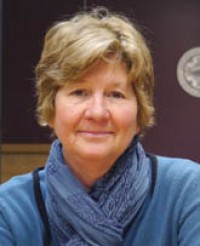
The study, which currently appears online in the journal Annals of Allergy, Asthma & Immunology, was led by Patricia Coogan, DSc, senior epidemiologist at SEC and research professor of epidemiology at the Boston University School of Public Health.
This study followed 31,848 African-American women between 1999 and 2011, all of whom are participants in the Black Women’s Health Study (BWHS) who completed health questionnaires every two years. In 1999 and 2005 they rated the frequency of experiencing 20 symptoms (e.g., “I felt depressed”, I felt lonely”, “I could not get going”). The 20 answers were summed into a scale ranging from zero (rarely or never experiencing depressive symptoms) to 60 (experiencing all depressive symptoms “most or all of the time”). The scale is commonly used in epidemiologic studies and a score of 16 has been used to identify individuals at high risk of depression.
The results indicated that as the frequency of depressive symptoms increased, the incidence of adult-onset asthma also rose, up to a two-fold increase in women in the highest category (score of ≥33) compared to the lowest category (score <16) of the depressive symptom scale. Furthermore, the incidence of asthma was increased 2.8 times in women who had a depressive symptom score of ≥16 and also reported use of antidepressants.
“Our results are consistent with positive findings from three previous studies of depressive symptoms and asthma incidence conducted in smaller and primarily white populations,” said Coogan. “The hypothesized mechanism linking depressive symptoms to asthma incidence is depression-related stress and its physiological consequences, particularly effects on the immune system and the airways. Given the high prevalence of both asthma and of depression in women, the association is of public health importance,” Coogan added.
The BWHS is the largest follow-up study of the health of African American women in the United States. Led by researchers at the Slone Epidemiology Center, the BWHS has followed 59,000 African-American women through biennial questionnaires since 1995 and has led to a better understanding of numerous health conditions that disproportionately affect African-American women.
Funding for this study was provided by the National Institute of Health’s National Heart, Lung, and Blood Institute (grant award #HL107314) and the National Cancer Institute (grant award #CA058420).
BU Awards Community Grant To Franklin Park Coalition to Support Youth Programming
Boston University today announced a grant of $2,500 to the Franklin Park Coalition (FPC). Boston University makes ongoing grants to local community organizations offering programs and services that benefit youth and make a difference in the lives of young people in Boston.
The FPC advocates for Franklin Park, a 527-acre historic green space located in the geographic heart of Boston and surrounded by some of the city’s most diverse neighborhoods. FPC works to engage all park users and community members through advocacy, programs, and restoration.
 The BU Community Grant will be used to help support FPC’s Back to Nature in Franklin Park program. The program is designed to bring up to 1,000 young people (ages 5-18) to the park to engage in a series of energetic outdoor activities in a natural setting. Using a range of events, including activities such as hiking, snowshoeing, tree climbing, kite flying, biking and a weekly drop in sports night, the goal is to expose youth to new recreational options in wilderness spaces and get them moving.
"Boston University Medical Campus is committed to helping provide resources for organizations and agencies whose programs support youth in the South End and Roxbury. FPC’s Back to Nature program promotes opportunity, access and an active lifestyle. This program is an outstanding example of utilizing one of the finest natural and wilderness spaces in Boston, Franklin Park. The program benefits youth and families in our city," said Valeda Britton, Executive Director BU Community Relations/Medical Campus.
The $2,500 community grants are awarded to programs and services that benefit residents of BU’s host communities, with special consideration given to programs that benefit youth. Beautification projects are also encouraged. Funding is intended to supplement the existing budgets of established organizations and agencies. Organizations such as, Boston City Lights, Discover Roxbury, the Roxbury Boys & Girls Club, and Mandela Homes have previously received a similar grant.
Study Finds Decreased Life Expectancy for Multiple Sclerosis Patients
The first large scale study in the U.S. on the mortality of patients with multiple sclerosis (MS) has been published and provides new information about the life expectancy of people with the disease. The study appears in the journal Multiple Sclerosis and Related Disorders.
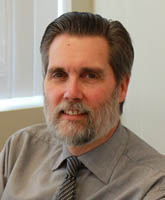 David Kaufman, ScD, associate director of the Slone Epidemiology Center at Boston University, is the lead author. The work is the result of a collaboration between the investigators at BU and their colleagues at University of California San Francisco, the University of Alabama, Heinrich Heine University in Düsseldorf, Care-Safe LLC, a consulting firm and the sponsor of the research, Bayer HealthCare Pharmaceuticals.
The investigators used health insurance claims data to identify a series of patients with MS and a comparison group of individuals from the same health plans who did not have MS. A total of 30,402 MS patients and 89,818 non-MS subjects who were in the OptumInsight Research (OIR) database from 1996-2009 were included in the study. Data on deaths was obtained from government databases of death records. Annual mortality rates were 899/100,000 in MS patients and 446/100,000 in comparators. The median lifespan was 6 years less among the MS patients than among the non-MS group.
“Our findings are consistent with what has been reported elsewhere in the world,” explained Kaufman, professor of epidemiology at BU School of Public Health. “While the results apply only to the commercially insured U.S. population, that group represents more than two-thirds of individuals under age 65, and this is the first time an MS survival disadvantage has been shown in this country.”
While early mortality due to MS is relatively rare, the new data confirm that compared to the general population, MS patients in the U.S. do experience a decrease in life expectancy. Most of the information on survival patterns in MS has come from Europe, where populations, risk factors and medical practice may be different than in the U.S. With the large number of MS patients in the U.S., the lack of data represented a significant knowledge gap. Future studies with longer follow-up periods can provide important information about how the introduction of anti-MS drugs in the 1990s has impacted survival in MS.
Jan. 28 Lecture: “Head Games: CTE and the Long-Term Consequences of Repetitive Brain Trauma”

Robert A. Stern, PhD, will present the 2015 Sargent College of Health & Rehabilitation Sciences Dudley Allen Sargent Distinguished Lecture. A professor of neurology, neuosurgery, and anatomy and neurobiology at the School of Medicine, he will speak on "Head Games: Chronic Traumatic Encephalopathy and the Long-Term Consequences of Repetitive Brain Trauma."
When: Wednesday, Jan. 28, 2015, 4-5 p.m.
Where: BU Charles River Campus, Sargent College, Room 101
635 Commonwealth Ave., Boston
Admission is free. Open to the public. Reception to follow in the Setterberg Lounge, 2nd floor. Contact Katy Staley at kstaley@bu.edu or 617-353-2705 for more details or to request special accommodations.
Stern is Professor of Neurology, Neurosurgery, and Anatomy and Neurobiology at Boston University School of Medicine, where he also serves as Director of the Clinical Core for the Alzheimer’s Disease Center and Director of Clinical Research for the Chronic Traumatic Encephalopathy (CTE) Center. A major focus of Stern’s research involves the long-term effects of repetitive brain trauma in athletes and the military, including the neurodegenerative disease, CTE. He has received funding from the National Institutes of Health and the Department of Defense for his work on developing methods of detecting and diagnosing CTE during life, as well as examining potential genetic and other risk factors for this disease. His other major areas of funded research include the assessment and treatment of Alzheimer’s disease, the cognitive effects of chemotherapy in the elderly, thyroid-brain relationships, and driving and dementia.
Stern has published more than 250 journal articles, chapters, and abstracts including work on various aspects of cognitive assessment. He is the senior author of many widely used neuropsychological tests, including the Neuropsychological Assessment Battery (NAB) and is a Fellow of both the American Neuropsychiatric Association and the National Academy of Neuropsychology. He serves on several editorial boards as well as the Medical and Scientific Advisory Boards of the MA/NH Chapter of the Alzheimer’s Association and Sports Legacy Institute, and is a member of the Mackey-White Traumatic Brain Injury Committee of the NFL Players Association. Stern appears frequently in national and international print and broadcast media for his work on CTE and Alzheimer’s disease and has testified before the US Senate Special Committee on Aging. He also appears in the feature length documentaries “League of Denial” (PBS Frontline, 2013), “Head Games” (2012), and “I Remember Better When I Paint” (2009).
BU ADC Professor Awarded Alzheimer’s Association Research Grant
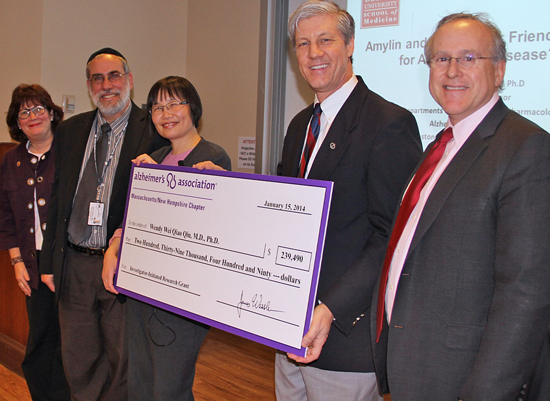
Representatives of the Alzheimer’s Association (AA) presented Wendy Qui, MD, PhD, associate professor of psychiatry and pharmacology with a check for $239,000 on Wednesday, Jan. 15 to support her research. Dr. Qui received the funding as part of the Alzheimer’s Association Investigator-initiated Research Grant Awards program. The presentation took place preceding Dr. Qui’s lecture, “Amylin and its Analogs: Friend or Foe for Alzheimer’s Disease,” part of the BU Alzheimer’s Disease Center (ADC) Spring 2014 Lecture Series.
“Dr. Qui is an outstanding member of our center and quite unique in that she is a practicing geriatric psychiatrist as well as a very productive basic science and clinical researcher,” said Robert Stern, PhD, Clinical Core director of the ADC. “This is a very important grant award, and we are deeply appreciative of the Alzheimer’s Association’s generous support of her research.”
Dr. Qiu’s research interests include identifying biomarkers and modifiable and non-modifiable factors related to Alzheimer’s disease and understanding how gene mutations interact with environment to cause diseases in the elderly. She cares for patients with dementia as well as psychiatric illnesses, including late-life depression. She also examines research participants for ADC clinical trials.
“The Alzheimer’s Association is the largest non-profit funder of Alzheimer’s Research in the world,” said Peter Ham of the Alzheimer’s Association, Massachusetts/New Hampshire Chapter, in making the presentation. “For us it is all about having an impact on people’s lives. Dr. Qui received one the highest evaluations by our grant reviewers, and we are very pleased to support her work.”
BUSM Professor Receives 2013 Presidential Early Career Award for Scientists and Engineers

Katherine Iverson, PhD, assistant professor of psychiatry at the Boston University School of Medicine (BUSM), has been named as a recipient of the Presidential Early Career Award for Scientists and Engineers. Iverson, who is also a Clinical Research Psychologist at the VA Boston Healthcare System, was recognized for her outstanding contributions to research and clinical proficiency in women's mental health following potentially traumatic events, especially as they relate to intimate partner violence (IPV) among military veterans.
Iverson received her undergraduate degree from the University of Notre Dame, and her PhD in clinical psychology at the University of Nevada, Reno. She then performed her postdoctoral training through the BUSM/VA Boston fellowship program, where she specialized in research on post-traumatic stress disorder (PTSD). Her present research focuses on pinpointing best practices for the treatment and prevention of IPV among female military veterans, and is funded through a Department of Veterans’ Affairs Career Development Award.
“I am honored by this award and inspired by the attention it is drawing to this important issue. It is my hope that this recognition will facilitate my continued research on the impact of intimate partner violence on military and veteran families,” said Iverson.
“We are deeply pleased that Dr. Iverson was selected this year for this prestigious, interdisciplinary, national award,” said Terence Keane, PhD, assistant dean for research at BUSM and Associate Chief of Staff for Research at VA Boston Healthcare System and Professor of Psychiatry. “Her work on the psychology of intimate partner violence and the effects of sexual assault is trend setting and she is poised to make significant contributions to the field for decades into the future,” he added.
Established by President Clinton in 1996, awardees are selected for their pursuit of innovative research at the frontiers of science and technology and their commitment to community service as demonstrated through scientific leadership, public education, or community outreach and is the highest honor bestowed by the United States Government on science and engineering professionals in the early stages of their independent research careers. Iverson joins Boston University’s College of Engineering assistant professor of biomedical engineering Xue Han as two of this year’s 102 awardees.