Student Updates
Slone Study Finds Frequent Experiences of Racism Associated with Greater Weight Gain among African American Women

A recent analysis conducted by investigators from the Slone Epidemiology Center at Boston University has found that frequent experiences of racism were associated with a higher risk of obesity among African American women. The findings, which currently appear online in the American Journal of Epidemiology, found the relationship between racism and obesity was strongest among women who reported consistently high experiences of racism over a 12-year period. The research was based on data from the Black Women’s Health Study, a longitudinal study that enrolled 59,000 African-American women in 1995 and has followed them continually.
Rates of obesity in the United States have increased rapidly over the past few decades with the greatest increases reported for African American women. Approximately half of African American women are currently classified as obese. Obesity is a risk factor for numerous health conditions including cardiovascular diseases, type 2 diabetes, orthopedic problems, and death. Racism is a form of psychosocial stress that African Americans experience disproportionately. Experiences of racism could contribute to obesity because both animal and human data indicate that chronic exposure to stress can result in dysregulation of important neuroendocrine functions which can in turn influence the accumulation of excess body fat.
The Black Women’s Health Study collected information on lifestyle factors, experiences of racism, height and weight and other factors using biennial questionnaires. The participants were asked in 1997 and in 2009 to rate the frequency of “everyday” experiences of racism, such as receiving poorer service in restaurants and stores, and if they had been treated unfairly because of their race on the job, in housing or by the police (“lifetime” racism). The analyses were restricted to women under the age 40 at the beginning of follow-up because most adult weight gain occurs during the reproductive years. The investigators found that women in the highest category of reported everyday racism in both 1997 and 2009 were 69 percent more likely to become obese compared to those in the lowest category at both intervals. Women who reported more lifetime racism were also at increased risk of obesity.
“Experiences of racism may explain in part the high prevalence of obesity among African American women,” explained Yvette C. Cozier, DSc, MPH, assistant professor of epidemiology at Boston University who led the analyses. She suggests that work-place- and community-based programs to combat racism and interventions to reduce racism-induced stress could be an important component of strategies for prevention of obesity, especially in communities at high risk.
The present work was supported by a grant 430483 from the Aetna Foundation, and grant CA054820 from the National Cancer Institute.
BUMC Art Days March 31- April 1

Submissions due Friday, March 28
Exhibit: Monday-Tuesday, March 31-April 1
Receptions begin at 3 p.m. on both days
BUSM Instructional Building, 14th Floor Hiebert Lounge
All students, faculty and staff at the Boston University Medical Campus are encouraged to submit artwork of any medium to the 24th annual "Art Days", founded by former BUSM Dean Aram Chobanian to foster the support and growth of the creative arts at BUMC. The exhibition is mounted by the Creative Arts Society. See images from Art Days 2013
This is the third year of a university-wide arts initiative with an annual keyword to be used as a thematic organizer for various courses and events. The Keyword for this year is "transformation". Transformation is marked by metamorphosis or a process of profound or radical change. See http://www.bu.edu/cfa/about/initiatives/keyword/. While there may be a special section at Art Days for display of works addressing transformation, it is also fine to submit work not related to the keyword.
Submissions are due Friday, March 28. Paintings, photos, poetry, sculpture, needlework, etc. will be accepted. Pieces should be framed if possible. Security will be provided. Works will be returned April 2. Specific instructions will be sent at a later date to those who respond to this announcement.
To be placed on the submit list or if you have any questions please contact Keith Tornheim, PhD, 638-8296 or tornheim@bu.edu.
Lessons on Protecting Patient Data
Leaders at Boston University and Boston Medical Center have collaborated to produce a new guide to protect patient data. The full article, by Thomas J. Moore, MD; Quinn R. Shamblin, CISM, CISSP, PMP, GIAC GCFA; Sumit Sehgal, CISSP, CISA; Robert Sprinkle, MS; Stanley M. Hochberg, MD; and Ravin Davidoff,MBBCh; can be found at https://dcc2.bumc.bu.edu/ocr/ClinicalResearchNewsletter/article.aspx?article=484
Data breaches have made big news in recent months, and Boston-area hospitals are not immune. It is well known that hackers stole personal financial data, including credit card numbers, for millions of customers at Target and Neiman Marcus. The threat to private medical information, however, often comes from low-tech carelessness, not hackers – lost smartphones, laptops or paper documents. In 2009, a Mass General Hospital employee misplaced paper records on the MBTA with information on 192 MGH patients, which subjected the institution to $1 million in federal fines.
Tracking patient data in databases and spreadsheets is an essential part of both clinical practice and biomedical research. Even when used for legitimate purposes, however, all protected health information (PHI) is subject to HIPAA Privacy and Security rules. Databases revealing PHI must be on an encrypted, passport-protected device. PHI identifiers range from the person’s name and phone number to his fingerprints and facial photo.
 Ways to Protect Sensitive Information:
1. Once all identifiers have been stripped from a dataset, it is no longer HIPAA-protected. Consider labelling patients with unique identifying numbers that are not part of PHI, linked to a master code stored on a separate, secured computer.
2. Nowadays, much work time is spent on portable devices: easy to use, easy to lose. Tablets, laptops, flash drives, and smartphones with access to PHI must be password-protected and encrypted, which greatly reduces the risk of a breach.
3. Email containing PHI must be sent securely. BU provides a secure email solution known as DataMotion SecureMail. BMC email automatically detects and encrypts BMC email containing PHI, but users should add the word “secure” to the subject line before sending PHI outside BMC.
4. When off-site, use only an approved secure remote access method when accessing sensitive information, especially when logged onto public wi-fi or travelling abroad.
5. Finally, training colleagues in proper security techniques is essential to protecting valuable and private patient data.
When patients and research subjects allow us to collect and store private information about themselves, they have a right to expect that we will keep those data secure and use them only for clinical and research purposes. Following these simple steps will help all of us adhere to this responsibility.
For additional information on how to secure devices visit http://www.bu.edu/infosec/howtos/securing-your-devices/
March 5 Cathy Shine Lecture: Do Government Agencies Protect Patients?
Failures in regulation and information dissemination by the FDA and medical licensing boards
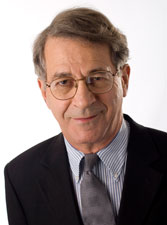
Is there a role for regulatory agencies in creating an environment to improve the health of patients? Dr. Wolfe presents the case that, yes, some agencies have a role, but have dangerously failed to perform it adequately. A prime example is the FDA, which should be a more important source of patient protection, especially where it serves as gatekeeper for drugs and devices. Others include medical licensing boards, most of which have failed to take action against physicians who are practicing substandard medicine in their states. Dr. Wolfe offers powerful examples from his experiences monitoring and influencing the FDA and medical licensing boards, and discusses recommendations for improving their performance concerning patient safety.
Sidney M. Wolfe, MD, co-founded Public Citizen’s Health Research Group with Ralph Nader in 1971 and was its Director until June 2013, when he became its Senior Advisor. Under his leadership, the Group has published research on critical issues in health policy such as pharmaceutical safety and effectiveness, workplace safety, and human research subject protection, and advocated for transparency and accuracy in the development of policies affecting the health and safety of patients. Before moving to the Health Research Group, Dr. Wolfe, conducted research on aspects of blood-clotting at the National Institutes of Health. Since 1995 he has been an Adjunct Professor of Internal Medicine at the Case Western Reserve University School of Medicine and Senior Associate, Johns Hopkins University, School of Public Health. His received his medical degree from Case Western University and his internship and residency were in internal medicine. He is currently a member of the Society for General Internal Medicine and served on the FDA Drug Safety and Risk Management Advisory Committee from 2008 to 2012. He has published extensively in the medical and health policy literature and, since July 2013, has written a regular column for the British Medical Journal. His awards include receiving the 1990 MacArthur Foundation Fellowship.
Wednesday, March 5
Noon–1 p.m.
BUSM Instructional Building
72 East Concord St., Hiebert Lounge, 14th Floor
Free and open to the public, reception will follow
Sponsored by the Department of Health Law, Bioethics & Human Rights at BU School of Public Health.
GSDM Alumni Reunite in Dubai

In early February more than 80 alumni, faculty, and friends of Boston University Henry M. Goldman School of Dental Medicine (GSDM) gathered at The Address Dubai Mall in Dubai, United Arab Emirates, for an evening of reunion.
The alumni reception and dinner was hosted by Dean and Mrs. Jeffrey W. Hutter with Dr. Thomas Kilgore, Professor in the Department of Oral & Maxillofacial Surgery, and Dr. Steven Morgano, Professor in the Department of Restorative Sciences/Biomaterials and Director of the Advanced Specialty Education Program in Prosthodontics. The event coincided with the UAE International Dental Conference & Arab Dental Exhibition, which took place Feb. 4–6.
Special guests at the dinner were Dr. Muhadditha Al Hashimi, who played a major role in the creation of the Boston University Institute for Dental Research and Education and is currently the Executive Dean of the Faculty of Health Sciences at Higher Colleges of Technology; Dr. Abdulghani Mira PGOE 00, DPH 01, Dean of the King Abdulaziz University Dental School in Saudi Arabia; Dr. Fahad Al-Harbi PROS 00, 01, 05, Dean of the University of Dammam School of Dentistry in Saudi Arabia; and Dr. Jawad Behbehani, Dean of the Kuwait Dental School.
Also in attendance were alumni of the Boston University Institute for Dental Research and Education, along with some of the faculty who served as their teachers and mentors during the years of their respective residencies, including Dr. Dina Debaybo, Dr. Manal Halabi, Dr. Yasser Kahbas, Dr. Mohammed Koutrach, and Dr. Faisal Succaria.
Dean Jeffrey W. Hutter said to the gathered alumni, family, friends, and distinguished guests, “You are an integral part of our Boston University Henry M. Goldman School of Dental Medicine community, and it means a great deal to me, as Dean, to see our School gather to celebrate our past and gather our momentum as we enter the future.”
Both Drs. Kilgore and Morgano spoke to the guests about their pride for the alumni of the region and their pleasure at seeing such a robust turnout.
Legacy of Sexual Violence in the Congo is Focus of Two-day Event, Feb. 27-28
Sexual violence in the Democratic Republic of the Congo (DRC) — first thought to be the bitter residue of wars that wracked the country for most of the past two decades — has spread into an epidemic of sexual abuse of children, gang rape, forced incest and other horrific crimes.
In conflict-torn areas of the eastern DRC, as many as 40 percent of women and girls may have been raped, with most victims under age 18. Nearly 50 women are raped every hour, according to estimates from researchers. A 2008 report by the United Nations Population Fund (UNFPA) observed the disturbing spread of sexual violence from war zones into towns and villages throughout the country.
Dr. Margaret Agama, the country’s UNFPA representative when the report was released, called sexual violence in the DRC a “plague” that was initially used as a weapon. In the aftermath of war, Agama said, “sexual violence is unfortunately not only perpetrated by armed factions but also by ordinary people occupying positions of authority, neighbors, friends and family members.”
To help shine a light on these crimes and their causes, the Boston University Program on Crisis Response and Reporting, in partnership with the Washington D.C.-based Pulitzer Center on Crisis Reporting, will present a two-day event exploring gender violence in the Democratic Republic of Congo.
On Thursday, Feb. 27, the program will screen the film Seeds of Hope, which chronicles a woman’s dogged fight to help DRC rape victims rebuild their lives and regain a sense of empowerment. Filmmaker Fiona Lloyd-Davies will be present at the screening n the Charles River Campus and will participate in a post-film discussion.
On Friday, Feb. 28, the event shifts to the Medical Campus for a panel discussion about the challenges to accurate, nuanced reporting about the DRC and its myriad problems, many of which extend beyond sexual violence. The panel will include a range of views from journalists, public health experts, artists, and activists.
Both events are free and open to all. RSVP for one or both events. Students interested in learning more about the 2014 Pulitzer Fellowship opportunity are strongly encouraged to attend.
The Boston University Program on Crisis Response and Reporting is a joint effort by journalists and global health specialists to improve mutual understanding and to promote collaborative global health story telling. The partnership combines the expertise of the Pulitzer Center on Crisis Reporting, the BU College of Communication, BU School of Public Health, and BU Center for Global Health & Development.

Global Health Reporting: Telling the Whole Story of Gender Violence in Democratic Republic of Congo
“Seeds of Hope” Film Screening – Thursday, Feb. 27
Boston University College of Communications
640 Commonwealth Ave, Room 209
5:30–7:30 p.m.
Panel Discussion – Friday, Feb. 28
Boston University School of Public Health
670 Albany St., First Floor Auditorium
8:30 a.m.–1 p.m. (Breakfast from 8:30–9. Panel discussion at 9 a.m.)
Program panelists:
Fiona Lloyd-Davies is an award-winning filmmaker and photojournalist who’s been making films and taking pictures about human rights issues in areas of conflict since 1992. Her 2000 film about honor killing, License to Kill for BBC2, brought a change in the law in Pakistan and was awarded a Royal Television Society award for Best International Journalism. She was awarded a second RTS award in 2005 with Salam Pax, the Baghdad Blogger, for the series of films they made for the BBC’s flagship current affairs program Newsnight. Her work combines journalism with a strong visual style that she learned as a graduate of the Royal College of Art. Her work has been broadcast on the BBC, Channel 4, ITN and Al Jazeera English and her photography work has been published in The Guardian, The Observer Magazine, The Glasgow Herald Magazine and The Irish Times. Her on-going reporting from eastern Democratic Republic of Congo focuses on the sexual violence against the civilian population.
Mama Jeanne Kasongo L.Ngondo became a humanitarian and an activist by accident. A Congolese entrepreneur who holds a master’s degree in Political Science from IPSL and ran several businesses in the capital city of Kinshasa, Jeanne began to open her home and her heart to the orphaned street children in her neighborhood, providing them with food, shelter, and love while enrolling them in school and paying for their tuition. These children called her Maman Jeanne – meaning “Mother” in French – and the name stuck. With the onset of the war in 1997, Kinshasa saw an influx of internally displaced persons fleeing from conflict in the east – these included orphans, escaped child soldiers, and victims of sexual violence. Unable to turn these women and children away, Maman Jeanne used profits from her businesses to support more and more vulnerable people. In 2000, she founded Shalupe Foundation as an official non-profit organization through which to channel her important work. Maman Jeanne now lives in Boston, where she runs Shalupe Foundation and raises awareness of the crisis in the Congo at the international level. She has spoken at numerous events in Boston, Washington, DC, and at the United Nations in New York, and was named an Ambassador for Peace by the Universal Peace Federation.
Dr. Susan Bartels is a board-certified emergency medicine physician. She completed a two-year fellowship in International Emergency Medicine at Brigham and Women’s Hospital and graduated from the Harvard School of Public Health with a Masters of Public Health degree. Dr. Bartels is now an attending physician at the Beth Israel Deaconess Medical Center, an Assistant Professor at the Harvard Medical School, and a Visiting Scientist at the FXB Center for Health and Human Rights at the Harvard School of Public Health. Dr. Bartels’ current international work is focused on sexual violence and women’s health, with a particular emphasis on rape as a weapon of war. She has led several research studies in eastern Democratic Republic of Congo investigating patterns of sexual violence as well as outcomes of sexual violence related pregnancies.
Sekombi Katondolo is the founder of Mutaani, eastern Congo’s only youth-led media company. Based in Goma, Mutaani Radio is the Democratic Republic of Congo’s fastest growing radio station, and Mutaani Label is growing the careers of dozens of young artists from across Africa’s Great Lakes Region. At 31, Sekombi is already an accomplished dancer, filmmaker, choreographer, and journalist. He believes in the power of Congolese people telling their own stories – to each other, and to the outside world. Katondolo’s work includes comprehensive coverage of DRC’s elections in November of 2011. In partnership with IDEO and Falling Whistles, Mutaani built a network of hundreds of young citizen journalists and equipped them with an innovative SMS-to-radio election monitoring system that channeled thousands of real-time reports on the voting process to radio listeners across eastern Congo and observers on the internet.
Submit Grant Proposals for Fall BU Arts Initiative Project by March 18
 To encourage the continued development of an intellectual community around the arts at BU and enhance the student-life experience, the BU Arts Initiative offers grants to faculty, students and staff for projects that directly engage students in the arts. A BU Arts Council committee will review all proposals. The deadline for Fall 2014 project proposals is March 18. For more information and to submit a grant proposal, visit the website.
Learn All About Renting in Boston, Feb. 27
BUMC students: Do you have questions about renting an apartment?
Join BUMC Housing Resources Manager Barbara Attianese and Steve Handler from Beacon Realty Properties as they provide an overview on how to rent an apartment and information on housing resources.
All About Renting in Boston
- Thursday, Feb. 27
- Noon-1:30 p.m., L-112 or
- 5:30-7 p.m., Keefer Auditorium
Steve has worked in his family business, Beacon Realty Properties LLC, in Boston since graduating from Syracuse University in 1988. He estimates to have signed over 4,000 residential leases in the City of Boston and will discuss the current rental housing market, what to expect and the process you will need to go through in order to secure housing.
After the presentation Barbara and Steve will answer questions about renting in Boston.
Learn more about BUMC Housing Resources .This event is sponsored by BUMC Housing Resources. Pizza served, RSVP OHR@bu.edu by 5 p.m. Feb. 25.
GSDM Students Share Unique China Externship Experiences

Boston University Henry M. Goldman School of Dental Medicine (GSDM) DMD ‘14 students Alena Mehtani, Erica Weinberg, Erik Harriman, and Grant Murray presented to to a packed classroom about their two-week international externship to two world-renowned institutions for Oral and Maxillofacial Surgery (OMFS) located in China.
The October 2013 trip commenced an expansion of GSDM’s Global Elective Externship program to include an exchange program with two institutions in China: Shanghai Jiaotong University School of Stomatology (SJUSS), located in Shanghai, and the Fourth Military Medical University School of Stomatology (FMMUSS), located in Xi’an.
Professor and Director of the Division of Oral Medicine Dr. Laisheng Chou serves as the GSDM program leader. Professor in the Department of Health Policy & Health Services Research and Associate Dean for Global & Population Health Dr. Michelle Henshaw accompanied the students on the externship.
For their presentation, the students, in turn, described all aspects of their unforgettable trip, including clinical, social, and cultural experiences. Murray stressed the uniqueness of their clinical environment. He spoke with awe of being in a hospital with four floors for OMFS. Weinberg talked about the experience in terms of her interest in pediatric dentistry, noting that the trip is valuable even to those interested in specialties outside of OMFS. She illustrated this with a photo from the trip of herself carrying a baby who’d just had a cleft palate surgery. Harriman and Mehtani presented some of the fascinating cases of rare conditions they saw and learned about on the trip.
The students also reflected on the influence of culture on the overall nature of treatment in China. They witnessed a robust sense of camaraderie between all levels of staff in the operating room. They also noted the systematic nature of treatment.
Mehtani, Weinberg, Harriman, and Murray fielded questions from the audience regarding the procedures they observed, the prevalence of certain conditions, and about clinical culture they experienced, among other topics.
Dean Jeffrey W. Hutter, who attended the students’ presentation, said, “It was a pleasure to hear about Alena, Erica, Erik, and Grant’s unforgettable trip.” He continued, “I am very proud that students from our School were able to have this truly unique clinical and cultural experience as we expand the global presence of the Henry M. Goldman School of Dental Medicine.”
In conclusion, the students gave glowing recommendations of the trip and welcomed anyone with interest in the externship to contact them. Students interested in international externships can also contact Elizabeth Anatori of Global & Population Health at eanatori@bu.edu or 617-638-4674.
Photos from the trip are available on Facebook and Flickr.
Life and Times as a Physician According to Former U.S. Health & Human Services Secretary

Louis Sullivan, MD, BUSM Class of 1958, knows what it means to “break ground,” the title of his recently published autobiography. His journey took many twists and turns beginning as an African-American growing up in segregated Georgia, coming north for medical school in predominantly white Boston, becoming chief of hematology on the Medical Campus, serving as founding dean and first president of Morehouse School of Medicine in Atlanta, all the way to being named U.S. Secretary of Health & Human Services, Dr. Sullivan has been a pioneer.
“Lou Sullivan is an intellectual giant,” said BU President Emeritus and BUSM Dean Emeritus Aram Chobanian, MD, introducing Dr. Sullivan. “He is also a giant at bringing people together to improve and advance health care and the medical profession.” Dr. Sullivan, a member of BUSM’s Dean’s Advisory Board, read passages from his book describing his early years in Blakely, Ga. and his years at the School of Medicine as well as when he was a faculty member leading the section of hematology.
“When I came to medical school my plan was to be a family doctor like my hero Dr. Griffiths in Georgia,” he recalled. “But like most medical students my plans changed from year to year based on my contact with the many outstanding faculty at the School. I thought I wanted to be a surgeon after spending time with Lamar Soutter (BUSM professor of surgery), but then I held a retractor to a liver for three hours during an operation and decided that was not for me.”
He talked of his plan to become chair of the Department of Medicine at BUSM, but was recruited back to Atlanta to help establish a medical school for poor and minority students at Morehouse College his undergraduate alma mater. He shared how he developed a relationship with George H.W. Bush and his wife, Barbara, which resulted in his being asked by President Bush to join his cabinet.
Dr. Sullivan currently serves as chair of the National Health Museum in Atlanta and of the Washington, DC-based Sullivan Alliance to Transform America’s Health professionals.
Following Dr. Sullivan’s talk he signed copies of his book and joined by his wife, Ginger, was greeted by students, faculty, staff and former colleagues and classmates at a reception.