Student Updates
Annual Mark A. Moskowitz Memorial Lecture Series
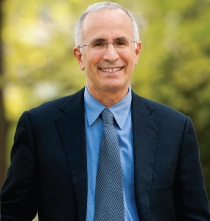
Please join the Section of General Internal Medicine in welcoming Dr. Russell S. Phillips, MD as the annual Mark. A. Moskowitz Visiting Professor. Dr. Phillips will present at General Internal Medicine Grand Rounds, as well as the Department of Medicine Grand Rounds. Dr. Phillips is the Director of the Center for Primary Care, William Applebaum Professor of Medicine and Professor of Global Health and Social Medicine at Harvard Medical School.
Friday, March 28
"Strengthening our Primary Care Community: Sharing Stories"
8 a.m.
FGH Building, First Floor Carter Conference Room
"Transforming Practice and Education in the Academic Health Center"
Noon
BUSM Evans Building, Keefer Auditorium
The annual Mark A. Moskowitz Memorial Lecture series was created in 2004 to honor Dr. Moskowitz. Dr. Moskowitz joined the faculty at BUSM in 1981. He was appointed Chief of the University Hospital Section of General Internal Medicine in 1988. He became Chief of the combined Sections of General Internal Medicine after the merger of University Hospital and Boston City Hospital in 1997. He led numerous research projects in a broad range of areas. His studies included measuring the severity of illness for hospitalized patients, evaluating the appropriateness of coronary artery bypass surgery in the Medicare population, disseminating and feeding back information on medical care practice patterns to physicians and measuring quality in ambulatory care. An eloquent advocate for using large administrative databases to study the practice and consequences of medical care, Dr. Moskowitz was a caring role model for students and residents. He mentored scores of General Internal Medicine fellows and junior faculty who have gone on to become national and international leaders in general internal medicine and health services research. The Visiting Professor Lecture series includes the General Internal Medicine Grand Rounds, as well as the Department of Medicine Grand Rounds.
“You are Amazing” BUSM Class of 2014 Match Day
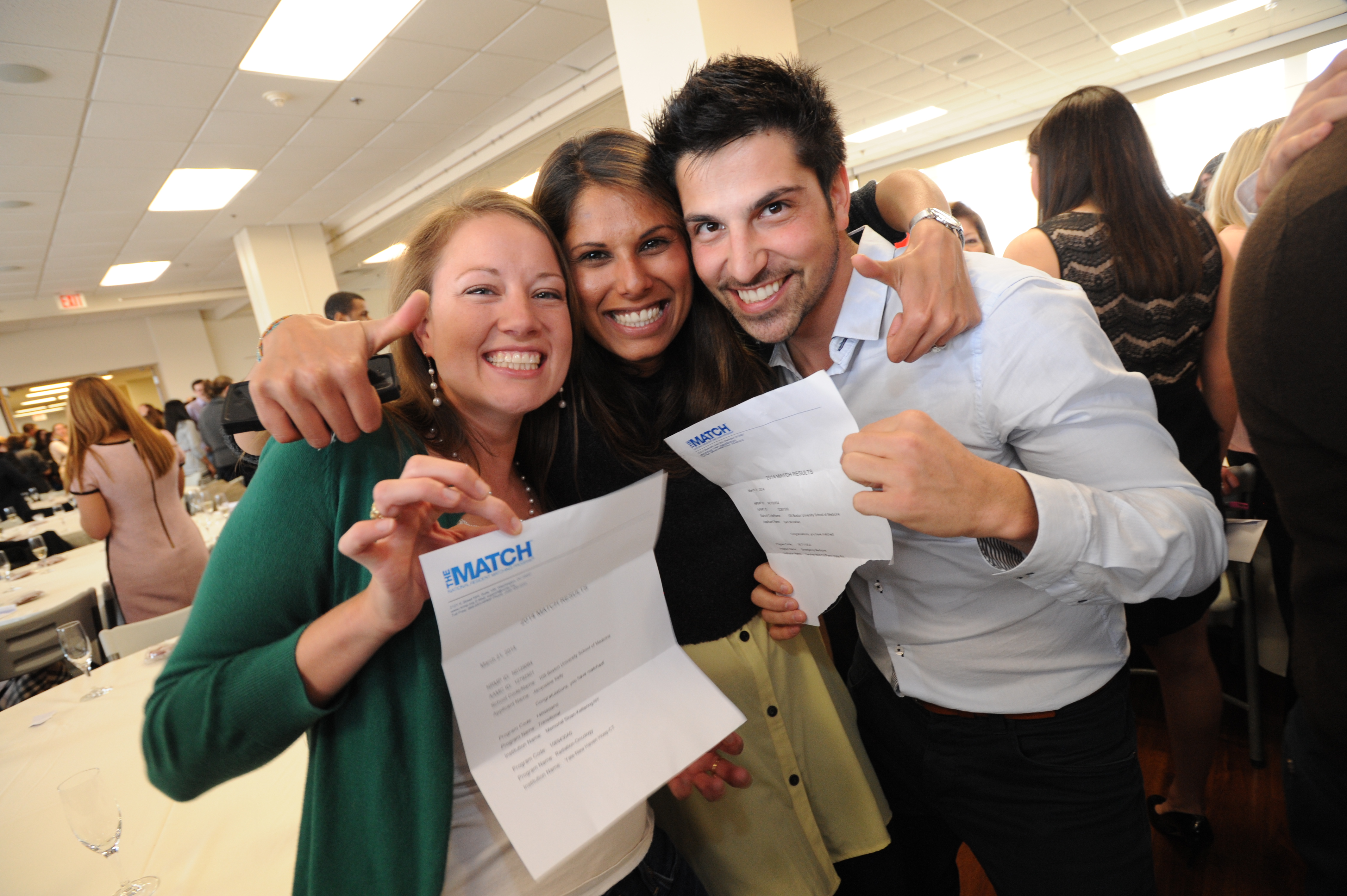
Amid the balloons and cameras snapping, the Class of 2014 received their National Residency Matching Program letters with family, friends, faculty and staff joining in the excitement.
“You are amazing,” said Angela Jackson, MD, associate dean for student affairs to the class. “You have worked hard for this day, and we congratulate you.” Also congratulating the class was Robert Witzburg, MD ’77, associate dean for admissions. “We are proud of you and salute you for not only what you have accomplished but for who you are.”
Dean Karen Antman led a toast to the class noting that, “You will remember this day long after you even remember your graduation day.” She highlighted some of the 2014 residency statistics including that 175 members of the class matched in residencies across the country with 44 staying in Massachusetts. Thirty-seven percent of the class are entering primary care residencies in internal medicine, family medicine and pediatrics. Eighteen graduates will stay on the medical campus training at Boston Medical Center (BMC) and two are in the combined BMC/ Boston Children’s Hospital pediatrics program. Surgical residences surged this year to nine percent of the class from three percent in 2013, and emergency medicine remains of high interest with seven percent of the class matching in this specialty.
This year, for the first time, students joined with friends and family to commemorate the day in pictures participating in a photo booth using signs indicating where they had matched. Other members of the class of 2014 were filmed for a video on BUSM Match Day.
“You will be ours soon, and we will love having you as alumni,” said Jean Ramsey, MD, associate dean for alumni affairs to the class. “We will work with you to help keep you in contact and keep your class together.”
BUMC Students, Faculty, Staff Encouraged to Share Thoughts on International Student Experiences
All Medical Campus students, faculty and staff are encouraged to share their thoughts in an anonymous survey regarding the University’s engagement with its international student population.
BU’s success in attracting students from diverse backgrounds and around the world has brought a renewed set of challenges and opportunities for self-evaluation and development of the university as a vibrant and fully international global learning community.
Please assist by suggesting the next steps the University can take to support the academic and social engagement of international students while educating all BU graduates for success in today's global society.
A newly convened Provost's ad hoc Committee on International Student Experiences and Institutional Impacts requests input and advice from all faculty, staff, and students. The Committee has set up a website http://www.bu.edu/provost/initiatives/iseii/ for anonymous responses to the following questions:
How has the presence of a large international student population affected your work and experience at Boston University?
- Please specify the challenges and suggest opportunities for BU to improve the academic success of a growing international student population.
- Please specify the challenges and suggest opportunities for BU to improve social interactions/dynamics, mutual understanding, and learning opportunities within its diverse student population.
- Please specify the challenges and suggest opportunities for BU to improve support to faculty and staff who work with international students.
- Please describe efforts or success stories related to international students that you would recommend or suggest as best practices, and identify experts or resources of which the Provost's Committee should be aware.
- Other comments
- Please indicate your BU affiliation: undergraduate student, graduate student, other student, faculty, staff, research staff, other ___________.
- Please indicate your US citizenship status: US citizen, US permanent resident, foreign national (non-US citizen/non-US permanent resident.
Please share your thoughts at http://www.bu.edu/provost/initiatives/iseii/ or send by email to internationalstudents@bu.edu by May1, 2014.
March 25 BUMC Faculty & Staff Wellness Fair

In an effort to promote wellness, BU Human Resources is hosting a Wellness Fair on the Medical Campus for faculty and staff. In addition to cardiac screenings there are a wide range of wellness offerings.
Highlights of the fair include:
- Private cardiac screening sessions (Registration required)
- 20 min fitness workshops and cooking demonstrations (Registration required)
- Chair massages, Skin analysis for sun damage, Glaucoma screenings and ergonomics demonstrations
- Select Departments and Schools of BU will provide information on their services
- Healthy refreshments and raffle prizes, including iPad minis
The Wellness Fair is presented in collaboration with Blue Cross Blue Shield. A representative will be available with information on health and dental plans.
BU Medical Campus Faculty & Staff Wellness Fair
- Tuesday, March 25, 11 a.m.- 3 p.m.
- BUSM Instructional Building, Hiebert Lounge
Faculty and staff unable to attend this event may choose to participate in Wellness Fairs on the Charles River Campus.
BU Charles River Campus Faculty and Staff Wellness Fairs
- Monday, April 7, 12:30-5 p.m. and Tuesday, April 8, 10 a.m.- 2 p.m.
- Fitness & Recreation Center, 915 Commonwealth Ave., Court 1 Upstairs Gym
For additional information please contact Kim Lyons, kimz@bu.edu , 617-353-5378 or Eugenia Rose, etrose@bu.edu, 617-353-4473.
Upward Movements at the School of Medicine
Full professorships to six, two join faculty
Six School of Medicine faculty members, whose areas of expertise range from post-traumatic stress disorder, fetal alcohol syndrome, and pediatric development to cardiovascular disease, traumatic brain injuries, and cardiothoracic surgery, have been promoted to the rank of full professor.
“We are delighted to recognize the accomplishments of these exceptional senior faculty,” says Karen Antman, dean of MED and provost of the Medical Campus. “The vigorous promotions process requires national and international recognition of a faculty member’s contributions.”
Antman says faculty promotions are awarded for the quality of both laboratory research and classroom scholarship.
Denise Sloan, formerly an associate professor of psychiatry, has been promoted to full professor. Sloan is researching more efficient ways to treat post-traumatic stress disorder. “We do have effective treatments for PTSD,” she says, “but they are typically quite time-consuming, with at least 12 one-hour sessions, and they require intensive training for therapists.”
Sloan is intrigued by the resilience of some people in the face of a traumatic event, while others develop PTSD. She believes a better understanding of that difference will inform PTSD treatment approaches.
She points to “the limited number of women at this academic rank,” saying she finds mentoring students extremely rewarding. “I have had outstanding mentors throughout my career, and I view mentorship as my chance to give back to the next generation of clinical scientists. I am particularly committed to encouraging more women to pursue academic careers.”
Sloan is the associate director of education, Behavioral Science Division, National Center for PTSD, at the VA Boston Healthcare System. She is the associate editor of Behavior Therapy and is on the editorial boards of five other scientific journals, including, Behaviour Research and Therapy, Journal of Abnormal Psychology, and Psychosomatic Medicine. Her research has received funding from several organizations, among them the National Institute of Mental Health and the Department of Veterans Affairs.
Rhoda Au (GSM’95), formerly a research professor of neurology, has been promoted to full professor. Au, an internationally recognized leader in neuropsychology research in cognition, has directed the collection, interpretation, and publication of neurocognitive performance of Framingham Heart Study subjects for two decades. By integrating digital technology into the evaluation process analyzing brain MRI images, she has developed novel cognitive biomarkers, new scoring methods, and standardization of cognitive measures correlated to vascular risk factors. Au, who is taking a leadership role in the study of chronic traumatic encephalopathy, has been a consultant to China’s Ministry of Science and Technology, advising on a national plan for research on Alzheimer’s disease. She is currently exploring collaborations for the study of nutritional variables involved in brain function and cognition.
Marilyn Augustyn, previously an associate professor of pediatrics, who developed an online training document for Boston Medical Center’s Reach Out and Read program, has been promoted to full professor of pediatrics and division chief of Developmental & Behavioral Pediatrics. Her curriculum, which has won international awards, is the core of a training program offered in multiple venues on DVD and as an online CME course.
Michael E. Charness, chief of staff at the VA Boston Healthcare System, has been promoted to full professor of neurology from associate professor. Charness is an expert on the neurotoxicity of alcohol and has defined some of the molecular changes that occur in fetal alcohol syndrome. He developed the first cell culture models to study alcohol’s effects on neural signaling and demonstrated molecular adaptations associated with chronic alcohol exposure. Charness codeveloped and codirects The Other Side of the Bed, an innovative interdisciplinary training program that allows medical students to work as health techs and nurses aides at the West Roxbury Campus of the VA Boston the summer after their first year. The program has been adopted by other VA-medical school affiliations around the country. Charness is scientific director of the National Institute on Alcohol Abuse and Alcoholism Collaborative Initiative on Fetal Alcohol Spectrum Disorders.
Hiran Fernando, a nationally recognized leader in thoracic surgery, has been promoted to full professor of surgery and division chief of cardiothoracic surgery. Fernando, who was formerly an associate professor of surgery, is known for developing new surgical procedures and for leadership in clinical trials and protocol development. His research focuses on minimally invasive CT surgery, including esophagectomy, treatment of gastroesophageal reflux disease, thermal ablation for lung cancer, and robotic surgery.
Olga Gursky, director of the department of physiology and biophysics Spectroscopy and Bio-Calorimetry Core Facilities, has been promoted from associate professor to full professor of physiology and biophysics. Gursky leads a research program on the structure-function relationships involved in lipid transport that underlie cardiovascular disease. A highly regarded teacher who developed and teaches a major component of the core graduate level course Foundations of Biophysics and Structural Biology, she has led the Special Topics/Student Seminar, both mandatory components of the Physiology and Biophysics Graduate Training Program. She is a member of the editorial board of the Journal of Lipid Research and a peer reviewer for the National Institutes of Health, the National Science Foundation, and the American Heart Association study sections.
In addition to those promoted above, two medical experts have joined the School of Medicine faculty as full professors.
Jeffrey Miller, who comes to BU from the Boston Biomedical Research Institute, is a full professor of neurology and of physiology and biophysics. He and his colleagues hope to develop new therapies for currently untreatable muscle diseases. By identifying the molecular changes that cause the loss of muscle function, and then testing methods to restore those pathways to normal, Miller’s lab focuses on finding novel treatment targets or ways to prevent neuromuscular disorders.
“BU provides an excellent combination of intellectual depth, collaborative environment, and support for research,” he says. “I hope that we will contribute to BU’s research excellence.”
Before joining MED, Miller was an associate professor of neurology at Harvard Medical School.
Hemant Roy is a full professor of gastroenterology as well as chief of the section of gastroenterology at Boston Medical Center. Before coming to BU, Roy was a clinical associate professor at the University of Chicago Pritzker School of Medicine. He is noted for fostering collaboration between basic scientists and clinicians on the development of noninvasive screening tools for gastrointestinal cancer. Roy’s research focuses on cancer risk stratification and prevention using new approaches to cancer screening, such as optical sensing of tissue to detect colon, lung, and ovarian cancers. He recently completed a National Cancer Institute investigator-initiated Phase 2b grant on the ability to predict the outcome of chemoprevention therapy.
This BU Today story was written by Kira Jastive. She can be reached at kjastive@bu.edu.
BUSM Physicians Assist in Development of Treatment Guidelines for Pulmonary Hypertension in Sickle Cell Disease
Physicians from Boston University School of Medicine (BUSM) and Boston Medical Center (BMC) have helped create the first set of clinical guidelines for treating patients with pulmonary hypertension in sickle cell disease. Elizabeth Klings, MD, director of the pulmonary hypertension inpatient and education program at BMC and associate professor of medicine at BUSM, spearheaded the development of these guidelines, which are published in the American Journal of Respiratory and Critical Care Medicine.
Several studies conducted in the past decade have demonstrated that cardiopulmonary complications, including pulmonary hypertension, are primary risk factors for death in patients with sickle cell disease (SCD). Pulmonary hypertension (PH) affects between six and 11 percent of adults with SCD and is an independent risk factor for death in these patients. This complication is often under-recognized and many patients are not diagnosed early in the course of their disease.
A group of 24 national physician leaders in pediatric and adult hematology, pulmonology and cardiology convened to develop guidelines specific to these patients. Funded by the American Thoracic Society and endorsed by the Pulmonary Hypertension Association and the American College of Chest Physicians, these guidelines represent the most comprehensive pulmonary recommendations thus far.
“I am proud to have collaborated with my colleagues across disciplines to create these guidelines, which will help providers recognize the link between sickle cell disease and pulmonary hypertension and deliver the optimum care to these patients,” said Klings.
Some of the guidelines include screening SCD adults for pulmonary hypertension even if they are asymptomatic every one to three years. All SCD patients with symptoms suggestive of PH, such as exertional shortness of breath and chest pain, should undergo a full PH workup. These patients are often best managed in a specialty center with expertise in the management of PH and SCD. The guidelines also recommend intensifying SCD therapy for all patients with pulmonary hypertension or an elevated pulmonary artery systolic pressure by echocardiography as these patients are also at an increased risk for death. The management of pulmonary hypertension in these patients is dictated by the hemodynamic numbers obtained by a catheterization of the pulmonary arteries. Patients with symptomatic PH should be considered for treatment of their condition.
Klings sees patients in the Boston University Center of Excellence in Sickle Cell Disease as well as in the Pulmonary Clinic at BMC. The Center also promotes interactive basic and clinical research and patient and professional educational activities. For more information, visit http://www.bu.edu/sicklecell/.
BUMC Campus Invited to March 17 Alzheimer’s Disease Research Workshop
BUMC Provost's Research Workshop
Accelerating Research on Age-related Cognitive Decline: Alzheimer’s and Beyond
BU faculty, fellows, residents, students and staff interested in Alzheimer’s disease and brain aging are invited to this workshop. Join with other BU investigators to explore opportunities to maximize utilization of Alzheimer’s Disease Center (ADC) resources across the University.
There will be two rounds of table discussions covering the following topics: Cognitive neuroscience, clinical trials and biomarkers, cellular and molecular mechanisms, genetics and epidemiology, and non-pharmacological interventions.
Monday, March 17, 3-5 p.m., Hiebert Lounge
Schedule
- 3:00 p.m. Welcome from Dean Antman
- 3:05 Introduction of BU ADC – Neil Kowall, MD
- 3:15 First table discussion session
- 3:45 Second table discussion session
- 4:15 Open Discussion
Sponsored by the BUMC Provost and the BU ADC.
BMC Construction Project Begins March 17; Note Campus Changes
In fall 2013 Boston Medical Center announced plans to redesign its clinical footprint and consolidate inpatient operations to the west side (Menino Pavilion) of campus. This multi-year redesign project will feature a number of improvements including an expanded Emergency Department (ED) unified with Urgent Care and with a separate Behavioral Health area; a consolidated state-of-the-art Radiology Department next to the ED; centralized, modernized Operating Rooms; a new women’s and children’s facility in the Yawkey Ambulatory Care Center; Intensive Care Units in one location; and a new bridge to transport helipad patients to the ED. As part of the redesign, patient services will be transitioned out of Newton Pavilion in 2017.
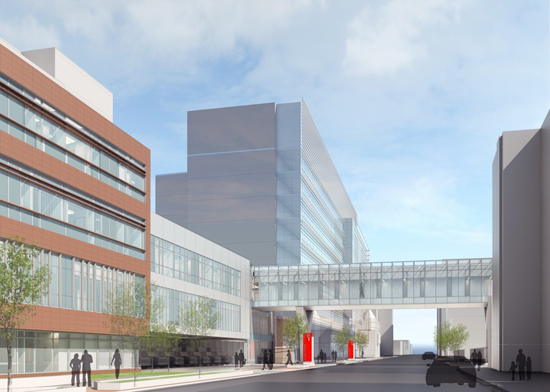
The month of March will bring much construction activity to the campus and will result in wayfinding changes.
March 17: Alperin Garden Closes
The Alperin Garden located next to the Moakley Building will close, enabling the start of the Moakley addition construction.
Week of March 17: E. Concord Street MBTA Bus Stop Moves
During the week of March 17, the bus stop on E. Concord Street will move 50 yards north of its current location in order to enable construction to begin on the addition to the Moakley Building. Several parking meters will be removed from the street to accommodate the new bus stop location. Pedestrian access will be redirected and new crosswalks will be paved.
This move was originally scheduled for March 14, but has been delayed pending city and state regulatory approval.
March 21: BMC Occupational and Environmental Medicine Moves
On Friday, March 21, BMC’s Occupational and Environmental Medicine Clinic will move from Yawkey Ambulatory Care Center 1 to Doctors Office Building 7. The office will close at noon that day in preparation for the move and reopen Monday, March 24, in its new space for normal business hours. The department’s phone numbers will remain the same. Patients have been notified of the move and campus signage will be updated to reflect the new location. Please direct questions about the move to 638-4144.
March 22: Emergency Department Walk-In Entrance Relocates to Harrison Avenue
At 5 a.m. Saturday, March 22, the walk-in entrance to the Emergency Department will relocate from Albany Street to the main entrance of the Menino Pavilion on Harrison Avenue. From this date forward all patients, staff and visitors will only be able to enter the Menino Pavilion from Harrison Avenue.
If you have questions or concerns about construction activity, such as noise, report them to construction@bmc.org or call 638-4144. Emailed questions will be responded to the same day.
BUSM Faculty Advocates for Increased Federal Funding for Basic Science Research

Every year the Federation of American Societies of Experimental Biologists (FASEB) brings scientists to Washington DC as part of Capitol Hill Day. Scientists from across the country meet with Congressional staff to discuss the importance of federal research funding. On March 5, 2014 scientists from 21 states met with their representatives. FASEB’s specific recommendations for funding included $32 billion for the National Institutes of Health and $7.6 billion for the National Science Foundation. The $32 billion recommendation for NIH funding represents fewer actual dollars (not inflation adjusted dollars) compared to 2010. More information about federal funding for basic science research is available on the FASEB website.
Three scientists from Boston University formed the State of Massachusetts delegation for Capitol Hill Day: Shoumita Dasgupta, PhD, Department of Medicine, Biomedical Genetics Section; Daniel Remick, MD, Department of Pathology and Laboratory Medicine; and Douglas Rosene, PhD, Department of Anatomy and Neurobiology. They were escorted by Joseph McInerney, Executive Vice President, American Society of Human Genetics. The group visited the offices of Senators Warren and Markey as well as Representatives Tierney and Kennedy.
At each office the group gave specific information about how reduced funding for science was having multiple negative impacts. Individual stories were told including:
- Scientists no longer doing research because of lack of funding.
- Increased scientific publications from other countries in the Journal of Immunology compared to publications from the United States.
- International genomic sequencing initiatives (e.g. Beijing Genomics Institute) surpassing efforts at the NIH.
- Loss of funding for the Framingham Heart studies and missing a generation of data.
- Decreased funding resulting in fewer experiments to examine the devastating effects of aging. These studies require a long term, consistent commitment since aging takes place over decades and it is difficult to start and stop science.
Staff members assured the delegation that the senators and representatives were highly supportive of increased funding for basic science research. Each agreed to submit programmatic requests to the budget committees. This will ensure that funding for basic science will be considered as an integral part of the budget process and not as a separate earmark. They also agreed to sign a “Dear Colleague” letter to be circulated to other senators and representatives advocating increased funding for NIH research. On behalf of Provost Antman, the Boston University faculty invited Massachusetts senators, representatives and their staff to come and visit the basic science labs at Boston University, and thanked them for their continued support.
GSDM Students Win Competitive ADA Student Scholarships
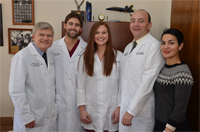
The American Dental Association Foundation (ADAF) recently awarded two DMD 16 students—Andrew Brattain and Casey Smauder—ADA Foundation Scholarships. Smauder received the Predoctoral Dental Student Scholarship and Brattain received the Underrepresented Minority Dental Student Scholarship.
Schools may submit one application per scholarship program for about 25 awards. With 65 accredited dental schools in the US, that makes for some stiff competition!
“With the limited number of scholarships available a school is lucky to have one recipient,” said Assistant Dean of Students Dr. Joseph Calabrese. “Having two makes us all at GSDM very proud of our students and all of their accomplishments.”
ADAF scholarships aim to defray the costs of professional education for academically-gifted pre-doctoral dental students. Students who are in their second year of study at the time of application, and currently attending or enrolled at a dental school accredited by the Commission on Dental Accreditation, are eligible to be nominated by their Schools.
ADAF offers:
• Approximately 25 Predoctoral Dental Student Scholarships, up to $2,500 each (up to $62,500 total)
• Approximately 25 Underrepresented Minority Dental Student Scholarships, up to $2,500 each (up to $62,500 total)
Last month Dean Jeffrey W. Hutter met with Brattain and Smauder to congratulate them on their achievements. Also present were Dr. Calabrese and Student Affairs Coordinator Amy Nelson, who helped in the nomination process.
“Congratulations to Andrew and Casey on their wonderful achievements,” said Dean Jeffrey W. Hutter. “ADAF awards a small group of very gifted dental students and we are all very proud of them for receiving this honor.”