Student Updates
Evans Center Research Retreat Day: Collaborative Research and Future Growth, Sept. 20
The Evans Center for Interdisciplinary Biomedical Research is holding "Retreat Day: Collaborative Research and Future Growth" on Monday, Sept. 20. Evans Center Affinity Research Collaboratives (ARC) Directors will present summaries of ARC research achievements and plans from this first year. ARCs include investigators from the medical campus and across campuses who share common interests in addressing novel biomedical problems. Please visit the website for details and times of each presentation.
The day begins at 9:30 a.m. in the Hiebert Lounge (14th floor) in the BUSM Instructional Building with coffee and pastries. A welcome from the Evans Center Director Katya Ravid, DSc will precede an introduction by BUMC Provost and BUSM Dean Karen Antman, MD. Cancer Center Director Douglas Faller, MD, PhD, will speak on “Potential Synergies with ARCs and Other Disciplines”.
All BU faculty, students and staff are welcome to attend. A wine and cheese reception will close the event and provide an opportunity for networking and conversation. RSVP by Friday, Sept. 17 at https://www.bumc.bu.edu/evanscenteribr/research-retreat/. More program details can also be found here.
Sovereign Bank Gift to Support Global Health Practice Opportunities for BUSPH Students
Boston University has received a gift of $900,000 from Sovereign Bank, a part of Banco Santander, half of which will go to Boston University School of Public Health (BUSPH) to support international field practicum experiences for students.
The gift of $450,000 to BUSPH over three years will be awarded to international health students with demonstrated financial need to help defray the costs associated with undertaking a three- to six-month international field practicum, which students complete as part of their graduate degree programs.
"International field practicum experiences are a fundamentally important part of learning and skill building for students who are preparing for public health careers in global health," said Jonathon Simon, chair of the international health department, and director of the Center for Global Health and Development at BU.
"The travel and living costs for these experiences can present a real stumbling block for some students," said Simon. "We are very grateful to Banco Santander for providing this funding, which will make it possible for us to support those students who might otherwise be prevented from participating."
"The gift from Sovereign Bank acknowledges the importance of addressing global public health challenges and the need for highly trained professionals to work in resource-poor nations," said Mark Prashker, BUSPH associate dean for development and strategic planning.
While details of the scholarship program are still being worked out, Prashker said that the School plans to use the money to support a variety of international field practicums for students, with special emphasis in Kenya and Latin America. Field placements are generally unpaid, and standard university or federal financial aid resources don't cover the extra expenses.
As part of the collaboration between Boston University and Sovereign Bank, the University will also establish a new undergraduate Spanish language and cultural community program.
Submitted by Elana Zak
<!-- var prefix = 'mailto:'; var suffix = ''; var attribs = ''; var path = 'hr' + 'ef' + '='; var addy17963 = 'ezak' + '@'; addy17963 = addy17963 + 'bu' + '.' + 'edu'; document.write( '' ); document.write( addy17963 ); document.write( '' ); / -->
BUSM Lecture Honors Victim of 9/11 Tragedy
The ninth annual Sue Kim Hanson Lecture in Immunology will be held at noon on Friday, Sept. 17, in BUSM’s Keefer Auditorium. The annual lecture honors Sue Kim Hanson, MA, PhD ’02, a former researcher in BUSM’s Pulmonary Center. Hanson, her husband and their daughter were passengers on one of the airplanes that struck the World Trade Center on Sept. 11, 2001.
This year’s lecturer is Dan R. Littman, MD, PhD, a professor of pathology and microbiology at New York University. The lecture, "Microbiota and HIV at the interface of innate and adaptive immunity,” will focus on how specific commensal bacteria act to shape our immune system and how the human immunodeficiency virus (HIV, the virus that causes AIDS) exploits a cell type of the innate immune system, the dendritic cell, to enhance its ability to infect T-helper cells.
Littman has a distinguished research career on the interaction between HIV and the CD4+ T-cells, the specific immune cell it infects and damages. He also investigates the molecular mechanism by which these cells make the transition from immaturity to fully functional (‘differentiated’) T-cells.
Sue Kim Hanson moved to Boston and earned a master’s degree in medical sciences from BUSM in 1992. After graduation she joined the school’s Pulmonary Center and then entered BUSM’s doctoral program in the Immunology Training Program through the department of pathology and laboratory medicine.
Her dissertation project was an investigation of the role of interleukin-16 in immunity and targeted deletion of the interleukin-16 gene in mice. Her degree was awarded posthumously by unanimous vote by the dissertation committee.
“Sue was on her way to a promising career in molecular biology,” said David Center, MD, Gordon and Ruth Snider professor of pulmonary medicine and associate provost for translational research. “While her life was taken at an early age, her legacy lives on through this annual lecture. We are proud to remember and honor her and her family each year.”
BMC to Hold Workplace Violence Drill Sept. 16
Please be advised that on Thursday, Sept. 16, Boston Medical Center will be conducting a workplace violence (Code Green) DRILL during the evening hours. The event will take place in and around the Moakley Building, 830 Harrison Ave.
The drill will test the hospital’s response to workplace violence. In addition to BMC staff, it will involve multiple agencies, including Boston Police, Boston University Police, BUMC Public Safety, Massachusetts State Police and Boston EMS. There also will be many emergency vehicles and apparatus on campus during this time. Please do not be alarmed; their participation is vital to the success of the drill.
You may receive messages during this drill. The messages will begin and end with the phrase “THIS IS A DRILL.” Any other messages that do not include the language “THIS IS A DRILL” are real and the appropriate actions should be taken.
Pedestrian and vehicle traffic in and around campus may be limited during the event. We appreciate your patience.
If you have any questions or concerns, please contact Steve Morash, BU Emergency Response Planning, 617-414-2188 or samorash@bu.edu.
BUMC Band Jams with Berklee Musicians Sept. 17 to Benefit BMC Food Pantry
On Friday, Sept. 17, musicians from the Berklee College of Music, in the spirit of reciprocity, will play with the BUMC Band in a concert to benefit BMC's Food Pantry. The BUMC Band is a diverse ensemble composed of medical students, faculty and staff whose mission is to foster interpersonal relation at the medical center through the enjoyment of music from every tradition.
The concert will be held from 7-9 p.m. in Bakst Auditorium. This is a great opportunity for BUMC students, faculty and staff to help a worthy cause. While there are many worthy causes, the most basic -- to help feed the people in our community who cannot afford to do so -- is one that rings true for everyone.
On behalf of the entire Band's members (faculty, staff and students) we hope that you will help devote time and effort again to help us help the Food Pantry this year. Cash donations will be accepted. If you would like to volunteer to help with collecting donations, please contact anand.devaiah@bmc.org.
BUSPH's Heiger-Bernays: Time to Revisit Food Safety Regulations
Since mid-August, more than half a billion eggs have been recalled after hundreds of people became sick with possible salmonella poisoning. It is the largest national outbreak associated with salmonella enteritidis, according to the Centers for Disease Control and Prevention.
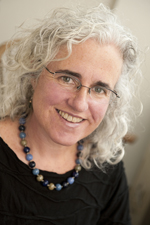
To prevent future outbreaks, the entire U.S. food safety regulation program needs to be revisited, says Boston University School of Public Health Professor Wendy Heiger-Bernays, who spoke with BU Today about the recent outbreak and the state of food safety regulation in the United States.
The egg recall crisis, a serious cause for concern in itself, also points to the helter-skelter way food safety is regulated in the United States. The FDA is responsible for regulating eggs in their shells, but regulating chickens, the grading of eggs, and all liquid egg products is the province of the U.S. Department of Agriculture. Neither government agency has the power to issue a product recall, relying solely on producers to do so voluntarily.
Read the full BU Today article "Food Safety Not All It’s Cracked Up to Be" to hear Heiger-Bernays full thoughts on the matter.
Submitted by Elana Zak.
Veterans Event Draws Student Volunteers With Ties to Armed Forces
Boston University Henry M. Goldman School of Dental Medicine (GSDM) Division of Community Health Programs (CHP) Oral Health Promotion Director Kathy Lituri led a team of volunteers at the Massachusetts Stand Down at Clifford Park on August 27 and 28. The two-day event, presented by the VA Boston Healthcare System in cooperation with Volunteers of America Massachusetts, offers homeless and at-risk veterans in Boston critical benefits and services, such as food, clothing, medical and dental treatment, housing referrals and placement, and career and job counseling.
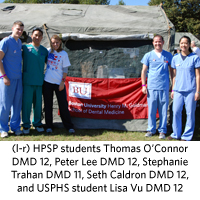
GSDM provided dental screenings, toothbrushes, toothpaste, denture cleanings, and referrals to the veterans. In total, 30 students and several faculty and staff members from GSDM volunteered their time and efforts to this event. Many of the student volunteers are attending GSDM through the Armed Forces Health Professions Scholarship Program (HPSP) and the U.S. Public Health Service Commissioned Corps (USPHS), so this event especially resonated with them.
"I am currently in the HPSP with the US Air Force," said volunteer Stephanie Trahan DMD 11. "I think it is very important for GSDM to participate in Massachusetts Stand Down because these are people who served our country and helped provide us with our ongoing freedom, who are now left homeless and without proper medical care. I am saddened by the whole situation but I feel if we can help in any way, it is important to do so."
Lituri added, "I want to thank the volunteers for their help with Massachusetts Stand Down. With their contributions, we were able to screen nearly 175 veterans over a two day period. They are all to be commended for taking time out of their busy schedules to volunteer for this event and it was really nice to see so many HPSP and USPHS scholars there."
Your Brain on Yoga: Calmer, More Content, According to BUSM Study
Even the most mainstream psychiatrists might agree that yoga is like chicken soup—it can’t hurt. But researcher Chris Streeter has gone a step further toward validating yoga’s potential to help treat depression and anxiety. In a study recently released in the Journal of Alternative and Complementary Medicine, the BU School of Medicine assistant professor of psychiatry and neurology scanned the brains of practitioners and found that compared with that age-old stress reliever, walking, yoga appears to be accompanied by greater improvement in mood and decrease in anxiety and a boost in the brain chemical associated with these benefits.
In Streeter’s 12-week study, a group of 34 randomly selected physically and psychologically healthy young men and women were divided into two groups, one that walked for an hour three times a week and one that practiced Iyengar yoga http://www.bksiyengar.com/ for the same amount of time. At four-week intervals, Streeter used a technique known as magnetic resonance spectroscopy to monitor subjects’ levels of a brain chemical called gamma-amino butyric acid, or GABA, elevated levels of which are associated with improved mood and decreased anxiety. She found that the yoga group reported a greater boost in mood than the walking group, with GABA levels matching those improvements. Although the role of GABA still isn’t completely understood, her study is the first to demonstrate the GABA-mood-yoga connection by looking at actual changes in the brain. BU Today spoke with Streeter about the implications of the study and the future of yoga as a way of treating mood disorders.
BU Today: What is the main implication of this study?
Streeter: This is the first study when we’re able to measure GABA’s relation to yoga. GABA is an important neurotransmitter, which is decreased in depressed people and increased in people who take so-called SSRIs (selective serotonin reuptake inhibitors), like Prozac, and it’s also implicated in anxiety disorders. It’s been reported for years that yoga helps people with depression and anxiety, but in this study we took people who didn’t have any experience with yoga and found that mood scales were higher in the yoga group, and so were GABA levels.
Why did you choose Iyengar yoga?
The beauty of Iyengar is that it’s been around for a long time and it’s pretty rigorous, with really well defined postures. And when you say it’s an Iyengar intervention, people know what you mean. There are variations in it, but as far as yoga goes, it’s as consistent as you can get. The other thing is, when people say “yoga,” it could be breathing, postures, meditation, or all of those things. But I had the subjects do mainly postures because I could see them actually doing it.
Do you think yoga alone could be a viable treatment for anxiety or depression?
It’s been suggested. But I would say it’s not a substitute, but rather an adjunct to treatment. It’s an exciting behavioral intervention, but the results here are associative, not causal. That’s a problem, expanding these results to say that doing yoga as a substitute for one’s meds is a good idea. It’s not. And doing yoga without proper training or supervision is not advised.
How does the use of magnetic resonance spectroscopy change the nature of mood studies?
It’s really exciting. The scan, which we use in conjunction with McLean Hospital, is really cutting-edge technology. Now we can measure what has historically been hypothesized. It used to be that if you could cut the brain, that was how you saw that these abnormalities were organic—it was not, so to speak, in the person’s head. But with functional imaging we have this picture that shows, gosh, here’s the brain of a depressed person before and after. It’s a much harder science.
Why did you decide to compare yoga to walking?
You really do need a control group. There have been a number of studies comparing aerobic and nonaerobic exercise that show exercise helps ease depression and anxiety. In this study, the walking group clearly had more exercise, and they were very active people. But the yoga group had more improvement in their mood than the walking group.
Could yoga be used to treat bipolar disease and thought disorders as well as depression and anxiety?
Yoga is probably always a good thing, more helpful than harmful. But some breathing exercises are not good for people who are manic or psychotic. They can trigger a psychotic episode.
Is mainstream psychiatry becoming more receptive to yoga as a treatment tool?
Doctors aren’t necessarily trained to prescribe it. But there was a study of using yoga to help treat epileptics. And we’re getting to the point when we’re actually getting good data. Yoga research is increasing exponentially.
How did you get interested in this research?
I’ve been interested in yoga since I was in the seventh grade. I loved the mind-body interface, and yoga is a very interesting mind-body subject. It helps people deal with all kinds of problems.
Do you practice yoga?
Oh yes. I’ve done a lot of different types—ashtanga, power yoga, Iyengar.
People might misinterpret these results to mean that yoga is better than walking. Can you clarify the comparision?
In this study, in this population, walking didn’t prove to be as beneficial to mood as yoga. It doesn’t mean that yoga is better than walking in other populations and other situations.
This BU Today story was written by Susan Seligson can be reached at sueselig@bu.edu.
BUSPH Study Observes Link Between Decongestant Use in Pregnant Women and Lower Risk of Preterm Birth
A new study led by Boston University School of Public Health (BUSPH) epidemiologists has found that women who took over-the-counter decongestants during their pregnancies are less likely to give birth prematurely.
Preterm birth -- deliveries at less than 37 weeks' gestation¬ -- is the leading cause of infant morbidity and mortality in developed countries, but its causes remain largely unknown, said Rohini Hernandez, the study's lead author and a doctoral candidate in epidemiology at BUSPH. In the United States, the rate of preterm delivery has increased from 9.5 percent in 1981 to 12.3 percent in 2008.
"Maybe this can provide some clues as to how to prevent preterm delivery," Hernandez said. "The more we can learn about what could potentially cause preterm birth would help our understanding in how to stop it."
The study, published online ahead of print in the journal Birth Defects Research Part A: Clinical and Molecular Teratology, found that women who took decongestants in their second or third trimesters had a roughly 58 percent reduced risk of preterm delivery compared to women who didn't use decongestants during their pregnancy. (The finding was observed only for women without preeclampsia.) The authors cautioned, however, that the findings do not necessarily imply a cause and effect relationship.
Decongestants are one of the most frequently used over-the-counter medications by pregnant women. Many, however, choose to not take any medications during their pregnancy to prevent potential harm to the developing fetus, Hernandez said.
"Medication use is a major concern for pregnant women and generally, when medications are found to have effects on the fetus, they're usually found to have adverse effects," Hernandez said. "This was surprising in that a potentially beneficial effect was found.
The researchers analyzed data from 3,271 live-born births by Massachusetts women, obtained between January 1998 and September 2008 as part of the longstanding Birth Defects Study, conducted by Boston University's Slone Epidemiology Center.
Approximately 6 percent of the study population delivered preterm, the authors wrote. Of that, 4.2 percent took decongestants while 6.7 percent did not. The women who took decongestants tended to be older, white, married, highly educated and have higher incomes.
The authors' findings supporting those from a 2006 Swedish study that found a link between prescription decongestant use and preterm delivery. Yet Hernandez said more research is needed to see if there is an actual cause and effect relationship between decongestant use and preterm birth and if so, what element in the decongestant is producing this outcome.
Co-authors on the study include Allen Mitchell, MD, professor of epidemiology and director of the Slone Epidemiology Center, and Martha Werler, DSc, MPH, professor of epidemiology.
The full article is available online.
Italian Youths Who Drink Wine at Family Meals Less Likely to Develop Harmful Adult Drinking Patterns, Study Finds
Italian youths whose parents allowed them to have alcohol with meals while they were growing up are less likely to develop harmful drinking patterns in the future, according to a new study led by a Boston University School of Public Health (BUSPH) researcher.
In a paper published in the journal Addiction, Research and Theory, a research team led by Lee Strunin, PhD, a professor of community health sciences at BUSPH, detailed their study of the drinking patterns and histories of 160 Italian adolescents and young adults who identified themselves as regular or heavy drinkers. The authors concluded that the introduction of a moderate amount of alcohol in a family setting could prevent young people from binge drinking and nurture healthier drinking behaviors.
"Young people allowed alcohol with meals when growing up were more likely to never drink 5 [or more drinks] or get drunk," the authors wrote. If they did drink more heavily, it was typically at a "later age than participants who weren't allowed alcohol in a family setting."
The researchers interviewed two groups of young people in the Italian regions of Abruzzo and Umbria. One consisted of 80 young adults aged 25-30; the second consisted of 80 adolescents, 16 to18 years old. "We were fortunate to be able to have such a large study sample to interview to help us understand this phenomenon," said Strunin.
Although the results focused on Italy, Strunin said they could be applied to different countries and could "assist in the design of policies to reduce alcohol problems and harmful behavior among young people."
Other reports have also suggested that alcohol introduced in a family setting may reduce alcohol-related risk behavior among young people, according to Strunin. Part of the reason, she said, could be that when alcohol is allowed, it is in a context in which there is openness about drinking, and moderate drinking with meals is considered normal.
"Youths in these cultures learn to drink more responsibly than their U.S. counterparts because drinking is culturally normative, exposure occurs at a younger age, and alcohol is part of the fabric of family mores," said the report.
It is important to note, the authors wrote, that the study focused on youths and young adults who drank wine during a meal with their family. "In talking about drinking in the family, we are talking about meal drinking, not sitting down with your child watching the football or baseball game with a six-pack," Strunin said. "The wine drinking is part of the meal."
In addition to Strunin, co-authors of the study are: Kirstin Lindeman of BUSPH; Enrico Tempesta and Simona Anav of Osservatorio Permanente sui Giovani e l’Alcool, Rome, Italy; and Pierluigi Ascani and Luza Parisi of Format Research, Rome, Italy.
Funding for this study came from a grant from the National Institute of Alcohol Abuse and Alcoholism.
The paper is titled "Familial drinking in Italy: Harmful or protective factors" and is published online at the journal Addiction, Research and Theory.