Student Updates
Epigenetics in Lung Cancer: From the Bench to the Beside, Oct. 7 Seminar
Join the BUSM Pulmonary Center on Thursday, Oct. 7, as it hosts distinguished visitor, Vice President for Research and Director of the Lung Cancer/Population Sciences Programs at the University of New Mexico Cancer Center in Albuquerque Steven Belinsky, PhD. Dr. Belinsky will speak on “Epigenetics in Lung Cancer: From the Bench to the Bedside.” This seminar will be held in the Housman Research (R) building, Conference room R-309, from 10 – 11:00 AM.

Dr. Belinsky has worked in the field of tobacco carcinogenesis for more than 20 years and is internationally recognized for his work in lung cancer and translational studies for early detection of lung cancer. His laboratory was the first to demonstrate that the tobacco specific nitrosamine causes DNA adducts that accumulate in the lung and lead to mutation of the K-ras oncogene. Dr. Belinsky’s work has been extended to evaluate epigenetic mechanisms for lung cancer, specifically inactivation of genes through aberrant promoter hypermethylation.
Dr. Belinsky received his undergraduate training and graduate degrees at the University of North Carolina at Chapel Hill. He then did a postdoctoral fellowship and was a Senior Staff fellow at the National Institute of Environmental Health Sciences before moving to the Lovelace Respiratory Research Institute in Albuquerque in 1990.
He currently serves as Vice President for Research, Director of the Lung Cancer Program, and co-directs the Cancer Population Sciences Program for the University of New Mexico Cancer Center. He has served on numerous advisory boards for the National Institute of Environmental Health Sciences and the National Cancer Institute and has authored more than 160 publications.
Your Money or Your Life? Bicknell lecturer: health reform must focus on better, not just cheaper, care
The typical American nurse spends one-third of her day focused not on patient care but on documentation, such as taking computer data and printing it out, only to reenter it in another computer. Only 3 percent of physicians contact their patients by email, “which is smaller than the number of priests who email their parishioners,” according to Harvard economist David Cutler. Those were among the many medical inefficiencies Cutler cited Friday in the School of Public Health’s 11th annual Bicknell Lecture, Controlling Health Care Costs: Your Money or Your Life?

It will take 10 to 15 years to rid the health care system of those inefficiencies said Cutler, a member of President Clinton’s Council of Economic Advisers, who also advised Barack Obama’s presidential campaign. He argued that reorganizing the delivery of care is essential for better and cheaper health care. And it’s coming, like it or not, Cutler predicted, as federal and state governments find themselves drowning in deficits fed by medical price inflation.
“American health care is inefficient in a way that is both lower-quality and higher-cost than it needs to be,” he stated.
Cutler’s bottom line: the health care reform legislation signed by President Obama in March will spur the creation of accountable care organizations (ACOs). Another entry in medicine’s alphabet soup of acronyms, ACOs are networks of doctors and other caregivers who work together to better coordinate patient care, from start to finish. The idea is that greater efficiency weeds out unnecessary costs.
ACOs are a new idea, and they are evolving at present. The reform law authorizes Medicare, the federal health insurance program for senior citizens, to use ACOs for its patients. Given Medicare’s vastness (45 million seniors covered), the idea is that if the massive program improves care and efficiency with ACOs, private insurers will follow suit.
Cutler acknowledged “open questions” about exactly how ACOs will work and said that the country will need to experiment with the new system. But the geniuses who crack that nut, he predicted, will become rich.
Following the lecture, a three-person panel discussed whether Cutler’s forecast was on the mark.

"He’s right, but I don’t think we have as much time as he suggested,” said Andrew Dreyfus, president and CEO of Blue Cross Blue Shield of Massachusetts, which Cutler said is the rare insurer experimenting with better ways to coordinate care. “I don’t think we have 10 years. Maybe two to four years. Health care is breaking everybody’s budget.”
Kate Walsh, president and CEO of Boston Medical Center, said that contrary to conventional wisdom, so-called safety-net hospitals like BMC, which serve large numbers of low-income and uninsured patients, are well-positioned to become ACOs.
The reform law, which will insure 32 million previously uninsured Americans, will boost paying business to safety-net hospitals, she said. But she warned that possible cuts to hospital payments by Medicare and Medicaid, the federal-state health program for the poor, are a threat to those hospitals’ finances. There may also be cuts under the reform law in Medicare’s DSH payments, which are made by the federal government to hospitals caring for unusually large numbers of uninsured people, Walsh said.
Physicians must play their part in reform by becoming aware of research about which treatments are unnecessary and needlessly run up costs, said Alice Coombs, president of the Massachusetts Medical Society. They and the country must also solve the problem of “defensive medicine”—doctors ordering every procedure in the book for patients, effective or not, to forestall the possibility of being sued for malpractice—she said, citing surveys in which 83 percent of doctors have confessed to practicing such medicine.
The annual William J. Bicknell Lectureship in Public Health honors William J. Bicknell, an SPH professor of international health and chairman emeritus, and a School of Medicine professor.
This BU Today story was written by Rich Barlow. He can be reached at barlowr@bu.edu.
Study Finds Language Barriers may Play Role in Health Care Disparities
Researchers from Boston University School of Public Health (BUSPH) and Boston Medical Center (BMC) and have found that individuals who do not speak English at home are less likely to receive colorectal cancer screenings (CRC) as compared to those who do speak English at home. The findings, which currently appear on-line in the Journal of General Internal Medicine, suggest that patient-provider language barriers play a role in health-care disparities, and that providers should promote the importance of CRC screening to non-English speaking patients.
The United States has tremendous ethnic and linguistic diversity. According to the 2005–2007 American Community Survey, minorities comprise 26 percent of the population, and nearly 20 percent of Americans speak a language other than English at home. By 2050, it is projected that minorities will comprise about half of the US population, with a similar increase in individuals speaking a language other than English at home.
The researchers performed a retrospective study of individuals age 50 years and older who were categorized as English-concordant (spoke English at home); other Language-Concordant (did not speak English at home but someone at their provider’s office spoke their language); or other Language-Discordant (did not speak English at home and no one at their provider’s spoke their language). Compared to English speakers, non-English speakers had lower rates of CRC screening. Compared to the English-Concordant group, the Other Language-Discordant group had similar screening levels, while the Other Language-Concordant group had lower screening levels.
“Our initial findings are consistent with other reports. However, in our adjusted model, we found that those who did not speak English at home but who had someone at their provider’s office who spoke their preferred language, had the lowest rate of CRC screening and this was unexpected,” said lead author Amy Linsky, MD, a fellow in general internal medicine at BMC.
“Our results suggest that providers should especially promote the importance of CRC screenings to non-English speaking patients, but that patient-provider language barriers do not fully account for lower CRC screening in patients who do not speak English at home,” added co-investigator Nathalie McIntosh, a doctoral student in Health Policy and Management at BUSPH.
According to the researchers, these findings may be related to unmeasured differences between the two cohorts, including patient characteristics, provider cultural competence, patient acculturation, the quality of patient-provider communication, and the level of patient health literacy including obtaining colorectal cancer screening. “Professional interpreters and language-concordant providers may be necessary, but not sufficient to mitigate these disparities,” added Linsky.
Reproductive and Developmental Effects of Pharmaceuticals Found in Wastewater
Pharmaceuticals are an emerging contaminant for aquatic ecosystems due to discharge of treated wastewater effluent. Using zebrafish as a model organism, Dr. Joanna Wilson has been testing the developmental, reproductive and transcriptional impacts of four common, environmentally relevant pharmaceuticals. Several of these pharmaceuticals are known to have reproductive side effects in humans. Acetaminophen (pain reliever), gemfibrozil (lipid regulator), carbamazepine (anti-epileptic and mood stabilizer), and venlafaxine (anti-depressant) all decrease zebrafish reproduction under low dose, chronic exposure conditions. Reproductive impacts appear to be multi-generational for some of these compounds. In this talk, ongoing research documenting environmental health impacts in fish and the application of this data for wild fish populations and for human health will be discussed.
Join Dr. Joanna Wilson,Department of Biology, McMaster University, when she speaks on “Reproductive and Developmental Impairments in Zebrafish after Exposure to Pharmaceuticals Found in Wastewater Effluen.” This lecture will be held on Friday, Oct. 1, 12 p.m., room L210, BU Medical School Instructional Building.
This lecture is supported by sponsored by the Boston University Superfund Research Program. For further information on the Superfund Program please visit http://www.busrp.org/ .
For further information on this seminar, including speaker recommended articles, please visit the EH Doctoral Seminar listing.
GSDM Student Saves Life on Transatlantic Flight
Mohammed Nadershah OMFS 11 was recently a passenger on a Lufthansa Boston to Frankfurt, Germany transatlantic flight when disaster struck. An announcement came through the cabin asking for any doctors on board to help with a medical emergency. Armed with the experience he had gained as a resident in the Boston University Henry M. Goldman School of Dental Medicine (GSDM) Oral & Maxillofacial Surgery Residency Program, Dr. Nadershah made his way to just outside the plane's lavatory where he encountered a 20-year-old female who had been vomiting and hyperventilating and then had passed out.
At this point the flight was over the Atlantic Ocean. If Dr. Nadershah was not able to resuscitate and stabilize the girl, the pilots would have to turn the plane around or divert to another airport, but the closest one was over an hour away.
Dr. Nadershah, thinking quickly, started basic life support and then with the help of the only other doctor on board—a German psychologist—located the correct medication in the plane's medical kit (the labels were printed in German), started an IV line, and gave the girl medication for vomiting. The girl recovered and the flight was able to continue on to Frankfurt. As Dr. Nadershah later learned, the girl—a student at Tufts University—was suffering from food poisoning. She had become severely dehydrated and had gone into shock.
The girl was extremely grateful to Dr. Nadershah for saving her life and the plane's crew was so thankful they upgraded him to first-class.
Oct. 1 Bicknell Lecture, "Controlling Health Care Costs: Your Money or Your Life?"
What will happen to the cost of health care under the Obama Administration's new national health care law? Hear leading experts discuss this topic and others regarding controlling health care costs as part of the 2010 William J. Bicknell Lectureship in Public Health "Controlling Health Care Costs: Your Money or Your Life?" at Boston University School of Public Health.
The event will be held on Friday, Oct. 1, from 9 a.m. to noon, on the first floor auditorium of 670 Albany St., on the Boston University Medical Campus. A continental breakfast will be available at 8:30 a.m. The event is free and open to the public.

The event will feature a lecture by 2010 Bicknell Lecturer David Cutler, PhD, Otto Eckstein Professor of Applied Economics at Harvard University.
 Professor Cutler's research is in health and public economics. He served on the Council of Economic Advisers and theNational Economic Council during the Clinton Administration, advised the Presidential campaign of Bill Bradley, and was senior health care advisor to the Presidential campaign of Barack Obama. Among other affiliations, Professor Cutler has held positions with the National Institutes of Health and the National Academy of Sciences. Currently, Professor Cutler is a Research Associate at the National Bureau of Economic Research and a member of the Institute of Medicine. Professor Cutler is the author of "Your Money Or Your Life: Strong Medicine for America's Health Care System" published by Oxford University Press. Cutler was recently named one of the 30 people who could have a powerful impact on healthcare by Modern Healthcare magazine and one of the 50 most influential men aged 45 and younger by Details magazine.
Cutler's lecture will be followed by a panel discussion.
The panel discussion features:
 Alice A. Tolbert Coombs, M.D., F.C.C.P., is President of the Massachusetts Medical Society as well as a criticalcare specialist at South Shore Hospital and an anesthesiologist with South Shore Anesthesia Associates. She has been long active in organized medicine, having served in the last three years as President-Elect, Vice-President, and Secretary-Treasurer of the Massachusetts Medical Society, respectively.
She is a member of the American Medical Association's Commission to Eliminate Healthcare Disparities. She served formerly as Vice Chair of the Massachusetts Board of Registration in Medicine's Patient Care Assessment Committee, as a member of the Massachusetts State Commission to Eliminate Racial and Ethnic Healthcare Disparities, and chair of the Massachusetts Medical Society's Committee on Ethnic Diversity. She was also a member of the Massachusetts Special Commission on the Health Care Payment System, established to evaluate the payment system and recommend reforms that will provide incentives for cost-effective and patient-centered care.
 Andrew Dreyfus was recently named president and chief executive officer of Blue Cross Blue Shield of Massachusetts, the state's largest health insurer with 2.5 million members. He will take over the position on Sept. 7. In his new role, Dreyfus will participate as a panelist in the 2010 William J. Bicknell Lectureship in Public Health, replacing previously scheduled panelist William C. Van Faasen, interim president and CEO of BC/BS.
Most recently, Dreyfus served as Executive Vice President of Health Care Services for Blue Cross Blue Shield of Massachusetts. In that position, he was responsible for the company's health and wellness, performance measurement and improvement, and provider contracting divisions. He also led the company's health care collaborative initiatives to improve the quality and safety of health care in Massachusetts.
He previously served as the first President of the Blue Cross Blue Shield of Massachusetts Foundation, which works to expand access and reduce barriers to health care for Massachusetts residents. During his tenure, the Foundation awarded nearly $17 million in grants to community organizations and launched a series of policy initiatives, including the "Roadmap to Coverage," which contributed to the successful passage of the state's landmark 2006 Health Reform Law.
Prior to joining the Foundation, Dreyfus served as Executive Vice President of the Massachusetts Hospital Association (MHA). At MHA, he led the development of nationally recognized initiatives to expand access to coverage, and improve quality and patient safety.
 Kate Walsh is President and CEO of Boston Medical Center, not-for-profit, 639-licensed bed, academic medialcenter with a community-based focus and primary teaching affiliate of Boston University School of Medicine. BMC has approximately 5,000 employees, 1,300 physicians and an annual operating budget of roughly $1.5 billion. Prior to her appointment at BMC in March 2010, Walsh served as executive vice president and chief operating officer of Brigham and Women's Hospital for five years. During her tenure, Brigham and Women's Hospital moved its patient satisfaction scores to the 95th percentile of benchmark institutions nationally, produced strong operating results based on consistent ambulatory and inpatient growth and set a new standard in patient-focused multidisciplinary care with the opening of the Carl J. and Ruth Shapiro Cardiovascular Center. She also served previously as the chief operating officer for Novartis Institutes for Biomedical Research.
Establishment of Office of Post-doctoral Affairs (OPA)
This message was sent to all faculty, students and staff on BUMC on Friday, September 24, 2010
Today is National Post-Doc Appreciation day and I am delighted to announce that we are launching an office on the medical campus that will be focused on support of this critical constituency of Boston University. The Office of Post-doctoral Affairs (OPA), housed within the Division of Graduate Medical Sciences will address the needs of post-doctoral researchers across the medical campus.
In addition to searching for program staff, we are busy planning some inaugural events - look for announcements of these in the not too distant future. In honor and support of the post-docs at Boston University, next year and beyond the OPA will sponsor special events on National Post-Doc Appreciation Day. But for now, a simple recognition of how important they are to the university's mission will have to suffice. Please join me in recognizing our post-doctoral community and we look forward to bringing you the Office of Post-doctoral Affairs.
Linda E. Hyman, PhD
Associate Provost GMS
Professor of Microbiology
David Sherr Wins BU Ignition Award to Advance Breast Cancer Prevention and Treatment
David Sherr, PhD, a professor of environmental health at Boston University School of Public Health, has been named a recipient of Boston University's highly sought-after Ignition Award, which he will use toward the development of a drug to prevent and treat breast cancer.
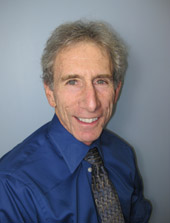
Ignition Awards are presented to four BU researchers twice a year by the University's Office of Technology Development, providing them with funding to move their research discoveries into practical implementation. This summer, Sherr was recognized in the health care category.
Sherr and a team of collaborators will use the $50,000 award to develop an inhibitor for the aryl hydrocarbon receptor (AhR), a protein that plays a unique role in initiating the development of cancerous cells and in the process of transforming those cells from benign to malignant.
AhR is understood to control how cells respond to environmental pollutants, such as dioxins, PCBs and hydrocarbons. With regard to breast cancer in particular, it appears to play a large role both in the initiation of the cancer and its progression towards a malignant, invasive tumor. Importantly, the AhR appears to influence both the malignant development of tumors induced by chemical exposure and those that are not.
"The thought is that if we can develop an inhibitor to stop AhR, we can prevent breast cancer from developing or metastasizing," Sherr said.
Sherr, who is also a professor of pathology and laboratory science at BU School of Medicine, began investigating the link between AhR and cancerous cells while studying the role environmental pollutants play in generating cancers. He found that AhR was the driving force in turning cells exposed to environmental toxins into malignant cancers.
"Now, the next step is to move into the translational research phase and generate a drug," he said. "It's great to have this connection with the Office of Technology Development and the support that they provide for these translational studies," he said.
Sherr has been working with Jennifer Schlezinger, associate professor of environmental health at BUSPH, and Sarah Molina, founding director of the BUMC High Throughput Screening Core, to screen for potential AhR inhibitors. From more than 3,000 compounds screened, they have identified several which interact with the AhR and 3 that appear to selectively inhibit its activity.
According to Sherr, preliminary studies show that in addition to breast cancer, such a drug could also be used to prevent and treat other forms of cancer including lymphoma, myeloma, prostate and ovarian cancer. He noted that recent studies published in Nature, Nature Immunology, and the Journal of Experimental Medicine have shown that AhR also plays a role in other diseases, such as autoimmune and inflammatory diseases. A recent report in Science suggests that the AhR also regulates production of stem cells.
"Being able to manipulate AhRs might have enormous implications," Sherr said.
Sherr's laboratory at BUSPH employs state-of-the-art cellular and molecular technologies to research three specific areas of basic and applied science. These include mechanisms through which environmental chemicals suppress the immune system; mechanisms through which molecular signaling leads to environmental, carcinogen-induced and spontaneous breast cancers; and the development of vaccines for the treatment of cancer and primary amyloidosis. The common element in these three disciplines is the involvement of AhR in the suppression of the immune system and in driving tumor cell growth and, it is postulated, invasion.
In addition to Sherr, Schlezinger, and Molina, collaborators on this project include Supraja Narasimhan, a graduate student at BU School of Medicine; Scott Schaus, associate professor of chemistry at BUSM; and Michael Pollastri, associate professor of chemistry and chemical biology at Northeastern University.
This is the second Ignition Award to be presented to a BUSPH researcher. Yesim Tozan, an assistant professor of international health at BUSPH, received the award in 2009 to develop a "toolbox" for delivering malaria treatments in rural areas of Africa.
Submitted by Michelle Salzman.
Med Campus Band On Call Friday Night: Berklee musicians join in benefit for food pantry
There will be doctors in the house—as well as nurses and medical and public health students—for tonight’s eclectic program of jazz, blues, pop, and Latin music to benefit the Boston Medical Center Food Pantry . And if last year’s sold-out collaboration between the BU Medical Campus Band and Berklee College of Music musicians was any indication, the house will be packed. The band and 17 friends from nearby Berklee will play at the School of Medicine’s Bakst Auditorium to raise money for the pantry, which helps patients in need. Click here to go the BU Today story link featuring the band’s version of “Dirty Water.”
The joint concert with Berklee’s All Stars Band was inspired by a hugely successful performance last February, when the BUMC Band played at Berklee’s Café 939 as part of the music school’s executive series, a showcase for Boston area professionals who are also musicians. Proceeds from that event went to a Berklee scholarship fund.
“They were turning people away at the door,” says Rafael Ortega, a MED professor of anesthesiology, who plays guitar and harmonica. “We arranged this concert in the spirit of reciprocity.” Ortega has written about music’s potential for soothing not just patients, but the practitioners who attend to them. The BUMC Band, with a membership hovering around 20, “has strived to improve communication, enrich the learning environment, foster medical humanism, and enhance cultural competency,” he says.
And the ensemble has a great time doing it. Born out of informal gatherings of BUMC musicians three years ago, the band rehearses on Sunday mornings in a storage room tucked behind a lecture hall. “It’s an ensemble that’s fairly diverse and ever-changing,” Ortega says. Drawing on their varied ethnicity and ages, the musicians play popular music with influences from reggae to calypso. “I’m from the Dominican Republic,” he says, “and we have musicians from Puerto Rico, China, and Armenia.” Other backgrounds include Indian, Jamaican, Korean, Sri Lankan, Trinidadian, and Iranian. “We have senior faculty to younger faculty to medical students to staff, with a range of capabilities.”
The band doesn’t do many acoustic numbers—the guys “like to amplify,” says Ortega. The amplifiers, as well as drums and a keyboard, were donated or purchased by the faculty and now “live permanently at the medical school,” he says. “We accept any instrument, and we have had saxophones, violins, Spanish guitar, harmonica, timbales, congas, djembe, and bongos.”
Ortega hopes BUMC colleagues and the BU community beyond will show up to enjoy the music and help a worthy cause. The need for food assistance is greater than ever, he says. “While there are many worthy causes, the most basic—to help feed the people in our community who cannot afford to do so—is one that rings true for everyone.”
More information about Friday’s concert, which is open to the public and begins at 7 p.m. at the Bakst Auditorium, 72 E. Concord St., on the Medical Campus, can be found here . Cash donations will be gratefully accepted.
This BU Today story was written by Susan Seligson. She can be reached at sueselig@bu.edu
BU Poised to Impact Cancer Research: Cross-campus collaboration nets $2 million NIH nanomedicine grant
The National Cancer Institute’s Alliance for Nanotechnology in Cancer has tapped a multidisciplinary research team, comprising members of the Charles River and Medical Campuses, to launch a training center to help grow the next generation of nanomedicine researchers in cancer. The announcement comes with a five-year, $2 million grant.

An offshoot of nanotechnology, nanomedicine is medical intervention at the molecular scale for treating disease or repairing damaged tissues. A nanometer is one-billionth of a meter, too small to be seen through a conventional laboratory microscope. Biological molecules and structures inside living cells typically operate at less than 100 nanometers. Harnessing nanoparticles to deliver drugs, heat, light, or other substances to specific cells could dramatically alter the future of diagnoses, prognoses, and treatments for a range of diseases. Traditional chemotherapy, for example, is delivered through the vein and exposes the entire body to its potent effects.
“If you can deliver chemotherapy specifically to sites, you not only concentrate the chemotherapy at the site of the tumor, but decrease the side effects and off-target effects,” says Douglas Faller, a School of Medicine professor, director of the BU Cancer Center, and one of the grant’s primary investigators. “We’re taking a very blunt instrument, systemic chemotherapy, and turning it into a targeted approach.”
In 2009, cancer was responsible for over 550,000 deaths in the United States, approximately one out of every four, according to the researchers. New diagnoses in 2010 are anticipated to top 1.5 million and deaths to come close to 570,000, with projections growing as the population ages.
The $2 million training center grant, distributed under the umbrella of the National Institutes of Health, will allow graduate students and postdoctoral fellows at BU to train in research labs focused on developing diagnostic and therapeutic tools for various types of cancer, from purification of micro RNAs—molecules that play an important role in gene regulation—to the development of noninvasive imaging and detection of cancer cells. The center will be called the Boston University Center for Cross-Disciplinary Training in Nanotechnology for Cancer.
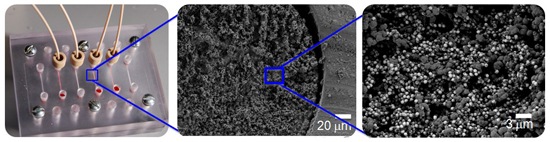
A new cross-disciplinary course, Introduction to Nanomedicine, has also been developed and will be cotaught by faculty from both physical and life sciences and engineering, as well as by medical researchers, and codirected by Katya Ravid, a MED professor of medicine and biochemistry and director of the Evans Center Interdisciplinary Biomedical Research (Evans Center), and Mario Cabodi, a College of Engineering research assistant professor of biomedical engineering.
“I have always believed in the power of trainees to serve as a bridge between departments and faculty, through exchange of concepts, technologies, and participation in common workshops,” Ravid says.
BU’s multidisciplinary research effort, known as the Nanomedicine Initiative, brings together the Charles River Campus Center for Nanoscience and Nanobiotechnology (CNN) with the Cancer Center, the Evans Center, and the MED department of medicine on the Medical Campus. “We think this grant is a stepping-stone to even bigger things,” says CNN director Bennett Goldberg, a College of Arts & Sciences physics professor and one of the grant’s primary investigators.
“Another important aspect to the award is being part of the NCI Alliance, which will couple our efforts with other centers for cancer nanotechnology around the country,” Goldberg adds. “For example, locally the MIT/Harvard center will be sending their students to our workshops, and we will make use of their nanomaterials toxicology testing lab.”
The story of BU’s cross-campus medical collaboration began in fall 2008—well before the NIH announced the training centers program—when CNN, the Evans Center, MED’s department of medicine (DoM), and Andrei Ruckenstein, vice president and associate provost for research and a CAS professor of physics, saw an opportunity for the University and began pursuing a new program in nanomedicine. At the heart of the mission: build long-term collaborations across the two campuses. Goldberg and Ravid began organizing meetings with physics and engineering colleagues and MED researchers and clinicians and set up a series of lectures and workshops explaining how nanotechnology could impact cancer, cardiovascular disease, and infectious disease.
“We built the infrastructure and support to allow researchers who develop nanotechnology to connect with physicians and medical researchers and apply their discoveries to critically important issues in human health,” says Goldberg. “The scientists on the Charles River Campus are thrilled and energized to see such rapid adoption of new ideas and techniques and the MED faculty are excited by the opportunity to advance their areas of biomedical science and health care.”

In fall 2009, Goldberg, in collaboration with Ravid, representing the Evans Center, announced a request for funding proposals, requiring that the research include faculty from both MED, and on the Charles River Campus, nanotechnology. CNN, with the support of the Evans Center, DoM, ENG, CAS, the Provost’s Office, and the Photonics Center, funded 11 seed projects. They include: developing a screening test for thyroid cancer, using ultrasound to release drugs from nanoparticles, and studying tumor cell circulation and adhesion. In total, $400,000 was committed internally and led to more than 30 researchers, clinicians, and faculty from across the University working together. This work later formed the basis for the NIH grant application.
“The coupling of a serious commitment to excellence in training with a strong, interdisciplinary research focus is what the Alliance was looking for when it established the Cancer Nanotechnology Training Centers initiative,” says Alliance for Nanotechnology in Cancer spokesperson Dorothy Farrell. “We expect that the BU center’s combined strengths in research and training will produce young scientists who will bridge the divide between scientific research and clinical application and be capable of moving cancer nanotechnology to the next stage of development.”
Karen Antman, dean of MED and provost of the Medical Campus, says she is thrilled about the NIH award. “Hopefully, this successful collaboration will inspire other innovative collaborations between faculty on the two campuses.”
This BU Today story was written by Caleb Daniloff. He can be reached at cdanilof@bu.edu.