Student Updates
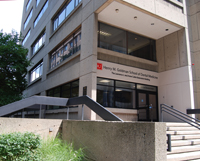
Search Committee Formed for GSDM Chair of Periodontology & Oral Biology
“I am pleased to announce the formation of a Dean’s Advisory Search Committee for the position of GSDM Chair of the Department of Periodontology & Oral Biology,” said Dean Jeffrey W. Hutter.
Professor and Chair of Health Policy & Health Services Research Dr. Raul Garcia will serve as the Chair of the Search Committee. The following individuals will serve as members of the Search Committee:
- Dr. Neal Fleisher; Clinical Assistant Professor, GSDM Department of General Dentistry
- Dr. Eva Helmerhorst; Associate Professor, GSDM Department of Periodontology & Oral Biology
- Dr. Carlos Hirschberg; Professor and Chair, GSDM Department of Molecular & Cell Biology
- Dr. Judith Jones; Professor and Chair, GSDM Department of General Dentistry
- Dr. Maria Kukuruzinska; Professor, GSDM Department of Molecular & Cell Biology and Associate Dean for Research
- Dr. Cataldo Leone; Professor, GSDM Department of Periodontology & Oral Biology and Associate Dean for Academic Affairs
- Dr. Barbara Nikolajczyk; Associate Professor, BUSM Department of Microbiology
- Dr. John Samuelson; Professor, GSDM Department of Molecular & Cell Biology
- Dr. Ming Fang Su; Clinical Associate Professor, GSDM Department of Periodontology & Oral Biology
- Dr. Vickery Trinkaus-Randall; Professor, BUSM Department of Biochemistry
- Dr. Leslie Will; Professor and Chair, GSDM Department of Orthodontics & Dentofacial Orthopedics
Applications and nominations should include a signed letter of intent, with the names of three professional references, and a current curriculum vitae. All applications and nominations are required to be submitted electronically using the online application process. Please upload, as PDF files, the signed letter and current CV, at: https://busdm-event.bumc.bu.edu/chair/.
The successful applicant is expected to take a strong leadership role in the Department’s research, teaching, clinical and service missions, at both the pre- and post-doctoral levels. The Chair’s responsibilities include strategic planning, resource management, fostering development of junior faculty, and continuing implementation and integration of the competency-based comprehensive oral healthcare philosophy basic to the School’s curriculum. The major qualifications required for this position include the DMD/DDS degree or equivalent, postgraduate specialty training in periodontology, and a demonstrated record of excellence in research and academic leadership. Strong preference will be given to applicants who also hold the PhD, DSc, or equivalent degree.
"We have been assigned the extremely difficult task of filling the position held with distinction by Dr. Frank Oppenheim," said Dr. Garcia. "His contributions to the School and the Periodontology & Oral Biology program have been numerous and it will take a highly dedicated and qualified individual to take on this challenge. However, I am confident in the ability of the Search Committee to identify an outstanding person and I look forward to kicking off the search process."
Simple Interventions Drastically Reduce Newborn Deaths in Africa, BUSPH Study Finds
Training community birth attendants in rural Zambia in a simple newborn resuscitation protocol reduced neonatal deaths by nearly 50 percent -- a finding that shows high potential to save lives in similar remote settings, a team of Boston University School of Public Health (BUSPH) international health researchers is reporting.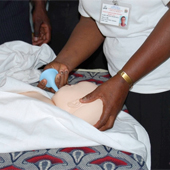
Findings published Feb. 3 in the BMJ by the team from the BU Center for Global Health and Development show that training and equipping Zambian traditional birth attendants to perform a neonatal resuscitation intervention led to a net reduction of about 18 deaths per 1,000 live births in the first 28 days of life -- a significant reduction in the overall neonatal mortality rate in Zambia, of about 34 deaths per 1,000 live births.
"We essentially showed that there is a method, very simple and inexpensive, to reduce neonatal mortality by about half," said Dr. Christopher Gill, associate professor of international health at BUSPH and lead author on the study. "This is the first high-quality study, using a randomized control methodology, to show unambiguously that a neonatal resuscitation protocol can be used to save lives. It's hugely encouraging."
The study, dubbed "LUNESP" for the Lufwanyama Neonatal Survival Project, was a large-scale trial in the rural Lufwanyama district of Zambia, where access to healthcare facilities is extremely limited. Researchers worked with Zambian traditional birth attendants -- community members who attend to villagers' births -- to gauge the impact of a package of neonatal interventions.
Birth attendants were divided into two groups -- one which used the existing standard-of-care in attending to deliveries, and the other that received extra training aimed at preventing neonatal hypothermia and birth asphyxia. Globally, at least 10 percent of otherwise healthy newborns experience inadequate respiration at birth, a problem often compounded by hypothermia from failure to immediately dry and warm the infants.
The trained attendants were instructed to immediately dry and swaddle the newborn in a dry blanket; to suction the infant's mouth and nose with a rubber suction bulb; and, when indicated, to stimulate breathing by rubbing the infant's feet or back or, in cases of inadequate respiration, to use a tube-mask to resuscitate the infant.
Non-trained attendants followed traditional practices, wrapping the infant in thin cloth and paying minimal attention to clearing the airways, sometimes by wiping the infant's nose with a cloth.
Among 3,497 deliveries, mortality in the first 24 hours of life was significantly lower for those delivered by trained attendants -- 7.8 deaths per 1,000 live births, compared to 19.9 per 1,000 births for the non-trained group. Deaths due to birth asphyxia were reduced by 63 percent among infants delivered by the trained attendants, the study found.
"Given recent estimates that approximately 800,000 infants die each year due to birth asphyxia, these findings have broad public health relevance," the research team said.
A second intervention involved training the attendants to recognize symptoms of sepsis in the first four weeks of life, and to administer a dose of oral amoxicillin to infants before referring them to a health center for further care. While this intervention was found to be effective -- with lower rates of neonatal mortality during weeks 2-4 of an infant's life -- the difference did not reach statistical significance.
"While early identification and treatment of sepsis is important, we found that most of the deaths were prevented in the first hours of life," Gill said.
The study provided evidence that community members who serve as birth attendants can perform a vital role in access to health care.
"In the context of a highly dispersed, rural African community with very limited access to health care, traditional birth attendants [TBAs] were able to master a set of skills that allowed them to significantly reduce neonatal mortality," the study concludes. "This was accomplished in a population of women TBAs with very low rates of formal education and under austere conditions. . . We believe this approach has high potential to be applied in other resource-constrained settings."
Since the study ended, the organization Save the Children has stepped in with financial support to help to continue the interventions in Zambia, Gill said.
The LUNESP study comes on the heels of a recent published study [known as "First Breath"] in the New England Journal of Medicine that found little impact of a neonatal resuscitation protocol on mortality rates. The BUSPH researchers noted several differences between that study and their own, including that a third of deliveries in the First Breath study occurred in clinics or hospitals, and that the gap in training levels between birth attendants in that study was not as pronounced as in LUNESP.
"LUNESP and 'First Breath' addressed fundamentally different questions, in different populations, using very different methods," the BUSPH team wrote.
The BU Center for Global Health and Development is involved in a variety of research studies aimed at improving infant and child survival by training and empowering community health workers in Africa and other regions of the world.
The LUNESP study was funded by a cooperative agreement between Boston University and the U.S. Agency for International Development. Additional support was provided by a Neonatal Resuscitation Program Grant from the American Academy of Pediatrics and UNICEF.
In addition to Gill, authors on the LUNESP study include: Davidson Hamer, Matthew Fox, Anna Knapp, Lora Sabin, Jonathon Simon, Nicholas Guerina, William MacLeod and Philip Seidenberg, all affiliated with the Center for Global Health and Development; Mark Mirochnick of the Boston University School of Medicine; Grace Phiri-Mazala, Joshua Kasimba, Charity Mulenga and Nelson Waitolo, affiliated with the Lufwanyama District Health Management Team; and Arthur Mazimba of the Center for International Health and Development Zambia.
The full study is available on the BMJ website.
Submitted by Lisa Chedekel.
CReM Seminar: Regulation of Stem Cell Fate, Feb. 15
Join the Center for Regenerative Medicine (CReM) on Tuesday, February 15 as it hosts Dr. Helen M. Blau, the Donald E. and Delia B. Baxter Professor in the Department of Molecular Pharmocology at the Stanford University School of Medicine. Dr. Blau is also Director of the Baxter Laboratory for Stem Cell Biology in the Department of Microbiology and Immunology and the Stanford Institute for Stem Cell Biology and Regenerative Medicine. A world-renowned scientist with a research focus in regenerative medicine and stem cells, Dr. Blau’s many honors and awards include an Honorary Doctorate from the University Nijmegen, Holland, a Nobel Forum Lecture at the Karolinska Institute in Stockholm, and a Fulbright Senior Specialist award to study and teach at the Institut Pasteur in Paris.
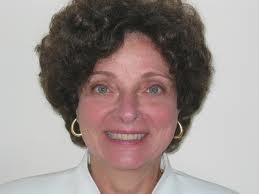
Dr. Blau’s lecture on the BU Medical Campus will focus on the Regulation of Stem Cell Fate. Her laboratory uses nanotechnology to study the soluble and tethered factors that influence differentiation decisions of stem cells. Through the use of microwell arrays, Dr. Blau’s lab can apply a wide range of “niche” conditions to single cells and then observe their effects with time lapse microscopy. This allows her lab to imitate in vivo microenvironments in vitro. In addition, Dr. Blau’s research aims to elucidate the molecular mechanisms of both nuclear reprogramming and stem cell fate, and to explore the balance between the stable differentiated state and the plasticity cells apparently retain even after “terminal” differentiation.
The CReM is a collaborative effort among scientists on the Medical and Charles River campuses of Boston University that aims to advance stem cell research and regenerative medicine, particularly for the benefit of patients afflicted with diseases seen at Boston Medical Center (BMC). The Center’s monthly Seminar Series brings the leading minds in stem cell research to BUMC. Past speakers have included, among others, George Daley, Rudolf Jaenisch, and Doug Melton.
Learn more on Tuesday, February 15, 2011 at 9 a.m. with Dr. Blau in the Evans Biomedical Research Center, Room X715.
From Childhood Trauma, Adult Tumors: Groundbreaking MED study links child abuse and fibroid tumors
Among children who have known the trauma of child abuse, the list of potential side effects is long: bad dreams and bed-wetting. Stuttering and substance abuse. Anxiety, aggression, withdrawal, and chronic difficulties in school.
But a new study by the Boston University School of Medicine suggests that child physical and sexual abuse can also have implications for the health and biological function of abuse victims far into adulthood. The groundbreaking study, which followed more than 60,000 women over 16 years, found that those who were abused as girls were more likely to develop uterine fibroids decades later as adults.
Fibroids are benign tumors in the uterus that range from the size of a pea to the size of a cantaloupe. They can trigger a host of health problems, including chronic heavy bleeding, anemia, pelvic and back pain, bladder and bowel conditions, and problems with fertility and conception.
In the public health arena, fibroids are largely overshadowed by more deadly cancerous tumors. But fibroids do pose a major public health issue because of the sheer number of women who have them: as many as 77 percent of women develop fibroids during their reproductive years, according to some studies, and the disease is known to disproportionally affect black women. Because fibroids can be asymptomatic—and because even women suffering severe cases tolerate the symptoms for periods of time—many cases go undiagnosed. Fibroid tumors are also the leading cause of hysterectomies in the United States, and as it turns out, this country has one of the highest rates of hysterectomy in the industrialized world—roughly one in four women undergoes the procedure by age 60.
Could the growth of these tumor cells in some women actually be rooted in childhood trauma? The close correlation stunned even study author Renee Boynton-Jarrett, a MED assistant professor of pediatrics. Compared with those who reported no abuse as children, women who said they had been abused were between 8 percent and 36 percent more likely to develop fibroids. That risk increased steadily the longer a child was exposed to abuse and the more severe the abuse became. And perhaps most striking of all, the data showed that the intervention of a supportive adult in an abused child’s life seemed to blunt the risk of developing fibroids down the line.
“I think this study has an important public health message,” says Boynton-Jarrett, who is also a pediatrician at Boston Medical Center. “While we might not be able to prevent every episode of childhood abuse, we can respond to children who we know have experienced abuse by making sure they have a supportive and nurturing environment.” At the same time, epidemiologists say, Boynton-Jarrett’s study has implications for future research and treatment of fibroids: as noninvasive treatment methods are developed that may be more effective during earlier stages of the disease, understanding those at high risk for fibroids might help determine who would benefit from screening.
BU Today spoke to Boynton-Jarrett about the study, which appeared in the January 2011 issue of the journal Epidemiology.
BU Today: How did you become interested in this area of research?
Boynton-Jarrett: It began when I was in grad school, at the Harvard School of Public Health. I was interested in how exposures to adversities in childhood could affect health across your life course. Fibroids was an area that was underresearched, but is very common among women.
How common are fibroids?
It’s not known exactly how common fibroids are in women, because they can be asymptomatic. We know that the prevalence of symptomatic fibroids is about 25 percent of women of reproductive age. But we don’t know the prevalence of fibroids that are asymptomatic, because they aren’t brought to medical attention.
What is it about the way fibroids develop that made you suspect a connection to childhood abuse?
One of the things we know about fibroids is that they’re hormonally responsive tumors. In other words, their cell growth is influenced by hormones in the body, such as estrogen. So I became very interested in ways in which stress influenced hormones such as estrogen, and how that might have an impact on fibroid growth.
How does stress affect hormones?
What we know about stress, both acute stressors and chronic stressors that are experienced over time, is that it can influence the way the body regulates hormones. And it can particularly affect organ systems that are sensitive to hormones, which would include the uterus. Stress can cause what we might call a dysregulation, or impaired regulation, of hormones in the body.
What are some of the other interesting findings of the study?
We realized that one of the biases in our study might be that someone who has fibroids, because they have a medical condition, might feel that their childhood was more problematic than someone else’s. So we also did a small sub-study looking just among women who had no diagnosis of fibroids at the time they answered our questionnaire about abuse in childhood, and then we looked forward over several years at reporting of fibroids in the future. And what we found was that among those women as well, there was an association between childhood exposure to violence and the risk for future onset fibroids.
How can other factors besides abuse be ruled out?
At the end of the day, this is a hard association to show, in part because there can be so many additional factors that perhaps we haven’t measured carefully or well enough. We know that when we ask people about experiences of childhood abuse, there’s a risk of underreporting those experiences, so we might not be capturing everyone. We know there are many factors associated with childhood adversities that can harm health that we can’t control for perfectly. So there are lots of challenges in this type of study. But when we saw this graded association, with increasing severity of abuse and increasing risk for fibroids, it provided even further strength and weight to the evidence that there is a real association between the exposure to abuse and the risk for fibroids.
What are the broader implications of your finding that support from a caring adult could lower the risk of developing fibroids for abused girls later in life?
A lot of times when we talk about childhood adversities, we talk about the concept that some children are resilient, or more resilient. We tend to think about resilience in terms of a child’s mental and emotional well-being. I think what’s important here is that the social support some children received buffered the negative impact on a biological outcome. We don’t know the exact mechanism by which that happened, but it suggests that resilience is more complex than just a state of being, and that it might operate on a biological level as well.
This BU Today story was written by Francie Latour
JBC Highlights Work of GSDM Trackman Lab
Dr. Philip Trackman has demonstrated, for the first time, that lysyl oxidase-like-2 is critical for normal cartilage formation.
The lysyl oxidase family is made up of five members, or isoforms: lysyl oxidase (LOX) and lysyl oxidase-like 1 – 4. All five isoforms share similarities that are expressed in lysyl oxidase or lysyl oxidase-like enzyme activity. It is widely understood that this activity plays a role in normal bone development, however until now the specific role of each of the isoforms remained largely unexplored.
Enter Mussadiq Iftikhar ORAL BIO 10, PERIO 10 and Paola Hurtado ORAL BIO 08, PERIO 12, two students working in Dr. Trackman’s lab—that with the guidance of Dr. Trackman, Research Assistant Professor Dr. Manish Bais, and BU School of Medicine Professor Dr. Louis Gerstenfeld—set out to evaluate the expression of all five isoforms in fracture healing.
The researchers determined the expression pattern of lysyl oxidase and its isoforms during fracture repair by collecting samples from mouse fractured femur calluses. After analyzing the samples, they determined that the expression pattern for lysyl oxidase-like-2 was different from the rest. Lysyl oxidase-like-2’s pattern spiked seven days after the fracture, which after further analysis, was determined to be the same time that the cartilage begins reforming. Most important, prevention of expression of lysyl oxidase like-2 with siRNA technology in a chondrocyte cell line completely prevented the chondrocyte differentiation program, thereby proving the critical role of lysyl oxidase like-2 in particular to cartilage formation.
Dr. Trackman futher explained the importance of this discovery, “This is the first normal biological function definitively identified for lysyl oxidase like-2, and contributes to a greater understanding of the biosynthesis of extracellular matrix and endochondral bone.”
The paper, “Lysyl Oxidase-like-2 (LOXL2) Is a Major Isoform in Chondrocytes and Is Critically Required for Differentiation,” can be found in full on the JBC website.
Jan. 28, DoM Special Seminar: Breaking Big Toys – Virtualization and Storage for Demanding Research & Academic Environments
Basic and clinical research has seen an explosion of data-hungry technology. From whole genome sequencing, to microarrays, to clinical data capture we are challenged with find places to store and process all of the data generated by modern laboratories.
Join Matt Cowger, a leading international expert on storage virtualization, as he presents a seminar to address the cutting edge of storage and virtualized computing and how academic centers can apply it to enhance research productivity and capability. Formerly of Salesforce.com, Matt is one of 53 people in the world to hold the VMware Certified Design Expert (VCDX) certification, holds the patents on methods for large scale virtual machine deployments (over 8000 VMs deployed per day) and has "broken too many ‘unbreakable’ systems to count". Currently a Master Virtualization & Storage Engineer for Hewlett-Packard, Matt has lectured at international conferences on virtualization.
- Host: John Meyers PhD, Director of Research Technology, Department of Medicine
- Date: Friday, January 28, 2011
- Time: 1:30 - 2:30 p.m.
- Location: EBRC Building, 650 Albany St, Room 714/715
- Contact: Donna Gibson, Donna.Gibson@bmc.org
Feb. 9 Public Health Forum: The Public's Love/Hate Relationship With Epidemiology
Join David Savitz, PhD, as he presents the talk "The Public's Love/Hate Relationship With Epidemiology: The Burden of Being Relevant" at the BUSPH Public Health Forum on Wednesday, Feb. 9 at noon in L-112.

Savitz's talk will cover how epidemiologic research, particularly studies addressing environmental health concerns, is of interest to the public because it provides a scientific approach to issues of great concern.
For more than two decades, Savtiz has studied the causes, distribution, and control of diseases in diverse populations. His research interests include problems associated with pregnancy and fertility and the risks of environmental exposures. He is a professor in the Departments of Community Health and Obstetrics and Gynecology at Brown University.
The BUSPH Public Health Forum is a regular series presented by the School of Public Health. It is free and open to the public.
BUSPH Public Health Forum
"The Public's Love/Hate Relationship With Epidemiology: The Burden of Being Relevant"
- Presented by David Savitz, PhD, professor in the Departments of Community Health and Obstetrics and Gynecology at Brown University
- Date: Wednesday, February 9, 2011
- Time: 12 - 1 p.m.
- Location: BUSM Instructional Building, Room L-112
- Contact: Diane Beliveau, beliveau@bu.edu
Excavation for the Foundation Begins at Student Residence
Work continues on the construction of the student residence at 815 Albany Street on the Boston University Medical Campus (BUMC).
The most recent work involves an excavator digging a hole for the foundation. This picture was taken on Jan. 18, 2011.

The second picture taken Jan. 4, 2011, shows trenches being dug in preparation for the foundation work.

The third photo, which was taken on Dec. 7, 2010, shows the demolition of the Fellows building.

The nine-story, $40 million structure is designed by Beacon Architectural Associates with a brick and limestone façade. Its 104 two-bedroom suites that include bath, kitchenette and living spaces will accommodate 208 students, each with individual bedrooms, the standard for graduate student housing. Walsh Brothers is the contractor for the building, which is expected to take 18 months to complete.
See the facebook album here.
As Four Loko Furor Wanes, Jell-O Shots Still Substantial Part of Underage Drinking, Study Finds
Alcoholic gelatin shots still represent a "substantial proportion" of how underage drinkers obtain alcohol, with one in five study participants reporting having one shot in the last 30 days, says a new study led by Boston University School of Public Health researchers.
The pilot study, published online in the journal Substance Use and Misuse, is the first of its kind to report on the prevalence of alcoholic gelatin shot consumption among adolescents, said lead author Michael Siegel, professor of community health sciences at BUSPH. Gelatin shots, commonly referred to as "Jell-O shots," are an alcoholic beverage made by preparing gelatin but substituting alcohol for some of the water.
While there has been a nationwide furor over alcohol-infused whipped cream and caffeinated alcoholic beverages like Four Loko -- the FDA recently banned the drinks -- gelatin shots have largely remained under the radar, Siegel said.
"We did a thorough search of literature and didn't find any other study that's been published that actually measured Jell-O shot consumption," Siegel said. "Part of the danger is that Jell-O shots don't have the same visibility as, for example, caffeinated alcoholic beverages do. Underage drinkers aren't thinking of Jell-O shots that way."
"If it's true that one-fifth of youth drinkers are using Jello shots, then we're getting an underestimate of youth alcohol intake in our national surveys … (because we're) leaving out a significant form of consumption," he said.
Siegel and his co-authors studied a nationwide sample of 108 underage drinkers, ages 16-20, on their consumption of alcoholic gelatin shots. The nonrandom study found that 21.4 percent had consumed one in the past 30 days. They also found that consumption of gelatin shots was associated with riskier drinking behavior, such as binge drinking, defined as five or more drinks in a row.
"The clear limitation is that this is a preliminary study, with only 108 subjects," Siegel said. "We can't draw accurate national conclusions as to what the exact prevalence of Jell-O shot use is among underage drinkers because we don't have a large, random sample but we are hoping to do a larger, follow-up study."
The authors found that while 58.5 percent of nonusers of alcoholic gelatin shots reported binge drinking, 92.9 percent of gelatin shot users reported binge drinking, the authors wrote.
The researchers note that alcoholic gelatin shot consumption among underage youth is worth further research for several reasons. First, there is strong evidence that gelatin is an effective alcohol delivery device. Second, youths are vulnerable to intoxication from gelatin shots because the sugary shots mask the bitter taste of alcohol, making it easier for young alcohol users to ingest larger quantities. Third, alcoholic gelatin shots combine a familiar, widely available, and appealing product -- gelatin -- with alcohol, which may "enhance the initiation of alcohol use among novice drinkers."
The study was supported by a grant from the National Institute on Alcohol Abuse and Alcoholism.
Besides Siegel, authors on the study include Jane Binakonsky and Noreen Giga, both of the Department of Community Health Sciences at BUSPH; and Craig Ross of Virtual Media Resources based in Natick, Mass.
Submitted by Elana Zak, ezak@bu.edu
Klein Recognized by BMC, Establishes Jerome Klein Award for Physician Excellence
Boston University School of Medicine (BUSM) professor of pediatrics Jerome Klein, MD has been recognized by Boston Medical Center with the establishment of The Jerome Klein Award for Physician Excellence. The award was presented by Ravin Davidoff, MD, BMC’s Chief Medical Officer to Dr. Klein in its inaugural year to commemorate this milestone and in recognition of his dedicated commitment and service.

In addition to serving as a Professor of Pediatrics at BUSM, Dr. Klein is the former Chief of Pediatric Infectious Diseases at BMC, Associate Editor at Clinical Infectious Diseases Journal and lecturer at Harvard Medical School. He has authored or co-authored two books and more than 450 articles on the infectious diseases of infants and children.
Dr. Klein is the recipient of numerous awards, including the Distinguished Physician Award of the Pediatric Infectious Diseases Society, the Bristol Award for Distinguished Achievement of the Infectious Diseases Society of America, Clinician of the Year Award of the Massachusetts Infectious Diseases Society, Lifetime Achievement Award for Clinical Research of the Society of the Ear, Nose, Throat Advances in Children, and the Maxwell Finland Award for Scientific Achievement from the National Foundation for Infectious Diseases.
His positive attitude and spirit have been evident throughout his 50-year career at BUSM, BMC, and its predecessor, Boston City Hospital.
The award will be given annually in December to a physician who shares Dr. Klein’s attributes, commitment and dedication specifically through the following characteristics:
• an outstanding mentor
• high standards and expectations
• clinical and/or research excellence
• leadership with a positive attitude
• supportive of colleagues and other healthcare providers