Inpatient Rotations

The first year of fellowship training is primarily focused on providing consultations for the inpatient services at the Boston Medical Center (BMC) and the Veterans Administration Boston Healthcare System (VABHS).
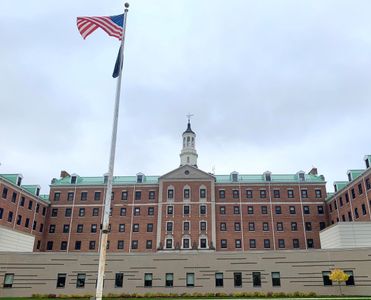
Boston Medical Center was formed in 1996 when Boston City Hospital and Boston University Medical Center Hospital merged. Boston Medical Center is a private, non-profit, academic medical center located in Boston’s historic South End. As the principal teaching affiliate of Boston University’s Chobanian and Avedisian School of Medicine, BMC is devoted to training future generations of health care professionals. Every hospital faculty member holds an academic appointment through BU’s School of Medicine, and BMC operates 67 residency training programs with 679 resident and fellowship positions. BMC has one of the busiest Emergency Departments and the largest 24-hour Level I trauma center in New England. BMC provides a comprehensive range of inpatient, clinical and diagnostic services in more than 70 areas of medical specialties and subspecialties, including cardiac care and surgery, hypertension, neurological care, orthopedics, geriatrics, and women’s health.BMC

The VA Boston Healthcare System serves as a major teaching affiliate and offers an unequaled training environment that supplements the program. The VABHS is comprised of several distinct campuses and numerous community-based outpatient clinics, and it serves as a major referral center for the entire New England region. Trainees participate in inpatient rotations at the West Roxbury campus. As the largest provider of graduate medical education in the United States, the VA is dedicated to its educational mission. All teaching faculty at the VA Boston have dual academic appointments at BU’s School of Medicine and Harvard Medical School, and house staff teams are composed of interns and residents from training programs at BMC, Brigham and Women’s Hospital, and Beth Israel Deaconess Medical Center. Trainees at the VABHS are exposed to a patient population characterized by a heavy burden of chronic illness, particularly cardiovascular and pulmonary diseases, and medical problems resulting from specific circumstances such as traumatic brain injury or spinal cord injury. The VABHS also affords residents the unique opportunity to experience a national-scope, single-payer, integrated health system that has been at the vanguard of medical information technology, patient safety, and quality improvement developments.VABHS
Each site cares for a diverse patient population with a broad variety of infectious diseases. Fellows provide infectious disease consultations across general medicine, surgery/trauma, and obstetrics and gynecology services. Consistent with BMC’s mission, fellows care for a diverse patient population, including underserved communities, refugees and international travelers, people who use substances, and patients living with HIV and hepatitis C. This breadth provides exposure to both common infectious diseases—such as surgical site infections and pneumonia—and less common conditions, including malaria, cutaneous leishmaniasis, and disseminated tuberculosis. Two fellows are assigned to BMC each month, with one fellow on each of the two primary consultation services: Keefer and Finland. Each team includes an ID faculty physician, medical students and residents, visiting trainees, and frequent participation from ID pharmacists and pharmacy residents. Each fellow typically receives three to six new consultation requests each day. A third fellow is assigned to the VABHS consultation service. Fellows gain experience caring for patients with complex medical conditions, including healthcare-associated and antimicrobial-resistant infections. A separate ID Physician Assistant team provides additional consultative capacity to offload the Finland and Keefer services as appropriate, as well as provide specialized allergy assessments for patients. An outpatient PA helps facilitate early outpatient follow-up after discharge. Teaching Rounds: Formal teaching rounds are held daily on each service. Fellows present, examine, and discuss new consultations as well as established patients with ongoing infectious disease concerns.Consult Services