Welcome to the Orthopaedic Surgery Residency Program
Message from the Director
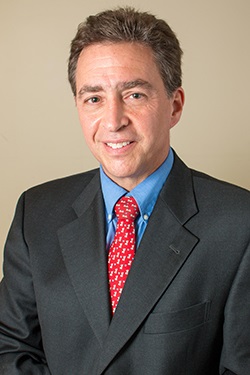
The program is fully accredited by the Accreditation Council for Graduate Medical Education (ACGME) and by the Residency Review Committee (RRC). Based on a tremendous increase in case volume and facilities, the residency program has 25 residents. Five residents per year are accepted into two separate programs via the National Residency Match Program (NRMP). There are four traditional five year positions and one six year position, which includes a basic science research year. During their research year, the research resident’s work focuses on the biology of skeletal tissue repair and/or the epidemiology of osteoarthritis or skeletal trauma and is performed between the 1st and 2nd orthopaedic year in training (typically between the PGY2 and PGY3 year).
The internship year meets the ACGME and ABOS Orthopaedic Program requirements. The year includes exposure in general surgery trauma, critical care medicine, plastic surgery, orthopaedic surgery, vascular surgery, and musculoskeletal imaging.
The four years of orthopaedic experience includes approximately 24 months at the Boston Medical Center, where heavy emphasis is placed on musculoskeletal trauma, sports medicine, spine surgery, and reconstructive surgery. Twelve months are spent at the Lahey Clinic in Burlington, MA and offer a vast experience in reconstructive surgery including joint arthroplasty, hand surgery, foot & ankle, sports medicine and trauma. Three months are spent at the Boston VA Medical Center, three months in the Oncology service at Massachusetts General Hospital, and three months at Boston Children’s Hospital.
The educational program includes a repeating 2 year lecture and didactic schedule through the AAOS ROCK program as well as supplementation with daily trauma conferences, monthly bioskills sessions, journal clubs, grand rounds, and paid for courses in each year of training. Protected time is carved out of the work week specifically for resident education. A resident initiated and run program is an important part of the syllabus. While participating in the program, residents receive extensive education in the basic sciences of the specialty. Finally, three special events with esteemed visiting professors, the Leach professorship, Einhorn professorship and the graduation symposium, round out the yearly offerings.
All residents complete a comprehensive research project prior to graduation. Toward that end, residents are presented with opportunities to conduct clinical and basic science research with the assistance of members of the orthopaedic faculty. Whether clinical or laboratory-based, completed projects are of such quality that national presentation and publication in a peer-reviewed journal are expected. Residents are given time off and costs are paid for them to go to meetings in which their work is being presented.
To further include residents in the development of the educational program and solve any issues that arise, resident education meetings take place with the faculty and residency director. Each residency year has a representative on the committee. Each resident is also appointed a faculty mentor for their first two years in training. Their charge is to help the resident if any problems arise and facilitate communication with the faculty. In the beginning of their third year, each resident designates a faculty advisor of their choosing for the remainder of their training. It is the responsibility of the mentor to meet with the resident on a semi-annual basis to review the resident’s progress and help guide them in their maturation.
The Boston University Medical Center Surgery Training Program seeks applicants who show exceptional academic potential and who have developed the maturity to undertake the challenges of a rigorous training program. To learn more about the program, please contact Lynnette St. Louis, Program Manager at lynnette.stlouis@bmc.org
Sincerely,
Paul Tornetta, III, MD, PhD
Chairman and Program Director
For additional information on recent graduates go to Recent Graduates.
For application requirements go to Application Requirements.
For information on resident benefits, go to Graduate Medical Education (GME) website.