Student Updates
BUSM Faculty Discusses Chinese Medicine and Healing, Feb. 12
Learn about Chinese healing practices across time and cultures with Linda Barnes, PhD a medical anthropologist and a scholar in the study of world religions. She is a nationally regarded expert in the field of Chinese medicine in the U.S. and has served as an expert reviewer for the National Institutes of Health’s National Center for Complementary and Alternative Medicine.
Dr. Barnes is an Associate Professor in the Department of Family Medicine at Boston University School of Medicine (BUSM), and in the Division of Religious and Theological Studies in the Graduate School of Arts and Sciences.
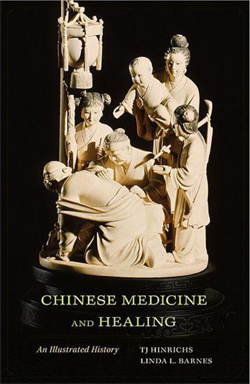
She is one of the editors of Chinese Medicine and Healing and will be leading a discussion on Feb.12, 7 p.m. at Barnes & Noble at BU. Chinese Medicine and Healing is an illustrated history that explores the emergence and development of a wide range of health interventions, including divination, meditative disciplines, herbal remedies, and acupuncture.
Chinese Medicine and Healing
- Linda Barnes, PhD
- Feb. 12, 7 p.m.
- Barnes & Noble at BU, Charles River Campus
- 660 Beacon Street
- Boston
Feb. 6 Photography Exhibit Features Work of Women with Intellectual Disabilities: Growing Older, Growing Stronger
Adults with intellectual disabilities (ID) are living longer than ever before, but aging and elderly women with ID face significant health disparities and other challenges. This population can sometimes be invisible. Growing Older, Growing Stronger is a photography exhibit featuring the work of aging women with ID. It was produced using Photo Voice, a participatory research technique where participants become co-researchers in the project and are given cameras and asked to document their worlds.
This exhibit of co-researcher photography explores themes of community inclusion, belonging, relationships, loss and joy, as documented by the artist co-researchers. This project is part of GMS’s Medical Anthropology and Cross-Cultural Practice master’s student Nechama Greenwood’s thesis work researching aging with ID. Co-researcher artists will be on hand to answer questions and light refreshments will be served. Please email Nechama@bu.edu for more information.
Growing Older, Growing Stronger
Boston University School of Medicine Appoints New Member to Dean’s Advisory Board
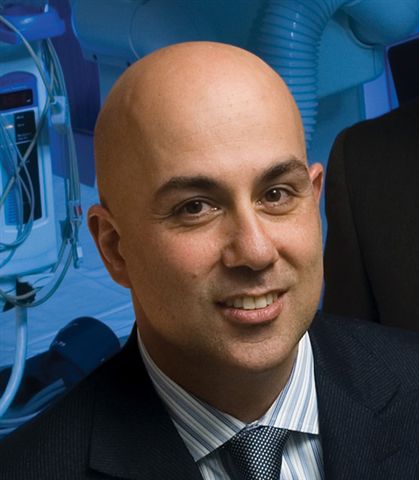
Pedram Salimpour, MD, MPH, has been named a member of the Dean’s Advisory Board (DAB) at Boston University School of Medicine (BUSM). DAB members serve three-year-renewable terms actively participating in medical school strategic planning and external relations initiatives.
DAB members are leaders in medicine, technology, business and other sectors of society. They share a passion for basic science and clinical research, as well as their support for BUSM. Board members are uniquely positioned to help advance the school and its students, scientists and clinicians.
“Service as a Board Member is the culmination of personal and professional aspirations. It is my hope that together, with fellow Board Members and the leadership of Dean Karen Antman, we will leave a legacy of discovery and prosperity for BUSM,” said Salimpour.
Salimpour is CEO and co-founder of Champion Health Enterprises, a company focused on the creation of novel health ecosystems for Native American tribes and their business entities. He is president and co-founder of CareNex Health Services, a healthcare technology and client-services organization specializing in neonatal and perinatal disease management programs with presence in more than 40 percent of the neonatal intensive care units in the U.S. In 2006, CareNex was partially acquired by Wellpoint (NYSE: WLP). In 2007, Salimpour co-founded Plymouth Health and acquired a 306 bed hospital in San Diego, California from Tenet Healthcare Corporation (NYSE: TCH). From 2001 to 2005, he served as executive vice president and co-founder of NexCare Collaborative, a not-for-profit organization that assisted healthcare needs of more than 100,000 underserved children and families in Southern California.
President-elect of the Los Angeles County Medical Association, Salimpour is a member of the boards of directors of the University of California, Los Angeles (UCLA) School of Public Health and a founding board member of the School of Medicine at the University of California, Riverside. He is an adjunct professor of health and human services at the Center on Human Aging at San Diego State University and an associate professor of pediatrics at the University of California, Riverside School of Medicine.
In addition to his medical contributions, Salimpour received an Emmy Award for his news documentary, “The Face of America,” and received a commendation from the Governor of California for his record of service to the State.
Salimpour is a graduate of BUSM. An Alpha Omega Alpha National Research Scholar, he was the first two-time recipient of the American College of Physicians’ Research Award. He completed his residency at the University of Southern California Medical Center’s Keck School of Medicine and received his Masters of Public Health degree at the UCLA School of Public Health.
BUSM Study Shows Potential of Differentiated iPS Cells in Cell Therapy without Immune Rejection
A new study from Boston University School of Medicine (BUSM) shows that tissues derived from induced pluripotent stem (iPS) cells in an experimental model were not rejected when transplanted back into genetically identical recipients. The study, published online in Cell Stem Cell, demonstrates the potential of utilizing iPS cells to develop cell types that could offer treatment for a wide range of conditions, including diabetes, liver and lung diseases, without the barrier of immune rejection.
Ashleigh Boyd, DPhil, and Neil Rodrigues, DPhil, the study’s senior authors, are assistant professors of dermatology at BUSM and researchers at the Center for Regenerative Medicine (CReM) at Boston University and Boston Medical Center (BMC). They also are lead investigators at the National Institutes of Health’s Center of Biomedical Research Excellence (COBRE) at Roger Williams Medical Center, a clinical and research affiliate of BUSM.
iPS cells can be developed from adult cell types, such as skin or blood, by returning them to a stem cell state using genetic manipulation. iPS cells are capable of maturing (differentiating) into all the specific cell types in the body, making them a powerful tool for biological research and a source of tissues for transplantation based therapies. Given that iPS cells can be made in a patient-specific manner, there should be great potential for them to be transplanted back into the same patient without rejection. Yet a study published in Nature in 2011 demonstrated that iPS cells transplanted in the stem cell state were rejected in genetically identical recipients.

“The Nature study provocatively suggested that tissues derived from patient-specific iPS cells may be immunogenic after transplantation. However, it never directly assessed the immunogenicity of the therapeutically relevant cell types that could be utilized in regenerative medicine and transplantation,” said Rodrigues.
The BUSM researchers evaluated this matter by taking adult cells from an experimental model and deriving iPS cells from them. They then differentiated the iPS cells into three cell types: neuronal (nerve); hepatocytes (liver); and endothelial (blood vessel lining) cells. These three cell types represent each of the three germ layers present during embryonic development – mesoderm, ectoderm and endoderm. Cells from these layers differentiate and ultimately develop into the body’s tissue and organ systems. Using experiments to mirror the potential clinical use of patient-specific iPS cells in cell therapy, the team transplanted each of the differentiated cells into a genetically identical experimental model and found no signs of an elevated immune response or indications of rejection.
The study results suggest that using patient-specific iPS cells should overcome issues of immune rejection in transplantation, which will be a significant problem for potential embryonic stem cell-derived therapies. Immune rejection in transplantation is treated clinically by immunosuppressive drugs but they can have serious side-effects, including the risk of developing cancer.
“If the use of immunosuppressive drugs can be avoided, as may be the case for patient-specific iPS cell based therapies, it would be preferable. Our results are very promising and future work should be directed at assessing whether tissues derived from human iPS cells will similarly lack immunogenicity,” said Boyd.
Research reported in this release was supported by an Institutional Development Award (IDeA) from the National Institute of General Medical Sciences of the National Institutes of Health under grant number # P20RR018757. The IDeA program builds research capacities in states that historically have had low levels of NIH funding by supporting basic, clinical and translational research; faculty development; and infrastructure improvements.
Jan. 28 Free Film Screening “MONSTER” Followed by Panel Discussion
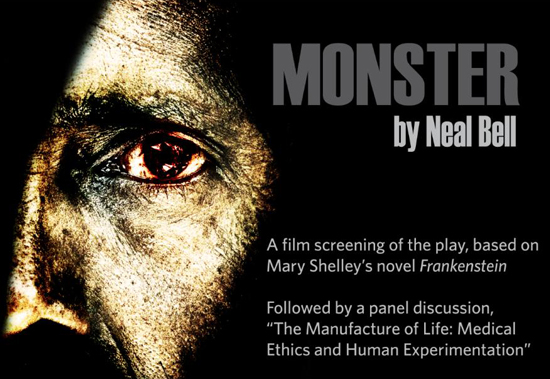
Students, faculty and staff on the BU Medical Campus are invited to a free film screening of the play MONSTER followed by a panel discussion on The Manufacture of Life: Medical Ethics and Human Experimentation. Based on the the novel Frankenstein by Mary Shelley, the screening and panel discussion will be held on Monday, Jan. 28, 4:30 p.m., 670 Albany St. Auditorium.
Following the screening, School of Theatre Director Jim Petosa will lead a panel discussion about medical ethics featuring BU Medical Campus faculty members George Annas, JD, MPH and Michael Grodin, MD.
This event is presented by the Arts Outreach Initiative and the College of Fine Arts in partnership with BU School of Public Health, BU School of Medicine, the Student Creative Arts Society, and the BUSM Office of Diversity and Multicultural Affairs.
Abuse During Childhood Linked to Uterine Fibroids in African-American Women
According to a new study from the Slone Epidemiology Center (SEC) at Boston University, African-American women who reported sexual or physical abuse before age 11 had a greater risk of uterine fibroids in adulthood compared with women who had no such abuse history. The association was strongest for women who experienced sexual abuse.
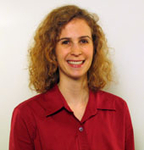
The study, which is published online in the American Journal of Obstetrics and Gynecology, was led by Lauren A. Wise, ScD, senior epidemiologist at SEC and associate professor of epidemiology at the Boston University School of Public Health (BUSPH).
This study followed 9,910 premenopausal African-American women from the Black Women’s Health Study. In 2005, participants provided information on lifetime experiences of physical and sexual abuse during childhood (up to age 11), adolescence (ages 12-18), and adulthood (19 and older). The incidence of fibroids was ascertained from 2005 through 2011.
The results indicate that the incidence of uterine fibroids was increased by 16 percent among women who had been physically abused during childhood and by 34 percent among women who had been sexually abused during childhood. The risk of fibroids increased with increasing severity of child abuse. The results were weaker among women who reported high levels of coping, which is consistent with previous research showing that emotional support may buffer the negative health effects of violence. There was also little indication that abuse during adolescence and adulthood increased the risk of fibroids.
“This is the second prospective study to show an association between childhood abuse and uterine fibroids diagnosed during adulthood,” said Wise. She noted that mechanisms might involve the influence of psychosocial stress on the biosynthesis or metabolism of sex steroid hormones, which are thought to be involved in fibroid development and growth. In addition, child sexual abuse is associated with sexually transmitted infections, which may also increase fibroid risk.
The lifetime risk of clinically-relevant uterine fibroids is 30 percent and they are a major contributor to gynecologic morbidity, including heavy menstrual bleeding, pelvic pain and infertility. In the U.S., fibroids account for more than $9.4 billion in health care costs annually and black women are two to three times more likely to be affected by the condition.
“Given the high prevalence of fibroids in African-American women, the association is of public health importance,” Wise added.
The Black Women’s Health Study (BWHS) is the largest follow-up study of the health of African American women in the U.S. Led by researchers at the SEC, the study has followed 59,000 African-American women through biennial questionnaires since 1995 and has led to a better understanding of numerous health conditions that disproportionately affect African-American women.
Co-authors of the study include Lynn Rosenberg, ScD, principal investigator of the BWHS and professor of epidemiology at BUSPH, and Julie R. Palmer, ScD, professor of epidemiology at BUSPH.
Funding for this study was provided by the Eunice Kennedy Shriver National Institute of Child Health and Human Development under grant award # HD069602 and the National Cancer Institute under grant award # CA058420.
Never Smoked. Lived Right. Died of Lung Cancer. The Puzzle of Cancer in Nonsmokers.
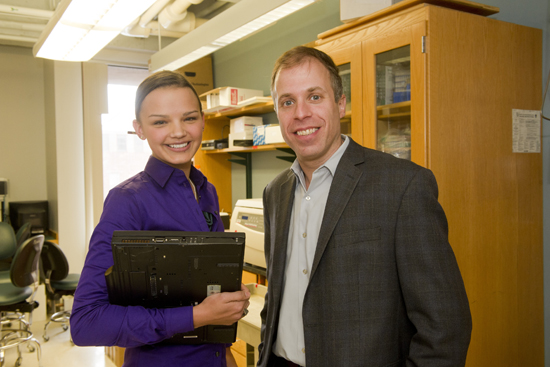
Avrum Spira’s aunt died of lung cancer almost 20 years ago. She was a nonsmoking exercise buff in her 40s who hadn’t been exposed to any known toxins; she worked in a government office, not a coal mine. “One of the healthiest people you could imagine, did everything right,” says Spira (ENG’02), who at the time was an internal medicine resident at the University of Toronto.
The one thing she didn’t do right wasn’t her fault: she’d been born to a nonsmoking mother who had died from the same illness. “I’m absolutely convinced she had a genetic predisposition” to lung cancer, says Spira, a School of Medicine professor and chief of computational biomedicine. That conviction set him on a quest for the genetic key to a medical mystery: why some people who have never smoked fall victim to this scourge of cigarette users.
Lung cancer kills more Americans than any other cancer, and twice as many women die from it than from breast cancer, although the latter gets greater public attention, says Spira. In 2008, the last year for which data was available, more than 208,000 Americans were diagnosed with lung cancer and almost 158,600 died from it. Spira says between 10 and 15 percent of these annual victims are nonsmokers (the percentage has been edging up slowly in recent years) with no apparent exposure to other toxins—a crucial caveat. “How do you know someone has been or has not been exposed to something in the environment?” he asks. Some potential toxins, like radon, are invisible, he notes, “so people who we’re seeing now, with higher rates of nonsmoking lung cancer—is it because they were exposed to radon 20 years ago?”
It’s true that worldwide, the rise in the incidence of lung cancer —from the eighth leading cause of death in 1990 to fifth in 2010—is mostly a function, perversely, of good news: as living standards have improved in the developing world, more people survive into adulthood, meaning a decline in childhood deaths from malnutrition and infectious diseases. That has brought an accompanying uptick in the number of people dying from diseases mostly found in wealthier countries, among them cancer. Moreover, air pollution in industrializing countries has resulted in more lung cancer in nonsmokers there, Spira says.
But in the United States, he says, doctors believe there’s a similar spurt in lung cancers in nonsmokers who’ve had no apparent contact with other toxins. The most extensive studies, incorporating detailed questionnaires and visits to peoples’ homes to see their environment, show that “there hasn’t been a clear association among nonsmokers who are getting lung cancer with exposures to other things.”
An ongoing, as-yet-unpublished study by a team that includes Spira is looking at tumor tissue and adjacent, noncancerous tissue from the lungs of 32 subjects with lung cancer: 8 smokers, 11 former smokers, and 13 who never smoked and had no apparent exposure to other toxins. The researchers ran the samples through a gene sequencer at MED, which “can give us unprecedented insight into the genomic changes leading to lung cancer” in nonsmokers, says Rebecca Kusko (MED’14), a graduate student spearheading the study in Spira’s lab.
With the sequencer, “we study the normal cells from each person as a control,” says Spira, “and then what happens in their tumor right next door, and say, what’s changed?” Preliminary results suggest that in the smokers, “a huge number of cancer pathways are activated,” as genes controlling cell growth in the tumors turned on. But those pathways weren’t necessarily activated in the nonsmokers, who showed different gene changes between their healthy lung tissue and their tumorous tissue. The researchers’ hypothesis is that the nonsmokers had a genetic predisposition, a pathway, to cancer that was activated by something in their environment.
That trigger, Spira theorizes, may be a viral infection (cervical, liver, and head and neck cancers are all caused by viruses, he says). The researchers are now sequencing the tumor tissue of the nonsmokers to try and find any viral genes. “Even if there’s one viral gene per million human genes, we might pick it up, we believe,” he says. The work will take a year or two.
Potential therapies—which are many more years away, he warns—might include screening people with the genetic predisposition and then giving those with the predisposition regular lung scans to catch cancers early. Another possibility would be drugs that could turn off uncontrolled growth in cancerous cells. (Spira got attention in 2010 for research suggesting that the natural compound myo-inositol could turn off incipient lung cancer in smokers.)
Those who walk Commonwealth Avenue and have to dodge fumes from smokers on break may wonder about secondhand smoke. Research is mixed, but Spira, who researches the amount of smoke necessary to change gene expression and possibly lead to lung cancer, believes that it takes a big dose—perhaps exposure over months or years.
Almost half a century after the surgeon general first warned of smoking’s dangers, Spira says that even Hollywood is catching on that not all cancer victims heedlessly bring the disease on themselves. In 2011, he was a presenter at the Prism Awards, given for accurate portrayals of illness in entertainment media. He handed an award to an actress whose character on the soap opera The Bold and the Beautiful had lung cancer.
The character was a nonsmoker.
This BU Today article was written by Rich Barlow. He can be reached at barlowr@bu.edu
Jan. 28 Celebrate the Legacy of Martin Luther King, Jr.
All members of the BU Medical Campus are invited to a special presentation commemorating the legacy of Rev. Martin Luther King, Jr.
Marcelle Willock, MD, former professor and chair, Department of Anesthesiology, BUSM, and former Dean, Charles Drew University of Medicine and Science, will discuss how Dr. King influenced her life and career and will share her views on the impact of the civil rights movement today.
Following Dr. Willock’s presentation, a classical string ensemble, sponsored by BU College of Fine Arts and the Medical Campus Arts Outreach Initiative, will perform Antonin Dvorak’s American Quartet.
Refreshments will be served.
Celebrate the Legacy of Martin Luther King, Jr.
- Date: Monday, Jan. 28
- Time: noon-1 p.m.
- Location: Hiebert Lounge, 14th Floor, BUSM Instructional Building
This event is brought to you by the BMC Events Committee, BUSM Office of Diversity and Multicultural Affairs, Goldman School of Dental Medicine Office of Diversity, BU School of Public Health and BMC Minority Recruitment Program.
Jan. 25 Guest Lecture on Health and Economic Impacts of Air Quality in a Changed Climate
Health and Economic Impacts of Air Quality in a Changed Climate is the topic a Jan. 25 lecture being given by Noelle Eckley Selin, PhD, Department of Engineering Systems and Atmospheric Chemistry, Engineering Systems Division and Dept. of Earth, Atmospheric and Planetary Sciences, Massachusetts Institute of Technology. This lecture is part of the Gijs van Seventer Environmental Health Seminar Series focusing on Climate Change: Science, Health, and Policy.
In this seminar Dr. Selin will discuss the scientific issues surrounding air quality, and how it interacts with climate change both from the perspective of emissions and chemistry. She will then describe her group's recent research on the health and economic impacts of air quality, specifically addressing the economic costs of morbidities and mortalities from ozone and particulate matter in the U.S., Europe, China and globally. New results on co-benefits for air quality and health from climate policies in the U.S. will be presented.
Dr. Selin will be speaking on Jan. 25, noon-1 p.m. in the BUSM Instructional building, room L-210. For more information on upcoming seminar topics and guest speakers, please visit http://sph.bu.edu/ehseminars
BU Awards Community Grants Supporting Youth Organizations in South End and Roxbury
Boston University today announced two grants of $2,500 to local community organizations offering programs and services that benefit youth in the South End and Roxbury. The two recipients are Boston City Lights and Mandela Resident Cooperative Association, Inc. (MRCA). These organizations work to make a difference in the lives of young people in Boston.
Boston City Lights is a free performing arts and training program designed to develop the artistic abilities of inner city kids. Located in the South End, its committed volunteers and past students teach dance, singing, acting, video production, set design and sound engineering. This grant will allow Boston City Lights to continue to use the arts to empower youth.
Mandela Resident Cooperative Association (MCRA) will use the grant for its 2013 Annual Get Connected Youth Fair, on February 20, 2013. The Annual Get Connected Youth Fair allows local community agencies to connect and provide information to youth, ages 14-24, on a variety of different topics including educational opportunities, job skill readiness training and employment openings. Boston University is excited to assist MCRA continue its valuable work with youth.
“Boston University Medical Campus is committed to helping provide resources for organizations and agencies that have programs that support the youth in our neighborhoods. Boston City Lights and MRCA have outstanding programs that help young people in our city.” said Valeda Britton, Executive Director BU Community Relations/Medical Campus. Ms. Britton also noted that construction has begun on the new Boston University Fitness and Recreation Center at the Blackstone Community Center and expects that the new Fitness Center will open in the beginning months of 2013.
The $2500 community grants are awarded to programs and services that benefit residents of BU’s host communities, with special consideration given to programs that benefit youth. Beautification projects are also encouraged. Funding is intended to supplement the existing budgets of established organizations and agencies.
Last spring, The Yawkey Club of Roxbury-Boys & Girls Club of Boston received a grant in support of their Young Leaders summer program, a seven week program offering 13 and 14 year olds a realistic work environment experience in a summer camp setting, the opportunity to be role models of young children and the chance to acquire new skills and develop leadership abilities. The Young Leaders program encourages students to experience personal growth and develop meaningful relationships with peers and caring adults through travel and exploring the New England region.