Student Updates
Study Shows Alcohol Consumption Is a Leading Preventable Cause of Cancer Death in the U.S.
Researchers from the Boston University School of Medicine (BUSM) and Boston University School of Public Health (BUSPH) have shown that alcohol is a major contributor to cancer deaths and years of potential life lost. These findings, published in the April 2013 issue of the American Journal of Public Health, also show that reducing alcohol consumption is an important cancer prevention strategy as alcohol is a known carcinogen even when consumed in small quantities.
Previous studies consistently have shown that alcohol consumption is a significant risk factor for cancers of the mouth, throat, esophagus and liver. More recent research has shown that alcohol also increases the risk of cancers of the colon, rectum and female breast. While estimates have shown that alcohol accounts for about four percent of all cancer-related deaths worldwide, there is a lack of literature focusing on cancer-related deaths in the U.S.

Timothy Naimi, MD, MPH, from the Department of Medicine at BUSM and colleagues from the National Cancer Institute, the Alcohol Research Group, Public Health Institute and the Centre for Addiction and Mental Health, examined recent data from the U.S. on alcohol consumption and cancer mortality. They found that alcohol resulted in approximately 20,000 cancer deaths annually, accounting for about 3.5 percent of all cancer deaths in the U.S.
Breast cancer was the most common cause of alcohol-attributable cancer deaths in women, accounting for approximately 6,000 deaths annually, or about 15 percent of all breast cancer deaths. Cancers of the mouth, throat and esophagus were common causes of alcohol-attributable cancer mortality in men, resulting in a total of about 6,000 annual deaths.
The researchers also found that each alcohol-related cancer death accounted for an average of 18 years of potential life lost. In addition, although higher levels of alcohol consumption led to a higher cancer risk, average consumption of 1.5 drinks per day or less accounted for 30 percent of all alcohol-attributable cancer deaths.
“The relationship between alcohol and cancer is strong, but is not widely appreciated by the public and remains underemphasized even by physicians,” said Naimi, who served as the paper’s senior author. “Alcohol is a big preventable cancer risk factor that has been hiding in plain sight.”
Submitted by Jeff Jenks, MD.
Recent Marijuana Use in HIV-infected Russians is Associated with Increased Sex and Drug Risk Behaviors
Researchers from Boston Medical Center (BMC) and Boston University’s School of Medicine (BUSM) and School of Public Health (BUSPH) have found that in Russian HIV-infected risky drinkers, marijuana use is associated with other increased risky behaviors involving drug use and sex. These findings, published online in the journal Drug and Alcohol Dependence, may aid clinicians and public health experts in detecting individuals at a higher risk of transmitting HIV.
Marijuana, otherwise known as cannabis, is the most frequently used illicit drug worldwide. Previous research has shown that in certain non-HIV infected populations, marijuana use is associated with the use of other drugs such as cocaine and heroin, as well as an increase in unprotected sex and a larger number of sexual partners. In Russia, the HIV epidemic has been largely propelled by injection drug use (IDU), although HIV transmission through unprotected sex is increasing. Still, not much is known about marijuana use and its impact on those behaviors in individuals already infected with HIV.

To investigate this, Jeffrey Samet, MD, MPH, from the Clinical Addiction Research and Education (CARE) Unit at BUSM and colleagues examined data collected in St. Petersburg, Russia, in a cohort of 700 HIV-infected individuals with risky drinking practices. Risky drinkers were defined as men who drink more than four drinks a day or 14 drinks a week and women who consume more than three drinks a day or seven drinks a week. In this population, the frequency of marijuana use within the previous year was determined and those who used were compared to the non-users with regard to risky drug and sex practices, including needle sharing, IDU, the number of sex partners and frequency of condom use.
Working with colleagues from Russia, the researchers found that baseline marijuana use was relatively common, with 20 percent having used within the previous month and 46 percent within the previous year. Forty-two percent of the respondents admitted to IDU and 23 percent to sharing needles within the previous 30 days, and 27 percent reported multiple sexual partners in the previous three months.
The data also showed a significant association among individuals who reported using marijuana within the previous 30 days and an increase in sharing needles, IDU and increase in the number of injections. In addition, while marijuana use was not associated with decreased condom use, it was associated with an increased number of sexual partners.
The study results indicate that asking HIV-infected patients about marijuana use may identify those who are at a higher risk for transmitting HIV.
“I don’t think physicians currently inquire about marijuana use among HIV-infected individuals in part because they are not sure what to do with the information,” said Samet, chief of general internal medicine at BMC and the article’s corresponding author. “Given these findings and the high prevalence of marijuana use, it is important to explore whether or not its use results in risky behavior.”
Funding for this study was provided by the National Institutes of Health’s National Institute of Alcohol Abuse and Alcoholism under grant awards R01AA016059 (Principal Investigator (PI): Samet), U24AA020778 (PI: Samet), U24AA020779 (PI: Debbie Cheng, ScD) and K24AA015674 (PI: Samet) and a National Institute on Drug Abuse INVEST fellowship.
Submitted by Jeffrey Jenks, MD.
Obesity and Excess Weight Gain During Pregnancy Linked to Heavier Babies in African-American Women
Epidemiologists at Boston University School of Public Health (BUSPH) have found that pre-pregnancy obesity and excess weight gain during pregnancy in African American women are associated with an increased risk of giving birth to an abnormally large baby. Macrosomia, which is defined as a newborn weighing more than 4,000 grams at birth (approximately 8.8 pounds), can cause delivery complications such as hemorrhage, infection, the need for a caesarean section, preeclampsia and perinatal mortality. The study, which appears online in the journal Obesity, was conducted by researchers at the Slone Epidemiology Center using data from 59,000 African-American women participating in the Black Women’s Health Study.
The investigators compared mothers of 691 full term infants weighing more than 4,000 grams with mothers of 5,996 full-term infants weighing less than 4,000 grams. Overall obesity, measured by body mass index (BMI) of greater than 30, was associated with a two-fold increased risk of macrosomia. After accounting for differences in BMI, the risk of macrosomia also was significantly higher among women with a pre-pregnancy waist circumference of greater than 35 inches compared with less than 27 inches.
Maternal obesity may increase the risk of macrosomia due to greater energy accumulation by the fetus from increased maternal glucose concentrations and insulin resistance. Central adiposity, or weight gain around the waist, also is related to glucose and insulin metabolic changes, independent of overall obesity. Few studies have examined the association between central adiposity and infant birth weight.

Gestational weight gain above the range recommended by the 2009 Institute of Medicine (IOM) guidelines also was associated with an increased risk of macrosomia and the association was present within each category of pre-pregnancy BMI: 25-35 pounds for BMI 18.5-24.9 kg/m2 (normal weight); 15-25 pounds for BMI 25-29.9 kg/m2 (overweight); and 11-20 pounds for BMI ≥30 kg/m2 (obese). These data indicate that overall and central obesity predict the risk of macrosomia, and that pregnancy weight gain is a strong determinant of risk.
“In addition to maintaining a healthy weight and waistline before pregnancy, our data suggest that it is especially important for obese women to adhere to the IOM guidelines for pregnancy weight gain to reduce their risk of macrosomia,” said senior author Lauren A. Wise, ScD, an associate professor of epidemiology at BUSPH.
The first author of the manuscript was Se Li, MD, ScD, a recent graduate of the doctoral program in epidemiology at BUSPH. Other authors included: Lynn Rosenberg, ScD, professor of epidemiology at BUSPH; Julie Palmer, ScD, professor of epidemiology at BUSPH; Ghasi Phillips, ScD, Epidemiologist at the Centers for Disease Control and Prevention; and Linda J. Heffner, MD, PhD, professor in the Department of Obstetrics and Gynecology at Boston University School of Medicine.
Funding for this study was provided by the Hood Foundation (Principal Investigator: Wise) and the National Cancer Institute under grant award # CA058420 (Principal Investigator: Rosenberg).
Biomedical Pharmacology Program Student to Receive Award from American Physiological Association

Casey Carmichael, a second-year graduate student in the PhD program in Biomolecular Pharmacology, will receive the 2013 Caroline tum Suden/Frances Hellebrandt Professional Opportunity Award from the American Physiological Association. Her winning abstract, “A role for Gai2 proteins in the acute neural control of blood pressure,” is one of three award winning abstracts out of 154 submissions. Casey will receive this award, which is given to graduate students and postdoctoral fellows, at the 2013 Experimental Biology meeting in Boston in April.
Casey is pursuing research in the Laboratory of Cardio-Renal Research under the mentorship of Richard D. Wainford, PhD. Her research is aimed at understanding the central neural aspects of blood pressure regulation in order to identify the pathophysiology and potential treatments for hypertension.
GSDM 50th Birthday Celebration Kicks Off at Yankee Dental Congress
 The 2013 Yankee Dental Congress (YDC) was especially celebratory for the Boston University Henry M. Goldman School of Dental Medicine (GSDM). Our School celebrated its 50th anniversary, welcomed back alumni, and saw Nadia Malik DMD 13 honored by the American College of Dentists.
At the Boston Convention & Exhibition Center, alums reconnected at the GSDM Alumni Lounge. A photo slideshow of the School’s first 50 years played throughout the Congress. Also exhibiting was GSDM Continuing Education, whose representatives promoted upcoming continuing education opportunities.
We celebrated the past, present, and future of our School at a 50th Anniversary Pre-reception Celebration on February 1, 2013. The special guests invited were closely involved in planning the anniversary celebration. They were:
- the Honorary Committee to Plan the 50th Anniversary Celebration of the Founding of the Henry M. Goldman School of Dental Medicine
- the Dean’s Advisory Board
- the GSDM Executive Committee
- the GSDM Alumni Association Board
Later that evening 1,125 alumni,faculty, staff, students and friends gathered for a reception and 50th Anniversary Kickoff Celebration.
“It means a great deal to me,” Dean Hutter said, “to see our community gather in such numbers to celebrate our past and gather our momentum as we continue our move forward into the future of our School and our University.”
Ron Nevins PERIO 67 received the alumni award for Service to the Profession. Dr. Nevins’ many hats include dental educator, practitioner, editor, American Academy of Periodontology leader, former Board director, founder and President of Perio Implant Research, Inc., and supporter of our School.
Special guests spoke, praising the past, present, and future of GSDM:
- BU Provost and Chief Academic Officer Dr. Jean Morrison
- American Dental Association President Dr. Robert Faiella
- American Dental Education Association President Dr. Gerald Glickman
- Dean’s Advisory Board Chair Dr. David Lustbader
- BU Alumni Council President Dr. Shadi Daher
- GSDM Alumni Association President Dr. Mitch Sabbagh
- Chair of the Committee to Plan the 50th Anniversary Celebration Dr. Thomas Kilgore
Dean Hutter concluded the program by saying, “Together, we can build on the momentum of a legacy of innovation and fund our proposed new facility to provide us with the infrastructure required to bring excellence to all of our programs as we build together a future that is truly great for our Henry M. Goldman School of Dental Medicine and our Boston University and we realize my and what I know is now your vision of becoming the Premier academic dental institution in the world, promoting excellence in dental education, research, oral health care, and community service to improve the overall health of the global population.”
A video commemorating the past 50 years and the future of our School then premiered at the reception.
Dean Jeffrey W. Hutter presented fourth-year DMD student Nadia Malik the American College of Dentists Senior Student Award at a luncheon on February 2, 2013.
Dean Hutter said, “Since first meeting Nadia during her Class of 2013 orientation in August 2009, I have been continually impressed with her intelligence, dedication, motivation, can-do attitude, and wonderful personality. As with the other student award winners here with us this afternoon, Nadia represents the reason why the future of our profession is so very bright.”
Photos from YDC are available on Facebook and Flickr.
Submitted by GSDM Communications.
Feb. 14 Seminar: Transdisciplinary Research Paradigms in Neurodegenerative Disease
BU Faculty, students and staff are invited to an Addiction Research Seminar, Feb. 14. This seminar will focus on strategies for studying addictions and other complex diseases that integrate population, computational and basic science approaches, and introduce a new cross-disciplinary BU training program for doctoral students engaged in addictions research.
Although much has been learned about the behaviors and biochemical imbalances associated with addictions, research leading to effective treatments has been slow. Addiction researchers using clinical and epidemiological approaches usually do not collaborate with those conducting basic research in cells and animal models because they do not share the same language, skill sets or perspective.


The Feb. 14 program, Transdisciplinary Research Paradigms in Neurodegenerative Disease, will begin with a presentation by Richard Myers, PhD, director of BUSM’s Genome Science Institute, on transdisciplinary research models being applied to his research on Parkinson’s disease and Huntington’s disease. Lindsay Farrer, PhD, Chief of Biomedical Genetics, will then lead a forum and panel discussion on of BU's New Transformative Training Program in Addiction Science (TTPAS), which prepares doctoral students to apply diverse approaches to addiction research using tools from bench science, medicine. population studies, statistics and computational biology. TTPAS directors and faculty will introduce this exciting new program and discuss its potential to advance a behavioral and biochemical focus in addictions research and practice. TTPAS leadership speaking at this forum are:
Lindsay Farrer, PhD
TTPAS Co-director
Chief, Biomedical Genetics
Professor, Boston University Schools of Medicine and Public Health
Tim Heeren, PhD
TTPAS Co-director
Professor, Department of Biostatistics
BU School of Public Health
David Rosenbloom, PhD
TTPAS Faculty
Professor and Interim Chair
Department of Health Policy and Management
BU School of Public Health
Transdisciplinary Research Paradigms in Neurodegenerative Disease
- Thursday, Feb. 14
- 3:30 -5:00 p.m.
- Keefer Auditorium, BU School of Medicine
Free and open to all faculty, students, and staff at BU and the VA. A reception with refreshments immediately follows the seminar.
More information: http://www.bu.edu/addictions/seminars/transdisciplinary/
GSDM’s Jonathan Shenkin Featured in Parents Magazine
Parents Magazine’s Jan Sheehan spoke to Clinical Assistant Professor in the Department of Health Policy & Health Services Research Dr. Jonathan Shenkin for the February 2013 article, “The Fight Against Cavities.” The article offers tips for keeping young children’s teeth free of decay.
 Dr. Shenkin’s tips include:
- Start cleaning the mouth early. “A child can get a cavity even if s/he only has one tooth,” he says.
- Lose the pacifier by age two or use one that is “orthodontically-correct.”
- If a child has no cavities by age four, s/he is likely in good shape for the rest of childhood.
- Insist on dental sealants
Dr. Shenkin is a spokesperson for the American Dental Association and has a private practice in pediatric dentistry in Augusta, Maine. His advocacy focuses on effecting change in oral health policy, with particular attention to the oral health of children.
The February 2013 issue of Parents Magazine is available on newsstands.
Submitted by Jackie Simon.
Save the Date! May 22 McCahan Medical Education Day
Mark your calendar for the 8th Annual John McCahan Medical Campus Education Day on May 22. BUMC faculty, fellows, residents, students and staff who are interested in educational innovations and scholarship are cordially invited to participate in this interactive event.
John McCahan Medical Campus Education Day
- May 22
- 8:30 a.m.-3:15 p.m.
- BUSM Instructional Building, 14th floor,Hiebert Lounge
TENTATIVE SCHEDULE
- 8:30 a.m. Welcome
- 8:40 Panel discussion
- 9:20 Vendors, Networking and Posters
- 10:45 Keynote Speaker: TBA
- Noon Poster session, lunch for registered attendees
- 12:45 p.m. Awards
- 1:45 Workshops
Start thinking about poster abstracts and workshop proposals. A call for submissions will follow soon!
This event is cosponsored by the Boston University School of Public Health, Goldman School of Dental Medicine, School of Medicine and its Division of Graduate Medical Sciences.
Contact Jackie McDonnell in the Office of Medical Education at 638-5128 or jdesmara@bu.edu for more information.
MLK Celebration Reflects on Half Century of Change
The celebration began with the sound of a voice. The crowd was silenced by the boom of Dr. Martin Luther King, Jr.'s words in his memorable "I Have a Dream" speech as it resonated within the walls of Hiebert Lounge Jan. 28. Faculty, staff and students from BMC and Boston University’s Medical Campus gathered there to celebrate the life and legacy of Dr. King listened to his speech before the keynote address by Marcelle Willock, MD, former professor and chair, Department of Anesthesiology, BUSM, and former dean, Charles Drew University of Medicine and Science.
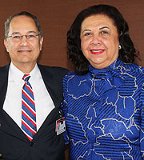
Willock reflected on her experience as an African-American woman pursuing a career in medicine during a tumultuous time in United States history.
“For so many of you, 50 years is something in the history books,” she said. “But for a few of us, myself included, we experienced these laws and atrocities or knew people who had.”
Willock said she dreamed of pursuing medicine from an early age. She attended the College of New Rochelle just outside of New York City, where she was informed that getting into medical school would be especially difficult because of her gender and the color of her skin. She was accepted into medical school at Howard University in Washington D.C., a city fraught with segregation and racism at the time.
No sooner had Willock begun her residency in anesthesia at Columbia-Presbyterian Hospital in New York City in 1963, before she asked the chairman of her program for two days off mid-week to attend a protest for civil rights in Washington D.C. The event, it turned out, would be one of the most memorable of her life.
“There were 200,000 people peacefully gathered and united in their purpose to demonstrate nonviolently for civil rights, jobs and freedoms,” she said. “And onto the stage came Martin Luther King, Jr. with his ‘I Have a Dream’ speech. His philosophy of brotherhood projected a better America for all its citizens.”
Willock’s involvement with the civil rights movement and the women’s movement gave her the motivation she needed to overcome the adversity she faced and shaped her career into one that would provide opportunities to minorities in the medical field. Her path brought her to BUSM and BMC, where she became the first minority woman to chair a clinical academic department in the United States.
“My experiences made me more aware of the injustices and the need for me to speak up and push for equality,” she said.
Willock concluded her presentation by imploring the audience to think about their commitment to bettering patient care, and to uphold Dr. King’s dream and BMC’s commitment to exceptional care, without exception.
“We honor Dr. King’s vision for his unselfish commitment to improve the life of all Americans and his observation that our destiny and our freedom as Americans are inextricably bound to each other,” she said.

The presentation was followed by a performance of Antonin Dvorak’s “American Quartet” by a classical string ensemble sponsored by BU College of Fine Arts and Medical Campus Arts Outreach Initiative. A string quartet was chosen because it symbolizes unity -- different voices blend together and through teamwork, create harmony.
The annual event was sponsored by BMC’s Events Committee, the BUSM Office of Diversity and Multicultural Affairs, the BU Goldman School of Dental Medicine Office of Diversity, the BU School of Public Health and the BMC Minority Recruitment Program.
Submitted by Sara Cody.
Overdose Education and Nasal Naloxone Rescue Kits for Bystanders Associated with Decreased Opioid Overdose Death
In a study of communities in Massachusetts with high numbers of opioid overdose deaths, the implementation of overdose education and naloxone distribution (OEND) was associated with a significant reduction in opioid overdose death rates. Led by researchers at Boston Medical Center (BMC), Boston University Schools of Medicine (BUSM) and Public Health (BUSPH) in collaboration with the Massachusetts Department of Public Health (MDPH) and published in the British Medical Journal (BMJ), this study provides observational evidence that OEND is an effective public health intervention to address the epidemic of fatal opioid overdose.
Opioids include substances such as heroin and prescription pain relievers, namely hydrocodone, oxycodone, codeine, morphine and fentanyl. The rate of opioid overdose continues to rise and is a major cause of preventable death. Opioid related overdose deaths have exceeded the number of motor vehicle deaths each year since 2005 in Massachusetts and are the leading cause of injury death in the commonwealth.

OEND is an innovative, community-based intervention that educates people at risk for overdose and potential bystanders on how to prevent, recognize and respond to an overdose. It also equips these individuals with a naloxone rescue kit. Naloxone, which may be administered by injection or by nasal spray, is a safe and effective antidote that reverses the life-threatening effects of an opioid overdose.
Between 2006 and 2009 in 19 communities with a high prevalence of opioid overdose deaths, Massachusetts OEND programs organized, funded and supported by MDPH trained 2,912 potential bystanders who reported 327 rescues. After adjusting for community level factors, including the use of addiction treatment and doctor shopping for prescription opioids, communities with low levels of OEND training had 27 percent lower opioid overdose death rates and communities with high levels of OEND training had 46 percent lower opioid overdose death rates compared to communities with no training.
“Opioid overdose is a major public health problem for which we have few proven solutions. This study provides observational evidence that OEND can have a population-level dose effect in reducing overdose death rates, where the greater the implementation, the greater the impact,” said Alexander Walley, MD, MSc, an attending physician in general internal medicine at BMC and the study’s lead author. Walley is an assistant professor of medicine at BUSM and medical director for the MDPH’s Opioid Overdose Prevention Program. “Together with a recent study, which demonstrated that OEND is highly cost effective, it appears that OEND is a promising, scalable and affordable tool to save lives from opioid overdose.”
Funding for this study was provided by the Centers for Disease Control and Prevention under award number 1R21CE001602 (Principal Investigator: Walley). To view the article on the BMJ website, go to http://www.bmj.com/cgi/doi/10.1136/bmj.f174.
Submitted by Tiffany Groover, MD, MPH