Student Updates
May 28 Transforming the Health Care Response to Domestic Violence: Lessons from Kaiser Permanente, Lynne Stevens Lecture & Award
The BUSM Department of Family Medicine invites the BMC campus-wide Domestic Violence Advisory Committee as well as all members of the Boston University Medical Campus and affiliated health centers to attend the fourth annual Lynne Stevens Lecture on Tuesday, May 28.
Lynne Stevens, MSW, served as an assistant professor of Family Medicine at BUSM and director of the Responding to Violence Against Women Program at BMC. Prior to her death in 2009, she was a clinician, tireless advocate and researcher dedicated to make healthcare responsive to women victimized by violence. In her memory generous donations have allowed for the creation of this annual lecture and research award.
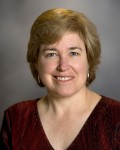
This year's Lynne Stevens Lecturer is Brigid McCaw, MD, MPH, MS, FACP. She serves as Medical Director in the Violence Prevention Program at Kaiser Permanente Northern California. She will speak on "Transforming Health Care Response to Domestic Violence: Lessons from Kaiser Permanente".
Dr. McCaw oversees the implementation of a comprehensive, coordinated approach for improving identification and services for intimate partner violence across all Kaiser Permanente regions and participates in research and teaching. She is a Fellow of the American College of physicians, serves on the Institute of Medicine Forum on Global Violence Prevention and is chair-elect for the National Health Collaborative for Abuse and Violence.
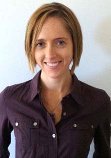
On May 28, the Department of Family Medicine will additionally announce the 2013 Lynne Stevens research award recipient, Shannon Bell, MD. Dr. Bell is a second year OB-GYN resident at Boston Medical Center. Her winning proposal is to pilot an aftercare clinic for sexual assault survivors at the BMC Women's Center.
Dr. Bell completed her BA at the University of Southern California and while there fostered an interest in forensics spending a year working for the Federal Bureau of Investigations Crimes Against Children Division. She also served as a suicide crisis counselor in Los Angeles. Bell received her MD at University of California, San Francisco, where she studied medical response to sexual assault at the San Francisco Trauma Recovery Center/San Francisco General Hospital. She began her residency in Obstetrics and Gynecology at Boston Medical Center in 2011.
Lynne Stevens Lecture and Award
- Tuesday, May 28
- Lecture Noon-1 p.m.
- Q&A 1-2
- Dowling Amphitheatre
WWE Donates $1.2 Million to SLI for Boston University CTE Treatment Program
The Boston University Center for the Study of Traumatic Encephalopathy (BU CSTE) has launched a new research program aimed at developing a treatment for Chronic Traumatic Encephalopathy (CTE). The study will be funded over a three-year period by a $1.2 million gift from WWE® to the non-profit Sports Legacy Institute (SLI), a founding partner of the BU CSTE.
Currently, CTE can only be diagnosed postmortem. The BU CSTE is leading the way in learning how to diagnose CTE in living people, a critical step in launching clinical trials in humans. The NIH-funded DETECT study, which stands for Diagnosing and Evaluating Traumatic Encephalopathy using Clinical Tests, led by BU CSTE investigator Robert Stern, PhD, professor of neurology and neurosurgery, is studying 100 former NFL players using a battery of tests to identify biomarkers for the disease.
The WWE gift will initially fund a new investigation to screen potential CTE treatments using a preclinical model. If a viable treatment is identified, and the biomarker study is successful, it is hoped that it will open the door to human studies.
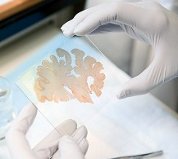 This program will be led by Ann McKee, MD, professor at Boston University School of Medicine (BUSM), director of the Neuropathology Service for VA New England Healthcare System and co-director of the BU CSTE, and Lee Goldstein, MD, PhD, a BU CSTE investigator and associate professor at Boston University's School of Medicine and College of Engineering. In addition, McKee is leading a biomarker study funded by the Department of Veteran Affairs aimed at identifying CTE in military veterans from the Iraq and Afghanistan conflicts.
CTE has been diagnosed in patients exposed to repeated brain trauma, including athletes who participate in contact sports, as well as military veterans and victims of abuse.
As part of its comprehensive Talent Wellness Program, WWE has been a leader in concussion prevention, education and management, with mandatory ImPACT™ testing for all talent. ImPACT (Immediate Post-Concussion Assessment and Cognitive Testing) is the first, most-widely used and most scientifically validated computerized concussion evaluation system. In 2008, WWE was the first major sports-entertainment organization to include ImPACT testing as part of its Talent Wellness Program, where every one of its talent undergoes baseline neurocognitive testing. In addition, WWE consistently updates its safety policies as new research becomes available. WWE’s Talent Wellness Program, which has been in place since 2006, also includes cardiovascular testing, medical and wellness staffing, annual physicals, drug testing and health care referrals.
“WWE is proud to help advance this critical research to help anyone at risk of suffering CTE,” said Paul Levesque, EVP Talent and Live Events for WWE. “WWE has been, and will continue to be, very proactive on taking measures to ensure the health and wellness of our talent.”
“We appreciate the generosity of WWE,” said Christopher Nowinski, Co-Founder and Executive Director of the Sports Legacy Institute. “I enjoyed my time at WWE, and I am excited to reunite with the organization on this important cause that will benefit a lot of people we both care about.”
SLI was founded in 2007 by Robert Cantu, MD, and Christopher Nowinski, a former WWE Superstar, who was forced to retire in 2003 due to the effects of a lifetime of brain trauma sustained in football, soccer and WWE. Both serve as co-directors of the BU CSTE.
CTE is a degenerative brain disease associated with repeated brain trauma, including concussions and multiple subconcussive exposures such as those in contact sports and military combat, and appears to be slowly progressive in most individuals. In early stages, CTE is characterized by the presence of abnormal deposits of a protein called tau in the form of neurofibrillary tangles, glial tangles and neuropil threads throughout the brain. These tau lesions eventually lead to brain cell death. The vast majority of individuals pathologically diagnosed with CTE showed clinical symptoms involving cognitive, behavioral or mood impairments which worsened over time.
"We've come a long way in 5 years; this funding will further accelerate the pace of our research and hasten the development of methods to detect CTE during life as well as identify treatments to slow or stop its progression," said McKee.
More than 600 living athletes have committed to donate their brain to the CSTE after death, including dozens of current and former WWE Superstars.
New BUSM Study Explores Providers’ Perceptions of Parental Concerns about HPV Vaccination
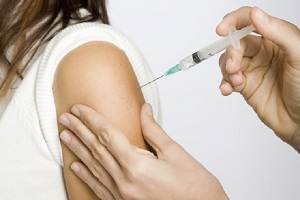
A new Boston University School of Medicine (BUSM) study has found that low-income and minority parents may be more receptive to vaccinating their daughters against Human Papillomavirus (HPV), while white, middle-class parents are more likely to defer the vaccination. The findings appear online in the May issue of the Journal of Health Care for the Poor and Underserved.
Cervical cancer incidence and mortality are markedly higher for low-income and minority women due to higher rates of HPV and limited access to screening and treatment. Vaccination for HPV has the potential to reduce health care disparities in cervical cancer rates if girls are vaccinated prior to sexual experimentation. Although providers felt that parents wanted to prevent cervical cancer in their daughters, some had concerns about safety of the vaccine and promoting early or unsafe sexual activity.
“Approximately 33,000 Americans will get an HPV-related cancer each year, many of which can be prevented by vaccination,” said the lead author Rebecca Perkins, MD, professor of obstetrics and gynecology at BUSM. “Solid communication between parents and providers is the key to improving HPV vaccination rates, which is what this study seeks to measure.”
Researchers interviewed 34 pediatric and family medicine physicians and nurse practitioners in four community health centers serving Boston’s low-income, minority populations. The providers answered open-ended interview questions about how they thought parents felt about vaccinating their daughters against HPV. They also were asked to role-play their HPV vaccination script using language they typically use to introduce the HPV vaccine to parents.
Immigrants, especially those from Latin America, viewed the vaccination more positively because they had experience with vaccine-preventable diseases and cervical cancer in their home countries. While providers did not note any difference in the sexual behaviors of adolescents from families of different ethnic backgrounds or incomes, they found that immigrant parents had more realistic impressions of their daughters’ sexual activity than White middle-class parents.
The findings of this study may be applicable to larger disparities seen nationwide in HPV vaccination rates. Funding for this study was provided by an American Cancer Society Mentored Research Scholar Grant MRSG- 09-151-01.
Metcalf Cup and Prize Winner: MED’s Deborah Vaughan
Her teaching formula: technology + professionalism = great doctors
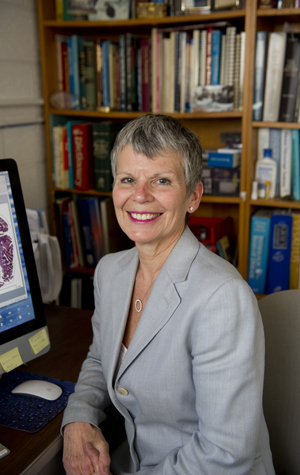
Most people return from summer vacation sporting a tan and with memories of relaxation. Deborah Vaughan came back from hers last year with hundreds of exam questions on computer software for School of Medicine students.
As passionate about work as about downtime, Vaughan (GRS’72) pioneered computer-based exams at MED and early on adopted other technology to quiz students in lectures and discussion groups. Now, conveying old-fashioned medical professionalism while seizing new-fashioned technology has won the professor of anatomy and neurobiology the 2013 Metcalf Cup and Prize, the University’s highest teaching honor.
“I was astonished” to learn of the award, says Vaughan, director of MED’s course in medical histology, the microscopic study of tissues. In addition to recognizing her innovations, she says, the award reflects “the strong support of MED for teaching, and especially the support of our talented educational technology personnel.”
For Vaughan, the human touch is every bit as important as machines are. Also MED’s assistant dean for admissions, she tries to meet personally with students, many of whom “have not previously experienced a faculty member who reaches out to them,” she says. And although she holds a PhD rather than an MD, she believes she can still “model the professionalism we attempt to develop in our students. I am available to them, I communicate readily and in a timely manner, and the respect I have for all my students is apparent to them.…I invite struggling students to meet with me, a request they appreciate and to which they respond favorably.”
Vaughan “is one of the select few who embrace change, especially when it is for the betterment of curriculum and/or for students’ learning,” according to a letter from colleagues nominating her for the Metcalf Cup and Prize. “It is more than common to receive enthusiastic emails from her before the sun rises as she beams about the latest tool she’s using to augment her course for the better.”
She has used technology to modernize histology, a course formerly involving lectures and laboratory sessions in which students examined glass microscope slides with a high-resolution light microscope. “In the late 1990s, I reversed the traditional order of a lecture followed by a laboratory session,” she says. “Thereafter, our students completed the laboratory exercises, guided by a faculty instructor,” before going to a lecture.
“This unconventional arrangement assured that the students would be familiar with the relevant histological structures and vocabulary before attending a lecture,” boosting learning efficiency, Vaughan says. In 2007, the histology course entered the digital age, losing the microscopes and slides for digitized images, leading to “a major pedagogical redesign of my course.”
Students now learn topics in three steps—self-study of tissue images; an interactive, small group discussion led by faculty; and a large lecture. “The three steps incorporate different learning approaches in different social contexts,” says Vaughan. “This design keeps the curious student engaged, while building on previously acquired knowledge.”
In 2002, she published an interactive online histology atlas as a lab guide for BU students; today, she says, it’s “an internationally popular” learning tool.
Vaughan earned a BA in biology from the University of Vermont before coming to BU for her doctorate. She did postdoctoral work in neuroanatomy here. She wrote a histology textbook and has twice won the Medical Campus Educator of the Year Award. She sits on the board of the International Association of Medical Science Educators.
The Metcalf awards, presented at Commencement, date to 1973 and are funded by a gift from the late Arthur G. B. Metcalf (SED’35, Hon.’74), a former BU professor and Board of Trustees chairman emeritus. The Metcalf Cup and Prize winner receives $10,000, the Metcalf Award winners $5,000 each. A University committee selects winners based on nominees’ statements of teaching philosophy, supporting letters from colleagues and students, and classroom observations of the teachers. John Finnerty, a College of Arts & Sciences associate professor of biology, and Carol Brennan Jenkins, a School of Education associate professor of curriculum and teaching, won this year’s Metcalf Awards.
More information about Commencement can be found on the Commencement website.
This BU Today story was written by Rich Barlow.
New NHLBI Director Speaking on BU Medical Campus, May 14
Join Gary H. Gibbons, MD, the newly named director of the National Heart, Lung, and Blood Institute (NHLBI) at the National Institutes of Health (NIH) during his inaugural visit to the BU Medical Campus. Dr. Gibbons will be speaking on "Setting a New Agenda for the NHLBI: Imagining Our Future" on Tuesday, May 14, 1-2 p.m. in Keefer Auditorium.
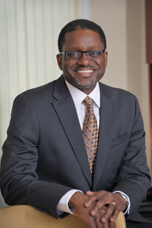
Prior to being named director of the NHLBI, which is the third largest institute of the NIH, he served as a member of the National Heart, Lung, and Blood Advisory Council (NHLBAC) from 2009-2012. He was also a member of the NHLBI Board of Extramural Experts (BEE), a working group of the NHLBAC.
Before joining the NHLBI, Dr. Gibbons served as chair of the Department of Physiology, and professor of physiology and medicine at the Morehouse School of Medicine in Atlanta. He also served as founding director of Morehouse’s Cardiovascular Research Institute, which during his tenure emerged as a center of excellence, leading the way in discoveries related to the cardiovascular health of minority populations. Dr. Gibbons received patents for innovations derived from his research in the fields of vascular biology and the pathogenesis of vascular diseases.
He earned his undergraduate degree from Princeton University, graduated magna cum laude from Harvard Medical School and completed his residency and cardiology fellowship at Brigham and Women's Hospital in Boston. Dr. Gibbons is the recipient of numerous honors, including election to the Institute of Medicine of the National Academies of Sciences and selection as a Pew Foundation Biomedical Scholar.
Setting a New Agenda for the NHLBI: Imagining Our Future
- Gary H. Gibbons, MD, New Director National Heart, Lung, and Blood Institute (NHLBI)
- Tuesday, May 14, 1-2 p.m.
- Keefer Auditorium
May 13 Kirshenbaum Lecture: Constitutional Dimensions of the Doctor-Patient Relationship Presented by George Annas
George Annas, JD, MPH, recognized expert on health law, bioethics and human rights, scholar and teacher, will present the annual Howard D. Kirshenbaum, MD, Lecture to the medical campus community including members of Dr. Kirshenbaum’s family on Monday, May 13. He will speak on “Constitutional Dimensions of the Doctor-Patient Relationship”
Annas is the William Fairfield Warren Distinguished Professor, the Edward R. Utley Professor, and Chair of the Department of Health Law, Bioethics and Human Rights at BU School of Public Health and a professor in both the School of Medicine and the School of Law. He earned a JD from Harvard Law School and an MPH from Harvard School of Public Health, where he was a Joseph P. Kennedy Fellow in Medical Ethics. Annas clerked for Justice John V. Spalding of the Massachusetts Supreme Judicial Court before coming to BU in 1972 as the director of the Center for Law and Health Sciences at the Law School.
Author or editor of 16 books on health law and bioethics, Annas has been characterized as “the father of patient rights.” He is a member of the Institute of Medicine of the National Academies, a fellow of the American Association for the Advancement of Science, co-chair of the American Bar Association’s Committee on Health Rights and Bioethics, and a member of the Committee on Human Rights of the National Academies. Annas is the cofounder of Global Lawyers and Physicians, a transnational professional association of lawyers and physicians collaborating to promote human rights and health. He has also held a variety of government regulatory posts.
His presentation, “Constitutional Dimensions of the Doctor-Patient Relationship” will be given in memory of Dr. Kirshenbaum, a highly regarded cardiologist, who died May of 2010. The Kirshenbaum Lecture was established by Elaine Kirshenbaum, wife of Dr. Kirshenbaum. A graduate of BU College of Liberal Arts, BU School of Education and BUSPH, Mrs. Kirshenbaum is a member of the Boston University Board of Trustees and a member of the School of Medicine Dean’s Advisory Board. Son, Daniel, graduated from BUSM in 2011 and daughter, Jennifer, graduated from BU School of Law.
Howard D. Kirshenbaum, MD Lecture
- Constitutional Dimensions of the Doctor-Patient Relationship
- George J. Annas, JD, MPH
- Monday, May 13, 5 p.m.
- 670 Albany St., First Floor Auditorium
- Reception to follow
May 15 Seminar: Connected Health as a Tool to Improve Patient Engagement and Empowerment
Don’t miss the MISU/BMC/VA/BU Medical Informatics Seminar, “Connected Health as a Tool to Improve Patient Engagement and Patient Empowerment."
Learn about how connected health programs, including remote monitoring, mobile health initiatives and other technology-enabled interventions can create behavior change, generate efficiencies and improve the quality of patient care. Specific solutions address cardiac care, at-risk pregnancies, opioid addiction, and diabetes and blood pressure issues.
This seminar will be given by Joseph C. Kvedar, MD, founder and director of Partners Healthcare Center for Connected Health, an organization focused on strategies to move care from the hospital or doctor’s office into the day-to-day lives of patients. By leveraging information technology including cell phones, computers, networked devices and simple remote health monitoring tools, providers and patients may be able to better manage chronic conditions, maintain health and wellness and improve adherence, engagement and clinical outcomes.
Connected health as a tool to improve patient engagement and patient empowerment
- Date: Wednesday, May 15
- Time: 4-5 p.m.
- Location: Crosstown Center
- 801 Mass. Ave., 2nd Floor, Conference Room 2127/2128
- Speaker: Joseph C. Kvedar, MD
For more information please contact Efua Gyan at efua.gyan@bmc.org or 617-638-7580.
May 12 Performance by BUMC Arts Outreach Initiative Artists and BMC Patients
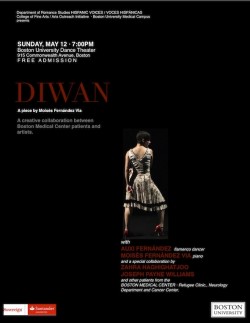 The BU Medical Campus Arts Outreach Initiative invites all members of the Medical Campus community to an innovative performance project conceived to support and honor the recovery of a selected group of patients from the Boston Medical Center’s Refugee Clinic, Cancer Center and department of Neurology. “DIWAN” is a pilot experience in creative collaboration between artists and patients, where participants will join on stage with acclaimed Spanish artists including flamenco dancer Auxi Fernández and pianist Moisès Fernández Via.
“This performance is an innovative dialogue between music, theatre, dance, and the passionate poetic world of Andalusian poetry. It is a garden for the senses,” explained Moisès Fernández Via, Project Curator and Researcher for the Arts Outreach Initiative. The initiative is an unprecedented partnership between Boston University College of Fine Arts (CFA) and the Medical Campus. Moisès serves as CFA’s liaison in the Medical Campus identifying, developing and implementing opportunities to foster interdisciplinary dialogue, building productive relationships between artistic creativity and health care practice.
- DIWAN
- Sunday, May 12, 7 p.m.
- Boston University Dance Theatre, Charles River Campus
- 915 Commonwealth Avenue, Boston
- Free admission
June 5 Health Services Research Workshop
Boston University Medical Campus
Health Services Research Workshop
Wednesday, June 5
Hiebert Lounge, cookies available
| 2:00 | Overview of Health Services Research. Dan Berlowitz, MD, MPH, Professor, BUSPH and Director, CHQOER |
| 2:15 | Getting Started in Health Services Research. William Fernandez, MD, Assistant Professor, Dept of Emergency Medicine and Doctoral Student BUSPH Dept of Health Policy and Planning |
| 2:30 | Career Development Awards in Health Services Research. Renda Wiener, MD, Assistant Professor, BU Section of Pulmonary, Allergy, Sleep and Critical Care Medicine |
| 2:45 | Assessing Quality of Care Using Large Databases. Adam Rose, MD, MPH. Associate Professor, BU Section of General Internal Medicine |
| 3:15 | Patient-Centered Health Services Research: Taking Account of Patient Perceptions of Care. Barbara Bokhour, PhD, Associate Professor, BUSPH |
| 3:45 | Reducing Disparities in Healthcare. Judy Jones, DDS, Professor, BU School of Dental Medicine |
| 4:15 | Implementing Best Practices in Clinical Care: |
| Allen Gifford, MD, Professor, BUSPH and Associate Director, CHQOER | |
| Carol VanDeusan-Lukas, EdD, Clinical Associate Professor, BUSPH | |
| 4:45 | Future of Health Services Research. David Rosenbloom, PhD, Professor and Chair-Ad Interim, BUSPH |
| 5:00 | Adjourn |
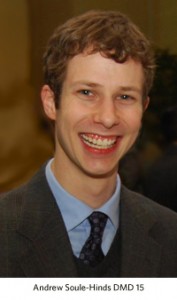
Schweitzer Fellow Andrew Soule-Hinds DMD 15: On a Mission to Improve Dental Care for Underserved
Boston University Henry M. Goldman School of Dental Medicine (GSDM) student Andrew Soule-Hinds DMD 15 was chosen in March 2013 for the highly selective Boston Albert Schweitzer Fellowship. He joins the nearly 500 Schweitzer Fellows who have collectively delivered over 90,000 hours of service to communities in and around Boston and Worcester since the program’s founding in 1992. Each Fellow executes a yearlong project that provides service to the local population.
 According to the Schweitzer Fellowship website, “the Boston Schweitzer Fellows Program is the oldest of thirteen Schweitzer program sites across the U.S. dedicated to developing a pipeline of emerging professionals who enter the workforce with the skills and commitment necessary to address unmet health needs.”
According to Associate Dean for Global and Population Health Dr. Michelle Henshaw, “The Henry M. Goldman School of Dental Medicine, in collaboration with Boston University’s School of Medicine, School of Public Health, and Sargent College, sponsored Boston University’s membership in the Schweitzer Fellowship Program’s Consortium of Universities. The fellowship provides talented students from diverse health professions the opportunity to become leaders in service by learning from nationally recognized experts and from each other. By entering into the consortium, the University has ensured that the four remarkable Schweitzer Fellows from Boston University will have a structured venue to share their knowledge, skills, and expertise with each other and the opportunity to jointly design and implement an outreach project for an underserved community in Boston.”
Dr. Henshaw continues, “Past fellows have had a tremendous impact on the health and quality of life of the communities they served and report that the fellowship was one of the most meaningful experiences of their education. I predict that this year’s Interprofessional collaboration will have a synergistic effect, enhancing the experience for the students and the positive impact on the community. I can’t wait to see what Andrew and his peers accomplish during their fellowship year.”
This is the second year in a row that a GSDM student has chosen to dedicate their service to the community under a Schweitzer Fellowship. As a 2012–13 Schweitzer Fellow, Dhara Shah DMD 13 has been working on a mission to establish a sustainable and duplicable dental program with Harbor Area Early Childhood Center.
The target population for Soule-Hinds’s project is survivors of human trafficking living in the greater Boston area, typically women in their twenties. These survivors usually have had little or no health care while being trafficked, including oral health care. Soule-Hinds discusses his choice of this topic, “Not even a month ago I was unaware that human trafficking was something that existed in my area. Knowing that such a horrific problem exists, and knowing that it exists in our own neighborhood was a harsh realization for me. As I learn more about the problem, and what can be done to help, I look forward to sharing what I have learned with others.”
A significant part of Soule-Hinds’s project is dedicated to learning more about the needs of human trafficking survivors, especially gaining specialized sensitivity training to understand how to customize a treatment environment for people who have endured this specific type of trauma. He will be working with the non-profit organization Amirah, dedicated to providing “whole person aftercare for survivors of commercial exploitation.” His goal is to add oral health care to the health services offered by Amirah.
The execution of Soule-Hinds’s project will entail coordinating oral health care for the human trafficking survivors. These appointments will take place in a customized environment where the survivors will be treated by GSDM practitioners who have undergone sensitivity training. The long-term goal is to establish a working relationship with Amirah so that GSDM can continue to help survivors of trafficking.
Soule-Hinds first became aware of populations underserved in medical and oral health care as he grew up in rural Maine. Though he didn’t know what form it would take, he knew that he wanted to bring oral health care to people who would otherwise not be able to obtain it. Soule-Hinds explains, “At the end of the fellowship I will have created a successful project linking an under-served population with the oral health care that it needs. In doing so I hope to have developed the organizational and leadership skills required to coordinate other multidisciplinary health projects in the future. I feel that giving back to others is one of the best ways I can appreciate opportunities that have been given to me.”
Dean Jeffrey W. Hutter adds, “Congratulations to Andrew on becoming a Schweitzer Fellow. His plan to provide oral health care to an underserved population exemplifies the mission of the Henry M. Goldman School of Dental Medicine to promote excellence in community service and to improve the overall health of the global population.”
Submitted by Mary Becotte, GSDM Communications.