Student Updates
Jan. 26 Visiting Professor Lecture: Optimal Structure of Basic Sciences at AMCs
"Optimal Structure of the Basic Sciences at Competitive University Academic Medical Centers"
 Arthur G. Palmer, PhD
Visiting Professor
Associate Dean, Graduate Affairs; Robert Wood Johnson, Jr. Professor of Biochemistry and Molecular Biophysics; Vice Chair, Biochemistry and Molecular Biophysics; Columbia University College of Physicians and Surgeons
Dr. Palmer's research interests include:
• Structure, function and dynamics of proteins and protein complexes
• NMR spectroscopy of biological macromolecules
• Molecular dynamics simulations of biological systems
• Fluorescence spectroscopy of biological systems
Thursday, Jan. 26
9-10 a.m.
Instructional Building, Hiebert Lounge
Coffee and tea reception to follow
Feb. 15 Deadline NIH (S10) Shared Instrumentation Grants
| Feb. 15 Deadline NIH (S10) Shared Instrumentation Grants
The internal deadline for 2017 Shared Instrumentation Grants pre-submission applications is Wednesday, Feb.15. An internal review is needed because while there is no limit to the number of S10 applications submitted, there is a limit of one application from the University for the same type of instrument. The NIH deadline for the S10 grants is 5 p.m. on May 31. Please go to Shared Instrumentation Grant Program to complete the forms for the internal review. Below are the SIG program announcements and online applications:
Questions? E-mail the Office of Associate Dean For Research at adrbumc@bu.edu. |
Jan. 23 Provost Workshop: Model Interventions for Urban Homelessness

Monday, Jan. 23
2-5 p.m.
Instructional Building, Hiebert Lounge
Join a robust panel of BUMC faculty and community leaders, experts on the issue of homelessness, in a discussion about current and planned state and city-wide programs.
Community Leaders
Monica Bharel, MD, MPH
Commissioner, Massachusetts Department of Public Health
James Greene
Director, Emergency Shelter Commission, City of Boston
Heavenly R. Mitchell MHA, LSW
Director, Healthy Start Systems
Jennifer Tracey
Director, Office of Recovery Services, City of Boston
BUMC Faculty
Harold Cox, MSSW
Associate Professor, Community Health Sciences, BUSPH
Emily Feinberg, ScD
Associate Professor, Pediatrics, BUSM; Community Health Sciences, BUSPH
Jessie Gaeta, MD
Assistant Professor, Medicine, BUSM
David Rosenbloom, PhD
Professor, Health Law, Policy & Management, BUSPH
Richard Saitz, MD, MPH
Professor & Chair, Community Health Sciences, BUSPH; Professor, Medicine, BUSM
Jeffrey Samet, MD, MPH
Professor, Medicine, BUSM
Two lively panel discussions will be followed by audience questions.
Students, faculty and staff are welcome.
Transportation Services for Jan. 16, Martin Luther King Day
The Martin Luther King, Jr. holiday will be celebrated on Monday, Jan. 16. Below is parking and commuting information for that day only.
All parking facilities will be open. 610 Garage monthly parkers may park in the 710 Albany Street or Doctors Office Building (DOB) garages. Those who are not enrolled in the monthly parking program may park in 710 and DOB garages for $7.
NO Shuttle Services will be operating including the East Boston HealthNet Shuttle and the Boston University Shuttle (BUS).
All buses and trains will operate on a Saturday schedule except the CT1 and the CT3 which are NOT operating. Commuter rail will operate on its regular schedule. For additional MBTA information visit www.mbta.com or call customer service at 617-222-3200.
Any questions? Call TranSComm at 638-7473 or the Parking office at 638-4915.
TranSComm Offers 20+ Discounts, Services and Programs
TranSComm (Transportation Solutions for Commuters) provides services and programs to assist with the transportation needs of the Medical Campus community. Their programs promote alternatives to driving alone, reducing traffic congestion and air pollution and enhancing accessibility in and around the Campus. The office has been helping students, employees, patients, and visitors with their transportation needs since 1991.
Some of the discounts, services and programs they offer include:
- BU employee MBTA subsidized T-pass program
- BU student semester (fall and spring) discounted MBTA pass
- Blank Charlie Cards available to load
- Guaranteed Ride Home for faculty/staff MBTA pass holders in emergency situations
- Carpool/Vanpool: Preferential parking before 11 a.m. in the 610 Garage (must have 610 Garage access)
- Hybrid: Preferential parking before 11 a.m. in the 610 Garage (must have 610 Garage access)
- Electric vehicle charging stations: Eight spaces in 710 Garage and four spaces in 610 Garage
- Ride matching: Assistance with finding carpool partner(s)
- Zipcar: Discounted membership
- Bike cage and rack access: Located throughout campus, including two secure cages (behind 710 Garage and next to E. Newton Pavilion), $20 for 12 month period
- Hubway: Discounted membership, $37.50
- Motorized Scooter & Vespa parking: $20 parking for 12 months. Can park in bike cage if electric, 610 Garage if gas
- Three bike maintenance stands and multiple bike pumps in bike cages
- Discounted bike helmets: $5 Bell bike helmets for adults and children
- Bike maintenance and safetyworkshops
Miscellaneous Services and Information
- Individualized commute assistance: Help with mapping out the best route for you
- Free South End campus walks: Learn history and fun facts through Walk Boston
- Free lending programs for umbrellas, books and bike locks
- BU shuttle Lost & Found
- Schedules, maps and routes: MBTA, HealthNet, VA, BU BUS, inner campus and evening shuttles, bike route and bike parking maps, campus maps
“TranSComm is currently partnering with Zipcar, Vision Zero and MassCommute to promote safe, green commuting for drivers, cyclists and pedestrians,” says Michelle Tse, TranSComm’s Operations Manager. Michelle and her team are also available to present at campus events such as wellness fairs and orientation meetings.

If you have questions or suggestions, contact TranSComm:
710 Albany St.
Monday through Friday 9 a.m.–5 p.m.
617-638-7473
Jan. 19 Event Celebrates Legacy of MLK

Thursday, Jan. 19,
Instructional Building, Hiebert Lounge
Noon
“On the Way We Go: Chaos or Community?”
Kenneth Elmore, JD, Associate Provost and Dean of Students, Boston University
12:40 p.m.
Refreshments and Music Interlude
“Motherless Child” performed by Margaret Lee (vocal), Moises Fernandez (piano)
1 p.m.
Town Meeting
A conversation about the current national climate and its implications for diversity, inclusion, health care and other areas. This is an opportunity to come together as a community and share thoughts and feelings in a safe environment.
This event is sponsored by BUSM Office of Diversity and Multicultural Affairs in collaboration with the BMC Human Resources Department, Henry M. Goldman School of Dental Medicine Office of Diversity, BU School of Public Health and the BMC Minority Recruitment Program. This event, including Dean Elmore’s speech and the Town Meeting to follow, will be videotaped and posted on BUniverse (Boston University’s YouTube Channel).
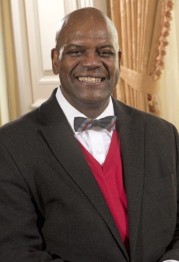 Kenneth Elmore
As Associate Provost and Dean of Students at BU Dean Elmore coordinates efforts to provide a safe environment where students can find their way within BU’s vibrant academic community. Additionally, Dean Elmore works with the President of the University to raise philanthropic support for undergraduate student scholarships, and shares leadership and management of a variety projects. As Dean of Students he advises student organizations, plans ways to acclimate students to the University, sets and regulates standards, offers academic support, and helps students navigate career goals. Appointed in 2003, Dean Elmore has more than 25 years of administrative experience in higher education. Trained as a lawyer, Dean Elmore attended New England Law and has a degree in Psychology from Brown University. He also holds a Master of Education in Policy, Planning & Administration from BU.
Jan. 17 Implementation in Progress Lunchtime Series
Evans Center for Implementation and Improvement Sciences
Department of Medicine Implementation in Progress Lunchtime Series
“Regression Discontinuity Design: A New Quality Improvement Paradigm?”
with Alexandra Yurkovic, MD, and Nicholas Cordella
January’s Implementation in Progress Meeting will focus on exciting new opportunities to apply regression discontinuity design to ongoing quality improvement initiatives such as readmission reduction efforts
Tuesday, Jan. 17
Noon-1 p.m.
Houseman Building, R115
Lunch will be provided | Open to all BUMC faculty and staff
For more information about the CIIS visit: http://sites.bu.edu/ciis/
For questions contact Caitlin Allen at cgallen@bu.edu
Legalized Marijuana: What You Need to Know
Public use, smoking under age 21 still illegal

The legalization in Massachusetts of recreational marijuana use, starting December 15, doesn’t mean that every Terrier will now be able to light up. And for those who can, smoking pot on campus, including in dorms rooms, will still be illegal.
While the ballot initiative passed by voters last month allows legal use for those 21 and older, it continues the ban on public pot smoking. Because colleges receive federal money and are bound by federal law, which still prohibits marijuana possession and use, using the drug on campuses remains forbidden for both students and nonstudents.
“The enforcement policy will continue for those under 21 and for smoking in public,” says Scott Paré, acting chief of the BU Police Department. “The use, possession, distribution, or cultivation of marijuana for recreational or medical purposes is not allowed in any Boston University residence hall or on any other Boston University premises. Nor is it allowed at any University-sponsored event or activity off campus or at any student organization event or activity.”
Violators may face “civil citation, state or federal prosecution, and University discipline,” Paré adds.
Adults who can use legally, off campus, under the law are limited to possessing one ounce of dried pot or 5 grams of concentrated substance on their person, with another 9 ounces permitted in their primary residence, for a total of 10 ounces permissible at home. Adults can grow up to 6 plants individually, or 12 plants per household when more than one adult lives in the home. Massachusetts law also prohibits driving under the influence of marijuana.
The law will create a “legal gray zone,” in the Boston Globe’s words: while possession, purchase, and use will be legal as of December 15, retail stores selling pot cannot open until January 1, 2018. Nor can you bring marijuana in from other states, including the five states besides Massachusetts that have legalized recreational pot, says Seth Blumenthal, a BU Writing Program lecturer who teaches courses on marijuana law and endorsed the ballot initiative.
Bottom line for adults off campus: “Growing is the only legal way to get it when the law goes into effect,” says Blumenthal (GRS’13). “There are several regulations to growing: how much, where, and what you can do with it after, so that is something people should look at very carefully first.”
On the other hand, the law may affect fewer Terriers than many people think.
“There is a misperception on campus that marijuana use is common among BU students,” says Katharine Mooney (SPH’12), director of Student Health Services (SHS) Wellness & Prevention. In fact, a recent randomized survey revealed that 82 percent of students either have never used marijuana or hadn’t used it in the previous month, she says.
According to BUPD statistics, 61 students have received civil citations for marijuana use in the last three years.
Because federal law still makes marijuana illegal, “traveling out of the state with pot could bring in federal prosecution” for users, “especially on airplanes,” Blumenthal says. “The federal government has cracked down on some rogue dispensaries or growing operations, but nothing much on the user level. I would also point out possible implications of pot use for some international students and their federal status.”
Legalities aside, there are health reasons to dissuade younger people from pot. “Research has consistently shown that brain development of marijuana users who start young is different from those who start after the brain is fully developed”—around the age of 25, says Leah Barison, an SHS wellness counselor. Adolescent brains are “uniquely sensitive” to pot’s effects, Barison says, particularly in the hippocampus, which controls memory, the cerebellum (regulating coordination and muscle control), the basal ganglia (learning and motor skills), the amygdala (emotions), and the cerebral cortex (thinking).
“In the short term,” she says, “effects on these brain areas can impact memory, judgment, perception, and coordination, which, for our students, may mean impaired learning, lower sports performance, and impaired judgment, leading to altered decision-making.” Long-term consequences could be “poor attention, reduced processing speed, reduced memory, and lower IQ.”
This BU Today story was written by Rich Barlow. He can be reached at barlowr@bu.edu
New Degree Program Focuses on Health Sciences Education

This October, a new program – the Master’s of Science in Health Sciences Education (MSHSE) – was unanimously approved by BU School of Medicine, the University Council Committee on Graduate Programs and Policies and the University Council. The program is offered through the Division of Graduate Medical Sciences (GMS), in collaboration with the School of Education (SED); Jeffrey Markuns, MD, EdM, assistant professor of Family Medicine serves as Program Director. Recruitment is underway for the inaugural class, who will matriculate in fall 2017. For more information, go to https://www.bumc.bu.edu/msed/hse/
The program offers those with degrees in nursing, medicine and other health-related areas an opportunity to pursue graduate studies in medical education. The MSHSE provides training in the principles of education and teaching that are applicable and adaptable to a specific health sciences discipline. It is designed to improve teaching skills and other aspects of health sciences education to help students advance their careers.
“This program will educate and train faculty from all the health professional fields who are committed to establishing themselves as master educators,” said Markuns. “The broad range of required courses along with a mentored practicum will produce world-class faculty in health sciences education.”
A certificate option is available for those with limited time and resources or who already have a strong background in general education, as well as the part- and full-time options to pursue the Master’s degree The certificate and Master’s degree options are available for the tuition remission benefit for eligible BU faculty and staff The program is expected to be initiated on campus in the classroom, but then students will be able to pursue a schedule that allows for part-time participation. Practicum based, it is designed for students to apply new skills from their studies directly to issues they already are seeking to tackle in their daily work.
The MSHSE provides numerous benefits to the University:
- It provides an opportunity for those faculty interested in developing additional skills in teaching and education to pursue an advanced degree directly relevant to their daily work using BU tuition remission.
- The program raises the profile of educational faculty throughout BU and creates new partnerships with educators from throughout the institution.
- With an eye towards additional distance-learning options, the MSHSE offers faculty development mechanisms for internationalteachers in the health sciences from institutions around the world.
PROGRAM HIGHLIGHTS
The Certificate and Master’s in Health Sciences Education are offered through the Division of Graduate Medical Sciences (GMS), in collaboration with the School of Education (SED), plus electives offered in the Schools of Medicine and Public Health
- Strong focus on practical skills application
- Core courses emphasizing curriculum development, research, evaluation, and teaching
- Robust practicum experience personalized for specific career goals
- Support and mentorship
Study Finds that School Shootings Less Likely in States with Background Checks
In a bid to address gun violence, researchers from Boston University Schools of Medicine and Public Health and Columbia School of Law drew analysis of media coverage of school shootings between 2013 and 2015 to see if the frequency of these events could be linked to state-level factors.
The study, led by Assistant Professor of Medicine Bindu Kalesan, PhD, MPH, found that school shootings are less likely in U.S. states with mandatory background checks on gun and ammunition purchases and with higher levels of spending on mental health services and public education.
Although this was an observation study without information on the perpetrators’ mental health, Kalesan notes “Our results may have a direct implication for public health approach to gun violence prevention and emphasizes the need for a national surveillance registry of mass shootings and school shootings with retrospective and prospective information to be a priority to better inform studies that consider the drivers and consequences of school shootings.”

shootings between 2013 and 2015
Read the full study here.