Student Updates
March 9 BUMC Voicemail System Upgrade
On Thursday, March 9, beginning at 7 p.m. and lasting for approximately two hours, the voicemail system on the Medical Campus will be upgraded. Voicemail will not be available during the upgrade.
Please note: Any messages in your current voice mailbox cannot be migrated to the new system. Please make sure you transcribe/handle any voicemail message in your current mailbox as they will no longer be available after the March 9 upgrade.
Directions for setting up your new mailbox will be available closer to the upgrade. Questions? Contact Rich Meredith.
Fourteen Faculty Promoted to Professor
Congratulations to the following BUMC faculty who have been promoted to the rank of Professor:
 |
Daniel Alford, MED, Medicine/General Internal Medicine, is a renowned clinician educator and scholar in addiction medicine and safe opioid prescribing for pain. For the past 15 years he directed the NIDA-funded Chief Resident Immersion Training (CRIT) in Addiction Medicine that has educated more than 390 chief residents and faculty from 117 residency training programs. In 2013 he developed the Safe and Competent Opioid Prescribing Education (SCOPE of Pain) program, which has trained more than 34,000 clinicians nationally. Dr. Alford has received numerous teaching and service awards, among them from the American Medical Association, White House Office of National Drug Control Policy, American College of Physicians, American Society of Addiction Medicine and Association for Medical Education and Research in Substance Abuse. |
 |
Stephan Anderson, MED, Radiology/Body Imaging, an expert in in-vivo and in-vitro imaging, has forged transdisciplinary collaborations with mechanical engineering in micro/nanotechnology, to develop novel contrast agents and imaging technologies. His has studied diffuse liver disease in ex-vivo specimens and small animal models, in addition to developing and validating imaging techniques in diffuse liver disease and in trauma. Dr. Anderson is the PI or Co-PI on four grants(National Science Foundation, National Institutes of Health, GE Healthcare and Philips Healthcare). He is the author or co-author of 47 peer-reviewed publications, 26 review articles, a book and seven book chapters. |
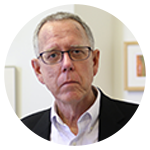 |
Jack Clark, SPH, Health Law, Policy & Management, an internationally known medical sociologist and health scientist, developed the concept of “regret” in patients following their decisions about the type of care they receive, first defined in studies to characterize the psychosocial outcomes of prostate cancer treatment. He developed patient-centered tools to assess care outcomes and led studies to improve the quality of care provided in the Veteran’s Health Administration. The five current research projects in which he collaborates, funded by the VA Health Services Research & Development Service, VA Office of Rural Health and American Cancer Society, have yielded more than a dozen published peer reviewed papers in the past two years. |
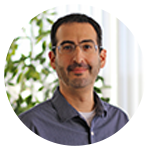 |
Matthew Fox, SPH, Epidemiology and Global Health, an internationally known infectious disease epidemiologist, studies childhood pneumonia in resource-deprived countries and treatment adherence among underserved HIV-infected individuals. He plays a key role in the Center for Global Health and Development and was instrumental in building BU’s relationship with the Health Economics and Epidemiology Research Organization (HE2RO) in South Africa, where he currently serves as co-director. The World Health Organization has formulated policies on treatment protocols based on Dr. Fox’s work. He serves as the PI or Co-I on grants from the World Bank, Gates Foundation, National Institutes of Health and USAID/South Africa. |
 |
Tarik Haydar, MED, Anatomy & Neurobiology, is a neuroscientist well recognized for his cutting-edge research in brain development in Down’s syndrome. His work has also explained how neural progenitors generate the variety of neurons within the developing neocortex. He has published 45 papers, as well as invited editorials and critical reviews, in Science, Cell, Neuron, PNAS, Journal of Neuroscience, and Nature Neuroscience. Dr. Haydar has served on several dozen NIH review committees and recently Chaired the Neural Cell Fate NIH Study Section. He has been continuously funded since his arrival at BU in 2010, serving as the PI on four active grants, including an R01. |
 |
Robin Ingalls, MED, Medicine/Infectious Diseases, is an expert in innate immunity, sexually transmitted diseases and bacterial pathogenesis. Her work is critical to our understanding of a number of human diseases including sepsis, pelvic inflammatory disease and pneumonia. She serves on the Innate Immunity and Host Defense study section for the National Institutes of Health and the VA Infectious Disease Merit panel. Dr. Ingalls has been continually grant funded since 1995. She excels in collaborating with basic scientists to develop innovative, clinically relevant research. |
 |
Virginia R. Litle, MED/Cardiothoracic, is an expert in the management of chest malignancies, in particular esophageal cancer, and in reducing the perioperative risk of venous thromboembolism. She directs the Barrett’s Esophagus Program, the Clinical Research Program in Thoracic Surgery and the Center for Minimally Invasive Esophageal Therapies. Dr. Litle, who has participated in multi-institutional research cooperative groups since 2005, served as PI on an NIH-funded translational research project of microRNA profiling of Barrett’s esophagus and esophageal cancer, and as Co-Investigator on several translational multi-institutional studies. Dr. Litle is a past president of the international Women in Thoracic Surgery, and a member of the American Association for Thoracic Surgery. |
 |
Jennifer I. Luebke, MED, Anatomy and Neurobiology, is a leading expert on the structure and function of neurons in the mammalian cerebral cortex. Vice-Chair of the Department and Director of its graduate program, her research focuses on the normal structure and function of individual cortical pyramidal cells and their alterations in transgenic mouse models of neurological disease and in a rhesus monkey model of normal aging. She has published key papers and review articles on the effects of normal aging, amyloidopathy and tauopathy on the electrophysiological and morphological properties of cortical neurons. Dr. Luebke, who Directs the Laboratory for Cellular Neurobiology, has been continuously funded by federal agencies and private foundations for two decades. She has mentored more than 50 postdoctoral fellows, PhD, MD/PhD and master’s students. |
 |
David McAneny, MED, Surgery/Surgical Oncology, is widely recognized for his work on cost-effective and safe management of surgical patients. He and his team developed I COUGH, a mnemonic for a variety of simple interventions to decrease pulmonary complications after surgery, that has now been adopted in scores of hospitals throughout the United States and in English-speaking countries around the world. His team also developed a protocol within the electronic medical record that drastically reduced the incidence of venous thromboembolism after surgery, which also is being implemented internationally. An outstanding clinical surgeon, with expertise in endocrine surgery and hepatobiliary-pancreas-GI surgery, Dr. McAneny has been included in various Top Doctors publications since 1999. He has received numerous teaching awards, including BUSM’s Stanley L. Robbins Award for Excellence in Teaching, and is the Councilor of BUSM’s chapter of the national honor medical society Alpha Omega Alpha. |
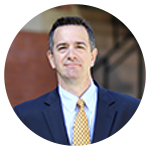 |
Michael McClean, SPH, Environmental Health, is an international scientist and scholar in environmental and occupational exposure assessment. His studies of potential health effects from exposures to chemical, physical or biological agents have resulted in more than 130 peer-reviewed articles in the Journal of Occupational and Environmental Medicine, Environmental Health Perspectives and Neurology and other top journals. Dr. McClean has applied his exposure assessment method to a range of public health issues, including kidney disease, occupational cancer and, most recently traumatic brain injuries. A gifted teacher and mentor, he has served as primary or secondary advisor to 17 doctoral students and received three teaching awards. Dr. McClean also serves as the SPH Associate Dean for Research and Faculty Advancement. |
 |
Tuhina Neogi, MED, Medicine/Clinical Epidemiology Research & Training, is an expert in osteoarthritis (OA) and gout. Her work has been continuously supported since she completed her clinical training in 2003 and she has more than 150 peer-reviewed publications. Her first study on pain in OA, published in BMJ, was recognized as the leading clinical research paper of the year at the international OA meeting (OARSI) in 2009. She has contributed to understanding triggers for gout attacks, which has led to changes in treatment guidelines published by the American College of Rheumatology (ACR). She was invited to write the most recent gout clinical reviews in NEJM and Annals of Internal Medicine, and her leadership in the international effort to develop new classification criteria for gout will become the FDA and EMA (European Medicines Agency) standard for gout clinical trials. She is the recipient of numerous awards, including the prestigious ACR Henry Kunkel Young Investigator Award in 2014 for outstanding and promising independent contributions to research in rheumatology. |
 |
Michael Paasche-Orlow, MED, Medicine, General Internal Medicine, is an international leader in the emerging field of health literacy. He has designed eight patient-oriented interactive behavioral informatics programs and helped create and evaluate a range of patient empowerment and decision support tools. He was a member of the Boston Medical Center investigative team that designed and tested an 11-part strategy to improve care transitions, called Project RED (Re-Engineered Discharge), which has emerged as one of the leading evidence-based strategies to improve care transitions. Dr. Paasche-Orlow has coordinated statewide learning networks for health providers in New Hampshire, Kentucky and Minnesota. He is the founding Editor-in-Chief for Health Literacy Research and Practice and he has run the Health Literacy Annual Research Conference, the largest international health literacy research conference, for each of the past eight years. He is a member of the Health Literacy Roundtable of the National Academies of Sciences, Engineering, and Medicine. Dr. Paasche-Orlow’s research has appeared in the NEJM, JAMA, BMJ, Annals of Internal Medicine and the American Journal of Public Health. He is currently the PI, Co-PI or subcontract PI on eight active awards. |
 |
Marie-Helene Saint-Hilaire, MED, Neurology, directs the Parkinson Disease and Movement Disorder program, with special focus on clinical research in Parkinson’s and Huntington’s diseases. Her experienced clinical trial and research team has participated in more than 100 clinical studies. Funding support includes the National Institutes of Health, Michael J Fox Foundation, American Parkinson Disease Association (APDA) and industry. Her research interests include new medications and role of neurorehabilitation, neuroprotective treatments and search for biomarkers in Parkinson. Dr. Saint-Hilaire is the site PI for the Michael J Fox Foundation project on biomarkers in Parkinson disease (PPMI). She has published more than 100 articles and book chapters. Since 2003, Dr. Saint-Hilaire has directed the American Parkinson Disease Advanced Center for Parkinson Research, one of only eight funded in the US. She serves on the scientific review committee of the Parkinson Study Group, a prestigious research consortium, and on the APDA National Scientific Advisory Board. She also directs the Movement Disorder Fellowship Program. |
 |
Flora Sam, MED, Medicine, Cardiovascular Medicine, an internationally recognized expert in heart failure with preserved ejection fraction (HFpEF), also known as diastolic heart failure. Dr. Sam was elected to the American Society of Clinical Investigation (ASCI) in 2011, which recognizes outstanding scholarly achievement in biomedical research. Continuously supported by NIH grants since her initial appointment, her translational research program investigates inter-tissue communication in heart failure. She has played a pivotal role in defining important circulating biomarkers in cardiac amyloidosis. She has served as the primary mentor for 40 trainees at the pre- and post-doctoral levels, served on two PhD thesis committees and is on the program faculty for two NIH T-32 grants. |
Visit East Boston with the Outreach Van Project
Every Thursday the Outreach Van Project (OVP), a group of first- and second-year medical students at BUSM, travels to East Boston to feed and care for the homeless population. The students unpack a van full of food, clothing and supplies, and distribute them throughout the night for anyone in need. They, along with a physician, also provide necessary medical care, and over the years have built a positive rapport with the clients. The students are there rain or shine, even on holidays, because they have become a reliable, consistent source of food and supplies for a population that desperately needs it.
One harsh December night, Gillian Smith, a videographer with the Communications Office accompanied the OVP. Under a single street light sat a maroon van with all of its doors propped open, inviting passersby to take something from inside. Outside the van stood half a dozen medical students, bundled up against single-digit temperature. With plastic gloves pulled over their winter ones, they scooped hot food into clear containers and handed it to a line of people waiting on the sidewalk.
The OVP was established in 1997 by the students to provide basic necessities to clientele in East Boston, where 20 percent of the population and 25 percent of children live below the poverty line. More than 1,400 people are served annually through this project.
David Corbett named BUMC Information Security Officer
 David Corbett has joined the Information Security team as BUMC Information Security Officer. In addition to representing Information Security to members of the BUMC community, David is going to take a central role in guiding the university’s HIPAA security compliance.
David joined BUMC Jan. 17, after seven years of HIPAA and civil rights enforcement at the US Department of Health and Human Services, Office for Civil Rights. Along with ensuring equal access to healthcare and social services, he investigated and resolved very large data breach cases by providing guidance and technical assistance. He received his BBA and JD from Temple University.
Save the Date – 4/18 Provost Workshop: Global Health Roundtable

Tuesday, April 18
3-5 p.m.
Instructional Building, Hiebert Lounge
Medical Campus faculty, postdocs, students and staff working on Global Health research are invited to a roundtable to explore synergistic and networking opportunities.
Welcome: Karen Antman, MD, BUMC Provost and BUSM Dean
Opening remarks: Patricia L Hibberd, MD, PhD, Chair and Professor, Global Health, BUSPH; Professor, Medicine, Section of Infectious Diseases, BUSM
Roundtable discussion to follow.
Tips for Staying Safe in Vehicles for Hire
Do you know how to stay safe when using Uber, Lyft, taxi cabs or livery vehicles? The Boston Police Department has created a safety tip sheet on ways to say safe when using vehicles for hire. Please review the safety tips at http://www.bu.edu/police/2017/02/03/bpd-safety-in-vehicles-for-hire/
Students Distribute Mittens to Homeless During Annual Census
On Wednesday, Jan. 25, as BUSM students joined more than 300 volunteers across the city to gather data of the number of people living on the streets with the hopes of connecting them with shelters and clinics, they brought with them a special message of compassion in the form of hand-sewn mittens.
The mittens they distributed were a donation from BUMC Associate Provost Thomas Moore, MD.

“An awful lot of people who are homeless, but for a couple of bad decisions or bad breaks, would have had apartments in the South End,” Moore said. “They aren’t different from a lot of us.”
Moore was inspired to create something for the students to give to homeless they met during the census-taking process so the experience would be more of a bilateral exchange.
“I thought, ‘What can I do that would make any difference?’” Moore said. “The mittens are easy for me to do, so what the heck.”
Moore asked friends for any old or unused sweaters. He felted the sweaters, a process which involves putting the sweaters through a washing machine to change their texture, and followed a three-part pattern to design and sew the mittens together.

“If all goes well, it takes about 45 minutes to do a pair,” he said.
The mitten project began during Intersession, and he finished his last pair a week before the census.
“Almost all of the materials were donated from friends,” he said. “I set an original goal of 25 pairs, but had enough material to keep going, so I ended up making 35.”
On each pair Moore pinned a tag that had a Boston University sticker on one side and on the other a message that said simply, “We care about you.”
BUMC Faculty, State and Local Leaders Discuss ‘Model Interventions for Urban Homelessness’

Community leaders joined the Boston University Medical Campus community on Jan. 23 in Hiebert Lounge to discuss the current state of homelessness in Boston and surrounding areas.
BUMC Provost and BUSM Dean Karen Antman, MD, led panelists as they conducted the workshop, “Model Interventions for Urban Homelessness,” a full afternoon focused on addressing the issue as well as potential solutions.
Jim O’Connell, MD, President, Boston Health Care for the Homeless Program, began the conversation by framing the homelessness issue. Then the audience of approximately 100 heard from three panels, which were divided into programs offered at the state, city and university levels. Each speaker shared information on their areas of expertise followed by discussions with the audience on the various topics related to their presentations.
One of the topics was the difficulties many organizations face in trying to help their clients experiencing addiction transition out of treatment and into a safer environment. One of the biggest factors, according to Boston Healthcare for the Homeless Chief Medical Officer Jesse Gaeta, MD, was a lack of available housing. “Without a place for clients to go, their chances of relapsing greatly increase, she said.
When asked what comes first, addiction or homelessness, O’Connell said homelessness certainly makes addiction worse, but the majority of people begin with an addiction and then transition into homelessness.
Among other topics of discussion were housing programs for at-risk pregnant women, city needle exchange programs and programs offered at BU. Highlights included an overview of the Police Assisted Addiction and Recovery Initiative, a nonprofit organization whose mission is to aid police departments in helping opioid users seek recovery options instead of placing them under arrest; local outreach programs specifically targeted to addressing the population at the intersection of Melnea Cass Blvd. and Massachusetts Ave. and the data being collected at our point of care locations, such as hospitals, clinics and urgent care facilities.
The participants:
Panel #1 – Current and Planned Massachusetts Initiatives
- Monica Bharel, MD, MDPH, Commissioner, Massachusetts Department of Public Health, who discussed current initiatives in the Commonwealth;
- David Rosenbloom PhD, Professor, Health Law, Policy & Management, BUSPH; Board Member of the Police Assisted Addiction Recovery Initiative Group (PAARI), who discussed the policing of drug addiction: medical treatment vs. law enforcement;
- Jesse Gaeta, MD, Chief Medical Officer, Boston Health Care for the Homeless, who discussed the priority of obtaining an individual stable housing.
Panel #2 – Current and Planned Programs in the City of Boston
- James Green, Director, Emergency Shelter Commission, City of Boston;
- Jennifer Tracey, Director, Office of Recovery Services, City of Boston;
- Heavenly R. Mitchell, MHA, LSW, Director, Healthy Start Systems, who discussed the collaboration to provide case management and prioritized access to housing for homeless pregnant women.
Panel #3 – Boston University Programs
- Richard Saitz, MD, MPH, Chair, Department of Community Health Sciences, BUSPH, who discussed mortality among the homeless related to addiction, care management approaches and issues regarding entry access to care;
- Jeffrey Samet, MD, MPH, Professor and Chief of General Internal Medicine, who discussed the effectiveness of Office-Based Opioid Treatment (OBOT) and mortality data for homeless HIV-infected substance users;
- Harold Cox, MSSW, Associate Professor, Community Health Sciences, BUSPH, who discussed the work of the “Life on Albany” Committee.
Feb. 9: Black History at BUSM
Second Annual Interactive Discussion: Black History Month at BUSM
Hosted and Sponsored by the BUSM Alumni Association
Thursday, Feb. 9
11:30 a.m.-1 p.m.
Instructional Building, Hiebert Lounge
Lunch Included
RSVP HERE
Introductions
Jean E. Ramsey, MD '90, MPH '08, Associate Dean for Alumni Affairs, Associate Professor of Ophthalmology and Pediatrics
Historical Focus: Solomon Carter Fuller, MD
Chantale Branson, MD '12, Associate Clerkship Director, Neurology
Interactive Panel Discussion
"Microaggressions: Hidden Messages That Hurt"
Participants:
- Kermit Crawford, PhD, Clinical Associate Professor of Psychiatry
- John Polk, MD '74, Assistant Dean for Student Affairs
- Dallas Reed, MD '10, Assistant Professor of ObsGyn, Tufts Medical Center
- Cheryl Scott, MD '82, BUSM Dean's Advisory Board; Preventive Medicine, Oakland, Calif.
- James Henry Tarver III, MD '88, Cardiologist, Orlando, Fla.
Campus Celebrates Legacy of MLK with Kenn Elmore

To celebrate the Martin Luther King, Jr. holiday, more than 100 members of the medical campus community gathered in the Hiebert Lounge on Thursday, Jan. 20, to hear BU’s Associate Provost and Dean of Students Kenneth Elmore, JD.
The event opened with audio of Martin Luther King Jr.’s famous “I Have a Dream” speech. Elmore began by sharing that his speech was going to be very personal. “I never would have dreamed to be in a position where I get to honor Dr. King. That is something in which my parents take incredible pride.” noted. He explained that his mother was brought to tears when she found out he would be speaking about MLK because “a lot of people fought very hard” to give him such an incredible opportunity.
His remarks, “On the Way We Go: Chaos or Community?" were based on a book by King with a similar title, Where Do We Go from Here: Chaos or Community? “I’m one of those people who thinks a little chaos and a little community can do well by us now,” he confessed. Elmore noted that King felt “Power without love is reckless and abusive; and love without power is sentimental and anemic.” He explained that this sentiment might characterize our national climate over the past few years – including issues such as war, underprivileged schools, lack of the middle class, etc. After the tragic 2016 shootings in Dallas, Elmore reached the crossroad of chaos and community. He reengaged with people in different ways and reevaluated what his “bubbles” were.
He reflected on his past and shared the refrain of a church song from his youth that especially spoke to him, “Ain’t gonna let nobody turn me around…I’m gonna keep on walking, keep on talking, marching up to freedom land.” The song was part of his youth and was sung to by his congregation to members when they were about to take a significant step in their lives. It was sung to Elmore when he left for college and it stuck with him. The song reminded him of the freedom riders of the civil rights movement, and he realized he could not live ahistorically. When he “saw with history in mind,” he saw all the people that tried to help move the country forward.
Elmore’s speech was followed by a musical interlude with Margaret Lee, MD, PhD, assistant professor of Dermatology, and Moisès Fernández Via, Founding Director of Arts | Lab @ Med Campus, and an energetic town hall discussion. Along with Elmore, Associate Dean of Diversity and Multicultural Affairs Rafael Ortega, MD, and Jonathan Woodson, Faculty Director at the BU Institute for Health System Innovation, facilitated a discussion that allowed the community to voice their concerns and questions. The event provided support and reflection on the eve of Inauguration Day.
To view more photos from the event, visit our Facebook album.
The event was sponsored by BUSM Office of Diversity and Multicultural Affairs in collaboration with the BMC Human Resources Department, Henry M. Goldman School of Dental Medicine Office of Diversity, BU School of Public Health and the BMC Minority Recruitment Program. To view the event, click here. For optimal viewing, please view in Firefox, Chrome, or Safari browsers.