Student Updates
Interdisciplinary BUMC Team Investigates Dialysis Access Malfunction

Patients with chronic kidney disease frequently develop stenosis of their intrathoracic large veins (i.e., central venous stenosis), which jeopardizes their prospects of having a functional dialysis access, while the current modality to diagnose this complication is fraught with inaccuracies.
An interdisciplinary team of clinicians, biomedical engineers and scientists, including members of the Evans Center IBR Thrombosis and Hemostasis ARC, has taken on this challenge. They were awarded a grant by Philips to lead a clinical study focused on assessing the potential of intravenous ultrasound, an emerging technique, to investigate and diagnose the mechanical properties of central venous stenosis. Results from this study will address one of the critical bottlenecks in the management of dialysis access malfunction, particularly in the underserved patient population, and is likely to seed larger clinical trials in the future to guide endovascular therapies.
NEIDL Researchers Create Tool to Study New Virus
Could help determine if Ebola-like LLOV can cause disease in humans
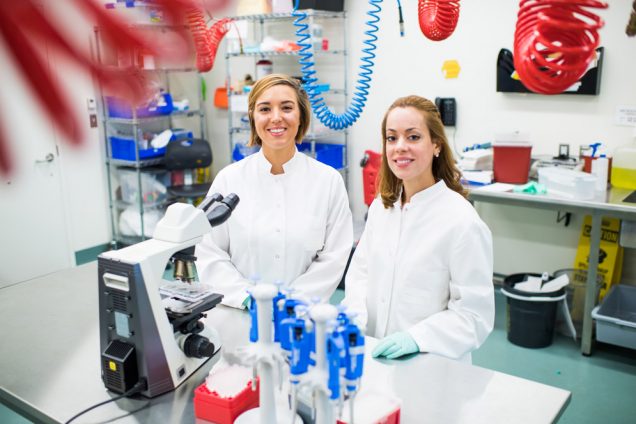
In recent years, traces of new zoonotic viruses—pathogens that live in animals and could potentially cause infectious diseases in humans—have been discovered in bats, fish, and other species around the world. But scientists have been stumped in their search for the complete genome for these viruses, the critical data that is needed to study their biology, and their potential dangers for humans.
But now, researchers at BU’s National Emerging Infectious Diseases Laboratories (NEIDL) have created a tool that they say will unlock many of the mysteries of one of these new pathogens—a filovirus closely related to the Ebola and Marburg viruses—and help them determine whether it could cause disease in humans. Ebola and Marburg are among the most virulent and lethal viruses known to infect humans.
Called Lloviu virus (LLOV), the new filovirus was first discovered in 2002 in dead bats in a cave in Spain; it was found again in 2014, in dead bats in Hungary. It is not known whether LLOV sickened and killed the European bats (known as Schreiber’s long-fingered bats, they are not found in North or South America) or if it causes disease in any animal. As with so many other new viruses, the complete genome has not been found.
The NEIDL team was led by Elke Mühlberger, a School of Medicine associate professor of microbiology, who is one of the world’s leading filovirus researchers. Filoviruses are made up of single-stranded RNA instead of DNA.
Here is how Mühlberger’s team created the new tool: They established a novel minigenome system for LLOV, which allows for the virus to be studied safely in a Biosafety Level-2 lab. Minigenomes are shortened versions of viral genomes, in which all the viral genes—those that cause infection—are removed and replaced by a single nonviral reporter gene. Minigenomes contain all the necessary signals to replicate the virus in cells, but they lack the proteins necessary to produce infectious virus.
“However, in order to make a minigenome, you need the viral start and stop signals that allow for replication,” says Whitney Manhart (MED’20), a PhD student in Mühlberger’s lab, who coauthored with lab manager Jennifer Pacheco a September 4 Cell Reports study on the new tool. “These are exactly what we were missing from LLOV,” she says.
“We currently have no therapeutics or vaccines which would target LLOV, and so answering basic questions about LLOV biology or the disease it might cause could help us be prepared for—or prevent—a major outbreak.” —Whitney Manhart (MED’20)
To make up for the missing elements of the LLOV genome, the NEIDL researchers copied and pasted similar sequences from the related Ebola, Marburg, and Reston filoviruses (Reston causes disease in nonhuman primates, but is not known to cause disease in humans). This technique is called sequence complementation.
“While this work is most interesting to people who study filoviruses, the idea could be applied to any kind of virus,” Pacheco says, noting that researchers studying a bat-derived influenza with an incomplete genome used a similar method to create an infectious viral particle.
Pacheco, Manhart, and their colleagues found that LLOV replication and transcription mechanisms are more similar to Ebola viruses than Marburg viruses. “We found that when the start signal is the same as Ebola viruses, then LLOV can replicate well,” says Pacheco. “When the start signal is the same as Marburg viruses, LLOV cannot replicate.”
“The minigenome helps scientists answer some questions about LLOV,” Manhart says, “but we need the authentic virus to answer all questions.”
Using the LLOV minigenome system, Manhart, who has been trained to work in BSL-4 conditions, will produce the real virus at Rocky Mountain Laboratories, a National Institutes of Health (NIH) BSL-4 lab in Montana, in collaboration with scientists there. Then, she says, Heinz Feldmann, the chief of Rocky Mountain’s Virology Laboratory and an expert in animal models of filovirus infection, will infect nonhuman primates at that lab with the virus as a step in determining if it could cause disease in people. “If it doesn’t cause disease, then we can learn about why LLOV doesn’t make primates sick even though it’s so similar to Ebola and Marburg viruses,” says Manhart. “If they do get sick, then we can start to learn more about the disease.”
LLOV was found in bats that live in northern Africa, and across Europe, Manhart says. “So if a spillover did occur, it could infect a lot of people very quickly. We currently have no therapeutics or vaccines which would target LLOV, and so answering basic questions about LLOV biology or the disease it might cause could help us be prepared for—or prevent—a major outbreak. This minigenome system, and importantly, the infectious virus, will be critical in those studies.”
The other NEIDL researchers who helped develop the tool are PhD candidate Tessa Cressey (MED’19), research assistant Adam Hume, and former research scientist Laure Deflubé.
The work on the new tool was begun with support from the NEIDL director’s fund and is now funded by the NIH.
This BU Today story was written by Sara Rimer
Parking and Transportation Services for Labor Day, Monday, Sept. 3
The following schedule and services will be in effect for Labor Day:
Parking: All parking facilities will be open. Employees with 610 Garage access may park in the 710 Garage on Labor Day. Those without parking garage access may park in the 710 Garage for $8.00 on the holiday.
Shuttles: No shuttles will be operating, including the BU Shuttle Bus and the Healthnet Shuttle.
MBTA: All subway trains, streetcars, buses, trackless trolleys, and commuter rail trains will run on a Sunday schedule. All buses will operate on a Sunday schedule except for Crosstown buses #1 and # 3 which will not operate on the holiday. For additional information on routes and schedules, please call the MBTA Customer Service Center at 617-222-3200 or visit www.mbta.com.
If you have any questions regarding this holiday schedule, please call the Office of Transportation Services at 617-638-7473 or the Parking Office at 617-638-4915.
8/20-24 BUMC Electrical Generator Testing
Beginning Monday, Aug. 20, through Friday, Aug. 24, facilities will be testing the electrical generators on the Medical Campus. There will be no disruption of electrical services during the four-hour tests.
Depending on your specific office or laboratory location in each of the buildings, you might hear the generator engines running.
| Monday, Aug. 20 | 778 Harrison Ave., Housman Medical Research building (R) |
| Tuesday, Aug. 21 | 700 Albany St., CABR building (W) |
| Wednesday, Aug. 22 | 650 Albany St., EBRC building (X) |
| Thursday, Aug. 23 | 71 E. Concord St., Conte Medical Research building (K)
815 Albany St., MSR building |
| Friday, Aug. 24 | 609 Albany St., Dermatology building (J)
750 Harrison Ave., Robinson building (B) |
If you have questions, please call the Control Center at 617-638-4144
100 BUMC Students Attend Diversity Mixer

On Wednesday, Aug. 8, approximately 100 students participated in a Medical Campus student diversity mixer. The event allowed underrepresented minority students from the three schools on the medical campus, Medicine, Public Health and Dental Medicine, to come together to mingle, share ideas and build relationships. BUSM Associate Dean of Diversity & Inclusion Dr. Rafael Ortega, who provided introductory remarks highlighting the importance of embracing and promoting diversity and inclusion on campus and how it relates to better patient care and outcomes. Also attending were BUSM Assistant Dean for Diversity & Inclusion Dr. David Henderson, and GMS Assistant Dean for Diversity & Inclusion Dr. Isabel Dominguez, and GSDM Director of Diversity Dr. Larry Dunham.
The event was a collaboration of the Latino Medical Student Association (LMSA), the Student National Medical Association, the Student National Dental Association, and BUMC Pride (the Medical Campus’ LGBTQ organization).
Ebola Research Begins at NEIDL
After years of review, lab receives first BSL-4 pathogen

Eight months after receiving final approval from the Boston Public Health Commission to conduct research at Biosafety Level 4 (BSL-4), Boston University’s National Emerging Infectious Diseases Laboratories (NEIDL) has begun work with its first Level-4 pathogen, the Ebola virus.
“This is clearly an important step for the NEIDL,” says Ronald B. Corley, NEIDL director and a School of Medicine professor of microbiology. “This will permit us to fulfill our mission of studying emerging pathogens and developing diagnostics, therapeutics, and vaccines for these pathogens, even those that require BSL-4 containment. It has taken a very long time to get to this point, but the time that has passed has not dampened our enthusiasm—and excitement—to be able to start BSL-4 work.”
NEIDL microbiologist Elke Mühlberger says the lab’s first Level-4 projects will examine how the Ebola virus damages cells in the liver, and why it triggers such a powerful inflammatory response. Answers to those questions, she says, could speed the development of a therapy for Ebola virus disease, which sickened tens of thousands of people and led to more than 11,000 deaths in West Africa in a 2014–2016 outbreak, and sickened 59 people and killed 29 in an outbreak in the Democratic Republic of Congo this past May.
Ebola virus causes a rare but life-threatening disease that has become a global public health threat, traveling to the United States and Europe during the 2014 outbreak. There is no available FDA-approved vaccine or therapy for Ebola virus, which along with the related Marburg virus, arrived at NEIDL earlier this week.
Mühlberger, a MED associate professor of microbiology, says the researchers’ plans include at least three projects involving the Ebola and Marburg viruses, all funded by the National Institute of Allergy and Infectious Diseases, which also provides more than $10 million a year to help underwrite the cost of operating the BSL-4 in the NEIDL. The first project, which will look at Ebola’s damage to the liver, will use human liver cells generated from induced pluripotent stem cells at BU’s Center for Regenerative Medicine by stem cell biologist and tissue engineer Gustavo Mostoslavsky, a MED associate professor of medicine and microbiology.
“We are excited to use these cells,” says Mühlberger, “because the liver is one of the main target organs of Ebola virus infection. We will use Gustavo’s cells to find out why Ebola virus is so devastating for the liver.”
A second project, which follows up on research conducted by NEIDL researcher John Connor, a MED associate professor of microbiology, will examine why the Ebola virus triggers an inflammatory response in specific immune cells. Mühlberger says researchers will also work with the Marburg virus, hoping to learn why it kills humans but not Egyptian fruit bats, a mystery that has been studied by Thomas Kepler, a MED professor of microbiology.
Safety and Security Are Paramount
“The need for this facility is even more acute today than when it was first built,” says Corley. “And we remain committed to being completely transparent in our operations, and maintain the NEIDL with the greatest attention to safety and security.”
Kevin Tuohey, executive director of research compliance at Boston University and Boston Medical Center, says the arrival of the Ebola and Marburg viruses has been eagerly awaited and was meticulously monitored. Tuohey says transportation of Level-4 agents is regulated by several authorities, including the US Department of Transportation, the Centers for Disease Control and Prevention (CDC), the International Air Transportation Authority, and the Boston Public Health Commission. Deliveries of the agents to the NEIDL, he says, are coordinated with Boston Emergency Management, Emergency Medical Services, and Boston Fire and Police Departments, as well as the Massachusetts State Police.
During transport, Tuohey says, Level-4 agents are packaged in accordance with the Department of Transportation’s “triple packaging” regulations, and BU requires an additional level of packaging in the form of a secured rigid material over the pack case. Shipments are carefully tracked with GPS. BU requires each delivery to have two drivers, both of whom are reviewed in an annual clearance process.
Tuohey says the NEIDL has bolstered its preparation for Level-4 research with the hiring of two new Environmental Health & Safety officers. Shannon Benjamin is the new associate director for high containment/BSL-3 BSO, and Nadya Yun is associate director for maximum containment/BSL-4 BSO. Benjamin comes to BU with 10 years of biosafety experience, most recently at Brown University, and Yun has two years of biosafety and compliance experience following 10 years as a researcher and research manager. She comes to BU from Environmental Health & Engineering, Inc., and Harvard Medical School, after working in BSL-4 at the Galveston National Lab and University of Texas Medical Branch.
In December 2017, after more than three years of review, BSL-4 research at the NEIDL was approved by the CDC, and last December the lab received final approval from the Boston Public Health Commission. All BSL-4 research conducted at the NEIDL must also be approved on a case-by-case basis by BU’s Institutional Biosafety Committee, which was created under National Institutes of Health guidelines to review research involving biohazardous materials.
Mühlberger says NEIDL researchers are excited to finally begin work with Ebola and Marburg viruses. She says the lab’s first step will be to propagate these viruses to produce enough material for experiments. The next step will involve inactivation procedures, so that material can be safely moved from BSL-4 to BSL-2, where most of the research will take place. She says the work will be conducted by several researchers who have been trained to work at BSL-4. They include senior research scientist Judith Olejnik, research scientist Adam Hume, research technician Jennifer Pacheco, and PhD student Whitney Manhart (MED’23), the first student trained in BSL-4 work at the NEIDL.
Those researchers will be joined later this summer by Robert Davey, a highly regarded virologist whose research bridges the fields of virology and cell biology, and by Anthony Griffiths, a virologist who studies how highly pathogenic viruses cause disease. Both come to the NEIDL from Texas Biomedical Research Institute, a private research center in San Antonio, Tex.

This BU Today story was written by Art Jahnke.
Parking and Transportation Services for July 4
PARKING: All parking facilities will be open. 610 Garage monthly parkers may park in the 710 Albany St. or Doctors Office Building (DOB) garages. All valid 610 Garage access will be programmed to work in the 710 Albany St. and DOB garages on Wednesday, July 4, ONLY. Those who are not enrolled in the monthly parking program may park in 710 and DOB Garages for $8 on Wednesday, July 4, ONLY.
SHUTTLES: No shuttle services - including the HealthNet patient shuttle - on July 4. The BUS (Boston University Shuttle) will not operate. Weekday service will resume on the Thursday, July 5. Visit bu.edu/thebus for additional information.
MBTA: The MBTA is operating on a Sunday schedule except for the CT buses (CT1, CT3), which will NOT be operating. The Commuter Rail and Ferry are operating on a Saturday schedule.
Customers are urged to take public transportation to and from Fourth of July events and advised to check mbta.com for the most up-to-date service information during the holiday.
Any questions? Please call TranSComm at 617-358-3506 or the Parking Office at 617-358-7592.
Remote Desktop Will Require Two-factor VPN with Duo Security Starting Thursday, June 28
You soon will be required to use the BU two-factor VPN with Duo security (2FA VPN) for remote desktop to access computers on the BU Medical Campus.
What should I do now?
If you do not use remote desktop to connect to a computer on-campus – usually from a computer at home - nothing is required. To learn more about remote desktop, click here.
If you do use remote desktop to connect to a computer on-campus, you must start using the 2FA VPN.
Type vpn.bu.edu/2fa instead of vpn.bumc.bu.edu into the Cisco client.

Then follow our instructions at Tech Web.
Why are we requiring the 2FA VPN for remote desktop access to computers?
BU faculty, staff and students are frequent targets of phishing emails, and attackers regularly compromise BU accounts. By requiring the 2FA VPN, we make it harder for a malicious individual to impersonate other users and access data on computers.
Click here to learn how to fight phishing.
If you have questions, please contact bumchelp@bu.edu.
Julie Palmer Appointed Director ad interim of BU-BMC Cancer Center
 Julie Palmer, ScD, Associate Director of Boston University’s Slone Epidemiology Center, Professor of Epidemiology at BU School of Public Health and Associate Director for Population Sciences at the BU-BMC Cancer Center, has been appointed Director ad interim of the BU-BMC Cancer Center, effective July 1. Dr. Palmer succeeds Avi Spira, MD, who was named Global Head of the JNJ (Johnson & Johnson) Lung Cancer Initiative.
Dr. Palmer has devoted much of her career to investigating the etiology of breast cancer, and breast cancer in African American (AA) women in particular. She is a founder and principal investigator of the Black Women’s Health Study (BWHS), a prospective cohort study of 59,000 AA women who enrolled in 1995 and have been actively followed by biennial questionnaires for more than 20 years. The study, which includes repositories of saliva, blood and tumor tissue samples from study participants, has been a tremendous resource for research on modifiable factors and genetic factors related to risk of cancer in AA women. She also is a co-founder, with collaborators at two other institutions, of the AMBER Consortium, designed to improve knowledge on causes of estrogen-receptor negative (ER-) breast cancer, a subtype that disproportionately affects AA women. Dr. Palmer’s current research is focused on developing an improved breast cancer risk prediction model for use in AA women at the primary care level and on establishing the prevalence and penetrance of susceptibility variants from BRCA1, BRCA2, and other cancer genes in an unselected AA population.
Dr. Palmer serves on the scientific advisory boards of various studies and foundations, including the NIEHS Sister Study and the Dr. Susan Love Research Foundation. She chairs an ad hoc working group of the NIH National Cancer Advisory Board. Dr. Palmer has received numerous awards, including the BU School of Public Health Distinguished Alumni Award, the National Cancer Institute Outstanding Service Award and the Eighth Annual AACR Distinguished Lectureship on the Science of Cancer Health Disparities. Most recently, she was selected to serve as a Komen Scholar and received a Komen Leadership grant from the Susan G. Komen Foundation.
Dr. Palmer holds a BA from Brown University, an MPH from BUSPH and a ScD in Epidemiology from the Harvard T.H. Chan School of Public Health.
Dr. Spira will remain the Alexander Graham Bell Professor and the PI of a number of grants, work clinically at BMC, and continue to work with us to compete for future lung cancer research grants, but will transition his industry-sponsored research grants to colleagues at BUSM.
Provost Seminar: The Future of Health Systems
Thursday, June 28
3-4 p.m.
Instructional Building, L112
SEMINAR
The Future of Health Systems
Health Systems are going through major change brought on by different market entrants and disruptors. In addition, significant changes in regulation and policy at the state and national levels have added to the complexity. A case study will illustrate how these changes are happening amid an industry that is being digitized and focused on the consumer.
SPEAKER
ROD HOCHMAN, MD (BUSM'79)
Rod Hochman is the president and CEO of Providence St. Joseph Health, a diverse family of organizations that has served the Western U.S. for more than 160 years. The organization comprises 111,000 caregivers who serve in 51 hospitals, 829 clinics and hundreds of programs and services in Alaska, California, Montana, New Mexico, Oregon, Texas and Washington.
Under Dr. Hochman’s leadership, Providence St. Joseph Health is transforming health care for the future through digital innovation, population health, mental health, genomics, whole person care and outreach to the poor and vulnerable.
He is a board member for the American Hospital Association (AHA), chair of AHA's Regional Policy Board 9 and chair of the board of trustees for the Catholic Health Association. He was named the 2015 Innovator of the Year by Press Ganey. He also is the recipient of the 2017 Partners in Care Foundation Vision and Excellence in Health Care Leadership Award. He was ranked the fourth most influential physician executive and the 25th most influential person in health care in 2017 by Modern Health Care.
Dr. Hochman served as a clinical fellow in internal medicine at Harvard Medical School and Dartmouth Medical School. In addition, he is a Fellow of the American College of Physicians and a Fellow of the American College of Rheumatology. He received his bachelor’s and medical degrees from Boston University.
Co-sponsored by BUSM and the BU Institute of Health System Innovation and Policy