Student Updates
BUSM Researchers Find Parental Dementia May Lead to Poor Memory in Middle-Aged Adults
People who have parents diagnosed with Alzheimer's disease or dementia perform less well on formal memory testing when compared to people of the same age whose parents never developed Alzheimer's disease or other dementia. This is true even in middle-aged persons who do not have a diagnosis of clinical stroke or dementia, according to a Boston University School of Medicine (BUSM) study. This study has been selected to be presented at a Plenary Session at the American Academy of Neurology's 61st Annual Meeting in Seattle, Wash from April 25 - May 2.
Researchers from the Framingham Heart Study (FHS) are following three generations of participants to study the risk factors and earliest biomarkers of Alzheimer's disease, stroke and other cardiac and neurological diseases. The first generation has been followed since 1948. Since both the parental and offspring generation are enrolled as study participants, researchers could accurately identify which parents did or did not develop Alzheimer's disease or other dementia in their lifetime.
For this study, researchers studied 715 participants (372 women, 343 men) belonging to the second generation of FHS (average age 59) using standardized cognitive tests and MRI brain scans. One group of 282 persons had one or both parents fulfilling standardized criteria for a diagnosis of dementia, the other group of 433 persons had parents who were known to be free of dementia. The scientists also tested all these individuals for a gene thought to be a strong risk factor for dementia, called the ApoE ε4 gene.
Among persons who were carriers of the ApoE ε4 gene, those who had parents with Alzheimer's disease or other dementia scored significantly worse on tests of verbal memory and visual memory than persons who did not have parents with Alzheimer's dementia.
"Parental dementia and Alzheimer's disease were significantly associated with poorer performance in verbal and visual memory tasks," said senior author Sudha Seshadri, MD, associate professor of neurology and co-director of the Medical Education for Neurology Residency Program at Boston University School of Medicine.
Researchers further concluded that the result in persons with parents who have Alzheimer's disease is equivalent to approximately 15 years of brain aging. The effect was largely limited to those study participants who have the ApoE ε4 gene, which supports the idea that the gene is probably at least partially responsible for the transmission of Alzheimer's disease risk between generations.
This study was funded by the National Institute of Aging and other branches of the National Institutes of Health. The National Institute of Aging and the National Institutes of Health had no role in the design and conduct of the study, the collection, management, analysis and interpretation of the data, or the preparation, review and approval of the manuscript.
The American Academy of Neurology, an association of more than 21,000 neurologists and neuroscience professionals, is dedicated to promoting the highest quality patient-centered neurologic care. For more information about the American Academy of Neurology, visit www.aan.com.
GSDM Professor Kukuruzinska Elected Co-Vice Chair for 2011 Gordon Research Conference
Boston University Goldman School of Dental Medicine Professor Maria Kukuruzinska, PhD, recently served as Session Leader at the Gordon Research Conference on Salivary Glands & Exocrine Secretion held February 8-13 in Galveston, Texas.
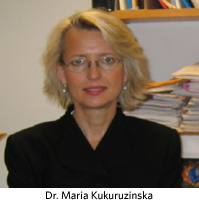
During the conference she was also elected Co-Vice Chair of the newly renamed 2011 Gordon Conference on Salivary Glands & Exocrine Biology, along with Indu Ambudkhar, PhD. Dr. Ambudkhar is Chief of Secretory Physiology at the Molecular Physiology and Therapeutics Branch of the National Institute of Dental and Craniofacial Research (NIDCR). The duo beat out two other nominated pairs for the positions and will also serve as Co-Chairs of the 2013 conference.
"Being elected Co-Vice Chair is important to me because I think I can set the direction of future conferences to include cutting edge science that is relevant to salivary gland biology and oral medicine in general," said Dr. Kukuruzinska.
Professor and Chair of the Department of Molecular and Cell Biology Dr. Carlos Hirschberg added, "Given the prestige of the Gordon Conferences, this is a signal honor for Dr. Kukuruzinska, the Department of Molecular and Cell Biology, and the Goldman School of Dental Medicine."
"Dr. Kukuruzinska's background in salivary gland development and oral cancer makes her an excellent candidate for this role," said Dean Jeffrey Hutter. "I am confident that under her leadership the Conference will be a great success."
Healthcare Emergency Management Open House: Earn a Master's Degree
Are You Prepared? Boston University's new Masters degree program in Healthcare Emergency Management (HEM) is training first responders in public health, public safety and the medical field with new skills and knowledge to be ready for the next crisis. Attend an open house on Thursday, February 26, 5-7pm; Friday, February 27, 5-7pm; Saturday, February 28, 12-2pm.
Responders must prepare for threats from natural and man-made disasters and terrorist events. The HEM program includes planning for, responding to, recovering from, and developing ways of mitigating:
- Radiological, chemical, biological, and natural hazards
- Overall public health and medical response; triage, treatment, and transportation of victims of the disaster
- Emergency services personnel health and safety
Healthcare Emergency Managers are needed to create a solid foundation for a safer future. The goal of this graduate program is build a cadre of professionals with diverse backgrounds to be prepared ready to respond to the next crisis. Instructors have combined work experiences of more than 20 years in organizations such FEMA, DMAT and the Pentagon.
The program uses a virtual classroom, which allows for real time face-to-face discussions; lectures between students and instructors regardless location. Participation only requires a webcam, a headset, and a DSL or cable internet connection.
For more information about the growing field of Healthcare Emergency Management call 617-414-2353 or visit the website www.bumc.bu.edu/bmcm.
First Year DMD Students Make a Difference in the Community
The Boston University Goldman School of Dental Medicine (BUGSDM) added service learning to the first year DMD curriculum this year as part of the Introduction to Dental Practice course. The service program brought BUGSDM students to local schools where they taught oral health education, observed sealant placement in a school setting using portable dental equipment, and provided services such as screenings and fluoride varnish applications. Participating schools included William Blackstone Elementary School, Orchard Gardens K-8 School, Joseph J. Hurley School, John Winthrop School, Patrick O'Hearn School, David A. Ellis School, Paul A. Dever School, and William Monroe Trotter School. 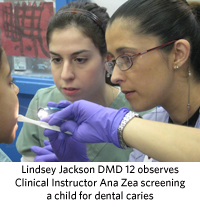
"Service learning was added to the first year curriculum in order to give the students more hands on experience in their first year," said Professor and Assistant Dean for Community Partnerships and Extramural Affairs Dr. Michelle Henshaw. "It also provided the opportunity for students to learn first hand about the high level of unmet dental needs in populations that may not make it to dental care."
"We are indebted to the school nurses and principals for allowing us to bring the dental students in to help us provide services," said Clinical Instructor Corinna Culler. "By the time we are finished all of the first year students will have visited a local elementary school twice."
The DMD students were excited about service learning, especially because they spend most of their first year in the classroom.
"This program was nice because it allowed us to go outside the classroom," said Lindsey Jackson DMD 12. "Actually seeing the screenings and treatment was much different than looking at examples on slides."
"I had a great learning experience outside of the classroom," said Sabahat Hanif DMD 12. "It definitely enhanced my subsequent IDP clinic session. I had never seen sealant placements before and we saw ideal examples of mixed dentition - something we do not see in the classroom."
BUGSDM students also appreciated the opportunity to help children from the local community.
"The kids were great," said Jackson. "They couldn't wait to show off the baby teeth they had lost and share the answers during our oral health lesson."
"Service learning is an integral part to experiencing new opportunities within the field, yet outside the clinic walls," said Katy Bednar DMD 12. "There is a balance between what you gain from the experience and what you leave for the community. Above all, it is immensely satisfying to help a child who otherwise may not have the chance to visit a dentist."
Center for the Study of Traumatic Encephalopathy Announces New Findings Linking Football and Progressive Brain Damage
Four 88 Plan Members Will Donate Brains Upon Death
Leading medical experts at the Center for the Study of Traumatic Encephalopathy (CSTE) at Boston University School of Medicine (BUSM) reported today that nine-year NFL veteran, former Tampa Bay Buccaneer Tom McHale was suffering from chronic traumatic encephalopathy (CTE), a degenerative brain disease caused by head trauma, when he died in 2008 at the age of 45. In addition, the CSTE has discovered early evidence of CTE in the youngest case to date, a recently deceased 18-year-old boy who suffered multiple concussions in high school football.
McHale, a Cornell University graduate, former restaurateur, husband and father of three boys, is the sixth former NFL player to be diagnosed post-mortem with CTE since 2002. CTE, a progressive neurodegenerative disease caused by repetitive trauma to the brain, is characterized by the build-up of a toxic protein called tau in the form of neurofibrillary tangles (NFTs) and neuropil threads (NTs) throughout the brain. The abnormal protein initially impairs the normal functioning of the brain and eventually kills brain cells. Early on, CTE sufferers may display clinical symptoms such as memory impairment, emotional instability, erratic behavior, depression and problems with impulse control. However, CTE eventually progresses to full-blown dementia. McHale died due to a drug overdose after a multi-year battle with addiction. Expert consensus is that drug abuse of any kind would never cause the neuropathological findings of CTE seen in McHale.
The other former NFL players diagnosed with CTE are former Pittsburgh Steelers Mike Webster, Terry Long and Justin Strzelczyk, along with Andre Waters and John Grimsley. Waters and Long committed suicide. Grimsley, an avid and experienced gunsman, died in 2008 from a self-inflicted gunshot wound that the medical examiner ruled as accidental. All six NFL CTE sufferers died by the age of 50. Damien Nash, who died in 2007 at the age of 24, is the only former NFL player to be examined neuropathologically and not have CTE. Chris Nowinski, co-founder of the non-profit Sports Legacy Institute (SLI), explained, "This means that six of six deceased former NFL players between the ages of 25 and 50 have had severe brain damage that, if they had lived, would have developed into debilitating dementia."
According to Ann McKee, MD, CSTE co-director and a leading neuropathologist who specializes in degenerative brain diseases, "CTE has been described for approximately 80 years. Initially referred to as dementia pugilistica because of the boxers that were originally studied, CTE is now being seen in other athletes. Although the neuropathological findings of CTE are, in some ways, similar to those we see in Alzheimer's disease, they represent a distinct disease with a distinct cause, namely repetitive head trauma." McKee conducted the neuropathological analysis on the brains of both Grimsley and McHale. Her findings of significant CTE in their brains were independently confirmed by E. Tessa Hedley-Whyte, MD, professor of pathology at Harvard Medical School and a neuropathologist at Massachusetts General Hospital.
Due to the growing strength of these findings linking brain trauma on the football field to CTE, a number of living former NFL players have recently agreed to join three-time Super Bowl champion Ted Johnson and seven other former NFL players to donate their brains to Boston University School of Medicine upon death. The new donors include three members of the NFL's 88 Plan, joining Ralph Wenzel, another 88 Plan donor.
The 88 Plan was named after former NFL star John Mackey's jersey number. Mackey, a Hall of Fame tight end for the Colts in the 1960s and 70s, suffers from severe dementia. The plan was created by the NFL to provide families of former players who suffer from some form of dementia with money to support their care. Members of the Plan, by definition, have been diagnosed with "dementia," which refers to progressive memory and cognitive deficits significant enough to impair daily living. During life, it is not possible to determine the underlying disease which causes dementia. Following death, CSTE doctors will be able verify with certainty whether or not 88 Plan members' dementia was caused by trauma sustained in sports like football (i.e., CTE) or by other causes of dementia, such as Alzheimer's disease. Eleanor Perfetto, PhD, wife of retired NFL player and 88 Plan member, Ralph Wenzel, who served as offensive lineman for the Chargers and Steelers, 1966-73, said, "My husband suffered numerous concussions and other head traumas while playing football and is now exhibiting significant dementia, is living in a locked assisted living facility, and is unable to feed himself or even recall his days playing football. Something needs to be done to prevent this type of tragedy from occurring to other players and their families."
CSTE is a collaboration between SLI and BUSM. SLI was founded by former Harvard football player and WWE pro wrestler Chris Nowinski, and neurosurgeon and concussion expert Robert Cantu, MD, chief of Neurosurgery and director of Sports Medicine at Emerson Hospital in Concord, Mass, and clinical professor Neurosurgery at BUSM. The work at BUSM is being led by McKee, an associate professor of Neurology and Pathology, director of the Neuropathology Core of the BU Alzheimer's Disease Center, and the director of the brain banks of the Framingham Heart Study and the Bedford VA Medical Center, and Robert Stern, PhD, associate professor of Neurology and co-director of the BUSM Alzheimer's Disease Clinical and Research Program. The CSTE received initial funding for their research from BUSM and subsequently received a $100,000 grant from the National Institute on Aging to support their work. This past week, the group of researchers learned that they received a $250,000 grant from the National Operating Committee on Standards for Athletic Equipment (NOCSAE).
Co-Director of the CSTE, Stern, said, "CTE is the only fully preventable cause of dementia. By studying large numbers of athletes throughout their lives, as well as examining brain tissue through our expanding CSTE brain bank, we will be able to determine the specific risk factors for CTE. This, in turn, will foster education and allow meaningful guidelines to be implemented at all levels of athletic participation, from youth, to college, to pro. In the mean time, however, we already know that return to play too soon after a concussion can have devastating results."
The discovery of the initial stages of CTE in an 18-year-old should move the discussion of football's concussion crisis toward youth football. The identity of the 18-year-old will not be revealed at the family's request. According to Cantu who wrote the first return-to-play guidelines, "Our efforts to educate athletes, coaches, and parents on the need to identify and rest concussions have only been moderately successful because people have been willing to look the other way when a child suffers a concussion. I hope the discovery of CTE in a child creates the urgency this issue needs. It is morally and ethically wrong to allow our children to voluntarily suffer this kind of brain trauma without taking the simple educational steps needed to protect them."
Lisa McHale, widow of Tom McHale, said, "What's even more disturbing to me, and the reason I am here, is that Tom is not alone. His is now the sixth confirmed case of CTE among former professional football players. Bearing in mind that only six former players, over the age of 25, have been tested for CTE, I find these results to be not only incredibly significant, but profoundly disturbing. And I just can't conceive of anyone thinking otherwise. I have 9 and 11-year-old boys who are just beginning to play Pop Warner football. In light of Tom's situation and the findings on the high school football player with the initial evidence of CTE, I now question their involvement in a sport that had been so important in our lives."
NFL players who have recently chosen to join the CSTE brain donation registry include Hall of Famers Joe DeLamielleure and Willie Wood, an 88 Plan member. They are joined by Ken Gray, Brent Boyd, Dan Pastorini, Mel Owens, and Chad Levitt, as well as 88 Plan members Wayne Hawkins and Willie Daniel. SLI president and CSTE co-director Nowinski said, "We appreciate the growing support among former NFL players and their choice to give back to past, current, and future generations of athletes. I hope this research serves as a wake-up call that radical change is needed in football to protect the millions of children playing the game."
Genome Science Institute Seeks Grant Applications
The Genome Science Institute is pleased to announce the availability of 1-2 seed grants ranging from $10,000 to $20,000 for one year each to enhance genetics and genomics research at Boston University. This Request for Applications (RFA) is open to all BU faculty at the Medical or Charles River campuses. The deadline for applications is March 16, 2009.
This RFA focuses on (1) The expansion of research at Boston University by supporting new collaborations between groups with diverse expertise to address an important scientific question in genetics and genomics research. (2) Development of new and emerging areas of genetics and genomics research.
Joint PIs are allowed. For faculty-level applicants, at least one PI must be a GSI member prior to the submission deadline. The GSI is open to all BU faculty engaged in genetics and/or genomics research. Please contact gsi@bu.edu to apply. Post-doctoral fellows may also apply with letters of support from their faculty supervisor (a GSI member).
This RFA is intended to expand the scope of genetics and genomics research at BU by supporting new areas of research and/or new collaborative efforts between groups that currently do not work together or who are in an early stage of collaboration. Requests to support on-going research or the expansion of an on-going research project by the applicants will not be considered responsive to this RFA.
More information on the application process and components can be found at https://www.bumc.bu.edu/gsi/2009/02/09/seedgrantrfa/
BUGSDM Professor Carl McManama Named Clinician of the Year
Boston University Goldman School of Dental Medicine (BUGSDM) Professor Dr. Carl McManama was named Clinician of the Year by the Massachusetts Dental Society in collaboration with dental societies from the other New England states during an award ceremony at Yankee Dental Congress 34 (YDC).

The Clinician of the Year Award is given to an individual who has been both a course presenter and a volunteer at YDC for several years.
"This award is really a recognition award for years of volunteer service and I am flattered to receive it," said Dr. McManama. "I gave my first YDC course in 1988 and have lost track of how many courses I have given since. I have a lot of respect for previous winners including BUGSDM's own Dr. Dan Nathanson." Dr. McManama continued, "I feel very strongly that this type of work is really an important part of being a health care professional. Volunteering in some capacity is not only rewarding and fun, it is what we should be doing. I really enjoy working on this meeting and my hope is that students will be inspired to do the same."
"This is a wonderful accomplishment for Dr. McManama," said Dean Jeffrey Hutter. "The time he dedicates to the field of dentistry through volunteer work makes him an excellent role model for our students."
"Top 10 (Public) Health Law Developments in the Past 50 Years" Topic of Feb. 11 Public Health Forum
Join Frances H. Miller, JD, on February 11 for the BUSPH Public Health Forum, a regular series held by the BU School of Public Health. She will give a lecture titled, "Top 10 (Public) Health Law Developments in the Past 50 Years."
Miller is a professor of law (LAW), professor of public health (SPH), and professor of health care management (SMG) at Boston University. She has taught courses on health law, food and drug law, antitrust in the health sector and health care resource allocation. She is also Of Counsel to the Boston Law Firm of Nutter, McClennen & Fish.
Additionally, Miller is a trustee of Joslin Diabetes Center and Mount Holyoke College. She has also served as a member or chair of the Health Facilities Appeals Board, the Certificate of Need appeals agency for Massachusetts, for the better part of two decades. She serves on the Institutional Review Board of Partners Health Care System, and is a former commissioner of the Massachusetts Rate Setting Commission.
In 1993, Miller was a consultant to the White House Task Force on Health Care Reform. She has also starred in two PBS television series on estate and financial planning, "This is My Will" and "Fiscal Fitness."
BUSPH Public Health Forum: "Top 10 (Public) Health Law Developments in the Past 50 Years" presented by Frances H. Miller, JD
Date: February 11, 2009
Time: 12:00 - 1:00 pm
Location: L-112, BUSM Instructional Building, 72 E. Concord St, Boston, Mass.
BUGSDM Represented at International Congress of the Iranian Association of Prosthodontists
Boston University Goldman School of Dental Medicine (BUGSDM) alum Mohammad Hossein Dashti DMD 88, PROS 91 recently served as Chairman of the 8th International Congress of the Iranian Association of Prosthodontists held in Tehran, Iran. More than 2,000 dentists attended the Congress and two faculty members from BUGSDM, Clinical Professor and Director of the Dental Health Center and Advanced Education in General Dentistry Program Dr. John Cassis and Clinical Assistant Professor Dr. Kasumi Barouch lectured at the event.


"I was honored to be selected as Chairman of the 8th International Congress of the Iranian Association of Prosthodontists," said Dr. Dashti. "As Chair, it was my ambition to have BUGSDM faculty members participate in the Congress and I was happy to have the opportunity to invite Dr. John Cassis, who was my teacher at BUGSDM, and Dr. Kasumi Barouch."
Dr. Cassis presented two lectures titled, "Predictable Esthetics I," and "Predictable Esthetics II," and Dr. Barouch presented a lecture titled, "The Quality of Periodontal Tissue Around Restorations." Nephew of Dr. Dashti, BUGSDM Clinical Assistant Professor Dr. Amir Mahoozi also attended the Congress and assisted Drs. Cassis and Barouch with their lectures.
"I was very grateful to be invited to lecture as part of this event by my former resident, Dr. Dashti," said Dr. Cassis. "Dr. Dashti is truly representing BUGSDM in a very positive way and I was impressed to see how much he has grown professionally through his work with the dental societies and local communities of Iran."
"The reason I became a dentist and also came to Boston was because of my uncle," said Dr. Mahoozi. "To participate in this event as a representative of BUGSDM with Dr. Cassis and Dr. Barouch and have the opportunity to show them the history and culture or Iran as well as the level of dentistry present there was truly amazing. I hope BUGSDM has the opportunity for further dialogue and cooperation with dental schools in Iran as there was enormous respect toward the United States from everyone we met at the Congress."
"Being selected as Chair of this Congress is a wonderful accomplishment for Dr. Dashti," said Dean Jeffrey Hutter. "The active role he has taken in his field is an inspiration to all BUGSDM alumni and I'm pleased that three of our faculty members had the chance to be a part of the Congress."
Dr. Mahoozi's photos from the trip are available on BUGSDM's flickr account. To view these photos you must have full web access.
Evolution Revolution: Back to the Future with Darwin
What if Darwin had access to the tools of biotechnology? How might he gather evidence to deepen his emerging view of descent with modification?
Join CityLab for a dynamic laboratory experience that puts YOU in the lab using current molecular techniques to gather evidence. See if the data will deepen your understanding or perhaps raise more questions.

Sessions for students in grades 9 - 12
Feb. 17, 18, or 19
1 - 4 pm
801 Albany St., Boston
Session for undergraduate/graduate students, faculty and staff
Feb. 18
6 - 9 pm
Free and open to the BU community
801 Albany St., Boston
Space is limited. RSVP to Patty Kellogg at 617 638 5623 or email pkellogg@.bu.bu.edu to reserve a spot.
Funding for Evolution Revolution, was provided by a Darwin "Evolution Revolution" Administrative Supplement from the Science Education Partnership Awards (SEPA) program at the National Center for Research Resources, a component of the National Institutes of Health.