Student Updates
Boston University School of Medicine Receives $10.5 Million Pledge to Create Breast Cancer Research Center
Boston University School of Medicine (BUSM) has received a pledge of $10.5 million to create a Breast Cancer Research Center, including an assistant professorship and an international scholars training program, from a Boston University School of Medicine graduate who wishes to remain anonymous. This pledge represents the largest individual gift received by the School of Medicine.
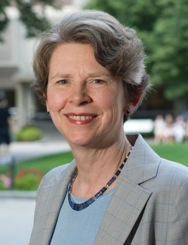
"This exceedingly generous commitment is an important investment in breast cancer research that will facilitate discovery and accelerate the development of diagnostics and treatment for this common life threatening disease," said Karen Antman, MD, Provost of Boston University Medical Campus and Dean of the School of Medicine. "We are particularly grateful that our graduate has chosen to support this important work of the Boston University School of Medicine. The donor who is a two-time cancer survivor has experienced the significance of timely and quality care. She has also worked on several health care projects in developing countries and this project at BUSM is an excellent opportunity to serve those in need close to home, a need she recognized while training at Boston City Hospital."
"We are incredibly grateful for this very generous gift, that will allow us to advance breast cancer research in new and exciting ways," said Gail Sonenshein, PhD, a professor of biochemistry and director of the Women's Health Interdisciplinary Research Center. "The funds will be used to develop a new Breast Cancer Research Center on the medical campus, recruit new faculty members, train scientists from the developing world, and fund pilot grants to help us understand the molecular basis of this devastating disease in diverse populations and for translational research projects that we hope will rapidly develop into new therapies."
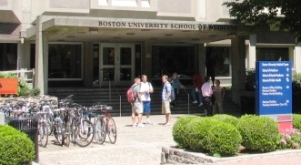
The fulfillment of the pledge will also support the building of the new residence for medical students on the medical campus. The proposed nine-story building will house 208 first-year medical students and transform student life at the School of Medicine.
The donor chose BU School of Medicine because of the medical campus' tradition of caring for the poor and underserved who will benefit from this research.
"Health disparities are a major concern in our society," said BU President Robert Brown. "This gift will contribute toward closing the disparities gap and will benefit the underserved and the most disadvantaged in our community. Boston University is deeply grateful to the donor."
Analytical Chemistry Journal Highlights Saliva Research
An article highlighting the research that is part of a collaboration between Boston University Goldman School of Dental Medicine (BUGSDM) Professor and Chair of Periodontology and Oral Biology Dr. Frank Oppenheim, Boston University School of Medicine (BUSM) Assistant Professor Dr. Frederic Little, BUGSDM Associate Professor Dr. Eva Helmerhorst, BUGSDM Research Assistant Professor Dr. Walter Siqueira, Tufts graduate student Timothy Blicharz, BUSM graduate fellow Philip Wexler and Robinson Professor of Chemistry at Tufts University Dr. David Walt was published in the February 4 edition of Analytical Chemistry.
The article is titled, "Fiber-Optic Microsphere-Based Antibody Array for the Analysis of Inflammatory Cytokines in Saliva," and describes the techniques used to develop a multi-analyte, antibody array.
This array simultaneously measures 10 inflammatory protein indicators in saliva from patients with pulmonary inflammatory disease. The idea behind the research is that these protein indicators will one day be used to diagnose and select treatment for patients by matching the patterns present in the array with patterns that are known to exist in the saliva of patients with different types of pulmonary inflammatory disease.
"The quickness and availability of results makes saliva testing attractive to pulmonary patients," said Dr. Little. "But there is a lot of intelligence that needs to be gathered in a discovery phase before we can know what patterns are in saliva. We are currently collecting all 10 analyte measurements from hundreds of patient saliva samples and we'll correlate these with what we know is going on clinically in the patients through subject questionnaires, dental exams, physical exams, and cataloging of medication they've taken in the past and present."
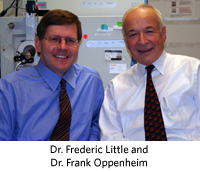
Dr. Oppenheim believes that the ability to look at 10 analytes together will allow physicians to give a more accurate diagnosis. He added, "Most systemic diseases don't manifest themselves only in a single body fluid parameter. There are typically many biomarkers present which show a pattern. If you look at the whole pattern of 10 analytes you're much safer in diagnosing or controlling the patient than if you only measured a single parameter." Dr. Oppenheim continued, "The point is that the multiplexing of analysis is really the way to go."
"I am very pleased that through this collaboration our faculty are doing their part to demonstrate that BUGSDM is an integral member of what President Brown describes as a great urban research university," said Dean Jeffrey Hutter. "I applaud their efforts and their collegiality."
Researchers Discover Ways of Integrating Treatment of Traumatized Tibetan Refugee Monks
Combining Eastern and Western medicine is the best way to ease post-traumatic symptoms among the Tibetan refugee monks who have come to the Boston Center for Refugee Health and Human Rights (BCRHHR) at Boston Medical Center, according to a paper co-authored by Michael Grodin, Grodin, professor of human rights, psychiatry, and community medicine at Boston University School of Medicine and professor of health law, bioethics and human rights at the School of Public Health.
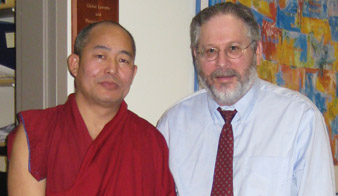
The BCRHHR recently treated a number of Tibetan refugee monks who fled violent religious persecution. These individuals arrived in Boston suffering from symptoms of traumatic stress, interfering with their meditative practice. The monks were diagnosed by their traditional healers as having srog-rLung, a life-wind imbalance. Recognizing that barriers exist between western and eastern medicine, the BCRHHR researched and implemented its own complementary therapy options to heal them. These findings appear online in the March issue of Mental Health, Religion and Culture.
According to Tibetan medicine, a srog-rLung disturbance has the potential to develop into a serious mental illness, leaving the victim at odds with the balance of the universe as well as jeopardizing his personal health. Symptoms of srog-rLung include uncontrollable crying, worrying, excessive mental, physical or verbal activity and an unhappy mind. Other conditions affecting the monk's health include anxiety, depression and post traumatic stress disorder (PTSD).
Research in cross-cultural health settings, particularly refugee health services, shows that successful treatment is contingent on a combination of the patient's interpretation of the illness and biomedical categories. This allows the patient to actively participate in his or her own healing. Cross-cultural psychiatric assessment is also necessary in determining appropriate treatment options, as treatment can be detrimental if not harmonized with the religious context in which mental illness will develop for these monks. The BCRHHR used traditional healers to obtain a dual diagnosis for the development of holistic therapy that responds to both PTSD and srog-rLung.
"This research and treatment involving patients accustomed only to traditional medicine, presented an opportunity for the acceptance of non-traditional therapeutic approaches," explained Grodin, who is also a professor of psychiatry, sociomedical sciences and community medicine at Boston University School of Medicine. "The difference between Tibetan and Western disease pathologies represents the need for evidence-based complementary therapies, such as the Tibetan monks in exile and other religious refugee populations," he said.
Tibetan Buddhist tradition dictates that the cure for suffering is enlightenment, attainable through meditation. When this occurs, the body is freed from anxieties and fears. The monks who were treated for PTSD and srog-rLung are finding that meditation, once second nature, has become difficult after nights filled with flashbacks that put the monks in a state of hyper-vigilance for the next day.
According to the researchers, in order to provide complimentary therapy for the monks, eastern and western medicine needed to be integrated to properly address both conditions. The spiritual aspect of the Tibetan medical model, which is at the core of the monks' experience of illness, guided this research. Ancient Tibetan Bon tradition of yogic practice was used to induce the mind into a relaxed state necessary to purify oneself through motion. This yogic practice combines movement of the body and controlled breath with movements of the mind to bring mental stability and offers an alternative to the monks' inability to eliminate invasive thoughts. Another therapy that was used is singing bowl therapy -- a form of music therapy, as sound has a direct connection to the heart, which aligns with srog-rLung experienced by the monks.
Grodin said the refugee health center at BMC integrated techniques of western medicine, such as anti-depressant prescribing and psychotherapy, with Tibetan healing practices, including medicines prescribed by Tibetan Amchi, meditation advice, Tai Chi and Qi Gong exercises. Grodin is trained in traditional Chinese medicine, such as acupuncture and meditation.
Other authors on the publication were Adriana Lee Benedict of Harvard College and Linda Mancini of the LamRim Buddhist Center and the BCRHHR.
Read more about Grodin's work with Tibetan monks at BCRHHR in the Boston Globe article "East Treats West."
Head of NIH Fogarty International Center Pushes Ambitious Agenda at Public Health Forum
When Dr. Roger Glass traveled to Zanzibar in 2007 with a U.S. delegation that included Health and Human Services Secretary Mike Leavitt, he got a lesson in the importance of the long-term sustainability of global health initiatives.
The lesson came courtesy of Zanzibar's minister of health, who announced to the delegation that his country had eradicated malaria -- for the third time. Malaria had been eliminated twice before, in 1950 and 1980, but those anti-malaria programs had not been sustained, leaving an opening for the disease to emerge, yet again.
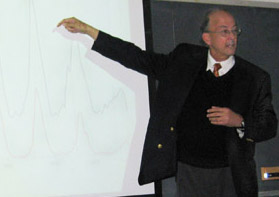
"This is really the issue of program sustainability," explained Glass, director of the Fogarty International Center and associate director for international research at the National Institutes of Health (NIH), who spoke at the March 11 BUSPH public health forum. Building local scientific capacity and converting research findings into practical interventions are keys to sustaining global health gains, he said.
"What the world wants is impact," Glass told a crowd of faculty, researchers and students. "And impact is not whether (an) article is in the New England Journal -- it's whether lives are being saved."
In a talk headlined, "Global Health in the 21st Century: New Directions and Perspectives from the Fogarty International Center," Glass said the center -- the smallest of 27 institutes and centers of the NIH -- was undertaking an ambitious strategic agenda that balanced new initiatives with unfinished business. The center is focusing on the growing epidemic of chronic, non-communicable diseases related to increased longevity and changing lifestyles in the developing world, he said, while also continuing to address infectious diseases.
"As we think about global diseases in the 21st century, we have to think about chronic diseases," such as heart disease, diabetes and cancer, Glass said. He noted that life expectancy had been prolonged in recent decades because of improvements in public health and medical treatment. "The global burden of disease has changed," he said.
He said there was still much work to be done on children's health issues, especially in resource-poor countries.
"We have a huge discrepancy in terms of who lives and who dies throughout the world," he said.

Glass, a research leader in the prevention of gastroenteritis from rotaviruses, previously worked as a medical officer for the Centers for Disease Control and Prevention and maintained field studies in Bangladesh, India, Mexico and other countries. He drew on his own career in encouraging young researchers to "go where the problems are," saying most of today's leaders in global health had "early experiences overseas."
Glass stressed that investments in global health pay off abroad and at home, in terms of their impact on both science and foreign relations. He said international health collaborations are a form of diplomacy that can "open doors."
Global health research has benefits for Americans, Glass said, because it often sheds light on health problems and inequities within the U.S. He cited research into high rates of infant mortality along the Mexican border, saying the problem is both "a health inequities issue for the U.S. and a global health problem."
He said there are myriad opportunities for the developing world to "learn from our mistakes." In China, for example, where smoking is now prevalent, rates of lung cancer are climbing. "This is going to be the biggest killer in China," as it once was in the U.S., he said.
Jonathon Simon, director of the Center for International Health at BUSPH, introduced Glass, who has received a number of awards for his research and leadership. The two men worked together in the 1980s, said Simon, who called Glass "a remarkably productive scientist" with a deep understanding of research.
Glass succeeded another BUSPH faculty member as head of the Fogarty center. Dr. Gerald Keusch, director of the Global Health Initiative and professor of International Health, was formerly Fogarty's director.
Glass said that after years of level federal funding, Fogarty was looking forward to additional funding through the recently-approved stimulus package.
The stimulus plan "is the first new money we'll have at NIH in six or seven years," he said.
Submitted by Lisa Chedekel
chedekel@bu.edu
New Study Shows How Spikes in Nitrite Can Have a Lasting Protective Impact on the Heart
A new study provides insight into how a short burst in nitrite can exert lasting beneficial effects on the heart, protecting it from stress and assaults such as heart attacks. In this study, just published in Circulation Research, researchers at Boston University School of Medicine have demonstrated for the first time that short elevations in circulating levels of this simple anion are sufficient to have a lasting impact on the heart by modulating its oxidation status and its protein machinery.
Nitrite, an oxidation product of the ubiquitous short-lived cell signaling molecule, nitric oxide (NO), was until recently thought to be biologically inert at the relatively low levels found in the body. Traces of nitrite are present in our diet and significant amounts are continuously produced from nitrate, another oxidation product of NO and a constituent of green, leafy vegetables. The suspicion that high levels of nitrite and nitrate may cause cancer, as well as concerns about their risk to compromise the ability of red blood cells to deliver oxygen to tissues, have led to strict regulations aimed at limiting our exposure to these substances through drinking water and food products.
In the past few years, however, multiple research groups have shown that low concentrations of nitrite exert numerous beneficial effects, ranging from anti-bacterial activities to increases in local blood flow, and that they can somehow protect tissues from damage when oxygen is suddenly cut off and then rapidly restored, as occurs during heart attacks and strokes.
To study the molecular underpinnings of this protective effect of nitrite, the researchers at Boston University School of Medicine used a rat model in which they administered nitrite only once, causing a short spike in circulating levels, as a way to simulate the types of naturally occurring increases in nitrite that follow exercise or consumption of a meal rich in nitrate.
The researchers used a systems-biology approach in which changes in multiple biological and biochemical systems (e.g., the composition of a large number of proteins, the concentration of several small molecule metabolites, and functional outcomes) are simultaneously monitored and then integrated to produce one final picture in order to provide a broader view of the impact of this treatment on the heart. They tested their theory that following these changes over time and at different doses of nitrite might help to explain the protective effects of nitrite on the heart.
"What we found was that a single brief nitrite treatment elicited persisting changes in the heart's oxidation status together with lasting alterations to numerous proteins involved in the heart's energy metabolism, redox regulation, and signaling," said David H. Perlman, a post-doctoral research associate in the Cardiovascular Proteomics Center at Boston University School of Medicine, and lead author of the study. "These alterations were particularly striking because they persisted at least 24 hours after the actual nitrite levels had returned back to normal, and they were correlated strongly with the improvements in heart function observed at the same time."
He noted that this type of protection, called ‘cardiac preconditioning', is a recently discovered phenomenon shown to be caused by numerous pharmacological agents.
"The proteins we have implicated include some key proteins, such as mitochondrial aldehyde dehydrogenase, that have been shown by others to be critical to cardiac protection afforded by other agents and triggers," added Perlman. "This is exciting because it ties nitrite-triggered cardioprotection into the broader preconditioning field. Our study complements and extends other work, and identifies new players of potential importance for protection of the heart."
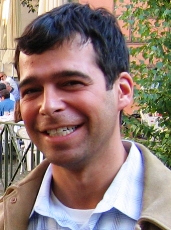
Perlman explained that nitrite levels in our bodies change under a number of circumstances, such as when we run up a flight of stairs or eat a big serving of salad.
"For years, the resulting bursts in nitrite were considered to be of little if any physiological relevance. Now we have good reason to believe that even small spikes in nitrite concentration can alter protein function in the heart in ways that afford protection," noted Perlman.
"We are intrigued by the breadth and magnitude of the proteomic changes in heart mitochondria elicited by a single, short-lasting elevation in nitrite concentration and believe that our findings will have broad implications for mitochondrial signalling and cardiac energetics," commented Martin Feelisch, senior author of the study. "It looks as though nitrite is triggering an ancient program aimed at fine-tuning mitochondrial function. Although the present study focussed on the heart, our observations may extend to other tissues and translate into relevant changes in muscle function elsewhere. If true, this may help explain, for example, the training effects of very short periods of exercise, which are known to be associated with elevations in circulating nitrite concentrations."
Interestingly, only low and high doses of nitrite, but not those in-between, were found to be protective. Although further studies will be needed to fully delineate the mechanisms of nitrite-induced cardioprotection, this study informs ongoing basic and translational studies by highlighting the importance of the dose-effect relationship for nitrite and the broad array of downstream targets possibly involved in its cardioprotective efficacy, the researchers concluded.
The study, "Mechanistic Insights into Nitrite-Induced Cardioprotection Using an Integrated Metabonomic/Proteomic Approach," was carried out as a collaboration between researchers at the Cardiovascular Proteomics Center at Boston University School of Medicine under the direction of Prof. Catherine E. Costello and core lab director Prof. Mark E. McComb, Prof. Martin Feelisch and his lab members of the Whitaker Cardiovascular Institute at Boston University School of Medicine, and Prof. Houman Ashrafian of Oxford University's Department of Cardiovascular Medicine. It was supported by grants and a contract from the National Institutes of Health, National Heart Lung and Blood Institute and National Center for Research Resources, as well as a Medical Research Council Strategic Appointment Award. It is available in the February 19th online edition of Circulation Research.
Gene Variant Associated with Cocaine Dependence, Cocaine Induced Paranoia Discovered
Researchers from Boston University School of Medicine (BUSM) and Yale University School of Medicine and the University of Connecticut School of Medicine, have discovered that variants in the α-endomannosidase (MANEA) gene are associated with cocaine addiction and cocaine-induced paranoia in European American and African American populations. These findings appear in the March issue of the Archives of General Psychiatry.
Cocaine is widely abused in the United States. The 2002 National Survey on Drug Use and Health revealed that nearly six million Americans age 12 or older used the drug during the preceding year. Compulsive use of cocaine is also common with more than one million individuals considered dependent on the drug. Several studies have suggested a substantial genetic contribution to cocaine dependence and related behaviors.
The researchers took a total of 3,992 individuals from two family-based samples (European American and African American) and two case-control samples (European American and African American) enrolled in studies of drug addiction and classified them as either cocaine dependent, suffering from cocaine-induced paranoia or controls. They were then genotyped for 11 markers spanning the MANEA gene. MANEA encodes an enzyme (a-endomannosidase) that metabolizes complex carbohydrates. MANEA was chosen for further study based on evidence from a low-resolution scan of the entire genome the researchers performed previously to search for genes associated with substance dependence.
The researchers found cocaine induced paranoia was associated with six of the 11 markers in the European American family sample. They also found these six markers and three other markers were significant in the African American sample. The strongest evidence for association in either population and in the total sample was observed for marker rs9387522, which is located in the 3' untranslated region of the gene. The A allele for this marker was associated with increased risk of cocaine induced paranoia in all four data sets.
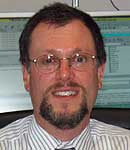
"Our findings suggest that cocaine dependence and associated behaviors may involve biological pathways not typically thought to be associated with brain metabolism and now opens a new pathway to understanding these highly prevalent disorders and their psychopathological manifestations," said lead author Lindsay A. Farrer, PhD, chief of the Genetics Program and professor of medicine, neurology, genetics & genomics epidemiology and biostatistics at BUSM.
According to the researchers, given MANEA's role in carbohydrate metabolism and relatively minor expression in brain, it would not appear initially to be a good biological candidate to modulate susceptibility to cocaine dependence or its associated psychotic complications. "However, insight into the relationship between MANEA, paranoia, and cocaine dependence can be gleaned from studies of mannosidase and other glycoproteins," notes Farrer.
MANEA is one of several glycosidic enzymes that remove oligosaccharide chains of dopamine β-hydroxylase (DBH), the enzyme that converts dopamine to norepinephrine. Low levels of DBH in plasma or cerebrospinal fluid and genetic variants in DBH have been associated with greater vulnerability to psychotic symptoms in several psychiatric disorders including cocaine dependence, schizophrenia, and major depression. MANEA may also influence susceptibility to cocaine dependence by modifying the function of liver carboxylesterase, a glycoprotein of the high mannose type, two forms of which hydrolyze cocaine and other drugs.
"This finding suggests that drug dependence and associated behaviors may involve biological pathways not typically associated with brain metabolism, and opens a new pathway to understanding these highly prevalent disorders and their psychopathological manifestations," added Farrer.
This work was supported by a grant from the National Institutes of Health.
White Patients Benefit More Than Blacks in Surviving Surgical Complications at Teaching Hospitals, Study Finds
Elderly patients who undergo surgery at teaching-intensive hospitals have better survival rates than at non-teaching hospitals, but these better survival rates occur in white patients, not black patients, according to a study co-authored by a BUSPH researcher.
"Survival after surgery is higher at hospitals with higher teaching intensity," according to the study, which appears in the February issue of the Archives of Surgery and was co-authored by Amy Rosen, a professor of Health Policy & Management at BUSPH and director of risk assessment and patient safety for the VA's Center for Health Quality, Outcomes and Economic Research in Bedford, Mass.
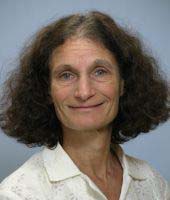
"Improved survival is because of lower mortality after complications...and generally not because of fewer complications," the authors said. "However, this better survival and failure to rescue (rate) at teaching-intensive hospitals is seen for white patients, not for black patients."
The research team, led by Jeffrey H. Silber, MD, director of the Center for Outcomes Research at The Children's Hospital of Philadelphia, analyzed Medicare claims from 4.6 million patients, aged 65 to 90, who were admitted for general, orthopedic and vascular surgery at 3,270 acute care hospitals in the U.S. from 2000 to 2005. Hospitals were classified as non-teaching hospitals if they had no medical residents, and teaching hospitals were scaled by their ratio of residents to hospital beds
The research team, led by Jeffrey H. Silber, MD, director of the Center for Outcomes Research at The Children's Hospital of Philadelphia, analyzed Medicare claims from 4.6 million patients, aged 65 to 90, who were admitted for general, orthopedic and vascular surgery at 3,270 acute care hospitals in the U.S. from 2000 to 2005. Hospitals were classified as non-teaching hospitals if they had no medical residents, and teaching hospitals were scaled by their ratio of residents to hospital beds.
The researchers measured mortality 30 days after surgery, in-hospital complications and failure-to-rescue, defined as the probability of death following complications. They found that compared to non-teaching hospitals, hospitals with the highest ratio of residents to beds had 15 percent lower mortality after surgery, no difference in complications, and 15 percent lower odds of death after complications (failure-to-rescue).
However, these benefits were observed in white patients, not black patients. Unlike whites, for black patients, the odds of death, complication and failure-to-rescue were similar at both teaching and non-teaching hospitals. The associations were adjusted for patient illness on admission; adjusting for income level did not change the results.
Black patients displayed higher complication rates than white patients at both teaching and non-teaching hospitals, although there was no difference in complication rates between teaching and non-teaching hospitals for black or white patients. While white patients at teaching hospitals experienced better survival rates after complications than black patients when compared to non-teaching hospitals, black patients experienced the same survival after complications at both types of hospitals.
The researchers found this racial disparity existed not only across different hospitals, but also for white and black patients within the same hospitals.
"Why racial differences in failure-to-rescue should occur within hospitals is not well understood, but there are many possibilities," the authors wrote. They offered as a possible explanation unintentional differences in communication between patients and providers. Also, in previous work, Silber and colleagues found that surgical procedures take longer for black patients than white patients in some hospitals.
Funding for the study came from the National Heart, Lung, and Blood Institute of the National Institutes of Health, the U.S. Department of Veterans Affairs and the National Science Foundation.
Submitted by Lisa Chedekel, chedekel@bu.edu
ASDA Students Lobby For Dental Issues
Boston University Goldman School of Dental Medicine (BUGSDM) members of the American Student Dental Association (ASDA) traveled to Washington, DC in February to participate in National Dental Student Lobby Day, an event co-sponsored by the American Dental Education Association (ADEA) and ASDA. Trip participants included ASDA Co-Legislative Liaisons Brian Nelson DMD 10 and Derrick Call DMD 12, as well as ASDA members Courtney Brady DMD 11, Mike Visser DMD 10, Gary Nord DMD 10, and Heather Parsons DMD 11.
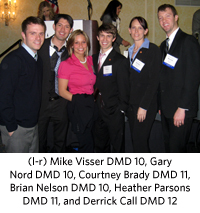
Participants spent their first day in Washington being briefed on the lobbying issues that ADEA and ASDA were officially endorsing, including the Meth Mouth Prevention and Community Recovery Act and the National Health Service Corps Funding legislation. During the second day they met with members of the U.S. House of Representatives to educate them about why these lobbying issues are important to dental students and professionals.
"I wanted to get involved with National Dental Student Lobby Day because up until I enrolled in dental school I hated politics," said Nelson. "But now, after realizing how important politics are to protecting our profession as well as the oral health of our communities, I'm hooked. National Dental Student Lobby Day gave me a chance to participate in the legislative process and also to set a good example for other students considering getting involved."
National Dental Student Lobby Day participants are expected to follow up with representatives by phone and through thank you letters. They must also submit write-ups to ASDA detailing how the representatives responded to the proposed legislation.
"I am very proud of our GSDM ASDA Chapter and very pleased our students participated in National Dental Student Lobby Day," said Dean Jeffrey Hutter. "The involvement of these outstanding students in organized dentistry at this early stage of their careers means a great deal to our School and to the future of our profession."
SPH Public Health Forum: Global Health in the Twenty-first Century
On March 11, join Roger Glass, MD, PhD, at the SPH Public Health Forum as he speaks on the topic, "Global Health in the Twenty-first Century: New Directions and Perspectives." The Public Health Forum is a regular series hosted by the BU School of Public Health.
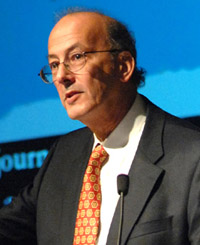
- Roger Glass, MD, PhD
Glass is director of the Fogarty International Center and associate director for international research at the National Institutes of Health. The Fogarty International Center is the international component of NIH, and it addresses global health challenges with research and training programs, supporting and advancing NIH's mission through international partnerships.
Glass's career has taken him to the Centers for Disease Control and Prevention, where he was stationed at the International Center for Diarrhoeal Disease Research in Dhaka, Bangladesh. He subsequently worked on the molecular biology of rotavirus at the NIH Laboratory of Infectious Diseases before becoming chief of the viral gastroenteritis unit at the CDC's National Center for Infectious Diseases. He has made major contributions in the understanding of the epidemiology of these pathogens and in vaccine development for rotavirus.
"It is rare to find somebody who has worked so effectively at the upstream science and the downstream delivery end of global health as Roger," said Jon Simon, associate professor and chair of International Health.
Glass has received numerous awards including the prestigious Charles C. Shepard Lifetime Scientific Achievement Award presented by the CDC in recognition of his 30-year career of scientific research application and leadership, and the Dr. Charles Merieux Award from the National Foundation for Infectious Diseases for his work on rotavirus vaccines in the developing world.
"Global Health in the Twenty-first Century: New Directions and Perspectives" Presented by Roger Glass
Date: March 11, 2009
Time: 12:00 p.m. - 1:00 p.m.
Location: BUSM Instructional Building, Room L-112
Contact: Gerald Keusch, keusch@bu.edu
BUSM Receives $260,000 Grant from Lincy Foundation
Focus on medical school curriculum development in Armenia
Boston University School of Medicine (BUSM) has received an initial grant of $260,000 from the Lincy Foundation to support a curriculum development project at the Yerevan State Medical University (YSMU) in Armenia. The project will develop a framework to make medical education in Armenia comparable to that in the US and Western Europe. BUSM and the YSMU will use the BUSM curriculum as a model and modify it as appropriate for Armenian students. The funds will support the first and second years of the three-year project.
"We are enormously grateful to the Lincy Foundation for their support of this important educational project. Working jointly with Yerevan State Medical University we hope to create the infrastructure for a dynamic, state-of-the-art learning environment for Armenian medical students," explained Aram Chobanian, MD, President Emeritus, Boston University and Dean Emeritus of the School of Medicine.
While the Yerevan State Medical University has a distinguished history as the foremost medical school in Armenia and was considered one of the leading medical institutions in the Soviet Union, it has not kept up with the rapid advances in medial science that have occurred over the past 25 years in North America and Western Europe. Medical education in Armenia continues to reflect the old Soviet system: teaching is to a great extent didactic; class sizes are large; and hands-on clinical training is minimal. Students have tended to be observers rather than active members of the clinical team.
The project will provide an in-depth analysis of the current Yerevan State Medical University curriculum, visits of senior faculty and medical students between the sister institutions, online access and adaptation of BUSM course materials for YSMU students, development of new courses, enrollment of senior medical students from Armenia in clinical clerkships at BUSM.
Gohar Kyalyan, PhD, MD, Rector of YSMU and co-investigator of the grant, has developed the project with Chobanian. "We are excited about the opportunity to work with Boston University to transform medical education at YSMU and in Armenia as a whole. The grant from the Lincy Foundation is particularly appreciated at this time of economic crisis for the world as a whole as well as for Armenia," said Kyalyan.