Student Updates
Alice Jacobs, MD Receives American Heart Association Award
Alice K. Jacobs, M.D., professor of medicine at Boston University School of Medicine and director of the Cardiac Catheterization Laboratory and Interventional Cardiology at Boston Medical Center received the American Heart Association Gold Heart Award. The award is the highest honor the association gives to volunteers who have provided continued, distinguished service.
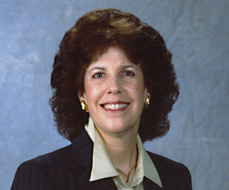
The award was presented at the association's 2009 Gold Heart Banquet in Washington, D.C.
Jacobs was the association's president in the 2004-05 fiscal year and has been a volunteer with the organization since 1981. As president, she provided critical leadership as the association launched several new initiatives including the Get With The Guidelines, a hospital quality-of-care program. In 2004, her presidential address at the association's annual meeting, Scientific Sessions, focused on the issue of trust between physician and patient and restoring public confidence in the healthcare system.
As a member of the association's Committee on Scientific Sessions Program, Jacobs founded enhancements to the organization's annual meeting, including "Ask the Expert" conferences and translational science sessions.
In 2006, as immediate past president, Jacobs called attention to the need for improvements in systems of care for patients with ST-elevation myocardial infarction (also called STEMI), a severe form of heart attack. This led to the association's Mission: Lifeline initiative, which seeks to develop strategies to increase the number of STEMI patients with timely access to primary percutaneous coronary intervention. Jacobs has served as chaired of the Mission: Lifeline Advisory Working Group since its creation in 2007 and has overseen the initiative's rapid expansion in communities across the United States.
Jacobs' major research interest is in coronary revascularization strategies. She is also interested in cardiovascular disease in women and the gender differences in the epidemiology, diagnosis, treatment and prognosis of ischemic heart disease.
Franzblau Honored by Einstein College of Medicine
Carl Franzblau, PhD, professor and chair of the Department of Biochemistry and associate dean Division of Graduate Medical Sciences received a Distinguished PhD Alumnus Award from Albert Einstein College of Medicine on June 2, 2009. Dr. Franzblau is a member of the class of 1962 and was one of the first students to be awarded a PhD at Einstein.
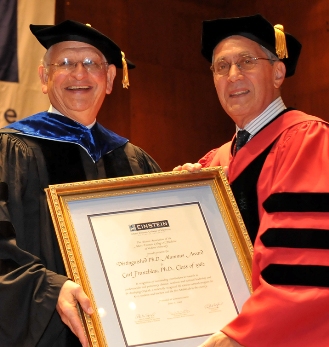
Einstein College of Medicine recognized Franzblau's many achievements including his extensive publishing in the field of cardiovascular and pulmonary diseases focusing on the role of connective tissue proteins in those disease processes. His key role in describing the nature of the chemical cross-links in collagen and elastin as well as describing the synthesis of these structural proteins in cell culture was also highlighted.
At the National Institutes of Health, Franzblau served on the Advisory Councils of the Heart Lung and Blood Institute and the National Center for Minority Health and Health Disparities, and chaired the Cardiovascular A study section.
He developed City Lab Academy at BUSM, a free nine-month academic and laboratory skills training program for qualified high school graduates interested in pursuing a career and further education in biotechnology.
On June 15 and 16 a symposium will be held at BUSM to celebrate Franzblau's nearly 50-year career and his many contributions to science and education. Medical campus faculty, staff and students are invited to attend this two-day event. A complete schedule is available here.
President Names First Warren Professors
President Robert A. Brown has appointed two faculty members as the first William Fairfield Warren Distinguished Professors at Boston University: George Annas, the Edward R. Utley Professor of Health Law, Bioethics, and Human Rights and chair of the School of Public Health department of health law, bioethics and human rights, and James Collins, a College of Engineering professor of biomedical engineering.
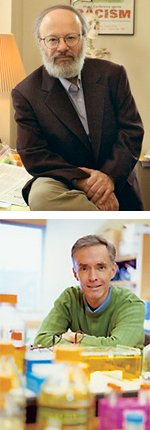
“The exceptional contributions of George Annas and Jim Collins certainly fit the high standards envisioned when we created the Warren Professorships,” says Brown.
The recipients of the professorships, named after the University’s first president, were announced Saturday in an e-mail Brown sent to faculty. The professorships were established last year on the recommendation of an ad hoc committee of the Faculty Council as a way of recognizing the University’s most distinguished faculty. In a letter to the faculty last year, Brown said the award is intended to be the highest honor bestowed upon senior faculty members who will continue to be involved in research, scholarship, and teaching, as well as the University’s civic life. After a call for nominations last fall, a faculty advisory committee reviewed several candidates and delivered recommendations to Brown, who made the final selections.
Annas, who is also a professor in the School of Medicine and the School of Law, said the award "should be seen as an honor to my colleagues in the department of health law, bioethics and human rights, as much as to me."
"It is my privilege to work with the incredibly talented faculty on both campuses of Boston University," says Annas. "I have had consistent support for my not always uncontroversial research and advocacy in health law bioethics and human rights."
Annas earned a J.D. from Harvard Law School and an M.P.H. from Harvard School of Public Health, where he was a Joseph P. Kennedy Fellow in Medical Ethics. After graduating from law school, he clerked for Justice John V. Spalding of the Massachusetts Supreme Judicial Court, and came to Boston University in 1972 as the director of LAW’s Center for Law and Health Sciences.
Annas is the author or editor of 16 books on health law and bioethics and is an expert on patient rights. He is a member of the Institute of Medicine of the National Academies, a fellow of the American Association for the Advancement of Science, cochair of the American Bar Association’s Committee on Health Rights and Bioethics, and a member of the Committee on Human Rights of the National Academies. He is the cofounder of Global Lawyers and Physicians, a transnational professional association of lawyers and physicians working together to promote human rights and health. He has held a variety of government regulatory posts.
Collins is a Howard Hughes Medical Institute investigator, a position he holds concurrently with his BU appointment. He also is cofounder and codirector of the University’s Center for BioDynamics. A Rhodes scholar, he holds a Ph.D. in medical engineering from Oxford and has been a member of the College of Engineering biomedical engineering faculty since 1990. He has been recognized as the ENG Biomedical Engineering Teacher of the Year and the Professor of the Year. In 2000, he won the Metcalf Cup and Prize for Excellence in Teaching. He is a 2003 recipient of a MacArthur Fellows Program award.
“I am delighted and very appreciative to be selected as one of the first Warren Professors,” says Collins. “I would like to thank Bob Brown and the selection committee for this marvelous honor. My academic career has benefited tremendously from Boston University’s support and celebration of high-risk interdisciplinary work. I look forward to continuing such work and teaching BU students for many years to come.”
Last week, Collins also was named as the recipient of Drexel University’s inaugural Anthony J. Drexel Exceptional Achievement Award, which comes with a $100,000 prize and recognizes “a member of a U.S. institution whose work transforms both research and the society it serves.” Collins has pioneered the application of nonlinear dynamics to biological systems and the developing field of synthetic biology. His research has led to the development of novel bioengineering devices and techniques, while making innovative contributions at multiple biological scales. He has 130 archival publications, and has 10 issued patents and 15 pending patents. He has been named a Fellow of the Institute of Physics, a Fellow of the American Physical Society, and a Fellow of the American Institute for Medical and Biological Engineering. He won the NIH Director’s Pioneer Award, the Ellison Medical Foundation Senior Scholar Award, and the Scientific American 50 Award, given to 50 outstanding leaders in research, industry, and politics.
This story appeared in BU Today and was written by Art Jahnke.
Holick Receives Linus Pauling Prize for Health Research
Michael Holick, MD, a professor of medicine, physiology and biophysics at BUSM who has revolutionized the understanding of vitamin D and its role in disease prevention, received the $50,000 Linus Pauling Institute Prize for Health Research.
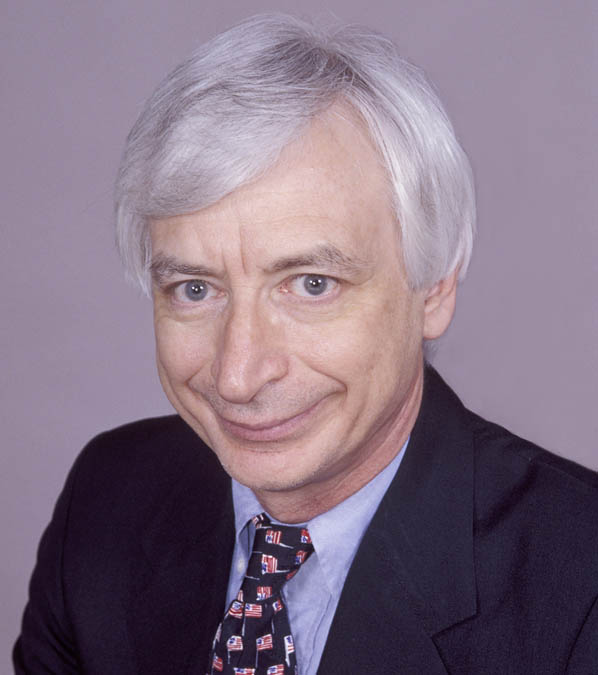
The prize was presented at a biennial conference, Diet and Optimum Health, sponsored by the Linus Pauling Institute at Oregon State University. It recognizes international leaders in research on the role of diet and nutrition in health promotion and disease prevention, as well as efforts to disseminate knowledge on diet, lifestyle and health to enhance public health and reduce suffering from disease.
Holick is responsible for redefining vitamin D deficiency, a concern that's now seen as a national epidemic, and has been strongly criticized in the past 20 years when warning that abstinence from direct sun exposure through sunblock use was leading to increasing vitamin D deficiency - with serious implications for cancer and other diseases.
"I well remember Linus Pauling standing up to criticism and skepticism, a trait of Holick as well," said Nevin Scrimshaw, president of the International Nutrition Foundation, in nominating him for this award. "Today, Holick is recognized as a world renowned nutritional biochemist/physician whose research has had a global impact on the health of both children and adults."
Holick's work opened a wide field of investigation that has now demonstrated how vitamin D deficiency increases the risk of cancer, autoimmune diseases, infectious and cardiovascular disease, Scrimshaw said. And studies have concluded that more than 50 percent of the children and adults in the United States are vitamin D deficient - a growing crisis, due in part to successful campaigns to always wear sun protection outdoors and reduce natural production of what's known as the "sunshine vitamin."
Holick was the first scientist to isolate the active forms of vitamin D, and in the past three decades has become the world authority on photobiology of vitamin D through synthesis in the skin - and he's determined that anyone living north of 35 degrees latitude can't make enough vitamin D in the skin during winter exposure to sunlight. His work has helped lead to vitamin D fortification in various foods.
In more recent work, Holick has shown links between vitamin D deficiency and the development of preeclampsia in pregnancy. An understanding of the health benefits of vitamin D was cited by Time magazine as one of the top 10 medical advances in 2007.
Previous recipients of the Linus Pauling Prize include Bruce Ames, University of California at Berkeley; Walter Willett, Harvard University; Paul Talalay, Johns Hopkins University School of Medicine; and Mark Levine, National Institutes of Health.
The prize is named after Linus Pauling, a two-time Nobel laureate, OSU alumnus, founder of the Linus Pauling Institute and pioneer in the role of vitamins and micronutrients in promoting health and preventing disease.
BUSM's CityLab Academy Graduation a Success
Thirty-one students graduated from Boston University School of Medicine's (BUSM) CityLab Academy today. CityLab Academy is a free nine-month academic and laboratory skills training program for qualified high school graduates interested in pursuing a career and further education in biotechnology.
Guest speakers at the ceremony included Boston Mayor Thomas M. Menino, Karen Antman, MD, provost of BU Medical Campus and BUSM dean and Neil Sullivan, executive director of Boston Private Industry Council.
"I'm glad to be here and support Citylab because it's an investment in you, all of you. BU made a commitment to helping Boston succeed in the life science field. We continue to make gains toward humanity and expanding Boston in competitive roles in a global economy. Life science is the future of Boston. You're starting right on the ground floor. The future is yours. Whatever you decide to do, you will be successful," said Boston Mayor Thomas M. Menino.
The students earned a certificate in Biomedical Laboratory Science, which qualifies them for job opportunities created by the new laboratories being built on the medical campus including the Level 4 National Emerging Infectious Diseases laboratory and the growing biotech industry in Boston.
Addressing the graduates, Neil Sullivan, executive director of Boston Private Industry Council stated, "You have the skills necessary to participate in a vibrant expansion of Boston's science sector. You represent our neighborhoods as well as so many cultures from around the world. Boston is becoming an international city. Your future and Boston's economic future are one in the same," said Sullivan.
Boston University announced in 2004 that it would contribute $1 million to expand the program and provide funds for 100 Boston residents to attend CityLab Academy. The program is free as Boston University covers the students' tuition, supplies and other expenses.
At the conclusion of the semester, students receive 12 Boston University credits. Some choose to continue their education; others receive job placement assistance from Boston University.
Classes will begin this September, to learn more about the program visit www.bumc.bu.edu/citylabacademy.
Photographs of UV Exposure Can Impact Sunburns in Preteens
Researchers from Boston University School of Medicine (BUSM) have found that among preteens, the use of photographs to measure ultraviolet (UV) exposure, could motivate them to improve sun protection practices and limit number of sunburns. These findings appear in the April 2009 issue of the Journal of the Dermatology Nurses' Association.
Skin cancer is the most common cancer in our society, and overexposure to UV light in childhood is a major risk factor. Individuals with light eyes, pale skin, history of sunburns, freckling tendency, multiple nevi, or family histories of skin cancer are at greatest risk.
The BUSM researchers collaborated with the Children's Melanoma Prevention Foundation to design an intervention program in the Northeast. They recruited middle-school students (aged 11-13 years) from Quincy, Massachusetts, a community with a melanoma rate higher than expected from 1999-2003. Of the 111 students who completed the study, 83 received the intervention and 28 were in the control group. All students received a sun protection lecture. Those in the intervention group also received a UV photograph of their face, (that shows pigment changes from chronic sun exposure), along with detailed explanations of their findings on the UV photographs at baseline. Follow-up surveys at two and six months were also obtained. Responses from both groups were analyzed with regard to attitudes and behaviors relating to sun protection practices.
According to the researchers there were fewer (36 percent) reported sunburns in the intervention group at two months follow-up, as compared with the control group (57 percent). This difference was smaller at six months follow-up with 51 percent of intervention group reporting a sunburn compared to 64 percent of the control group. The researchers then examined the relationship between preteens who were "planning to tan" at baseline and reports of sunburn at two and six months follow-up and found sunburn rates were again lower among the students in the intervention group compared to the control group.
Students generally reported that the UV photograph was a helpful tool in teaching risk factors for skin cancer and the majority had kept them, Those preteens with the highest risk factors for melanoma, such as numerous facial freckles, were greater impacted and were significantly less likely to report sunburn at two months and again in six months.
"Despite public health recommendations to protect children and preteens from sun damage, studies indicate that we can be quite ineffective in this regard," said lead author Marie-France Demierre, a professor of dermatology and medicine at BUSM. "Studies have reported that children experience at least one annual sunburn, and more than a third have three or more per year. This greatly increases their chances of melanoma. The UV photographs appear to be a helpful tool to allow a child to recognize the risk for skin cancer and potentially reduce their chance of sunburn," added Demierre.
Demierre added, "The UV photograph represents an immediate ‘‘picture" of sun damage that can impact impressionable teens. By providing coping information, for example, information on how to protect oneself, sun protection information, one can facilitate positive health behaviors potentially preventing sunburn."
Demierre also commented on the feasibility of such a study within a public school system. The researchers had a close collaboration with the Quincy school superintendent, teachers and nurses who allowed this important research to take place. "The potential of UV photographs in improving sun protection behavior among children and preteens, especially those most at risk for melanoma, is enormous. Every teen should get an ultraviolet photograph of his/her face in school along with routine vaccinations," she added.
Funding for this study was provided in part by The La Roche Posay North American Foundation and the Dermatology Nurses' Association Research Grant sponsored by the Ortho-Neutrogena Corporation.
Flu Numbers Climb a Bit, Fear Lessens a Lot
Vigilance continues, as experts find H1N1 less threatening
Although the number of people infected with H1N1 (swine) flu continues to climb, health officials in Massachusetts and elsewhere are worrying less about its virulence. Genetic and epidemiological data suggest that this strain of flu may be no more virulent than strains that surface every year.
Public health officials are reconsidering initial demands for school closings at the first sign of the virus. Still, as final exams wind down and Commencement approaches, no one is suggesting that the University is out of the woods.
Yesterday’s count put the number of confirmed cases in Massachusetts at 34. That includes a Boston University dental school resident, whose status was bumped from “probable” to “confirmed” Monday night. David McBride, director of Student Health Services, says the resident is recovering. McBride says the University has tracked down all patients, residents, and staff who had contact with that resident, and is monitoring their health for seven days from time of exposure. He says none are exhibiting worrying symptoms of the flu.
On the Charles River Campus, three students have experienced symptoms that may be flu-like symptoms, McBride says, but none of the cases is sufficiently suspicious to warrant H1N1 testing. He says one of the three students has gone home and two are isolated in their rooms, with food brought in and careful attention being paid to any change in symptoms.
Students on the Charles River Campus appear to be in step with a downward trend in anxiety about the flu.
Kimberly Reiss (COM’09) says she believes that H1N1 is “nothing more than normal flu. I think the media is making people more scared than they should be.”
Flavio Esposito (GRS’12) says the flu really is “a big deal. But we shouldn’t make it as big a deal as we have made it.”
Yasmin Atefi (ENG’10) has stopped worrying. “I think it’s fine,” he says. “I think a lot of people are getting sick because the seasons are changing, and a lot of them have gone to student health and been tested and they’re fine.”
As fears abate, McBride says his office still encourages any student with symptoms of mild illness to stay home and call Student Health Services or a personal physician. Those symptoms include a persistent cough, fever, headache, sore throat, runny nose, body aches, diarrhea, and vomiting.
Student Health Services has made additional nurse time available to handle an anticipated increase in calls; elsewhere on campus, first responders remain vigilant. Two special response teams, one for the Medical Campus and one for the Charles River Campus, are communicating daily with officials from the Boston Public Health Commission.
The University is keeping 200 recently installed dispensers of antibacterial solution in place (although the solution by itself is not effective against viruses). Custodial staff continue to make extra efforts to keep public areas clean, using disinfectants shown to combat other flu strains.
This BU Today story was posted on Wednesday, May 6, 2009 and was written by Art Jahnke.
Dental School Resident Recovering from ‘Probable' Swine Flu
Orthodontic clinic closed through May 8
A resident at Boston University's Goldman School of Dental Medicine has been identified by Boston Public Health Commission (BPHC) authorities as having a probable case of swine flu, also known as H1N1. The resident, who is recovering, felt sick on April 28 and was tested for the swine flu virus at a Boston-area hospital. Those tests have been sent to the Centers for Disease Control (CDC) for a definite identification.
Dr. David McBride, director of Student Health Services at Boston University, says that since April 27, the beginning of the resident's potentially contagious period, the resident is believed to have had contact with 12 patients and 15 residents. McBride says the University has reached out to all 12 patients and spoken to 10, advising them of symptoms to watch for. None of the patients report any symptoms of flu. The University has also reached out via email and phone to the 15 residents who may have been exposed to the virus, and reached 14. McBride says one resident reports a sore throat, and one has a cough. Because both symptoms could indicate a flu infection, says McBride, the BPHC has requested that the first-floor, postdoctoral orthodontic clinic where the resident worked, at 100 East Newton Street, remain closed until May 8. The BPHC also asks that all orthodontic faculty, staff and residents remain in their homes until that date. McBride says the University will comply with all BPHC requests, and is working closely with the commission on appropriate and prudent further responses.
Jeffrey Hutter, Dean of the Henry M. Goldman School of Dental Medicine, says the possibility of patient exposure to the virus is limited to a confined area dedicated to postdoctoral orthodontic patient treatment on the first floor of the clinic. That dental school orthodontic clinic is located on the Boston University Medical Campus, almost two miles from the Charles River Campus. All activities on the Charles River Campus will proceed as scheduled.
McBride says Student Health Services is advising all members of the Boston University community to remain home if they feel ill. In addition, all should practice good hygiene, including washing hands often with soap and water (alcohol-based hand cleaners are also effective), covering nose and mouth when coughing. They should avoid touching their eyes, nose or mouth, and avoid close contact with sick people.
The infected resident, who reportedly is feeling much better, has been at home since April 30. The resident has not traveled to Mexico. The source of the possible infection is unknown.
Last week, the Mexican government closed all schools and universities, including a BU study-abroad program in Guadalajara. The University has encouraged all students in that engineering program to return to their homes, rather than to the University. McBride says the University has activated a longstanding special team trained to respond to pandemics and other emergency situations. That team is coordinating actions with public health authorities and on-campus groups.
A hotline at the dental school has been established to answer any questions and concerns. The number is 617-638-4700. The e-mail address is H1N1info@bu.edu.
BU Today story written by Art Jahnke was posted on Sunday, May 3, 2009.
SPH Public Health Forum: Malaria Elimination – Hype or Hope?
On May 13 join Laurence Slutsker, MD, MPH, at the SPH Public Health Forum as he presents the talk "Malaria Elimination - Hype or Hope?"
Dr. Slutsker is chief of the Malaria Branch at the Centers for Disease Control and Prevention and clinical assistant professor of medicine at Emory University School of Medicine. He joined the CDC in 1987 and has conducted and supervised epidemiologic research in Kenya, Malawi, Tanzania, Sudan, South Africa, Japan and the United States on a variety of topics including malaria, HIV/AIDS, diarrheal diseases and general tropical public health.
His current work is focused on prevention and treatment of malaria in infants and pregnant women, anti-malarial drug resistance, interactions between HIV and malaria, and evaluations of malaria control programs.
The Public Health Forum is a regular series hosted by the BU School of Public Health.
SPH Public Health Forum: "Malaria Elimination - Hype or Hope?"
Speaker: Laurence Slutsker, MD, MPH
Date: May 13, 2009
Time: 12:00 p.m. - 1:00 p.m.
Location: BUSM Instructional Building, Room L-112
Contact: Diane Beliveau, beliveau@bu.edu
BUMC Facilities Management Teams with Neighborhood Associations to Make Boston Shine
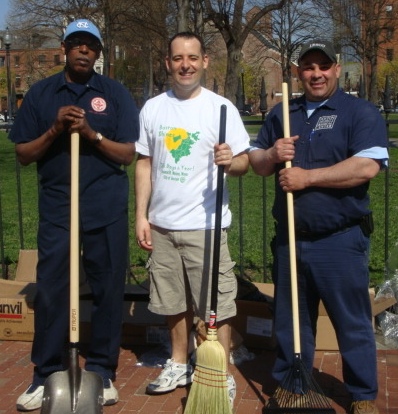
Tyrone Crumble and Jesus Viera, members of BUMC's Office of Facilities Management teamed up with members of the Blackstone/Franklin Square and Worcester Square Area Neighborhood Associations to spruce up parks bordering the Boston University Medical Campus. The effort is part of Boston Shines, the City of Boston's bi-annual city-wide neighborhood cleanup program. Tyrone and John spent a a Saturday morning in April with residents including David Wisholek from Blackstone/Franklin Square. Together they pruned trees, raked and cleared debris from historic green spaces.