Student Updates
BUSPH Faculty Receives Prestigious Peter Paul Professorship
Catharine Wang, an assistant professor in the School of Public Health department of community health sciences, has been awarded a 2009 Peter Paul Career Development Professorship by Boston University that she will use to pursue research related to translating genomic discoveries into programs that will improve human health.

Wang, who recently joined the BUSPH faculty, is one of this year's three recipients of the award, which recognizes outstanding young faculty within their first two years of BU appointments. The award, which provides $50,000 a year for three years in salary support and research funds, was established in 2006 with a gift from entrepreneur and philanthropist Peter T. Paul.
Wang, who has a doctorate in health behavior and health education from the University of Michigan School of Public Health, is pursuing research centered on the genomic applications to health, genetic risk assessment and risk communication in the context of genetic testing.
"The first thing I did after the initial shock was breathe a sigh of relief," she said of receiving news of the award. "One of the most challenging aspects as a junior faculty member is finding ways to get new research ideas off the ground. I plan to use the award to bolster and strengthen an ongoing study and to initiate two pilot studies related to the translation of genomic discoveries into programs that will improve human health."
Wang is joined by Margaret Litvin, a College of Arts & Sciences assistant professor of Arabic and comparative literature, and Abigail Moncrieff, an associate professor of law at the School of Law. The awards are named for Peter Paul (GSM ‘71), president of the mortgage banking company Paul Financial, LLC, who gave the University $1.5 million in 2006 to fund 10 professorships over five years. Nominations for the award are submitted by deans and department heads, and awardees are selected by President Robert A. Brown and Provost David Campbell.
Last year, another BUSPH faculty member was among the Peter Paul award recipients. Yesim Tozan, an assistant professor of international health, received the award to pursue her research into the neurocognitive consequences of childhood malaria and the associated socio-economic costs.
Submitted by Lisa Chedekel
Seasonal Flu Vaccines for Students, Faculty and Staff
Boston Medical Center is offering the seasonal influenza vaccine to employees, students, licensed independent practitioners (LIPs) and patients today. All employees, students and LIPs are encouraged to get the seasonal influenza vaccine this year.
Community Flu Shot Clinics for Seasonal Flu
BMC is hosting two public flu shot clinics. BUSPH faculty, staff and students are welcome and encouraged to receive their flu shot at these events.
• Tuesday, Sept. 22, 9 am - 5 pm in the Newton Pavilion Lobby
• Thursday, Sept. 24, 9 am- 5 pm in the Menino Pavilion Lobby
Further information on the H1N1 vaccination campaign will be available in the coming weeks.
Alcohol Education for Youths: Lab-based Experience
In an effort to reduce underage drinking and alcohol abuse, Boston University School of Medicine's (BUSM) CityLab program in collaboration with Boston University School of Public Health, completed the first phase of a pilot curriculum for the National Institute on Alcohol Abuse and Alcoholism. The pilot, titled "Alcohol Education for Youths: A Laboratory-Based Experience," took place over a three-day period at Archbishop Williams High School in Braintree, Mass. earlier this year. The focus was to help high school students develop an understanding of the physiological effects of alcohol on the body through scientific investigation.
The first phase of the pilot program involved two groups of students. A focus group, consisting of seven ninth and tenth graders, met with the Boston University CityLab team in early April to learn about the curriculum and provide feedback on what they viewed as important for creating a meaningful alcohol program for high school students.
A second group of nineteen students participated in the curriculum pilot. They sought to explain the high risk behaviors associated with alcohol use among adolescents. The students began the exercise by comparing the behavior of normal mice and mice under the influence of alcohol. Later, students investigated the journey of alcohol through the body. They worked in the laboratory where they discovered how the enzyme-alcohol dehydrogenase becomes less effective at breaking down alcohol as the concentration of alcohol increases, resulting in an increase of blood alcohol level.
The students actively participated in the process of scientific investigation, including experimental design and data analysis to gain a better understanding of alcohol's effect on the body. "The goal of the curriculum is to provide students with a deeper understanding of basic science as it relates to the physiological and behavioral effects of alcohol through the process of scientific investigation. Our hope is that students will make informed and responsible decisions about alcohol use." explained Dr. Donald DeRosa, director of CityLab at BUSM.
This program aims to present data which supports the damage alcohol causes at the molecular level in a relevant way to stop under-age drinking. Plans are underway to expand the pilot program to include all freshman biology classes for the 2009-2010 school year. Curriculum that explores toxicity, a basic understanding of neuroscience, and the effects of alcohol on the brain and behavior will be introduced. Test results from the pilot program along with data collected through surveys and interviews suggest that students acquired a deeper understanding of the physiological effects of alcohol. "This focus group was very informative. The CityLab Program explained the physiological effects of alcohol to students," said Lydia Sands, Archbishop Williams High School student. "I believe this will be an effective way to teach students about the abuse of alcohol," said Sands.
"Overall, this program gave our students another reason to love science and see its relevance in daily decision making," said Jane Funderburk, Academic Dean of AWHS. "This outstanding program is on track to be placed in schools across the nation," explained Dr. Carmen Mariano, President of AWHS. "Our school will be forever proud of the role we played in its growth," said Mariano.
Three Active NFL Pro Bowl Players to Donate Brains to BUSM's CSTE
The Center for the Study of Traumatic Encephalopathy (CSTE) at Boston University School of Medicine (BUSM) announced today that three active National Football League Pro Bowl players have pledged to join the CSTE Brain Donation Registry. The players include: Matt Birk, Baltimore Ravens; Lofa Tatupu, Seattle Seahawks; and Sean Morey, Arizona Cardinals. These players have decided to donate their brain and spinal cord tissue to the CSTE upon death so that researchers can better understand the effects of trauma on the brain and spinal cord.
Brain trauma in sports is increasingly seen as a health crisis due to the discovery of a neurodegenerative disease called Chronic Traumatic Encephalopathy (CTE) in a number of recently deceased athletes. Over the past several years, CTE was found in ten deceased athletes including professional football players, boxers, a professional wrestler, and an 18 year-old high school athlete. Only one athlete tested for CTE during that time did not have the disease.
Robert Cantu, MD, a leading sports concussion expert and clinical professor of neurosurgery at BUSM said, "CTE is the only fully preventable cause of dementia. By studying large numbers of athletes throughout their lives, as well as examining brain tissue through our expanding CSTE brain bank, we will be able to determine the specific risk factors for CTE and potentially develop effective treatments. The research will foster education and allow meaningful guidelines to be implemented at all levels of athletic participation."
The co-directors of the BUSM CSTE include Cantu, Chris Nowinski, Ann McKee, MD, and Robert Stern, PhD. They published research findings on CTE in athletes in the July issue of the Journal of Neuropathology and Experimental Neurology (2009, vol.68¸ pp. 709-735). McKee also recently presented these findings to the NFL Mild Traumatic Brain Injury Committee and NFL Players Association.
Birk, Tatupu, and Morey are the first active NFL players to join more than 150 former athletes, including 40 retired NFL players, in the CSTE Brain Donation Registry. Through enrolling in the C.O.N.T.A.C.T. research program (Consent to Offer Neural Tissue of Athletes with Concussive Trauma), these athletes will be interviewed annually by phone throughout their lives and, upon death, their brain tissue will be examined by the CSTE. This prospective approach with allow the researchers to examine the relationship between clinical symptoms and pathology for the first time
Arizona Cardinals receiver and special teams player Sean Morey said, "As an active NFL player, I believe it is critical to support all the research being done to better understand the potential long term risks associated with brain injuries in the NFL and football at all levels. One of the most profound actions I can take personally is to donate my brain to help ensure the safety and welfare of active, retired, and future athletes for decades to come."
According to Baltimore Ravens star center Matt Birk, "The science is clear that CTE is a threat to the health and well-being of all contact sports athletes. I would like to do my part to raise awareness and help the research advance toward treatment and an eventual cure." Birk, who is also making a financial contribution to the non-profit Sports Legacy Institute (SLI), went on to say, "I consider my financial donation to be an investment in my future, the future of my friends that have played football with me, and the future of all of those children playing the game today."
CSTE's research reveals that the need for concussion education for youth sports is more urgent than ever. In June, Oregon became the first state to mandate concussion education for youth sports coaches, passing "Max's Law", a bill requiring coaches to be trained annually to recognize concussion symptoms and provide appropriate medical treatment. On Tuesday, September 15 a similar bill will be heard by the Joint Committee on Public Health in the Massachusetts State Legislature. Senate bill 796, sponsored by Senator Steven Baddour, mandates a sports concussion safety program for coaches, trainers, and volunteers for schools in the Commonwealth. CSTE's Cantu and Nowinski will be testifying at Tuesday's hearing.
Referring to today's announcement by Birk, Tatupu, and Morey, SLI co-founder and president, Nowinski said, "These active NFL players have admirably ignored concerns held by many athletes that by participating in this research, they could be perceived as having a concussion history that could negatively affect their career and contract negotiations."
CTE, originally referred to as "dementia pugilistica" because it was believed to only affect boxers, is a progressive neurodegenerative disease caused by repetitive trauma to the brain. It is characterized by the build-up of a toxic protein called tau in the form of neurofibrillary tangles (NFTs) and neuropil threads (NTs) throughout the brain. The abnormal protein initially impairs the normal functioning of the brain and eventually kills brain cells. Early on, CTE sufferers may display clinical symptoms such as memory impairment, emotional instability, erratic behavior, depression and problems with impulse control. However, CTE eventually progresses to full-blown dementia. Although similar to Alzheimer's disease, CTE is an entirely distinct disease.
Matt Birk was voted into six Pro Bowls at center during his 11 seasons with the Minnesota Vikings. A Harvard graduate, Birk signed with the Baltimore Ravens in 2009 and is expected to start at center this season.
Lofa Tatupu was voted into the Pro Bowl in his first three seasons in the NFL, one of only two Seattle Seahawks ever to earn the prestigious honor. The former USC star is entering his fifth season with the Seahawks as one of the top linebackers in football.
Sean Morey was recently voted into his first Pro Bowl in 2008 as a Special Teams Player with the Arizona Cardinals. The Brown University honors graduate and Superbowl XL Champion is entering his tenth season in the NFL. He is also a member of the NFL Players Association's Player Safety and Welfare Committee.
*****
The CSTE was created in 2008 as a collaborative venture between Boston University School of Medicine (BUSM) and Sports Legacy Institute (SLI). The mission of the CSTE is to conduct state-of-the-art research of Chronic Traumatic Encephalopathy, including its neuropathology and pathogenesis, the clinical presentation and course, the genetics and other risk factors for CTE, and ways of preventing and treating this cause of dementia.
Sports Legacy Institute is a 501(c)(3) nonprofit corporation founded in 2007 to solve the sports concussion crisis. SLI is dedicated to education, prevention, treatment, and research on the effects of concussions and other brain injuries in athletes and the military. SLI partnered with Boston University School of Medicine to form the Center for the Study of Traumatic Encephalopathy in 2008.
Dr. George Huang Joins GSDM
On September 1, Boston University Henry M. Goldman School of Dental Medicine (GSDM) welcomed Dr. George Huang to the position of Herbert Schilder Professor in Endodontics and Director of the Postdoctoral Program in Endodontics.

Dr. Huang holds a DDS from Taipei Medical College and a Certificate in Endodontics, a Master of Science in Dentistry, and a Doctor of Science in Oral Biology, all from GSDM. He is a Diplomate of the American Board of Endodontics.
Dr. Huang has extensive experience teaching in both clinical and didactic settings. Since beginning his academic career, Dr. Huang has held faculty positions at Boston University, the University of California (San Diego and Los Angeles), the University of Maryland, Kaohsiung Medical University, and most recently Columbia University, where he was an Associate Professor and the Director of the Division of Endodontics.
In addition, Dr. Huang has held several research positions at the NIH/NIDCR Intramural Oral Infection and Immunity Branch and the NIH/NIAMS Intramural Cartilage Biology and Orthopedics Branch. He is currently engaged in research funded by the NIDCR and the AAE with grants totaling more than $2.7 million. He is the author of 30 peer reviewed articles and numerous book chapters and lectures nationally and internationally.
"I am delighted to welcome Dr. Huang to the GSDM community," said Dean Jeffrey Hutter. "As former Chair of Endodontics, this position holds a special place in my heart and I know that Dr. Huang will be an excellent successor. His background in research and academia will allow him to bring a unique skill set to the position and his time spent as a student at GSDM provides him with a deep understanding of current and past students."
BUSM Lecture to Honor Victim of 9/11 Tragedy
BUSM will present the Eighth Annual Sue Kim Hanson Lecture in Immunology on Friday, September 11, 2009 at noon in the School's Keefer Auditorium. The annual lecture honors Sue Kim Hanson, MA, PhD '02, a former researcher in BUSM's Pulmonary Center. Kim Hanson, along with her husband and daughter, were passengers on one of the planes that struck the World Trade Center on September 11, 2001.
The lecture titled, "Toll-like Receptors and the Renaissance of Interest in Innate Immunity," will focus on how an immune response is initiated following infection. It will be presented by Luke O'Neil, PhD, the Chair of Biochemistry and Director of the Biotechnology Institute at Trinity College in Dublin.
O'Neil's research is in the area of molecular basis of inflammatory diseases, with a particular interest in pro-inflammatory cytokines and toll-like receptors. Toll-like receptors are a family of proteins that sense the presence of pathogens and trigger the activation of the immune system to fight off the infection. A better understanding of how these receptors regulate immune responses will provide should lead to new vaccine strategies and treatments for many diseases.
Kim Hanson moved to Boston and earned a master's degree in medical sciences from BUSM in 1992. After graduation, she joined the School's Pulmonary Center. She then entered the doctoral program in Immunology through the Department Pathology and Laboratory Medicine at BUSM.
Her thesis project was an investigation of the role of interleukin-16 in immunity and targeted deletion of the interleukin-16 gene in mice. Her degree was awarded posthumously by unanimous vote by the thesis committee.
"Sue was on her way to a promising career in molecular biology," said David Center, MD, Gordon and Ruth Snider Professor of Pulmonary Medicine, Professor of Medicine and Biochemistry at BUSM. "While her life was taken at an early age, her legacy lives on through this annual lecture. We are proud to remember and honor her and her family each year."
Grodin Honored for Commitment to Public Health and Justice
Michael Grodin, professor of health law, bioethics and human rights at BU School of Public Health, was recently awarded the Massachusetts Department of Public Health Diversity Council Justice Award in recognition of his "dedication to peace, justice, public health and human rights." The Diversity Council is an advisory body of MDPH that advances diversity within the organization and promotes awareness of issues related to health equity.

The honor was presented to Grodin at the Massachusetts Department of Public Health during a program entitled "A Dialogue on Human Rights and Public Health in the 21st Century" held August 20, 2009. Grodin delivered the keynote address, "Health and Human Rights: The Inextricable Link."
Grodin, who is also a professor of psychiatry, sociomedical sciences and community medicine at Boston University School of Medicine, is co-director of the Boston Center for Refugee Health and Human Rights and co-founder of Global Lawyers and Physicians. He is also the Medical Ethicist at Boston Medical Center. Grodin's work explores the relationship of health and human rights, medicine and the holocaust, bioethics, and the philosophy of psychiatry and psychoanalysis, all of which he has taught, lectured and published on extensively. The Diversity Council Justice Award acknowledges his body of humanitarian work.
Submitted by Michelle Salzman
Sept. 9 Public Health Forum: Making Good on Universal Health Coverage in Massachusetts
On September 9, join Christina Severin, SPH '95, as she discusses universal health care coverage in Massachusetts.
Severin is president of Network Health, a managed-care organization that provides state-subsidized coverage to thousands of residents in Massachusetts. It insures more than 160,000 MassHealth and Commonwealth Care patients, and is one of five non-profits contracted by the state to serve a portion of the state's Medicaid population.
Prior to her role as president, Severin served as vice president and chief operating officer at Network Health, and as director of quality. Previously, she served as director of managed care and practice management for Health Services Partnership and as practice manager at Codman Square Health Center. She was also director of community health center services at Boston City Hospital.
Severin has taught classes in health care administration at Tufts Health Care Institute (in collaboration with the World Health Organization) and at Boston University School of Public Health. She earned a master's in public health at BUSPH with a concentration in health services.
BUSPH Public Health Forum: "Making Good on the Promise of Universal Coverage in Massachusetts: The View from the Public Plan"
Speaker: Christina Severin, president of Network Health
Date: Wednesday, September 9, 2009
Time: 12 - 1:00 p.m.
Location: BUSM Instructional Building, Room L-112
Contact: Alan Sager, asager@bu.edu
BUMC Flu Vaccination Schedule
Seasonal Flu and H1N1 Vaccines Will Be Available for Students, Faculty and Staff
This message is from the Boston Medical Center Flu Task Force -- Boston Medical Center will be offering the seasonal influenza vaccine and H1N1 influenza vaccine to employees, students, licensed independent practitioners (LIPs) and patients over the next several months. All employees, students and LIPs are encouraged to get both the seasonal and H1N1 influenza vaccine this year.
A BMC task force has been convened to plan for and manage the influenza vaccination campaign. Because the H1N1 vaccine will not be available until later in the fall, the plan is to immunize as many staff as possible for seasonal flu in September. We will conduct a subsequent H1N1 immunization campaign when the vaccine arrives.
Community Flu Shot Clinics for Seasonal Flu
BMC will be hosting two public flu shot clinics. BUSPH faculty, staff and students are welcome and encouraged to receive their flu shot at these events.
- Tuesday, Sept. 22, 9 am - 5 pm in the Newton Pavilion Lobby
- Thursday, Sept. 24, 9 am- 5 pm in the Menino Pavilion Lobby
Further information on the H1N1 vaccination campaign will be available in the coming weeks.
BUSM researchers discover Zcchc11-dependent uridylation of microRNA directs cytokine expression
BUSM researchers have discovered a novel mechanism that cells use to regulate gene expression. A type of molecule called microRNA is capable of inhibiting expression of select genes. The study, which was spearheaded by Matthew R. Jones, PhD, an assistant professor of medicine and appears on-line in Nature Cell Biology, shows that a specific enzyme called Zcchc11 is capable of modifying microRNAs so that they no longer inhibit that gene expression.

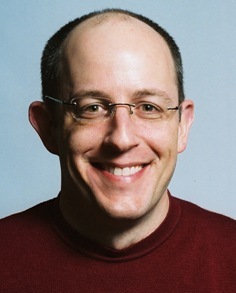
"This enzyme has not been previously described, and the functional significance of these microRNA modifications had not been previously appreciated," says senior author Joseph P. Mizgerd, ScD, a professor of medicine and microbiology and Director of the Pulmonary Center at the School. "Further, we show microRNA modifications by this enzyme to be important to the expression of interleukin-6, a molecule central to immune and inflammatory responses." Future studies will need to determine whether this novel mechanism of gene regulation may influence the susceptibility to or progression of immune and inflammatory diseases.