Student Updates
Spotlight on the GSDM Greater New York Alumni Club
The Boston University Henry M. Goldman School of Dental Medicine (GSDM) Greater New York Alumni Club held a continuing education event on February 3 that drew a large crowd of area alumni.

GSDM Professor & Chair of Restorative Sciences/Biomaterials Dan Nathanson MSD 85, PROS 90 presented a lecture titled, "What Don’t We Know About New Ceramic Technologies?"
The lecture, like most Greater New York Alumni Club events, was held at the Cornell Club and included a reception and dinner. Each attendee was awarded 3 CEUs for participation. The Club will be hosting two similar events in the coming months.
The first, a lecture by Eric Linden DMD 83 titled, "Laser Periodontal Surgery," will be held on March 24. The second, a lecture by John Santopolo ENDO 78 titled, "A Day in the Life of an Endodontist," will be held on May 5.
To RSVP to either of the upcoming lectures contact Christine Haigh, 617/638-4891.
Pre-Pregnancy Obesity and Gestational Weight Gain Influences Risk of Preterm Birth in African American Women
Researchers at Boston University School of Medicine’s (BUSM) Slone Epidemiology Center and Boston University School of Public Health (BUSPH) have found that pre-pregnancy obesity and gestational weight gain are associated with an increased risk of preterm birth in African American participants from the Black Women’s Health Study. This study appears in the March issue of Epidemiology.
A baby born at less than 37 weeks of gestation is considered preterm. This occurs more often among black women than white women and is a leading cause of infant morbidity and mortality in the United States. Obesity is associated with intrauterine infections, systematic inflammation, dyslipidemia, and hyperinsulinemia, all of which may increase the risk of preterm birth.
In order to investigate the relations of preterm birth with prepregnancy obesity and gestational weight gain, the BUSM researchers used data from the Slone Epidemiology Center’s Black Women’s Health Study. They compared mothers of more than 1,000 infants born three or more weeks early with mothers of more than 7,000 full-term infants. They examined two types of preterm birth: that indicated for medical reasons (medically-indicated) and that occurring for no known reason (spontaneous).

The researchers found that obesity increased the risk of medically-indicated preterm birth and very early spontaneous preterm birth (<32 weeks), and that underweight increased risk of both preterm birth subtypes. Among obese women, gestational weight gain within the range recommended by the 2009 Institute of Medicine (IOM) report (0.4-0.6 lbs/week in the second and third trimesters) was optimal in reducing risk of preterm birth. “Our data suggest that it is especially important for obese women to adhere to the IOM guidelines for pregnancy weight gain to reduce their risk of preterm birth,” said lead author Lauren A. Wise, ScD, an associate professor of epidemiology at Boston University School of Public Health and a senior epidemiologist at the Slone Epidemiology Center.
Funding for this study was provided by the National Cancer Institute and the Hood Foundation.
Researchers Find Link Between Neighborhood Socioeconomic Status and Diabetes Risk
Researchers from Boston University’s Slone Epidemiology Center have found a direct link between neighborhood socioeconomic status and risk for type 2 diabetes in African American women. The study, which appears on-line American Journal of Epidemiology, is the first prospective study to examine the relationship between neighborhood socioeconomic status and incidence of type 2 diabetes in a large, geographically diverse cohort of African-American women.
Type 2 diabetes is estimated to affect 20.6 million people in the United States and has particularly impacted African-American women, who are twice as likely to have the disease as non-Hispanic whites.
Recent studies indicated that the socioeconomic characteristics of a neighborhood can affect health status independent of socioeconomic status of an individual. Neighborhood environment influences diet and physical activity through the availability of grocery stores, recreational facilities and educational resources. In addition, neighborhoods vary with regard to sources of chronic stress (noise, violence and poverty).
This study looked at women who participated in the Black Women’s Health Study which has followed 59,000 black women from across the United States since 1995. The baseline questionnaire asked about a history of diabetes, and each follow-up questionnaire asked about a new diagnosis of diabetes. United States Census block group characteristics were used to measure neighborhood socioeconomic status.
During 12 years of follow-up of 46,382 participants aged 30–69 years, 3,833 new cases of type 2 diabetes occurred. The incidence of diabetes was the highest in women living in neighborhoods with the lowest socioeconomic status score after taking into account other risk factors for diabetes.
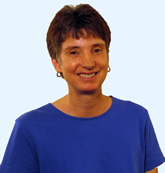
“Our findings indicate that the risk of type 2 diabetes for African-American women is influenced not just by individual characteristics, but by the characteristics of the neighborhoods in which they live,” said senior author Julie Palmer, Sc.D., a senior epidemiologist at the Slone Epidemiology Center and professor of epidemiology at Boston University School of Public Health. “Even women with the highest educational levels appeared to be affected by their neighborhood environment,” she added.

“Because many Africa-Americans live in disadvantaged neighborhoods regardless of their level of education, efforts to reduce the occurrence of diabetes need to include improving conditions in disadvantaged neighborhoods,” added study co-author Yvette Cozier, D.Sc., an epidemiologist at the Slone Epidemiology Center and an assistant professor of epidemiology at Boston University School of Public Health.
Funding for this study was provided by the National Cancer Institute and the National Institute of Diabetes and Digestive and Kidney Diseases.
Susan Baloul ORTHO 09, ORTHO 11 Selected to Receive Prestigious Milo Hellman Research Award
On January 8, the Council on Scientific Affairs (COSA) selected Susan Baloul ORTHO 09, ORTHO 11 as the winner of the 2010 American Association of Orthodontists (AAO) Milo Hellman Research Award. The award will be presented at the Excellence Luncheon held during 2010 AAO Annual Session in Washington, D.C. in May.

Dr. Baloul was chosen for this prestigious award based on her research titled, "Mechanism of Action and Morphological Changes in the Alveolar Bone in Response to Selective Alveolar Decortication Facilitated Tooth Movement." She chose this topic because of her interest and experience in both periodontics and orthodontics. Dr. Baloul worked on this research over a three-year span of time while completing her DSc in Orthodontics and Dentofacial Orthopedics at Boston University Henry M. Goldman School of Dental Medicine (GSDM).
Associate Professor of Periodontology & Oral Biology Dr. I. Alpdogan Kantarci mentored Dr. Baloul on this research project, which sought to test if corticotomy-induced osteoclastogenesis and bone remodeling underlie the orthodontic tooth movement and how selective alveolar decortication enhances the rate of tooth movement.
"This was an interesting area for us to get involved in and it was certainly a challenge to learn about bone biology in response to surgery assisted orthodontic tooth movement," said Dr. Kantarci.
To better understand the mechanism, Dr. Baloul used 114 Sprague-Dawley rats who were separated into three treatment groups. The groups included corticotomy alone, tooth-movement alone, and “combined” therapy. Changes in each therapy group were assessed using faxitron analyses, microcomputed tomography, histomorphometric studies, and quantitative-real time PCR (q-PCR) of expressed mRNAs.
"Susan developed novel assays for alveolar bone structures of the rats, isolated sufficient amounts of RNA to study numerous markers by q-PCR, adapted micro-CT measurement for the 3-dimensional changes in the alveolar bone, and generated large amounts of samples for future testing," said Dr. Kantarci. "In order to complete such a thorough characterization of the alveolar bone response, Susan worked hard, spent weekends and evenings in the lab, and evaluated her interim data very frequently getting exposed to sophisticated statistical analyses."
The resulting data—which was consistent at all levels of analysis—suggested alveolar decortication enhances the rate of tooth movement during the initial tooth displacement phase. This results in a coupled mechanism of bone resorption and bone formation during the earlier stages of treatment and this mechanism underlies the rapid orthodontic tooth movement.
"The result of Susan's research was an extremely well-received doctorate thesis by her committee and a clear understanding of the tooth movement not only in surgery-assisted models, but also using conventional techniques," added Dr. Kantarci.
"This is a great honor for GSDM and the Department of Orthodontics, and is a credit to both Dr. Kantarci for his mentoring of Susan and to Susan herself, for all the effort she put in," said Anthony A. Gianelly Chair in Orthodontics & Dentofacial Orthopedics and Director of the Postdoctoral Program in Orthodontics Dr. Leslie Will. "Indeed, Susan spent quite some time last fall preparing her manuscript and application, long after the research was complete. I am very proud of Susan, who has shown great determination, initiative, and willingness to work hard."
“It is an honor to be the recipient of the Milo Hellman Award," said Dr. Baloul. "I am especially proud to be the first BU student to receive such a prestigious award. This truly demonstrates the caliber of research and mentorship that we receive here at BU."
Dr. Will added, "Having the Milo Hellman Award come to BU should demonstrate to all graduate students that the research they do can and should be significant and a real addition to the literature."
Dr. Baloul added, "I faced many obstacles and was challenged by many difficult decisions. Choosing to leave a prominent private practice was terrifying. However, it has proven to be one of my best decisions. My experience has been humbling, yet, rewarding. This confirms to me that I made the right decision and that pursuing a doctorate degree for a future career in academia is the correct path for me.”
Dr. Baloul continued, “My achievement would not have been possible if it was not for all the support that I received. I extend my sincere thanks to the whole Department of Periodontology & Oral Biology and the Department of Orthodontics & Dentofacial Orthopedics and, especially, to my mentor Dr. Kantarci, and Drs. Will, Van Dyke, Gerstenfeld, and Carvalho.”
Worst Case Bioethics: Annas Explores Death, Disaster and Public Health in New Book
In a new book published by Oxford University Press, BU School of Public Health Professor George Annas employs contemporary disputes involving death and disaster to explore the radical changes underway in public health practice, human rights discourse to promote health, and the application of constitutional law to medicine.
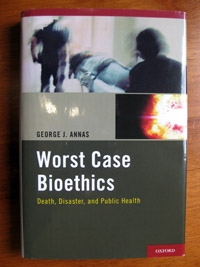
American bioethics, still in its infancy, is routinely called on by the government to provide political cover for controversial public health decisions involving the life and death of Americans, Annas argues in Worst Case Bioethics. Doomsday or worst-case scenarios are often at the heart of these bio-political decisions. A central feature of science fiction, these scenarios can impart useful insights, he says.
But worst-case scenarios can also be unpredictably destructive, undermining both preparedness and the very values that bioethics seeks to promote, Annas finds. Discovering a new flu strain, for example, leads immediately to visions of the 1918 flu pandemic, the worst in human history. Likewise, a "ticking time bomb" scenario leads to reliance on lawyers to justify torture and physicians to carry it out, he says.
In the book, Annas, chair of the BUSPH Department of Health Law, Bioethics & Human Rights, explores the worst-case charge of "death panels," which continues to threaten meaningful healthcare reform in the U.S. Fundamental change in American healthcare, he argues, will require fundamental change in America, including confronting our obsession with technology and our denial of death, and replacing our over-reliance on the military and market metaphors in medicine. "A combination of the ecological and rights metaphors could help us successfully navigate the waters of change," he writes.
Annas looks at how worst-case scenarios distort debate, limit options, rationalize human rights abuses, and undermine equality and social justice. He concludes, nonetheless, that it is possible to temper worst-case scenarios in ways that promote both the development of a meaningful American bioethics, and a life and liberty affirming global health and human rights movement.
Worst Case Bioethics addresses current debates on American and global medical issues, including national health care, experimental cancer drugs, quality of medicine and patient safety, preparation for a global flu pandemic, and regulating/outlawing cloning and germline genetic alterations. It also addresses national security issues such as the best response to bioterrorism; force-feeding hunger strikers at Guantanamo; and killing civilians in Afghanistan -- with emphasis on the roles played by physicians and lawyers in each.
Annas is William Fairfield Warren Professor at BU, professor in the BU schools of Medicine and Law, and co-founder of Global Lawyers and Physicians, a transnational group that promotes human rights and health.
More on the book can be found on the Oxford University Press website.
Evans Center Hypertension Symposium Honoring Haralambos Gavras, MD, April 16
The Evans Center for Interdisciplinary Biomedical Research is honoring Dr. Haralambos (Harry) Gavras on Friday, April 16, with a mini-symposium on hypertension.
The symposium is in recognition of his outstanding contributions to the field of hypertension. Dr. Gavras serves as professor of Medicine at BUSM and Chief of the Hypertension and Atherosclerosis Section. He has been the Director of an NIH-supported Specialized Center of Research in the Molecular Genetics of Hypertension and a member of various NIH Study Sections and Advisory Committees.
A pioneer in the research of the renin-angiotensin system, he was the first to introduce ACE inhibition and angiotensin II blockade for the treatment of patients with hypertension, congestive heart failure, or both. Dr. Gavras has received the Novartis Award from the Council of High Blood Pressure Research of the American Heart Association in 2000 and the Franz Volhard Award of the International Society of Hypertension in 2004, as well as numerous other awards and Honorary Doctorates. He is a Fellow of the Royal College of Physicians, (Glasgow), past President of the American Society of Hypertension and the Inter-American Society of Hypertension and past Chairman of the Hypertension Council of the American Heart Association. He has been on the faculty of Boston University since 1975 and is the author of more than 650 publications.
Details on this symposium will be available late February. For more information please contact Robin MacDonald, remac@bu.edu.
To suggest topics and awardees for future mini-symposiums, please visit https://www.bumc.bu.edu/evanscenteribr/mini-symposia-and-seminars/how-to-apply/
MS Program in Biomedical Forensic Sciences Earns Full Accreditation
The Master of Science Program in Biomedical Forensic Sciences was granted full accreditation for a term of five years by the Forensic Science Education Programs Accreditation Commission (FEPAC) on January 19, 2010. The Program, now in its fourth year, is under the direction of Dr. Robin W. Cotton in the Department of Anatomy and Neurobiology. 
“Please join me in congratulating the Program in Biomedical Forensic Sciences for their achievement in developing one of the Division of Graduate Medical Science’s innovative educational programs,” said Linda Hyman, PhD, Associate Provost for the Division of Graduate Medical Sciences at BUSM.
To learn more about the program, call 617-638-1950 or email bmfs@bu.edu.
Advanced methods and tools: Using FlowJo software to interpret your flow cytometry data, Feb. 10 seminar
Graduate students, postdoctoral fellows and other flow cytometry users on the BUMC are invited to attend a free seminar on how to analyze flow cytometry experiments. The BUMC Flow Cytometry Core Facility is offering this seminar to help train experienced users in FlowJo software, which is a very valuable tool for handling multiparameter flow data. Users who are already familiar with FlowJo and would like to maximize their ability with this tool are invited to attend. Novice users or investigators who are unfamiliar with flow cytometry basics will probably find this seminar to be too advanced to be particularly useful.
"We are fortunate to have once again as our guest speaker, Dr. John Quinn from TreeStar, who is an expert educator in this area," said Gerald V. Denis Ph.D., Flow Cytometry Core Co-Director.
The Flow Cytometry Core Facility operates as a fee-for-service core under the supervision of the Core Committee, at the direction of Dean Antman. The mission is to offer state-of-the-art instrumentation, analysis and consultation for BUMC scientists who use flow cytometry in their research. As PIs, members of the Flow Cytometry Core Facility understand the need to produce data in a timely and cost effective manner. They have assembled a team of talented individuals to help PIs reach their goals regardless of project complexity.
Wednesday, Feb. 10, 2010
Housman Building, Room R-115
72 East Concord Street, Boston
10 AM - 12 Noon
For additional information please contact Yan Deng, ydeng@bu.edu, 617-414-5225.
Feb. 10 Public Health Forum, What Not to Eat: Foodborne Illness Update 2010
On Wednesday, February 10, join Barbara Mahon, MD, MPH, at the BUSPH Public Health Forum as she speaks about "What Not to Eat: Foodborne Illness Update 2010."

Her presentation will give an overview of the current situation in foodborne illness, such as infectious diseases like salmonellosis, and then discuss how researchers know what foods are making people sick. Mahon will review different ways to figure out what foods are the culprits and how that information links to action on the part of regulatory agencies and the food industry to try to make food safer.
Mahon leads the FoodNet and Outbreak Surveillance Team in the Enteric Diseases Epidemiology Branch at the Centers for Disease Control and Prevention (CDC). The team is responsible for the FoodNet active foodborne disease surveillance system and for national surveillance for outbreaks of foodborne disease. It also conducts epidemiologic studies of the burden, trends, and food source attribution of foodborne diseases caused by Salmonella, Listeria, and E. coli O157, among other pathogens.
Mahon, a pediatrician and infectious disease epidemiologist, has a broad background in infectious disease epidemiology, having worked on foodborne diseases, vaccine-preventable diseases and sexually transmitted diseases in academia, the industry and in the government.
Mahon is currently an adjunct assistant professor of epidemiology at BUSPH. From 2002 to 2007, Mahon was a full-time faculty member in the Department of Epidemiology at BUSPH. She taught courses on infectious disease epidemiology and the epidemiology of vaccine-preventable disease. Her research focused on childhood vaccine-preventable disease.
The BUSPH Public Health Forum is a regular series presented by the School of Public Health. It is free and open to the public.
BUSPH Public Health Forum: "What Not to Eat: Foodborne Illness Update 2010"
Speaker: Barbara Mahon head of the FoodNet and Outbreak Surveillance Team in the Enteric Diseases Epidemiology Branch at the Centers for Disease Control and Prevention and adjunct assistant professor of epidemiology at BUSPH.
Date: February 10, 2010
Time: 12 p.m. - 1 p.m.
Location: BUSM Instructional Building, Room L-112
For more information, contact beliveau@bu.edu.
Broke a Tooth? Grow It Back
Dental team: baby teeth hold key to regrowth
George Huang may just kill off the Tooth Fairy. Not to mention the makers of dental implants and crowns.
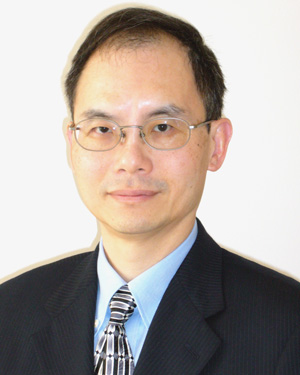
The Herbert Schilder Chair in Endodontics and director of the postdoctoral program in endodontics at the School of Dental Medicine says there are valuable dental stem cells residing in baby teeth and third molars, also known as wisdom teeth. The cells remain viable for about a week after extraction if stored under the right conditions, but are at maximum potency just after they are removed. The dental stem cells from the discarded teeth can be used to regrow damaged or decayed parts of a mature tooth.
“We could regrow the lost structure without having to make a big crown, just do some minor patching,” says Huang (SDM’88,’89,’92). “We have some data in animals that indicate that it’s a real possibility. Normally, we just discard wisdom teeth and baby teeth. Now we’ll definitely advocate to preserve them. There are more and more dental stem cell banks.”
Huang’s team found a way to regenerate two major human tooth components — dental pulp and dentin — for the first time in a mouse model. The mouse was used to supply nutrition for human tissue regeneration. Using tissue engineering, researchers saw empty root canal space fill with pulp-like tissue with ample blood supplies. Dentin-like tissue regrew on the dentinal wall.
“The finding will revolutionize endodontic and dental clinical practice by helping to preserve teeth,” Huang says.
In related research, Huang’s team has successfully reprogrammed dental cells into embryonic-like cells — called induced pluripotent stem (iPS) cells — which may prove an unlimited source for tissue regeneration, and perhaps eventually whole teeth.
Up until now, scientists had been able to create iPS cells from mice or certain types of human cells such as fibroblasts. But all three types of human dental stem cells Huang and his fellow researchers tested were easier to reprogram than fibroblasts, previously considered the best way to make human iPS cells. Their research appears in the recent editions of Stem Cells and Development and Tissue Engineering. Huang is quick to point out that regrowing a whole tooth from scratch, while being tested in large animals, is a ways off for humans.
“There’s always new technology replacing old technology,” he says. “Nowadays, dental implants are very successful. You get a tooth pulled, you put in an implant. But it took 30 to 40 years to get to this stage. Perhaps in the future, we’ll be regrowing a whole tooth, and that may take 30 years, but once the technology is mature, it may replace dental implants.”
This BU Today story was written by Caleb Daniloff.