Student Updates
New Study Suggests Link between Cape Water Supply, Breast Cancer Risk
Upper Cape Cod drinking water that was contaminated by wastewater effluent dating to the 1960s may be associated with an increased risk of breast cancer, a team of BUSPH researchers reports in a new study published online in Environmental Health Perspectives.
The researchers found that associations were strongest for women exposed to contaminated water from the Barnstable Water Pollution Control Facility, versus those not exposed, when a 20-year cancer latency period was assumed. Investigating environmental risk factors for breast cancer poses a challenge because exposure may have occurred years prior to the cancer being diagnosed, known as latency.
"Using a detailed exposure assessment, we found an association with breast cancer with longer latency and greater exposure duration," the study says. "The current exposure analysis expands upon our earlier work to explore the spatial and temporal relationship between a source of environmental contamination and a route of exposure for this study population."
BUSPH epidemiology and environmental health researchers have been investigating possible reasons for elevated cancer rates in the upper Cape for decades, recently incorporating extensive spatial and temporal modeling. Among the possible risk factors that they and other researchers have examined are air and water pollution associated with an area military base, pesticide applications to cranberry bogs, particulate air pollution from a large electric power plant, and contaminated drinking water. Some positive links have been made, but researchers have concluded that the environmental exposures they have investigated can explain only a portion of the high cancer incidence.
In 2008, a study led by Veronica Vieira, associate professor of environmental health, found areas of elevated breast cancer risk, including one near the Massachusetts Military Reservation, previously known as Otis Air Force Base, from 1947 to 1956. Last October, a study led by Ann Aschengrau, professor of epidemiology, found that babies born to Cape women exposed to a chemical solvent used in drinking water pipes -- PCE, or perchlorethylene -- had an increased risk of some birth defects.
In the new study, researchers looked at residential histories, public water distribution systems and groundwater modeling to explore possible associations between drinking water contamination and breast cancer. Exposure was assessed from 1947 to 1993 for 638 breast cancer cases that were diagnosed from 1983 to 1993 and 842 controls, taking into account residential mobility with respect to the drinking water source.
The findings showed no significant associations between drinking water and cancer rates for those who were exposed for less than five years. Adjusted odds ratios for those who had up to 10 years of exposure were slightly increased, compared to women with no exposure. The strongest associations were for women who were exposed to the drinking water for longer time periods, assuming a 20-year latency period to breast cancer diagnosis.
When cancer clusters are discovered, there are many possible environmental factors that could be investigated, said the researchers, led by Vieira. This study, given the geographic overlap of groundwater plumes identified using spatial analyses, investigated the hypothesis that exposure to drinking water contaminated by effluent from a wastewater treatment facility was associated with breast cancer. The spatial relationship alone did not establish exposure, but the study was able to determine a plausible route of exposure by also taking time into account.
In addition to Vieira, researchers on the study included Aschengrau, Thomas Webster, associate professor of environmental health, and Lisa G. Gallagher, currently a postdoctoral fellow at the University of Washington.
The research was supported by grants from the National Cancer Institute and the Superfund Research Program, National Institute of Environmental Health.
The full study can be accessed on the Environmental Health Perspectives website.
Submitted by Lisa Chedekel
Mar. 17 BUSPH Public Health Forum: Does Big Pharma Have a Duty to Help Poor Patients?
On Wednesday, March 17, join Kevin Outterson at the BUSPH Public Health Forum as he explores the question, "Do Global Pharmaceutical Companies Have a Duty to Help Impoverished Patients?"

Outterson, an associate professor of law at BU School of Law, will examine the potential ethical responsibilities that drug companies might have to improve global public health. Drug companies control patent rights for many drugs with health implications in low- and medium-income countries. This talk will explore ethical responsibilities in the legal context of global drug patents.
Outterson's research interests include global pharmaceutical markets, health disparities and corporate governance. He has testified on pharmaceutical marketing issues before legislative and regulatory bodies in several states, and at the federal level he has testified before the US Senate Committee on Health, Education, Labor, & Pensions on global drug pricing.
For more than a decade, Outterson worked in two major US law firms before joining Boston University. His practice included domestic health care transactions, as well as tax and corporate issues for nonprofit health systems and international businesses. He has served as an expert witness in corporate governance issues in state and federal court, defending depositions and testifying at trial. His academic papers can be accessed on the Social Science Research Network .
The BUSPH Public Health Forum is a regular series presented by the School of Public Health. It is free and open to the public.
Learn About In Vivo Imaging With Fluorescent And Bioluminescent Light Using IVIS
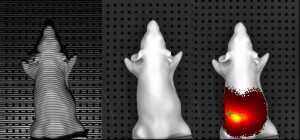
Join Anna Studwell, IVIS Core Technician/Manager on March 10 as she presents an introduction to In Vivo Imaging. This presentation covers the basic science behind bioluminescent and fluorescent imaging, a description of the imaging hardware, and an overview of analysis techniques using Living Image software. Researchers interested in tracking cancer cell metastasis and tumor growth, stem cell migration, and other research allowing fluorescent or bioluminescent labeling may find this system a useful tool for developing figures worthy of publication. A limited number of participants may sign up at the presentation for a demonstration of the instrument's capabilities later that afternoon from 12:30-2:30 p.m.

Some uses of this system include:
- Tracking of bioluminescent or fluorescently tagged cancer cells to monitor growth and metastasis;
- Monitoring all forms of cell transplant experiments to quantify engraftment, cell growth or cell differentiation. This includes studies of stem cell transplants, reconstitution of hematological and immune systems after irradiation.
- Monitoring the in vivo gene activity in transgenic animals carrying appropriately tagged promoter indicator trangenes.
- Monitoring in vivo gene activities in cells that have been reconstituted to carry a bioluminescent or fluorescently tagged expressed gene.
- Reconstrucing bioluminescent or fluorescent signal to a rough in vivo location in three dimensions
The presentation will take place on Wednesday, March 10, 2010 from 10:00 - 11:00 a.m, in the BUSM Evans Building, 72 East Concord Street, Room 112A. This event is free. No registration required. More information is available at https://www.bumc.bu.edu/stemcells/crm-core-facilities/ivis-imaging-core/
GSDM Researchers ID Propeptide’s Normal Role in Healthy Bone Development
GSDM Professor of Periodontology & Oral Biology Dr. Philip Trackman, PhD, and his team for the first time identified the normal role of the lysyl oxidase propeptide (LOX-PP) in healthy bone formation.

The significant finding is that LOX-PP naturally interferes with the effects of an important bone growth factor, effectively slowing the growth of pre-osteoblasts, cells that will ultimately make bone. Because these cells cannot multiply and make bone at the same time, the researchers think LOX-PP helps pre-osteoblasts stop growing to allow for further development so they can make bone.
“Bone formation is a multi-step process and the control of each phase, regulated by growth factors and apparently also by LOX-PP, is critical,” Dr. Trackman says.
Dr. Trackman and colleagues have already made huge breakthroughs studying how LOX-PP prevents tumor growth and growth of tumor cells that can metastasize to bone. Growth factors made by tumor cells and by normal bone cells permit these different cells to “talk” to each other, encouraging tumors to grow in the bone.
“By interfering with this communication, we think LOX-PP can treat or prevent metastasis,” Dr. Trackman says.
Research contributors include Dr. Siddharth Vora, Ph.D. from GSDM and the lab of Dr. Matthew Nugent in BU School of Medicine’s Department of Biochemistry. The paper, Lysyl Oxidase Propeptide Inhibits FGF-2-induced Signaling and Proliferation of Osteoblasts, appears in the March 5 Journal of Biological Chemistry and is available online at http://www.jbc.org/content/285/10/7384.full.
GSDM Students Get Their Point Across; Defeat Tufts in Dental Debate
On Friday, February 12, the Boston University Chapter of the American Student Dental Association (ASDA) participated in a debate against Tufts University School of Dental Medicine. The debate was sponsored by the Massachusetts Dental Society (MDS) and included an introductory speech by guest speaker and GSDM Associate Dean for Strategic Initiatives Dr. Paula Friedman.

Debate topics were as follows:
- Mid-level providers
- PGY1 (residency) vs. national licensing exams
- Pass/fail vs scored Board exams
The GSDM team was coached by Dr. Friedman and included students Mike Visser DMD 10, Brandon Johnson DMD 10, Heather Parsons DMD 11, and Dhara Shah DMD 13. More than 80 students, faculty, and staff members from GSDM and Tufts attended the debate, which was judged by a faculty member from each school and a MDS representative.
After a great deal of knowledgeable back and forth between the schools, GSDM was announced as the winner. The debate was followed by a tour of Tufts' new vertical expansion and a reception.
"Congratulations to the student debate winners," said Dean Jeffrey W. Hutter. "Their knowledge of the debate topics is commendable and this event served as an excellent opportunity for our students to interact with their peers at Tufts while brushing up on current topics in dental medicine."
DASH to Health – Online support for eating better and getting in shape
New Year’s is long gone, and with it scores of well-intentioned resolutions. The January gym crowds have dissipated, vending machine stockers are working overtime, and Captain Crunch has replaced morning crunches.

“Now is the time for folks to get out of their postresolution slumps,” says Megan Murphy, program manager of DASH for Health, a free online program designed to improve eating and exercise habits.
Created by a team of BU doctors and nutritionists led by Thomas Moore, a School of Medicine professor of medicine and a Medical Campus associate provost, the DASH program offers well-balanced, easy-to-understand eating plans intended to lower weight, blood pressure, and cholesterol.

“It differs from other online diet programs because it doesn’t promise a quick fix,” Murphy says. “It’s about teaching good eating habits that will last a lifetime, not fitting into a bikini by Memorial Day.”
Based on the DASH diet, developed in 1992 by a team of researchers from five academic institutions and promoted by the National Heart, Lung, and Blood Institute to control hypertension, the DASH program’s curriculum offers twice-weekly articles about nutrition, food preparation, dining out, losing weight, and getting fit.
DASH is open to BU faculty and staff and up to three adult household members. After enrolling, participants monitor progress by logging onto their “My Stuff” page, which tracks weight, diet, blood pressure, and daily exercise routines. The section also creates weekly meal suggestions and recipes (including vegetarian options), offering a servings tutorial and a shopping-list creator.
“Poor dietary habits have resulted in serious health concerns for millions of Americans,” Moore says, “including obesity, diabetes, and cardiovascular disease. We focus so heavily on caloric reduction and weight loss that we tend to ignore the health benefits that are provided by well-balanced diets.”
In 2002, the DASH program was offered as a free benefit to employees of EMC Corporation, an information infrastructure company based in Hopkinton, Mass.
According to an article published in 2008 by the Journal of Medical Internet Research, 2,834 EMC employees and spouses enrolled and provided information about their food intake. Moore and his team used the data to analyze changes in weight, blood pressure, and food intake.
“After two years, participants who remained enrolled were eating significantly more fruits and vegetables and fewer grain products,” Moore says. “They also reduced their consumption of carbonated beverages, reduced their weight, and lowered their blood pressure.”
Enrollees who visited the DASH Web site regularly also tended to have greater success in lowering blood pressure and losing weight. “These statistics suggest that DASH was at least partially responsible,” Moore says, “so we strongly encourage members of the BU community to enroll.”
BU staff and faculty members and up to three adult household members can enroll in DASH for Health for free. Participation is confidential. Informational sessions for the Charles River Campus are offered today, Thursday, February 25, at 808 Commonwealth Ave., Room 134, from 2:30 to 3:30 p.m., and tomorrow, Friday, February 26, at the College of Arts & Sciences, 725 Commonwealth Ave., Room 216, from 11:30 a.m. to 12:30 p.m.
This BU Today story was written by Vicky Waltz.
Share Your Artistic Abilities at ART DAYS 2010
All students, faculty and staff from all schools are encouraged to submit artwork of any medium to the 20th annual Boston University Medical School gallery for the arts. "Art Days" was begun by former Dean Aram Chobanian to foster the support and growth of the creative arts at BUMC. It has been very successful and has shown work from students, faculty and staff and family members. The exhibition is mounted by the Creative Arts Society.
ART DAYS 2010
Monday-Tuesday, March 22 and 23
BUSM Instructional Building, Hiebert Lounge
To be placed on the "submit list" or if you have any questions, please contact Dr. K. Tornheim at 638-8296 or tornheim@bu.edu.
On March 19, we will accept paintings, photos, poetry, sculpture, needlework, etc. Pieces should be framed if possible. Security will be provided. Works will be returned March 24. Specific instructions will be sent at a later date to those who respond to this announcement
Faculty Research Symposium:Quality, Quantity, and Cost in the Treatment of HIV/AIDS in Africa
Join Sydney Rosen, research associate professor of international health at SPH, and Warren Kaplan , assistant professor of international health at SPH, as they present their research on the "Quality, Quantity, and Cost in the Treatment of HIV/AIDS in Africa" at the BUSPH Faculty Research Symposium on Wednesday, February 24 at noon in the BUSM Instructional Building, room L-112.
All members of the BUSPH and BU community are invited to attend the Faculty Research Symposium series and learn about the diverse work their colleagues are doing across the areas of public health.
Part 1. Presented by Sydney Rosen
Can Resource-Constrained Countries Afford Better First-Line Antiretroviral Therapy Regimens for HIV/AIDS? Evidence from the Center for Global Health and Development's Work in Zambia
Most resource-constrained countries use stavudine (d4T) in first-line antiretroviral therapy (ARV) regimens for HIV/AIDS despite its high burden of toxicities because it is inexpensive and effective. In 2007, Zambia became the first country to replace d4T with tenofovir in first-line ART. Tenofovir is much more expensive than d4T, and the change in treatment guidelines was expected to increase the cost of treatment in Zambia substantially. This talk will present results from the CGHD's ongoing study of the costs and outcomes of ART in Zambia both before and after the switch to tenofovir; discuss the implications of the change for the overall cost and success of Zambia's treatment program; and consider the tradeoff between quality and quantity in the response to HIV/AIDS.

Part 2. Presented by Warren Kaplan
The UNITAID Patent Pool Initiative to Improve Access to Tenofovir-based ARV Therapy
UNITAID, the intergovernmental organization based in the World Health Organization, is creating a "patent pool" for antiretroviral therapies. The specific purpose of this structure, which collectively manages ARV patent rights, is to increase access to fixed-dose combinations. Tenofovir-based fixed dose combinations are particularly important in this regard. The "pool" intends to license rights to produce these ARVs to generic manufacturers, with the intention of inducing competition and lowering price. This scheme is voluntary. Some questions raised in this talk will be: Why would a pharmaceutical company join this "pool"? How can the public health community know if it is working or not?
Presenters: Sydney Rosen and Warren Kaplan
Date: Wednesday, February 24, 2010
Time: 12:00 p.m. – 1:00 p.m.
Location: BUSM Instructional Building, room L-112
School of Medicine Will Host Physicians for Human Rights: Call for global health curriculum tops weekend conference
As an undergraduate intern at the World Health Organization in Geneva, Elizabeth Park became convinced that global health issues should be planted firmly in the curricula of medical schools.
Now a volunteer for the BU chapter of Cambridge-based Physicians for Human Rights, Park (CAS’10, MED’13), who is enrolled in the Seven-Year Liberal Arts/Medical Education Program, hopes the group’s national conference at the School of Medicine on Saturday, February 20, will invigorate efforts to make international health, human rights, and global cultural awareness part of every future doctor’s education. About 150 students and educators have registered for the daylong event, which will culminate in a Town Hall Forum on Human Rights and Health Policy, open to the public and moderated by U.S. Representative James McGovern (D-Mass.).
“I want to believe that across the United States a movement is happening, that medical students want more global health in their curricula,” says Park, who emigrated from South Korea at age 11. She hopes that the students and faculty members who attend will be “the front-runners of the curriculum change movement on their campuses.” Lofty as the goal may seem, PHR is calling for a change in “the paradigm of medicine,” to incorporate human rights in the education of health professionals.
Founded in 1986, the nonprofit PHR attempts to shine a spotlight on the health consequences of human rights violations around the world, and mobilizes to try to stop them as well as to prevent future ones. The organization’s ongoing campaigns target torture, the Darfur crisis, the needs of AIDS sufferers in developing countries, and pleas for asylum in the United States for international victims of torture. PHR, which also has offices in Washington, D.C., shared the 1997 Nobel Peace Prize in its role as a coordinator of the International Campaign to Ban Landmines.
“Given Boston University’s long-standing record of expertise and leadership in the health and human rights movement, as well as the new Center for Global Health and Development, we are honored to team with the Boston University School of Medicine’s student chapter to host this unprecedented event,” says Hope O’Brien, PHR student program coordinator. “The students are not only the doctors, nurses, dentists, and public health specialists of tomorrow, they are already advocates for their patients’ rights, and the rights of others.
Karen Antman, dean of MED and provost of the Medical Campus, says the school is solidly behind the ideals of the conference. “We support the activity of our faculty and students in support of global human rights, and are honored to be hosting the 2010 PHR Conference on the Medical Campus, at the request of our students,” says Antman, who will deliver welcoming remarks with O’Brien. The keynote speaker, PHR cofounder and board chair Robert S. Lawrence, an associate dean and professor at Johns Hopkins School of Medicine and School of Public Health, will speak on Why Health Professionals Need Human Rights, and Vice Versa.
The conference will include strategy sessions, panel discussions, and skill development workshops, all reflecting the common goal of integrating human rights into medical education.
“There will be information on tangible skills and solutions to help lead your campus on this issue,” says PHR coordinator Danielle Fox, who shares Park’s excitement about the possibility that the BU-based proceedings will set a major change in motion. Fox cites a March 2009 study, published in PLoS one, an open access, online-only scientific journal from the Public Library of Science, led by a public health professor at the University of California at Berkeley, which concludes that while a majority of medical school deans “believe that knowledge about human rights is important in health practice … human rights education is lacking at most of their institutions.”
BU’s School of Public Health addresses global health concerns and pandemics, but Park fears that those topics get less attention than they deserve at the School of Medicine, which offers occasional lectures by experts such as Michael Grodin, an SPH professor of health law, bioethics, and human rights and cofounder of the BU-based Boston Center for Refugee Health and Human Rights, and George Annas, William F. Warren Distinguished Professor and chair of health law, bioethics, and human rights.
“I know that many patients at Boston Medical Center are from other countries, and a significant number of them have experienced torture,” says Park. “Clinical rotations in the first or second year that emphasize these patients’ needs would be great.”
Conference details can be found here.
This BU Today story was written by Susan Seligson. She can be reached at sueselig@bu.edu.
Human Rights & Health Forum: BU Experts to Discuss Hunger Strikes and Force-Feeding of Prisoners Feb. 23
A year after a high-profile report ordered by President Obama confirmed the continued force-feeding of hunger strikers at Guantanamo Bay detention center, Boston University School of Public Health (BUSPH) faculty are sponsoring a forum Feb. 23 to discuss the legal, ethical and human rights implications of the practice, and to set an agenda for action to end what some critics consider inhumane treatment.
The forum, "Hunger Strikes and Physicians," will feature experts who have studied the legal and ethical questions surrounding physicians' involvement in force-feeding hunger strikers at Guantanamo and U.S. prisons and who worked to change the practice during the Bush administration. The event will include film clips showing the actual force-feeding of prisoners, a process in which detainees are placed in restraints and fed Ensure or other nutritional supplements through a nasogastric tube. Human rights advocates, including the International Committee of the Red Cross, and physicians' groups, including the AMA and the World Medical Association, have deemed the practice inhuman and degrading.
"We want to educate people about this practice, which has been conducted in secret -- and, as importantly, talk about what physicians and the public can do to try to end it before it becomes accepted American policy, " said George Annas , professor and chairman of health law, bioethics & human rights at BUSPH, who has been an outspoken opponent of the force-feeding of hunger strikers for years.
Annas will be joined at the forum by Michael Grodin , MD, professor of health law, bioethics and human rights and professor of psychiatry at the BU School of Medicine; Sondra Crosby, MD, an internist at Boston Medical Center, associate professor of medicine and assistant professor of health law, bioethics & human rights who has visited Guantanamo and other U.S. prisons to conduct medical exams on hunger strikers at the request of their lawyers; Caroline Apovian, MD, an associate professor of medicine who heads the nutrition center at Boston Medical Center; and Scott Allen, MD, a physician from Brown University who specializes in prison medicine. Crosby, Grodin and Apovian are co-authors of the leading medical article on caring for hunger strikers, which appeared in the journal JAMA in 2007.
The forum comes just over a year since President Obama promised to return the U.S. to the "moral high ground" in the war on terror by issuing three executive orders, including one requiring that the Guantanamo Bay prison be closed within a year, one to end torture, and another establishing an interagency task force to lead a systematic review of detention policies and procedures. Guantanamo remains open, and many critics believe force-feeding competent hunger strikers amounts to torture.
Grodin said the issue of force-feeding detainees is complex because some people view the feeding of a starving prisoner as a humanitarian act.
"This is more than just about hunger strikes -- it's about the rights of competent prisoners to refuse any treatment, including refusal of food as a form of protest or demand, and about the medical ethics of physicians who are called upon to order force-feeding," Grodin said.
The year-old report commissioned by the Secretary of Defense at the President's direction -- dubbed the "Walsh Report" after its chairman, Admiral Patrick Walsh -- concluded that the treatment of detainees at Guantanamo Bay complied with the Geneva Conventions, which bar "humiliating and degrading treatment," but made some recommendations to allow prisoners more social and religious interaction. In the area of force-feeding, it concluded that conditions were "in compliance" with the Geneva Conventions and recommended that military personnel "continue safe and humane treatment of hunger strikers whose life or health is jeopardized by hunger striking." Human rights' advocates called the report a whitewash.
The forum will be held Tuesday, Feb. 23, from 4 to 6 p.m. in the Hiebert Lounge, located on the 14th floor of the School of Medicine Instructional Building at 72 E. Concord Street. It is open to all students, faculty, staff and interested community members.
The forum is co-sponsored by the Department of Health Law, Bioethics & Human Rights; Global Lawyers & Physicians; and the Health and Human Rights Caucus. Background materials for the conference, including the Walsh report and the JAMA article, are posted on the GLP website .
For more information contact Alicia Orta at the HLB&HR department.