Student Updates
BUSM Celebrates Match Day
At BUSM 140 students anxiously awaited the results of Match Day. The annual event marks the moment in which students around the country learn which residency programs they will be attending and where they will spend the next three to five years of their lives following graduation.
Within seconds of the noon deadline, the future physicians accompanied by friends and families rushed to their mailboxes and opened envelopes in an effort to eliminate the nervous energy and anticipation that had been building throughout their four years of medical school.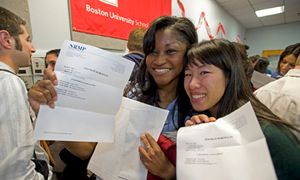
This year 41 percent of students graduating from Boston University School of Medicine are pursuing careers in internal medicine, pediatrics or family medicine.
“BUSM faculty and staff are very proud of our outstanding students. Match Day is a rite of passage, perhaps as memorable as graduation for medical students. It has been a privilege to both teach and learn from our young physicians. We wish them the very best in their future endeavors and know that they will do great things,” explained Phyllis Carr, MD, professor of medicine and associate dean of students at Boston University School of Medicine.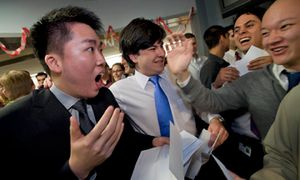
Across the nation more than 15,000 U.S. medical school seniors from more than 126 medical schools participate in Match Day. Conducted annually by the National Resident Matching Program (NRMP), the Match uses a computer algorithm, designed to produce favorable results for students, that aligns the preferences of applicants with the preferences of residency programs in order to fill the thousands of training positions available at U.S. teaching hospitals.
The Match was established in 1952, at the request of medical students, to provide a fair and impartial transition from medical school to residency.
NRMP is a private, not-for-profit organization established in 1952 to provide an orderly and fair mechanism to match the preferences of applicants to U.S. residency positions with the preferences of residency program directors for those applicants. The NRMP is sponsored by the American Board of Medical Specialties, the American Medical Association, the Association of American Medical Colleges, the American Hospital Association, and the Council of Medical Specialty Societies.
BUSM's Costello Honored for Outstanding Achievement in Mass Spectrometry
For nearly 40 years, Catherine E. Costello has advanced the application of mass spectrometry to biomolecules, especially carbohydrates and glycoproteins. Costello is a professor of chemistry, biochemistry, and biophysics at BUSM and founding director of both the school's mass spectrometry resource and its cardiovascular proteomics center.
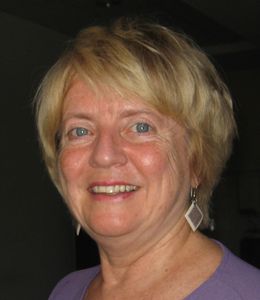
"Early on, the scientific world pooh-poohed MS for structural characterization because most published mass spectra were of hydrocarbons. Even when MS was acknowledged as useful for other compound types, most thought that carbohydrate behavior was even less promising than that of hydrocarbons," says Fred W. McLafferty, an emeritus professor at Cornell University. "More than anyone else, Cathy has shown us 'lack of faith' people that MS can really characterize terrible molecules such as sugars, carbohydrates, and glycoconjugates, and she has now convinced key researchers studying such critical biomolecules that MS is a first-choice resource." In a paper that has been cited more than 850 times, Costello described the nomenclature for dissociation of glycans from glycoconjugates.
Costello has shown "prescient vision in collaborating with biomedical scientists on problems with high impact on human health," says Peter B. O'Connor, a former colleague at Boston University who is now at the University of Warwick in Conventry, England. For example, she collaborated with D. Branch Moody at Harvard University in work that showed that isoprenoid glycolipids are involved with the immune system's response to Mycobacterium tuberculosis infection. They also identified a previously unknown family of M. tuberculosis lipopeptides that activate T cells.
Working with Carlos B. Hirschberg at Boston University, she used mass spectrometry to determine the fine structure of N-glycans of the worm Caenorhabditis elegans and how N-glycans are specific to different developmental stages of that model organism.
In addition, Costello was one of the first to recognize the value of the MALDI (matrix-assisted laser desorption ionization) technique. She helped bring MALDI to a wider audience by encouraging Marvin Vestal that his company Vestec should start manufacturing a MALDI time-of-flight mass spectrometer, which became the first commercial instrument of its kind.
Costello received a bachelor's degree in chemistry from Emmanuel College in Boston in 1964. In 1970, she received a Ph.D. in organic chemistry from Georgetown University, where she worked with Charles F. Hammer on NMR and organic reaction mechanisms. She was a postdoctoral associate with Klaus Biemann at Massachusetts Institute of Technology from 1970 to 1973, and there she made the switch to MS. She continued as the associate director of MIT's mass spectrometry resource until 1994, when she became the founding director of the mass spectrometry resource at Boston University.
She has served in many scientific societies, including as a councilor of ACS, as president of the American Society for Mass Spectrometry, and as senior vice president and currently president-elect of the Human Proteome Organization (HUPO). She received the 2004 Henry A. Hill Award from the ACS Northeastern Section, the 2008 Discovery Award in Proteomics Sciences from HUPO, and the 2009 Thomson Medal from the International Mass Spectrometry Foundation.
Costello will present the award address before the Division of Analytical Chemistry at the fall ACS national meeting in Boston.
GSDM Student Takes Home Prestigious Honor from AADR Meeting
Several Boston University Henry M. Goldman School of Dental Medicine (GSDM) students showcased their research at the AADR Annual Meeting held March 3 to 6 in Washington, D.C.
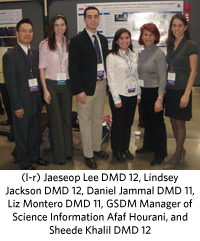
Sheede Khalil DMD 12, who worked with Professor and Director of the Predoctoral Research Program Dr. Maria Kukuruzinska, was the winner of an AADR/Johnson & Johnson Healthcare Products Hatton Award in the Junior category. This award is given annually in the Junior category to someone who has carried out their research as part of undergraduate or professional training, such as undergraduate science students or dental students. Individuals with a formal research degree, such as a master's degree or Ph.D. are not eligible for this category.
Khalil's presentation was titled, “N-Glycosylation Drives Duct Formation in the Developing Submandibular Gland.” She was announced as the award winner during the opening ceremonies of the meeting. Khalil will go on to compete in the IADR/Unilever Hatton Competition & Awards in Barcelona, Spain, held July 14 to 17.
Five additional GSDM predoctoral students presented their research at the meeting. Liz Montero DMD 11 presented her research titled, "Anti-Carcinogenic Effect of Capsaicin in Oral Cancer,” which she worked on with Associate Professor Dr. Anita Gohel. Lindsey Jackson DMD 12 worked with Associate Professor Dr. Russell Giordano on the research she presented titled, ”Comparison of Ceramic Physical Properties Milled from Cerec3 and MCXL.” Moira Sinnott DMD 12 presented her research titled, "Oral Health Disparity: Low Income Children have Poor Oral Health-Related Quality of Life," which she worked on with Professor and Chair of General Dentistry Dr. Judith Jones. Sinnott also received the IADR Behavioral, Epidemiological, & Health Services Research Outstanding Predoctoral Student Abstract Award for this project in 2009. Daniel Jammal DMD 11 worked with Associate Professor Dr. Eva Helmerhorst on the research he presented titled, “The Antifungal Activity of Human Parotid Secretion is Species-Specific.” Jaeseop Lee DMD 12 also worked with Associate Professor Dr. Eva Helmerhorst on his research titled, “Zymography of Dental Plaque Supernatant Reveals Multiple Gliadin-degrading Enzymes.”
"Congratulations to all the students and their mentors for their outstanding efforts," said Dean Jeffrey W. Hutter. "The Annual Meeting of the AADR is a wonderful chance for the faculty, staff, and students of GSDM to learn about cutting-edge research that is being investigated by their peers. Sheede should be very proud that her research stood out among the other predoctoral students in attendance."
BUSPH Researchers' Work on Gulf War Illness Pays Off for Veterans — Finally
Sixteen months after a panel of experts issued a landmark report affirming that exposure to toxic chemicals may have affected thousands of veterans of the 1991 Gulf War, the U.S. Department of Veterans Affairs has agreed to re-examine the disability claims of veterans suffering from ailments they blame on their war service.
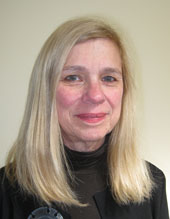
"This is really a big step," said Roberta White, chair of the BU School of Public Heath's Environmental Health Department and scientific director of the Congressionally-mandated panel known as the Research Advisory Committee (RAC) on Gulf War Veterans' Illnesses. The committee is based at BUSPH.
"It's exciting to do a piece of work and see that people may actually benefit from it. Having been one of the first people to study Gulf War illness -- going back 18 years -- I'm just so thrilled to see this sea change in the way it is being viewed," White said.
In a recent interview with the Associated Press, VA Secretary Eric Shinseki said the decision to re-examine disability claims was part of a "fresh, bold look" his department is taking to help veterans who suffer from what is known as Gulf War illness, and who have long felt the government did little to help them. The VA said it also plans to improve training for clinical staff who work with Gulf War veterans, to make sure they understand the cluster of symptoms that characterize the illness and do not dismiss them, as has happened to many veterans over the years.
In November 2008, the RAC panel of scientists and veterans issued a comprehensive report asserting that Gulf War illness was a "real condition" affecting at least one in four U.S. veterans of the 1991 Gulf War. The group cited numerous studies showing that the condition was linked to exposure to toxic chemicals, including pesticides and pyridostigmine bromide (PB), a drug given to troops to protect against nerve gas. White has done numerous studies on the effects of such exposures on Gulf War veterans.
Former Secretary of Veterans Affairs James Peake sent the RAC report to the National Academy of Sciences' Institute of Medicine (IOM) for review and recommendations. But Peake was replaced soon afterwards by retired Gen. Shinseki, who quickly took an interest in the Gulf War veterans' plight, White said.
White said she and other members of the federal committee have had a number of meetings and conversations with Shinseki's staff -- especially with chief of staff John Gingrich, a retired Army colonel who commanded a field artillery battalion in the 1991 war.
"Ever since [Shinseki] came in, he and his staff have really shown a commitment to Gulf War veterans," she said. She said Gingrich had attended the last RAC meeting "to talk with us about how the VA is trying to change the system."
White said only a small proportion of Gulf War veterans have been approved for disability compensation, so the re-examination of claims will be a major undertaking for the VA.
As many as 175,000 to 210,000 Gulf War veterans are believed to have experienced a pattern of symptoms that include rashes, joint and muscle pain, sleep and gastrointestinal problems, according to the RAC report, which reviewed dozens of studies on veterans.
What caused the symptoms has long been a subject of both inquiry and controversy. Independent scientists have pointed to pesticides and pyridostigmine bromide pills given to troops as probable culprits. The 2008 report noted that since 1994, $340 million has been spent on government research into the illness -- but little has focused on effective treatments.
VA officials said the agency is not planning to give a new benefit to Gulf War veterans, but is making sure that the claims that were submitted were handled properly.
"We're talking about a culture change, that we don't have a single clinician or benefits person saying 'you really don't have Gulf War illness, this is only imaginary' or 'you're really not sick,'" Gingrich told the Associated Press.
A law enacted in 1994 allows the VA to pay compensation to Gulf War veterans with certain chronic disabilities from illnesses the VA could not diagnosis. More than 3,400 Gulf War have qualified for benefits under this category, according to the VA.
The VA says it plans to review how regulations were written, to ensure that veterans received the compensation they were entitled to under the law. The VA then would give veterans the opportunity to have a rejected claim reconsidered.
The VA doesn't have an estimate of the number of veterans who may be affected, but it could be in the thousands.
White, who is associate dean for research at BUSPH, recently was named chair of the Department of Defense's Gulf War Illness Research Program Integration Panel, which will guide the allocation of funds for further research. She has been called on a number of times in recent years to provide testimony to Congress about Gulf War illness.
Last summer, White told a U.S. House Veterans' Affairs subcommittee that just as Iraq and Afghanistan veterans are being diagnosed with post-traumatic stress disorder based largely on self-reported symptoms, so, too, should the physical complaints of veterans of Gulf War veterans be taken seriously.
She said that while diagnostic tests often cannot detect the neuropsychological symptoms of Gulf War illness, years of research have shown that veterans of that conflict who were exposed to chemicals may suffer central nervous system deficits and associated health problems.
"When patients are seen clinically, neuropsychological test results and brain imaging can be interpreted as being normal, even among patients who experience significant health symptoms and functional problems in daily life," White said in her testimony. "The clinical and research evidence suggest that health symptoms complaints in Gulf War veterans should be taken seriously, especially if the veteran has known exposure to neurotoxicants in theater."
Submitted by Lisa Chedekel
BUSPH Student Receives Scholarship to the Society for Adolescent Medicine 2010 Annual Meeting
The New England Chapter of the Society for Adolescent Medicine (SAM) has awarded Boston University School of Public Health student Grace Yang with a scholarship to attend its annual conference.
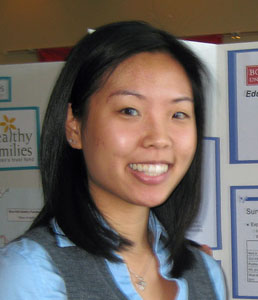
Yang, who is concentrating in maternal and child health in the Community Health Sciences Department, will receive $1,500 to help pay for registration and travel costs to the meeting. SAM is an interdisciplinary group of health professionals dedicated to promoting awareness about adolescent health issues.
When she first heard the news she had won, Yang said she was a bit stunned. "I had to read the email at least a few times before I actually believed that I had received it," she said. "Once it sunk in, I was absolutely thrilled, excited and honored to have the opportunity to learn from people all over the country who work with adolescents in different capacities."
Yang credits Emily Rothman, an assistant professor of community health sciences, with telling her about the scholarship and encouraging her to apply.
The master's in public health candidate will graduate in May and plans to continue her education in nursing and become a pediatric nurse specializing in adolescents. Yang is also interested in integrating her public health education and skills with clinical practice by developing, implementing, and evaluating youth development programs for adolescents.
The New England SAM chapter established the scholarship in 2006 to encourage continued interest in adolescent health. It is awarded to one student in the entire New England region per year. The theme for this year's conference is "The Integration of Art and Science." It will be held in Toronto, Canada, this April.
Submitted by Elana Zak ezak@bu.edu
GSDM Raises Prosthodontics Awareness
On Saturday, March 6, students, residents, and faculty from the Boston University Henry M. Goldman School of Dental Medicine (GSDM) Department of Restorative Sciences/Biomaterials partnered with Division of Community Health Programs (CHP) Oral Health Promotion Director Kathy Lituri to provide dental outreach at a Cancer Awareness Health Fair. The fair was held at the Iglesia Cristiana Nueve Vida Church in East Boston and was sponsored by UMass Boston, Dana-Farber Cancer Institute, the Latino Health Insurance Program, and the host church.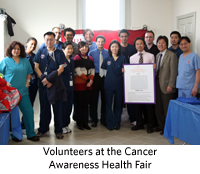
In addition to addressing issues related to cancer, the organizers also sought to address issues related to health disparities in Boston—which is where GSDM came in. The Massachusetts Section of the American College of Prosthodontists (ACP) and GSDM arranged to promote oral health by providing oral health information and oral screenings as part of National Prosthodontics Awareness Week.
A special room at the event was dedicated to dental screenings where volunteers from GSDM, including residents and faculty members Clinical Associate Professor and Past President of the Massachusetts Section of the ACP Dr. Hideo Yamamoto and Clinical Associate Professor and President of the Massachusetts Section of the ACP Dr. Shiro Kamachi, screened children and adults. Volunteers from Harvard also participated in the outreach effort.
"ACP is celebrating their 40th anniversary this year," said Dr. Kamachi. "This was a perfect opportunity for us to serve the community and introduce our specialty to the public. I thank Ms. Kathy Lituri for giving us the opportunity and the DMD students and residents of Post-doctoral prosthodontics from BU and Harvard who participated in the event. They did a great job."
BUSM Researcher Receives Prestigious Young Investigator Award
Adam Rose MD, MSc, FACP, an assistant professor of medicine at BUSM and a core investigator at the Center for Health Quality, Outcomes, and Economic Research at the Bedford VA Medical Center, has been named a 2009 Pier M. Mannucci Young Investigator prizewinner. Rose received this award for his article titled “Warfarin dose management affects INR Control” (Volume 7 Issue 1) which appeared in the Journal of Thrombosis and Haemostasis.
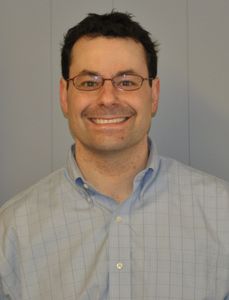
The Mannucci Prizes are awarded in honor of Pier M. Mannucci, the Journal's first Editor-in-Chief, for the best articles by investigators younger than 35 years of age. The prizes are a contributed by Bayer HealthCare and recipients are selected by a jury of editors. Rose was one of five selected for this honor.
Rose’s research centers on measuring and improving the quality of care in outpatient oral anticoagulation. In this article, Rose and his co-authors used a representative database of patients receiving oral anticoagulation in the United States to examine prevalent practice with regard to warfarin dosing. They modeled the visit-level predictors of a dose change. They found that patients whose management included more or fewer dose changes than predicted by the model (i.e. too many or too few changes) had worsening anticoagulation control. The authors concluded that it is possible to model the decision to change the warfarin dose, and that judicious management of warfarin doses in clinical practice can contribute to improved anticoagulation control. This study is notable for the clinical relevance of its findings and for the novel methods that enabled the authors to examine this important but understudied topic.
Rose attended Harvard University and graduated with a degree in Music, Magna Cum Laude (1992-1996). He then went on to medical school at the University of Pennsylvania (1997-2001). Rose performed his residency and chief residency in Internal Medicine at Montefiore Medical Center in Bronx, New York (2001-2005). He then completed a fellowship in General Internal Medicine and a residency in Preventive Medicine at Boston Medical Center (2005-2008).
A Call to Serve: BU Inaugural Global Day of Service arrives in April
In the spirit of Lemuel Murlin, the BU president who in the early 1900s envisioned a university “in the heart of the city, in the service of the city,” the BU Alumni Association is sponsoring its first Global Day of Service, giving alumni and others the chance to reach out to their communities, in unison, wherever they may be.
 The Alumni Association, along with the BU Community Service Center, is organizing community service sites across the country and around the globe where alumni can volunteer in honor of BU, on Saturday, April 17. The Global Day of Service is open to anyone connected to BU.
“The Day of Service is going to engage alumni and so many others — parents, students, faculty, and staff — in service projects that are meaningful and rewarding,” says Meg Umlas, executive director of alumni relations.
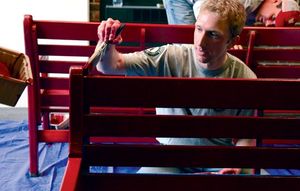
There will be at least 50 sites in the United States and abroad, including Madrid, London, Shanghai, Brussels, Sydney, and São Paolo. Service can be as simple as cleaning up a neighborhood park or helping out in a local road race, Umlas says, but it can also be focused on graduates’ area of expertise.
“Many alumni boards are interested in serving areas that reflect their constituency,” she says. “For example, School of Hospitality Administration alumni have expressed interest in working in soup kitchens. School of Medicine students are considering providing free care. There are School of Law alumni interested in doing pro bono work.”
If volunteers aren’t available on that Saturday, the Alumni Association is encouraging service in the days before and after April 17, says Kelly Cunningham, director of alumni communications and new media. “We want to make this opportunity available to everyone; to constrain it to only one day would exclude service, although we are pushing April 17 as the unifying day.”
She adds that those who can’t find a BU site near them can get a smaller group together to volunteer. “If you live in Topeka, Kans., and no one else is signed up to serve, you can go on your own to a local site,” Cunningham says. “This is a chance to mobilize our community on behalf of those who really need it.”
Umlas hopes the day of service will benefit participating alumni as well as communities. “We hope they get a opportunity to contribute to a local community and connect with fellow alumni,” she says. “We also hope they feel good about doing something in honor of BU.
“This will be a milestone event and the start of a wonderful new tradition.”
More information for BUSM students is available at https://www.bumc.bu.edu/medalumni/events/global-day-of-service/. BUSPH students can learn more at http://sph.bu.edu/index.php?option=com_insidernews&articleid=2670&task=view&id=623&Itemid=366
This BU Today article was written by Brittany Rehmer(COM ’11).
Breakthrough in Epithelial Tissue Research Made by GSDM Team
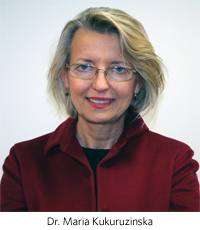
Professor and Director of the Predoctoral Research Program Dr. Maria Kukuruzinska and her research team have made an important advance in the understanding of how epithelial tissues achieve functional maturity.
Formation of mature tissues involves the establishment of stable cell-cell contacts between adjacent cells through the organization of different adhesion complexes. These include E-cadherin-containing adherens junctions (AJs) that mediate cell-cell adhesion, and ZO-1-containing tight junctions (TJs), which determine the barrier function of epithelia.
In their most recent publication in Experimental Cell Research, Dr. Kukuruzinska and her team provide evidence that modification of E-cadherin with N-glycans control not only the maturation of AJs but also the assembly of TJs. They show that the reduced N-glycosylation status of E-cadherin drives the organization of mature AJs, which in turn, sequester protein phosphatase 2A (PP2A) from the sites of TJs. The absence of PP2A renders the TJ proteins competent to assemble into functional junctions. This study highlights the relationship between the metabolic pathway of protein N-glycosylation and intercellular adhesion. In addition, it provides mechanistic insights into the well acknowledged but little understood dependence of TJ formation on AJ maturity.
The manuscript, titled, "Hypoglycosylated E-cadherin promotes the assembly of tight junctions through the recruitment of PP2A to adherens junctions," by former GSDM Research Associate Mihai Nita-Lazar, Dr. Ivan Rebustini, Dr. Janice Walker and Dr. Kukuruzinska, is available online at http://www.elsevier.com/locate/yexcr.
Register for the First Annual Translational Research Symposium
Showcase your research and meet other investigators who, like you, are pursuing innovative studies that will one day bring basic science to the bedside and beyond.
Thursday, April 1 from 8:00 am to 2:00 pm
595 Commonwealth Avenue, 4th Floor, Boston, Mass.
The Boston University Clinical and Translational Science Institute is offering a one-day research symposium to introduce the research community to the university’s depth of resources supporting translational science. Meet other investigators across Boston University who are discovering new treatments and techniques to keep our communities healthy.
Register for the research symposium today. Deadline March 24th.
Learn More
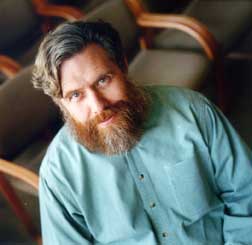
You have a novel idea, but you are wondering how to bring new technology to industrial and clinical settings. George M. Church, PhD, Professor of Genetics, Harvard Medical School, Director of the Center for Computational Genetics, and keynote speaker will address “Reading & Writing Living Systems: Technology-Transfer to Industrial & Clinical Settings.”
Church has pioneered technology innovations in the fields of chemistry and biomedicine and has 10 U.S. patents granted and several pending. A leader in technology transfer to commercial settings, he has served on 22 scientific advisory boards. Read more about George M. Church, PhD
Other research symposium topics include:
- Identifying and sustaining interdisciplinary collaborations
- Patient-oriented research: recruitment and regulatory issues
- Intellectual property and technology transfer
- Biostatistics and informatics resources
Showcase Your Research
Register for the symposium by March 24th to submit your scientific poster for an award. Researchers who present exceptional posters will be awarded first prize ($2,500), second prize ($1,000) or third prize ($500).
Directions and Contact Information
To get directions to Boston University or to learn about parking, visit http://management.bu.edu/about/visit/index.html.
For more information about the symposium, contact David Seldin, MD, PhD, at 617-638-7027.